Paired transitways can be employed on major transit routes to provide dedicated space for bus, light rail, and streetcar service. Different modes or service types can be configured to run parallel to each other to create a transit priority corridor. Parallel transit lanes for each mode permit simplified cross-platform transfers.
Most frequently found in city centers, dual mode paired transitways are used on streets with heavy transit ridership on both bus and rail, or where transfers between modes are frequent.
Recommendations
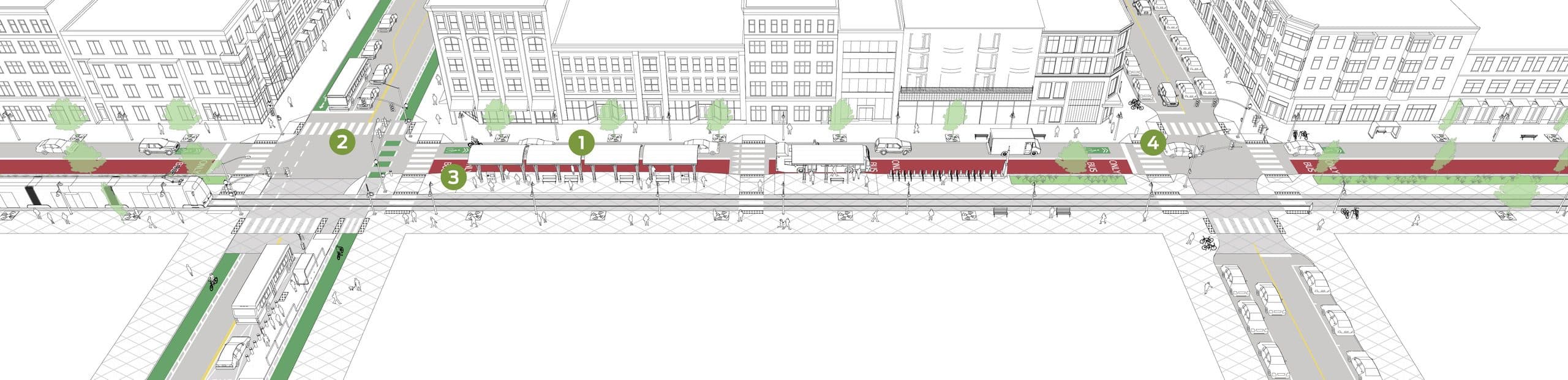
Especially on street segments with frequent transit service, or in locations where a number of lines converge, dual-mode transitways can simplify transfers and bolster transit visibility and system identity.
1Street and stop design must account for differences in vehicle design between different services and modes, including vehicle length, boarding height, and door location. Where these dimensions differ, separate platforms may be created, preferably adjacent to one another on the same block to ease transfers and reduce rider confusion.
2Restrict turns across transitways to mitigate conflicts with transit vehicles; driver visibility may be poor.
Demarcate with solid white lines, and BUS ONLY or LRV ONLY lane markings (MUTCD §3D-01).
3Clearly indicate transfer opportunities with signage showing routes and platform direction. Wayfinding and system information are essential to enabling passenger trip planning.
4Transit signal heads can be used where confusion may emerge, such as where transit and vehicle traffic proceeds in separate phases.
High-quality paving materials, furnishings, and plantings improve the streetscape and invite activity, while also defining edges and ensuring pedestrians do not enter active transitways.
On this street, a rail transitway comfortably shares space with pedestrians, who freely use the full width of the sidewalk, transitway, and median, yielding when trains approach. Depending on bus and general traffic volumes and network role, the remainder of the street can also be designed as a shared transit street, creating a public space across the entire street.
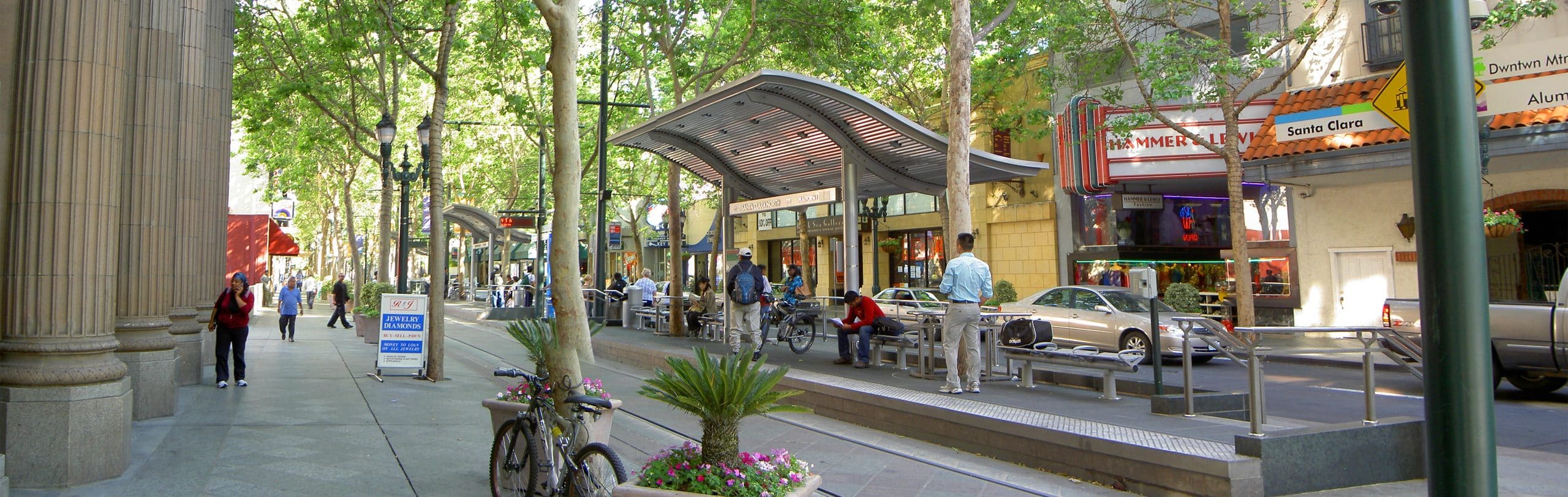
Wikimedia Commons contributor xAtsukex
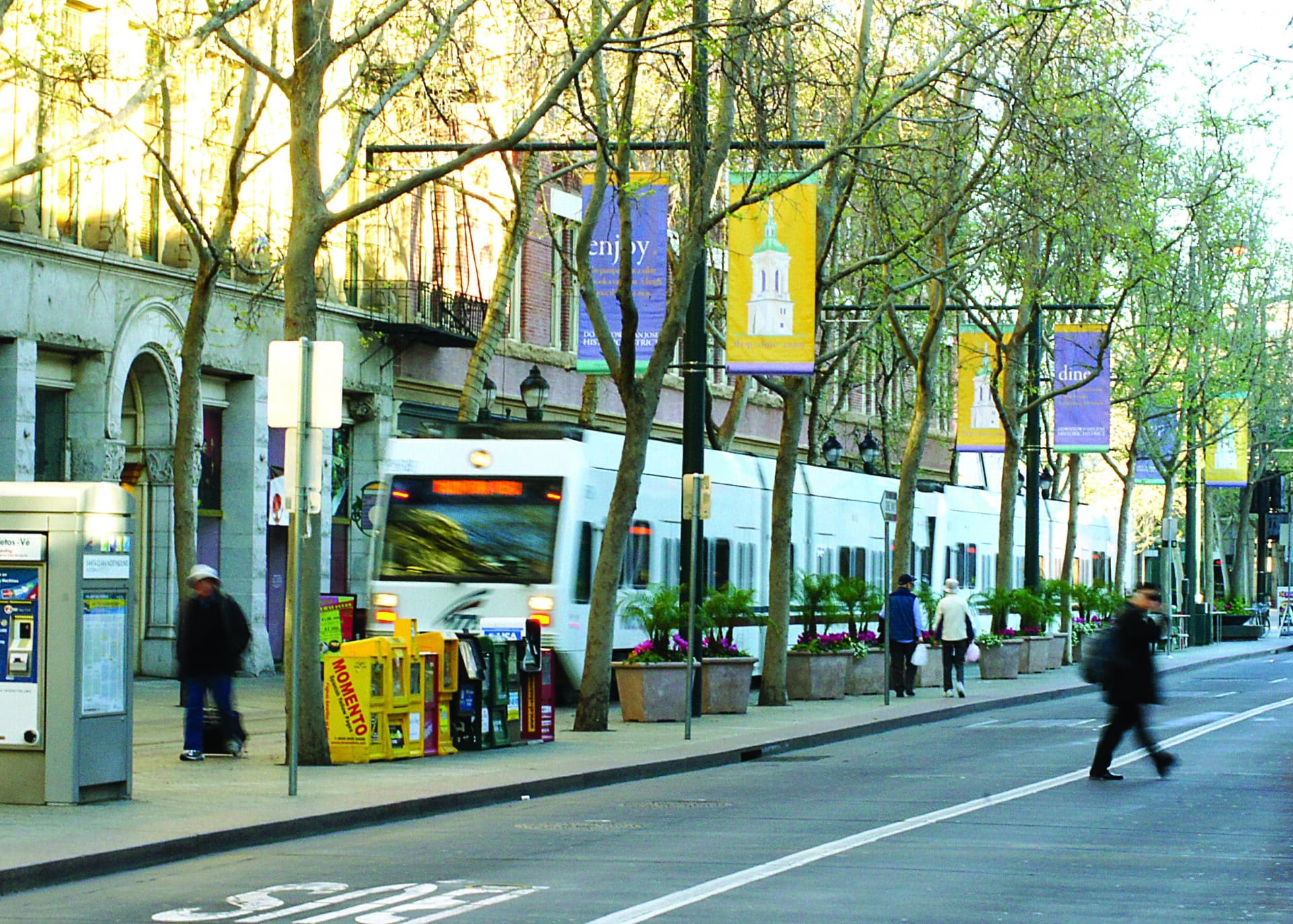
Studio 111