Bike parking can supplement transit ridership both in bustling urban corridors and at regional stops and stations, and can replace time- and space-consuming on-bus bicycle racks.
Bike parking elements can expand transit sheds, enhancing access to stop-adjacent destinations, and boosting intermodal connectivity.
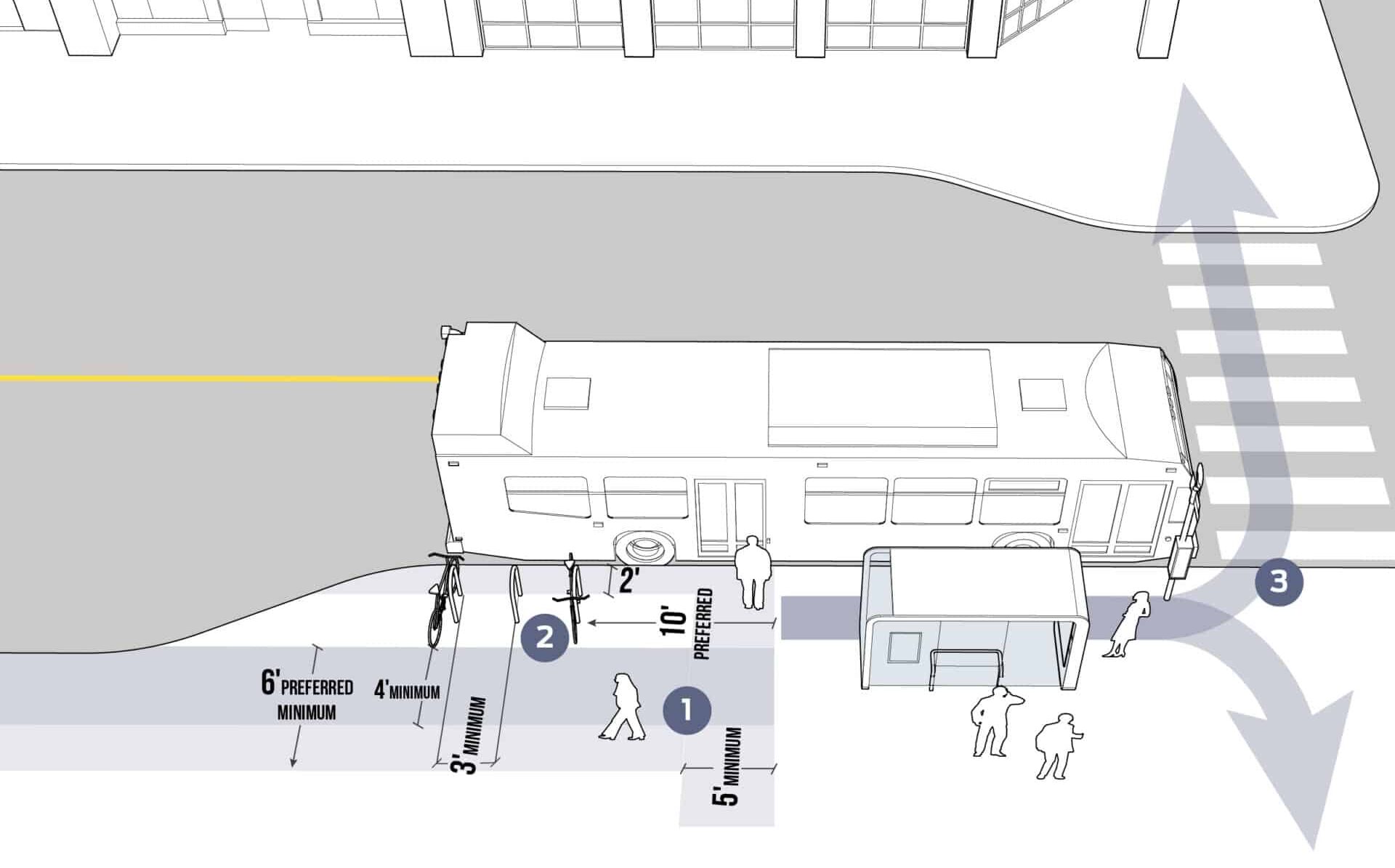
Application
Provide short- and long-term bike parking options where demand exists or is expected.
Benefits
Short- and long-term bicycle parking enables first- and last-mile connections, as well as access to destinations, and should be considered near all stations and stops.
Adequate bike parking deters unintended locking, including chaining bikes to trees, sign poles, or seating elements.
Considerations
Parked bicycles must not impede access paths to and from transit vehicles or along walking routes. Consider the distance available between parked bicycles and other elements.
Critical
1Provide a clear zone around bicycle parking to avoid impeding traffic, including near transit vehicle doors, on adjacent sidewalks, and through long-term storage facilities.
2If multiple bicycle racks are installed, place them at least 3 feet apart to allow convenient, uncluttered access.
Locate parking in well-lit areas in full view of sidewalks and pedestrian paths.
Recommended
3Short-term bike parking should be located within 50 feet of stop or station entrance, as well as major destinations.
Optional
At feeders and terminals, long-term bicycle storage, including bike lockers or cages, provides enhanced security and protection from weather, enabling first- and last-mile trips. These facilities should be installed close to the entrances to major stations.
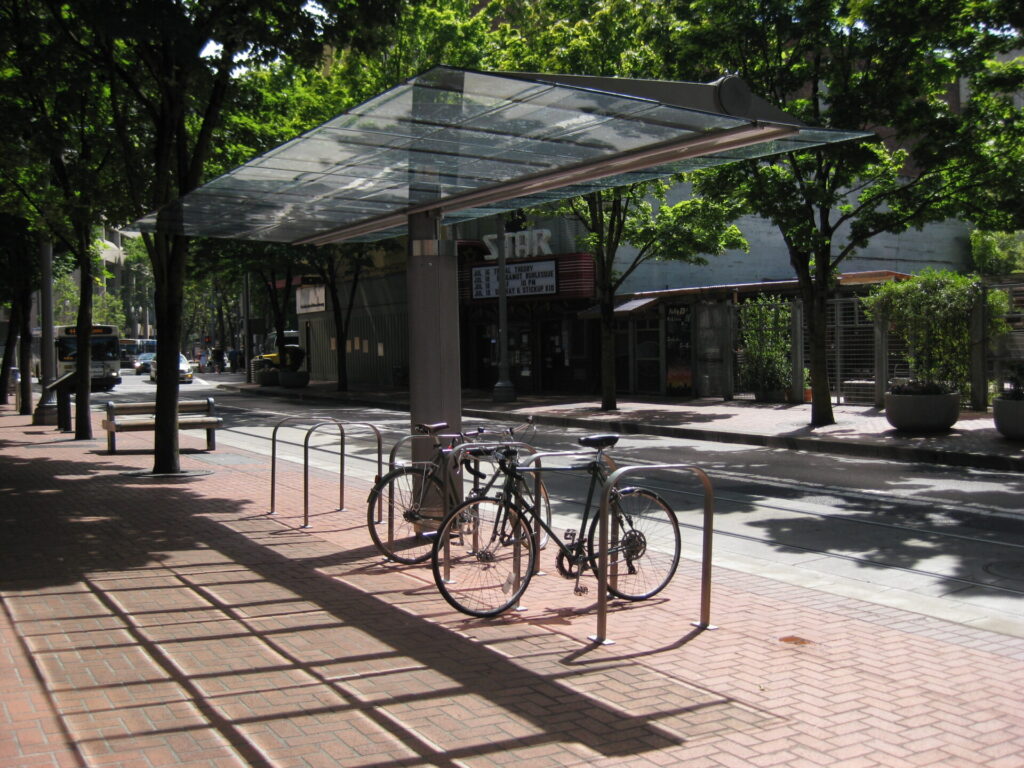
Portland Bureau of Transportation
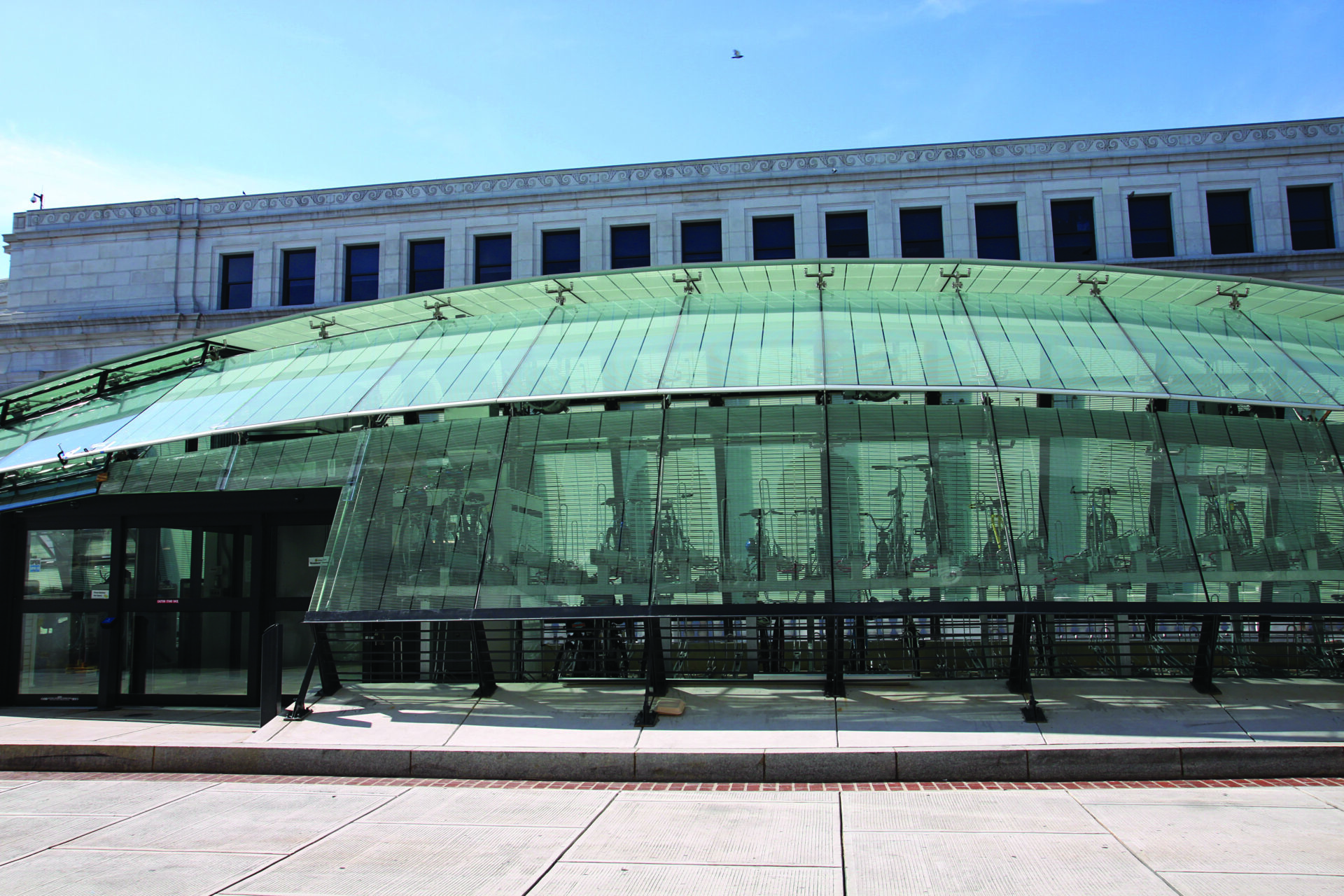
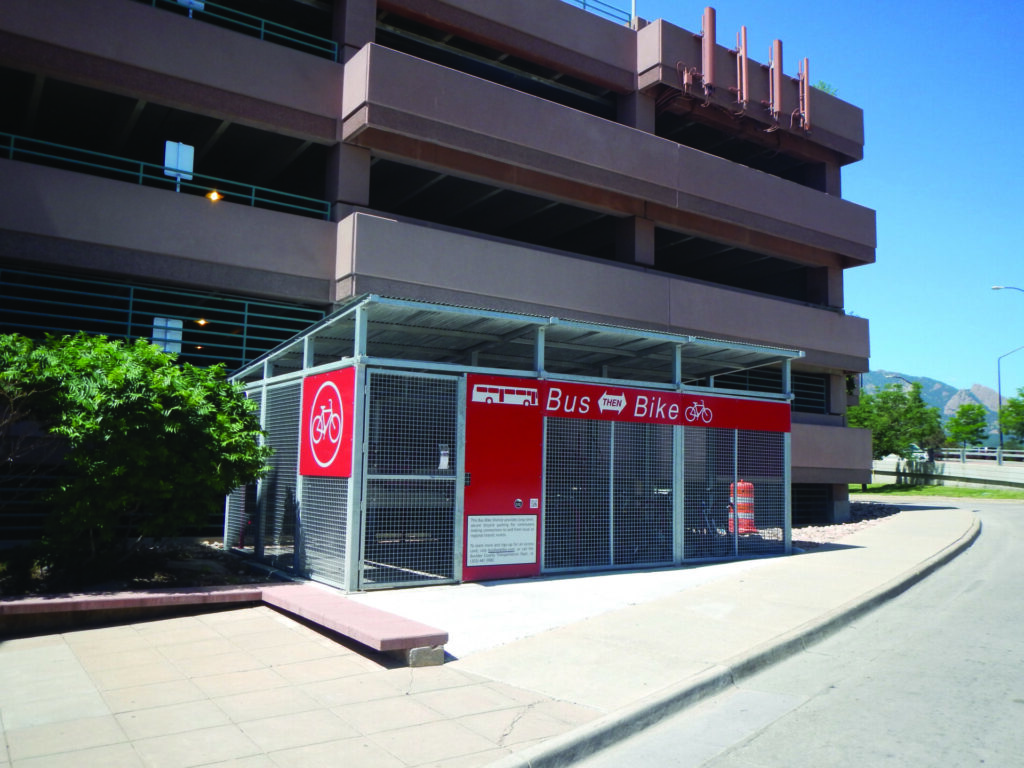
Natalie Stiffler