A major source of delay on high-volume transit routes occurs where large numbers of passengers board and alight in constrained space, especially curbside bus and BRT stops.
Managed boarding procedures can reduce interference and conflict with pedestrian movement adjacent to the transit stop, and make the boarding process itself more efficient.
Stephen Hui via Flickr
Application
Where transit passengers are observed blocking the sidewalk, especially at high-volume stops (≥100 boardings per hour at peak), queue management may be valuable.
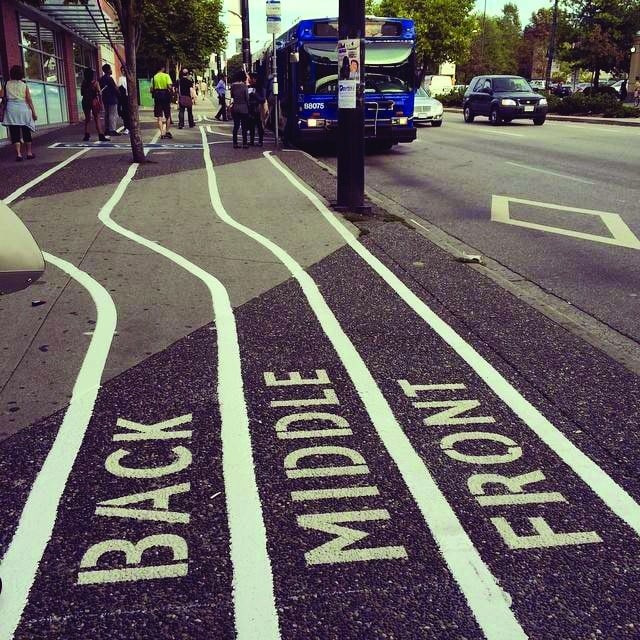
On boarding platforms serving large transit vehicles with multi-door boarding, queue management shows waiting passengers how to evenly distribute themselves.
Benefits
Queue management markings organize waiting passengers at busy transit stops and preserves a pedestrian through-zone.
Where all-door boarding applies, well-marked queuing space disperses riders along the entire platform, speeding the boarding process.
Considerations
Alighting passengers must be able to exit before boarding passengers enter; ensure markings and signs communicate this requirement and make room for alighting riders.
Stops serving multiple routes must provide a separate boarding and queuing area for each route.
Critical
Mark queue lines for each door of the transit vehicle, with pathways directed clear of the pedestrian through-zone.
Use wayfinding principles of progressive information; alert passengers of the route number and which door to board through markings and signs.
Recommended
Lean bars may be provided at long queues.