Cities and transit agencies across North America recognize that better bus service requires dedicated street space and supportive policies. Many agencies are improving transit through initiatives like enhanced bus stops, transit-only lanes, queue jumps, or modifying traffic signals to give buses priority. However, fragmented tracking of transit priority projects across state and regional lines has made it difficult to understand the scale of progress.
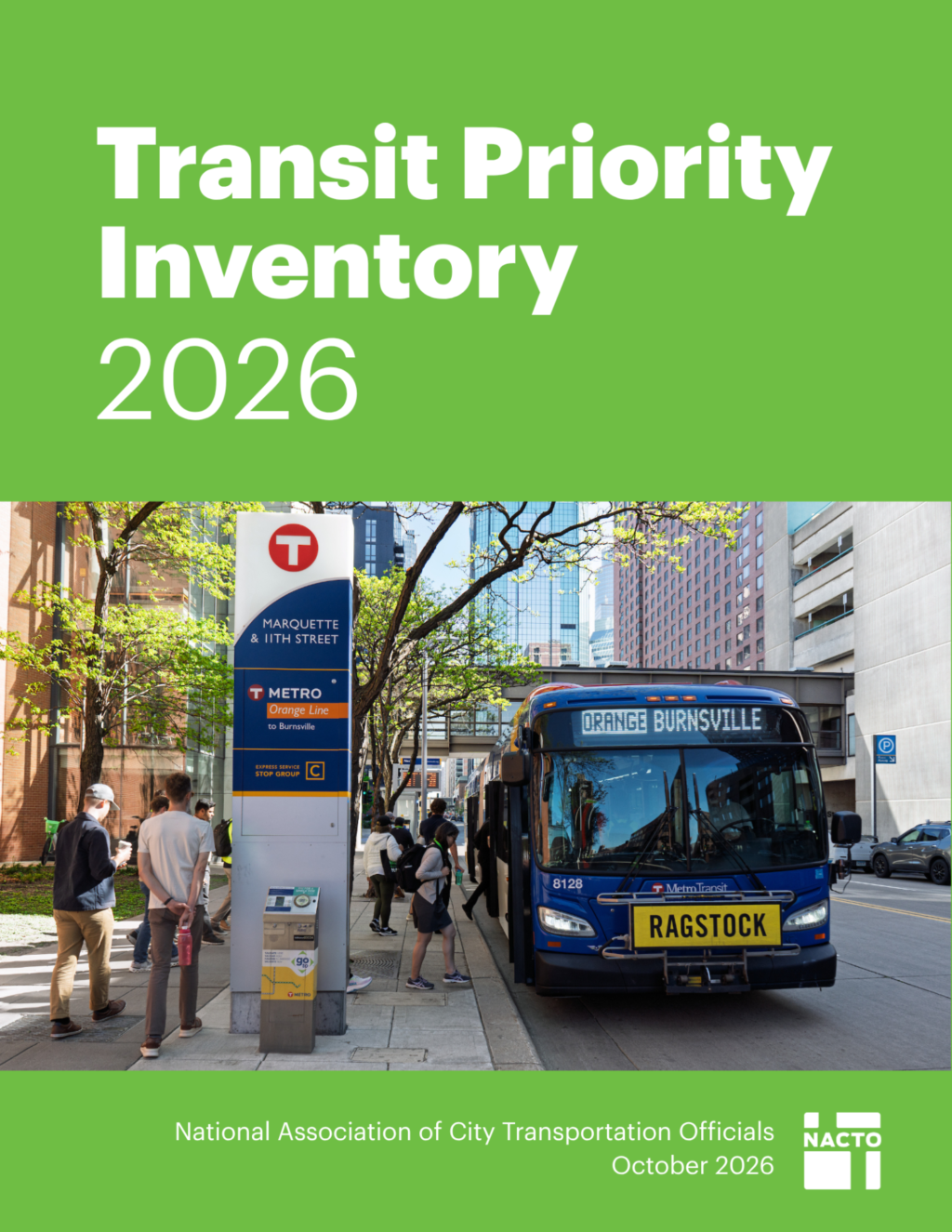
NACTO’s Transit Priority Inventory addresses that gap. Developed with members of NACTO’s Transit Priority Working Group, a cohort of city and transit agency staff currently working in the field, we are able to show the breadth and depth of transit priority work in the United States and Canada.
This inaugural inventory, built from a survey of 72 city transportation departments and transit agencies, documents the activities, scope, staffing, and funding of their transit priority work. This high-level view helps identify what makes programs successful and, over time, will serve as a benchmark for understanding how programs grow and priorities evolve.
Insights from the Inventory
Right-sizing bus stop spacing and making stop improvements that streamline boarding are the leading tactics in agencies’ transit priority toolboxes.
Both city transportation departments and transit agencies acknowledge that stop-level improvements can have a significant impact on transit performance.

Transit agencies are more likely than city transportation departments to be delivering projects under dedicated programs for bus speed and reliability and bus rapid transit.
While a large majority of survey respondents have completed projects to improve bus service and build out BRT corridors, many city agencies are moving forward without dedicated sub-programs for these strategies.

Mature and emerging transit priority programs are separated by a defining factor: dedicated funding streams.
Most respondents have found success securing funding for individual projects, but those with dedicated capital funding streams for programmatic work are making greater progress on implementation, especially for bus speed and reliability projects.
Skip ahead to the appendix to download the full survey results.