Over a decade of focused planning, design, and coordination transformed bus service and improved pedestrian safety on San Francisco’s highest-ridership bus corridor.
Running along Mission Street is the 14 Mission bus line, which, 10 years ago, riders identified as unreliable. Slow service was a major issue due to narrow lanes, congestion, and double-parking. Pedestrians also reported feeling unsafe due to turning cars and long crossing distances.
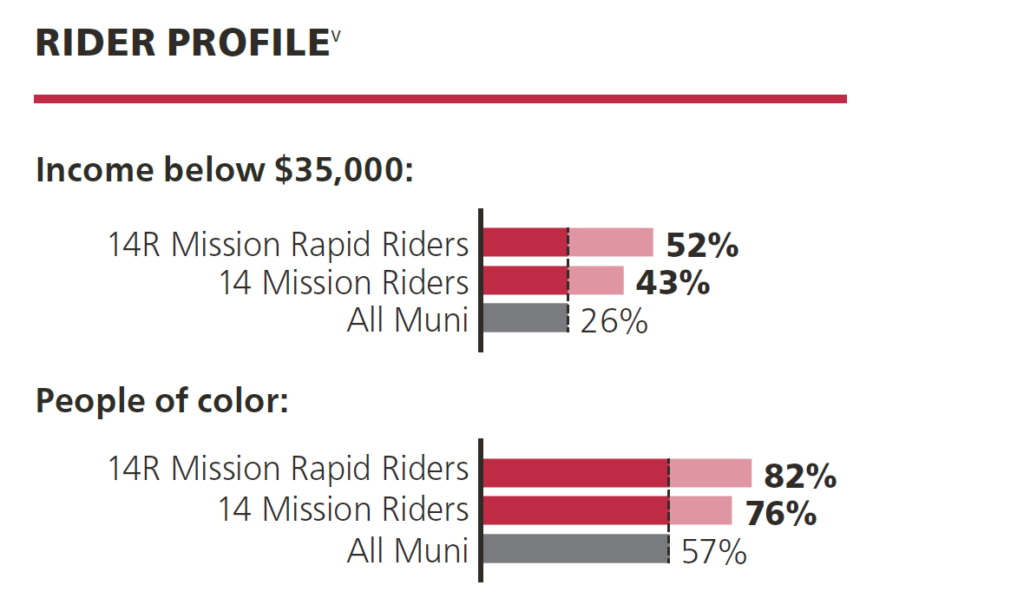
Riders of the 14 Mission and 14R Mission buses are disproportionately low-income and people of color, and 60% of people visiting Mission Street arrive via transit.
Between 2016 and 2026, three projects on Mission Street led to:
- 6.4 miles of new or upgraded transit lanes
- 50 intersections with transit signal priority
- Seven transit bulbs and islands that make it easier to get on and off the bus
- 29 pedestrian bulbs and islands
- Leading pedestrian intervals at signals to make it easier and safer to get to bus stops
The city made these improvements as part of the San Francisco Municipal Transportation Agency’s Muni Forward program. The program, originally funded by a 2014 voter-approved bond measure, makes safety, travel time, and reliability improvements on high-ridership transit corridors.
Transit improvements on Mission Street were split into three separate, smaller endeavors, which included adding transit lanes, constructing transit bulbs, moving bus stops, and adjusting loading zones.
14 Mission Rapid Project (2016)
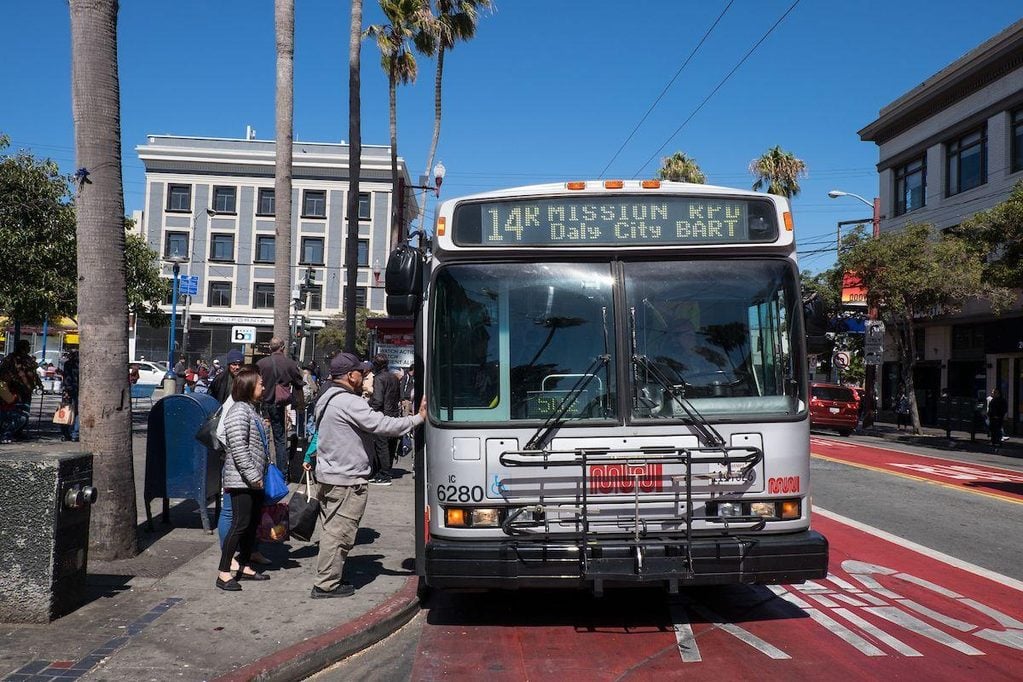
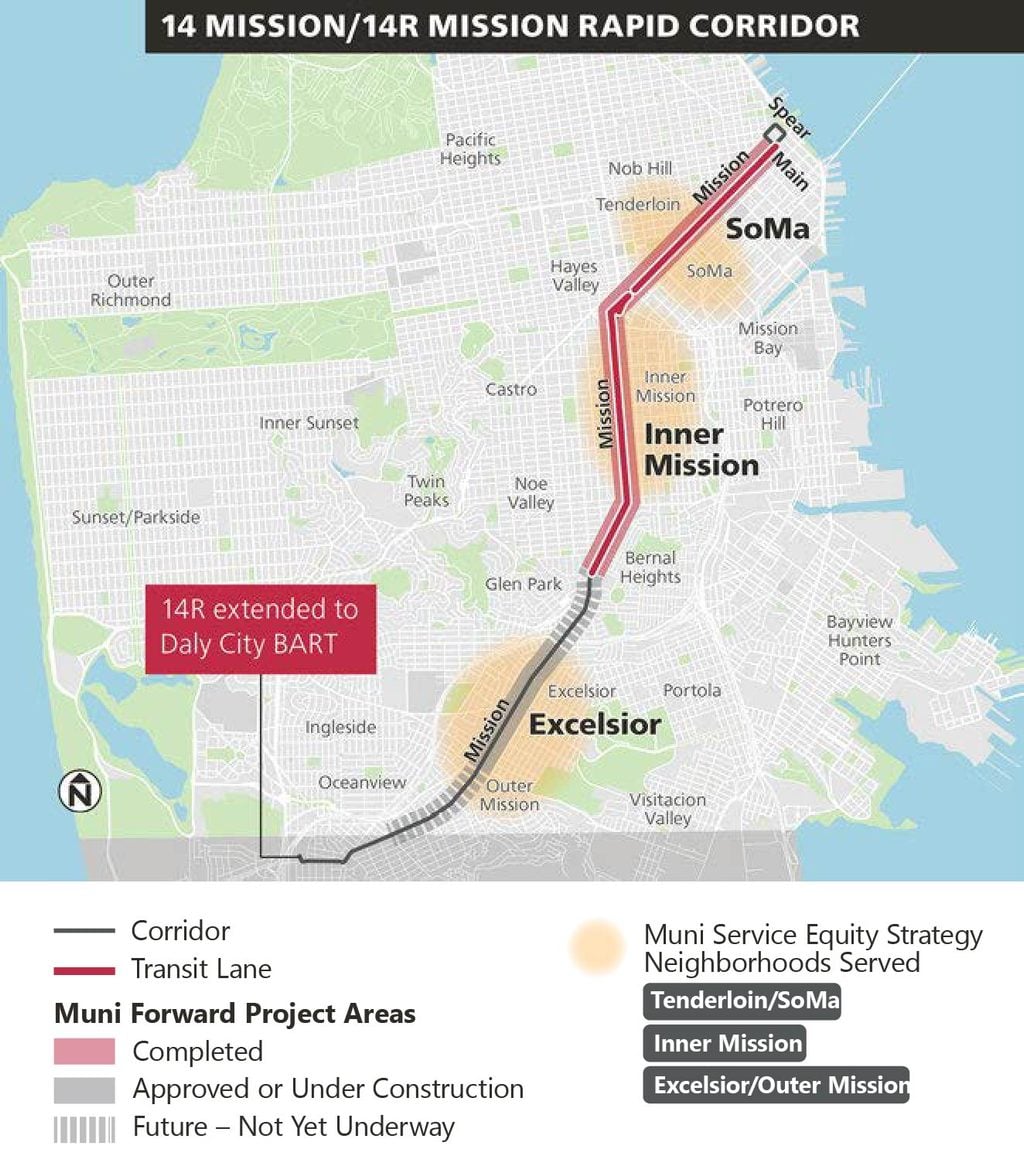
In 2016, SFMTA first took on the task of improving safety and efficiency on Mission Street. They increased service frequency and added a new 14R Mission rapid bus line with fewer stops.
Prior to 2016, Mission Street had part-time transit lanes in San Francisco’s downtown SoMa neighborhood, ending at 11th Street. In 2016, SFMTA made transit priority improvements along 2.5 miles of Mission Street south of these lanes, in the Inner Mission neighborhood.
These improvements included:
- Transit-only lanes:
- Both ways between Cesar Chavez Street and 30th Street (about half a mile)
- Southbound/away from downtown between 14th Street and Cesar Chavez (2.5 miles)
- Left-turn restrictions at every intersection to improve safety for pedestrians by eliminating potential conflicts with turning vehicles
- Right-turn pocket lanes to prevent turning vehicles from encroaching on the bus lane
After these changes were installed, SFMTA conducted intercept surveys and collected speed data to evaluate the project. The evaluation found that three-quarters of respondents said they felt safer or just as safe on Mission Street, two-thirds of bus riders said the bus was more reliable, and buses through the area traveled about two minutes faster on average. In 2017, Zendrive studied the results of these initial improvements on driving behavior along the corridor and found a 36% reduction in speeding.
SoMa Transit Lanes (2020 to 2022)
In 2020, the SFMTA board approved temporary bus- and taxi-only lanes to protect essential workers and transit-dependent residents from the increased risk of COVID exposure associated with slow or crowded buses. This included converting the part-time Mission Street lanes in the downtown SoMa neighborhood to full-time, connecting to the 2016 transit lanes.
After temporary lanes were installed on Mission Street between 1st Street and 11th Street, the city conducted a technical evaluation and further public outreach. These evaluation results were used to inform design changes to the temporary lanes and, later, to the permanent installations.
The evaluation found that:
- Transit travel times improved significantly over pre-COVID conditions and remained relatively steady as traffic increased.
- Travel time variably decreased.
- The number of collisions involving transit vehicles declined.
- Total vehicular collisions decreased by 58%, and collisions involving pedestrians decreased by 40%
- 65% of general public survey respondents supported making transit lanes permanent.
In 2021, the city approved six permanent transit-only lanes, including making the full-time transit lanes on the 14 Mission and 14R Mission bus lines permanent.
The city also implemented other improvements to the corridor, including:
- Widening lanes to accommodate buses.
- Changing parking regulations. Instead of two part-time parking lanes, the new street design has a single 24/7 parking lane.
Excelsior and Outer Mission (2026)
In 2026, SFMTA made transit and safety improvements to a third, high-injury section of Mission Street in the city’s Excelsior neighborhood. The Mission/Geneva Safety Project aimed to improve pedestrian safety, transit reliability, and loading in a business district less than a mile south of the 2020 transit lanes.
The project area included over one mile of Mission Street (between Trumbull Street and Geneva Avenue) and half a mile of Geneva Street. Between 2011 and 2017, crashes killed five people and injured over 300 people in this area.
From 2017 to 2018, the city conducted community outreach to identify the most salient issues when navigating these streets through one-on-one meetings, door-to-door surveys, walkthroughs, community meetings, and more. The project team used this feedback to develop a conceptual plan, which was then refined with additional community input throughout 2019.
In the summer of 2020, SFMTA installed quick build improvements as interim upgrades ahead of the larger capital project, including:
- Paint and post curb extensions to improve visibility at corners
- Visibility daylighting prohibiting parking approaching crosswalks
- Improved loading and additional metered parking to support access for local businesses
- Transit bulbs
- Consolidating four close-together transit stops into two stops
Next came the full-build out. Between 2022 and 2026, the San Francisco Public Works team led the work of installing permanent improvements, including:
- Forty concrete sidewalk bulb-outs
- Upgraded traffic signals at 20 locations
- Sewer main replacement work at 10 locations
- Concrete street base replacement work
- Street repaving throughout the project area
Results
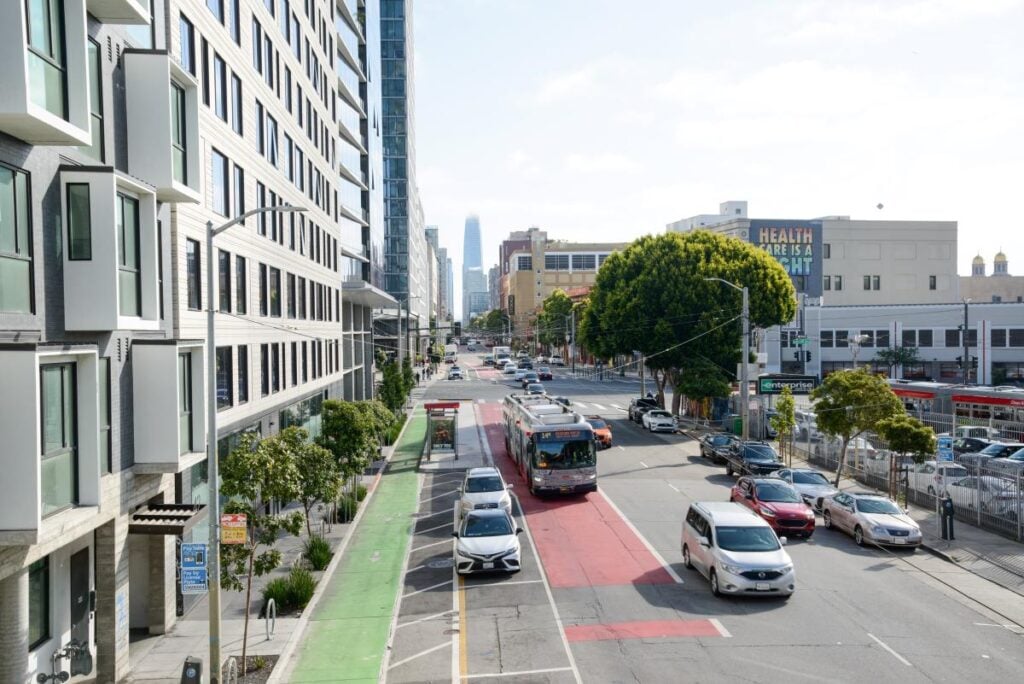
- Faster buses: Since these projects were installed, transit is up to 31% faster in SoMa and 9% faster across the line overall.
- More reliable service: Following the 2016 transit lane installation, bus service on Mission Street became up to 25% more reliable.
- More riders: Between 2015 and 2019, ridership on the 14 Mission and 14R Mission bus lines grew by 19%. As of May 2024, ridership recovered to 95% of pre-pandemic levels on weekdays and to over 110% of pre-pandemic levels on weekends — more than the Muni system as a whole.
- Safer streets: Muni Forward improvements reduced injury collisions by 59% between 13th Street and Cesar Chavez Street.
Links and Resources
- 14 Mission Rapid Project (SFMTA)
- SoMa Transit Lanes (SFMTA)
- Mission/Geneva Safety Project (SFMTA)
- Fast Forward: 10 Years of Muni Forward 2014 – 2024 (SFMTA)
- A Decade of Rolling Out the Red Carpet for Riders (SFMTA)
- Transit Street Design Guide (NACTO)
- Move! That! Bus! (NACTO)