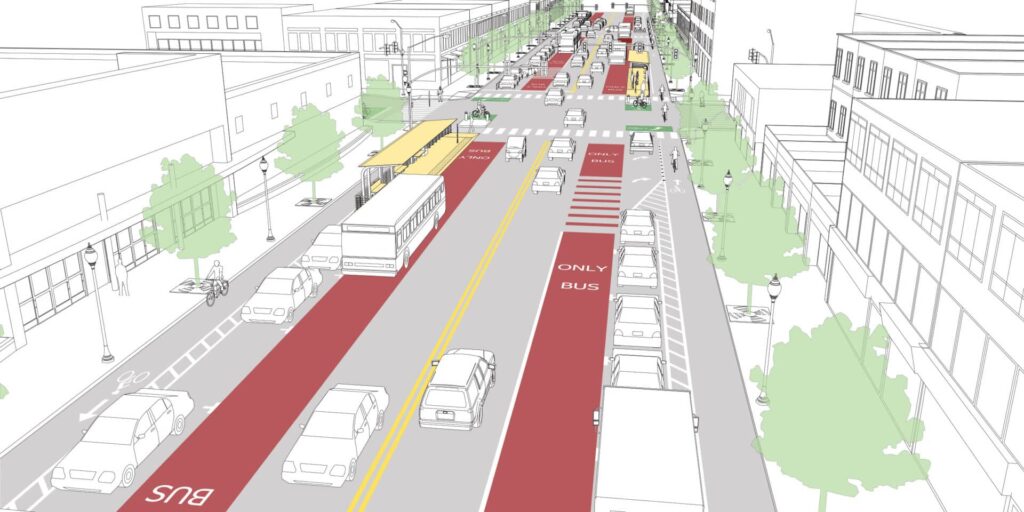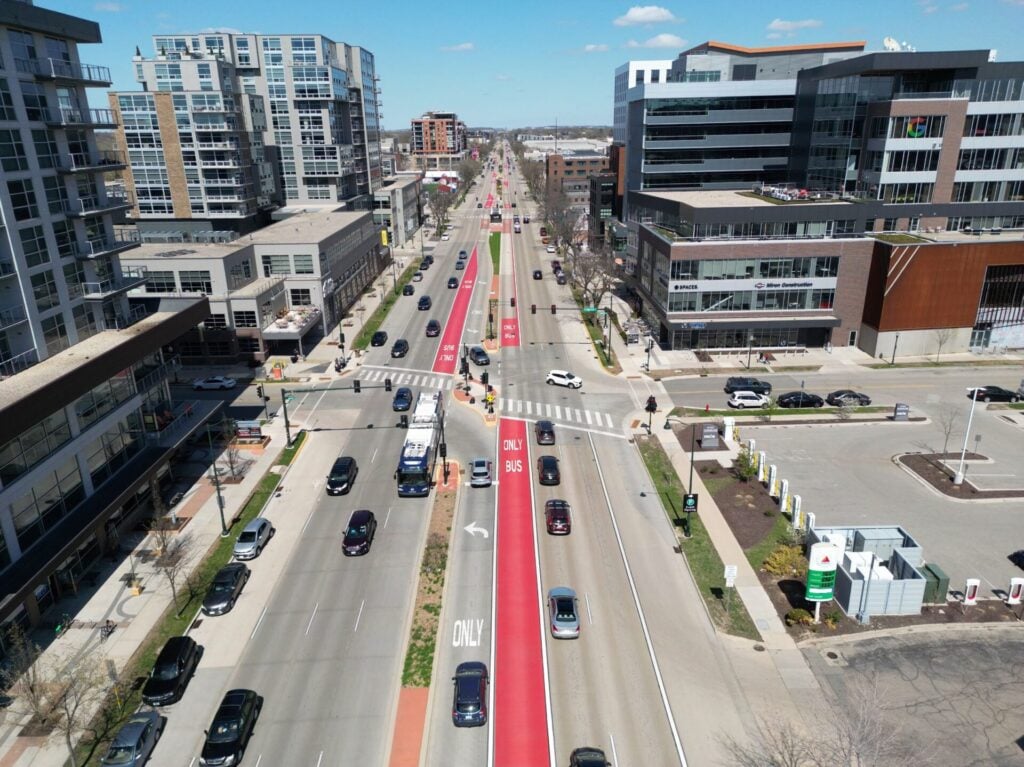
Making buses faster and more reliable is one of the most effective ways to transform urban mobility. From red carpet bus lanes and queue jumps to signal priority and optimized stop spacing, agencies are deploying a wide toolkit of street design interventions to get buses out of traffic.
Yet, for years, tracking these projects across municipal, state, and regional boundaries has been fragmented—making it difficult to measure collective progress or understand how often a collection of scattered street improvements elevated into a truly network-wide program.
To fill this gap, NACTO teamed up with our Transit Priority Working Group—a cohort of peer practitioners working on the frontlines of city streets—to launch the inaugural Transit Priority Inventory. Gathering data from 72 transportation departments and transit agencies across 25 U.S. states, Washington, D.C., and four Canadian provinces, the inventory provides a look at how transit priority is built, funded, staffed, and scaled today.
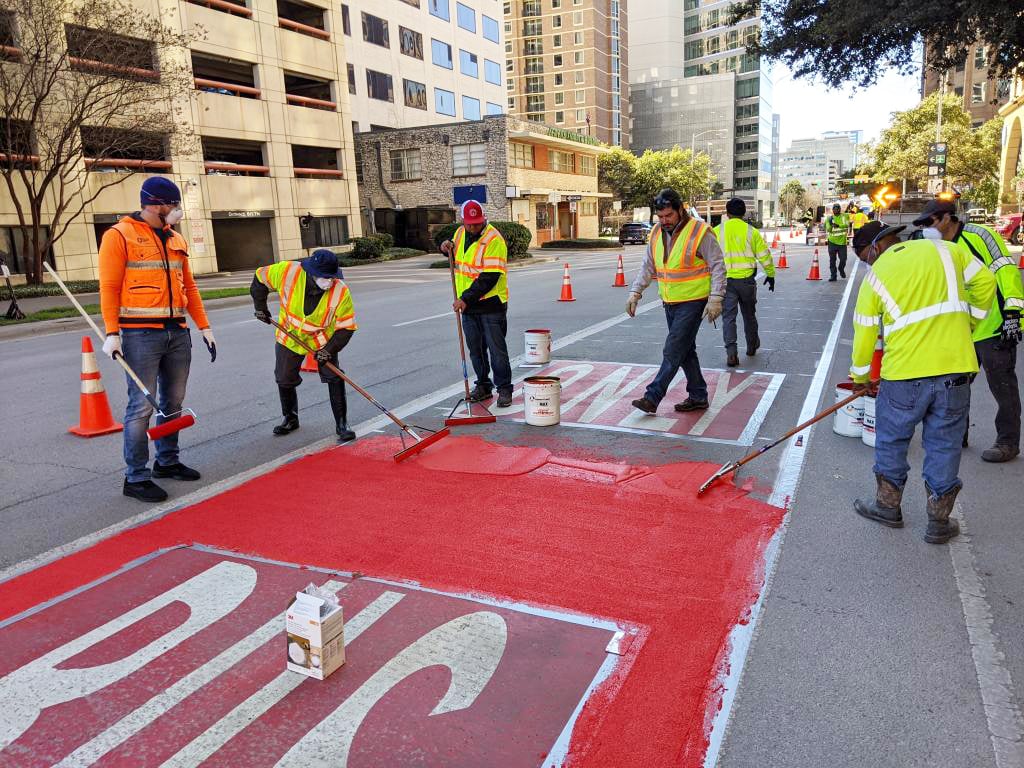
City of Austin
The Good News: Priority Tools Are Mainstream
The inventory reveals that city DOTs and transit operators have largely embraced street-level bus interventions. Rather than treating transit priority as an experimental trial, agencies across North America are putting proven treatments into practice:
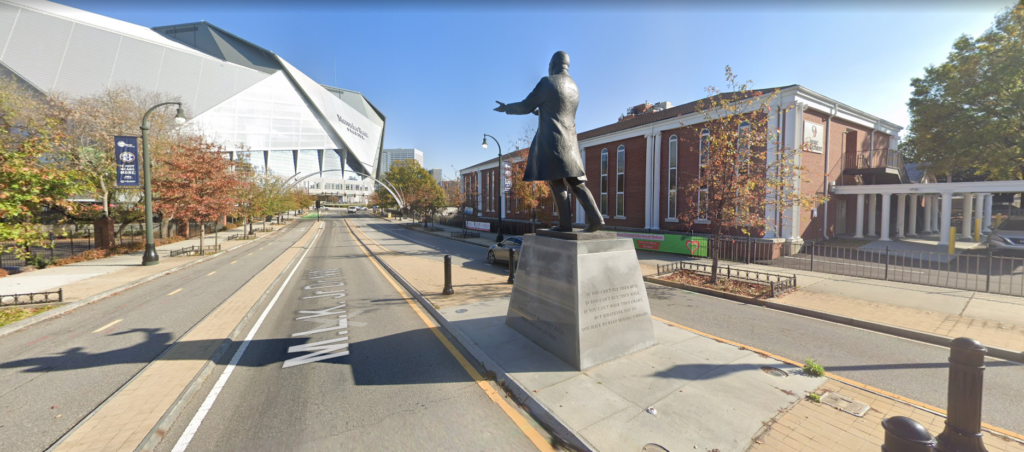
- Dedicated street space: 86% of responding agencies have implemented at least one type of bus priority lane, whether curbside, center-running, or offset.
- Smarter signals: 83% leverage transit signal priority to hold green lights for arriving buses. City DOTs—as owners of signal networks—are leading the charge on queue jumps and next-generation, cloud-based signals.
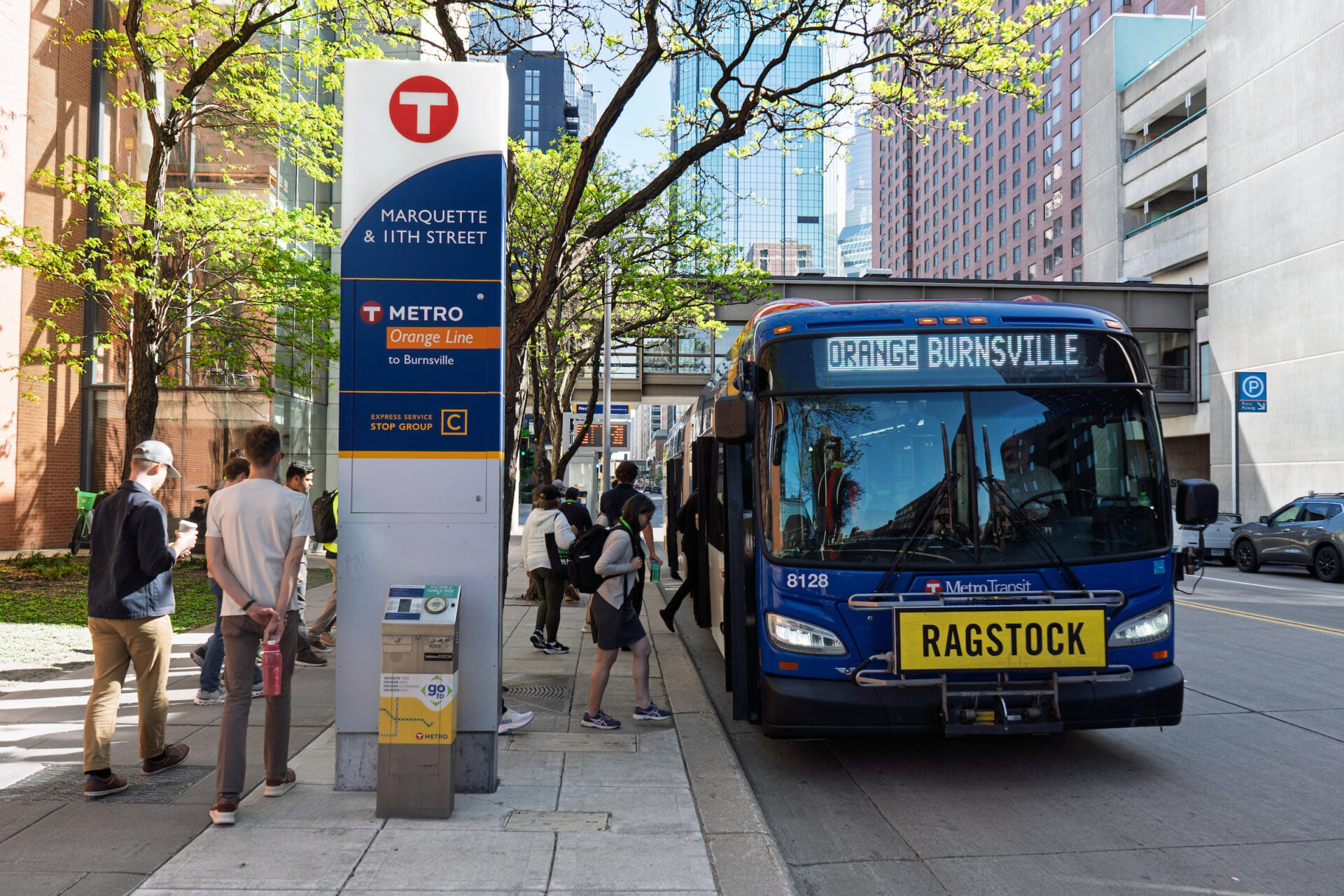
- Stop optimization: Nearly 80% of agencies implement stop-level upgrades like in-lane bus bulbs, while transit operators are actively rebalancing stop spacing to eliminate unnecessary delays and speed up boarding times.
“Paint, stop improvements, signal changes, and bus stop optimization can transform transit quickly for a relatively low cost. And when buses are easy and reliable, riders follow.”
The Catch: One-Off Projects vs. Sustained Programs
While tactical projects are on the rise, a clear divide emerges in how systematically these improvements are made. Individual projects can make a difference on a single bus line or street, but transformative change comes from long-range programmatic work that considers the entire network.
A majority of surveyed transit agencies (66%) and city DOTs (53%) have delivered targeted bus speed and reliability improvements or major bus rapid transit corridors. However, most city DOTs deliver these improvements on an ad-hoc, project-by-project basis without dedicated sub-programs or standalone teams.
Only a third of transit agencies operate formal sub-programs designed to deliver these projects continuously. Without dedicated organizational structures, cities risk stalling when progress relies on individual grant cycles rather than systematic network upgrades.
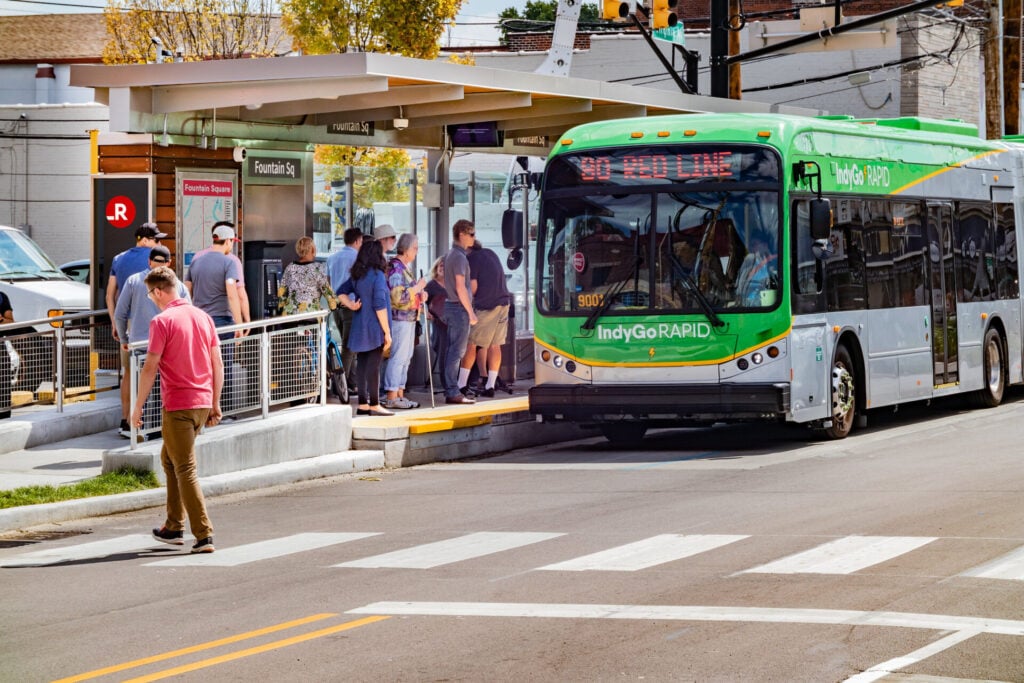
IndyGo
What Sets Mature Transit Priority Programs Apart?
More than a quarter of inventory respondents self-identify as having a mature transit priority program. Comparing these mature teams with emerging ones highlights three essential ingredients required for lasting impact:
- Dedicated, multi-person staffing: 90% of mature programs feature five or more full-time equivalent staff members focused exclusively on transit priority, with half employing nine or more dedicated staff. In contrast, 64% of medium-mature programs rely on just one to four staff members, and over a quarter have no dedicated staff at all.
- Reliable, non-grant capital budgets: 100% of transit agencies and 75% of city DOTs with mature programs maintain dedicated capital funding streams for transit priority outside of competitive grant programs. Only 8% of emerging programs have dedicated capital budgets, leaving them heavily exposed to grant timelines and budget shifts.
- High-quality data pipelines: You can’t improve what you don’t track. Mature transit agencies lead the field in leveraging automatic vehicle location and automatic passenger counter data, public dashboards, and regular performance reporting. Agencies like TransLink turn high-quality operational data into actionable annual reports that directly guide where to invest street design resources next.
An Evergreen Challenge: Cultivating Political Champions
Even the most mature programs hit red lights when it comes to politics and public engagement.
Across all respondents—regardless of agency size, maturity, or funding structure—cultivating political champions and local community support ranked as the single hardest objective. Only 9% of mature transit agencies report outright success in rallying political champions, and just 25% of mature city DOTs report success in securing broad community support.
Technical capacity and street space are critical, but sustained political leadership remains the missing catalyst needed for citywide networks.
Capitalizing on the Promise of Public Transit
Improving bus service is one of the fastest, most cost-effective strategies to deliver equitable mobility and lower urban emissions. But moving from isolated corridor successes to transformational transit networks requires shifting away from chasing one-off grants.
To unlock transit’s full potential, city leaders and transit executives must invest in dedicated multi-person teams, permanent capital budgets, and the institutional priority riders deserve.
Explore the Findings
Attend the webinar: Join us on Thursday, November 5, for a webinar exploring these findings further, featuring agencies with robust transit priority programs.