With pull-out stops, buses shift out of the travel lane to service stops.
While they have operational benefits for transit compared to in-lane stops in certain situations, they often provide benefits chiefly for through-traffic, while slowing bus operations due to the need to shift in and out of travel lanes. Bus zone lengths at pull-out stops include transition or taper space in addition to platform length, resulting in a need for longer clear curb zones than with in-lane stops.
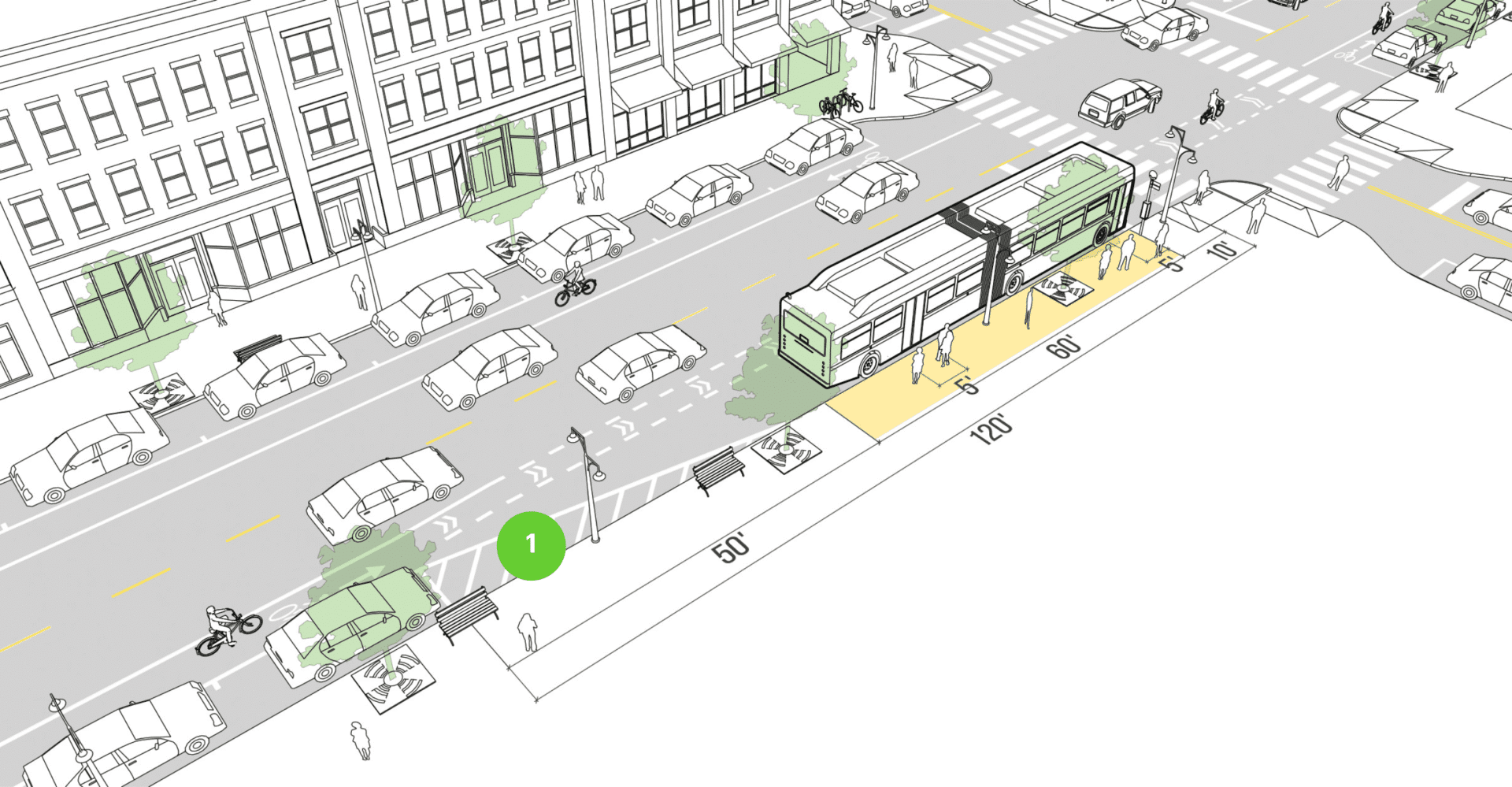
Dimensions are for standard buses. Streetcar and LRV specifications may vary
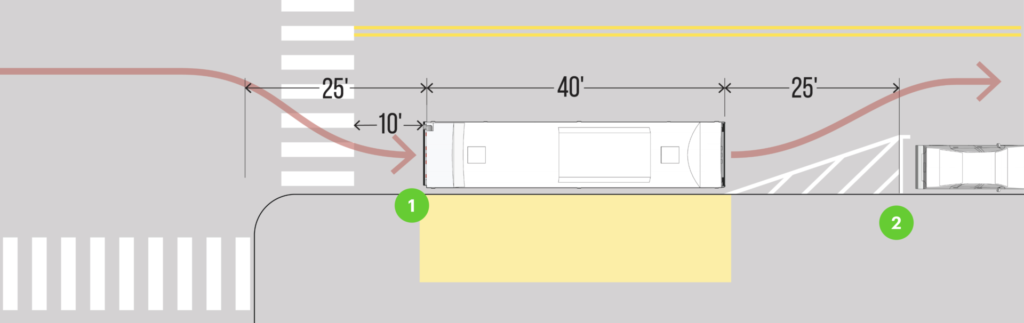
Discussion
Where buses are required to pull from traffic to make stops, longer bus zones are needed to accommodate transitions to and from traffic.
Short transition distances add delay to transit service and require sharper transitions to the curb, wearing transit vehicles and infrastructure more quickly.
Enforcement is required to keep pullout stops clear; vehicles standing or parking in the stop zone constrain the operator’s ability to pull completely to the platform.
Longer stops ease transitions into and out of stops, but require more curb length, reducing curbside parking spots.
At high-volume boarding locations, longer stops can be used to distribute queuing riders along the sidewalk and to ease pedestrian congestion.
Where buses make queue jump maneuvers, pull-out stops allow the bus to pull to the right of queued traffic and receive an advance green signal.
Where local and rapid/limited services are provided on the same route or corridor, local service may pull-out to stop at preferred transfer locations, allowing the rapid service to pass the local, and stop in-lane.
Critical
Pavement markings and NO PARKING: BUS STOP signs (MUTCD R7-107) must clearly delineate the edge of the stop zone to deter blockages.
Provide 5–10 feet of distance between each additional transit vehicle dwelling at the platform to allow a bus.
1Locate stop zone with at least 10 feet of clear distance from crosswalk or curb return. Measure to transit stop pole at near-side, or rear of transit vehicle at far-side.
Optional
Bus-mounted cameras can enforce vehicles blocking the stop zone.
Provide 5–10 feet of distance between each additional transit vehicle dwelling at the platform to allow a bus.
2White diagonal hatch line markings may be striped to delineate the entry and exit tapers and discourage blocking.