One-way corridor streets, which often have multiple travel lanes and significant daily throughput, and which connect multiple urban or activity centers, may be prime corridors to implement dedicated transit lanes. These may be trunkline transit routes where multiple bus lines converge and connect.
Implementing well-branded or high-capacity vehicles, robust stations and wayfinding, and dedicating on-street space improves on-time performance and rider experience, and increases the total person capacity of congested streets.
Recommendations
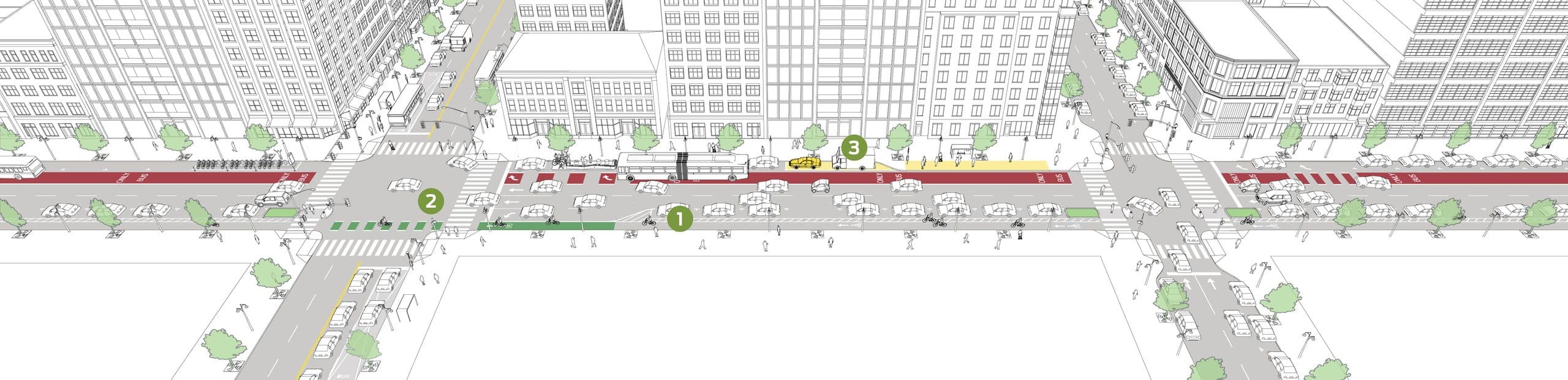
Transit lanes are typically most efficient on corridors with frequent service, generally more than six vehicles per hour.
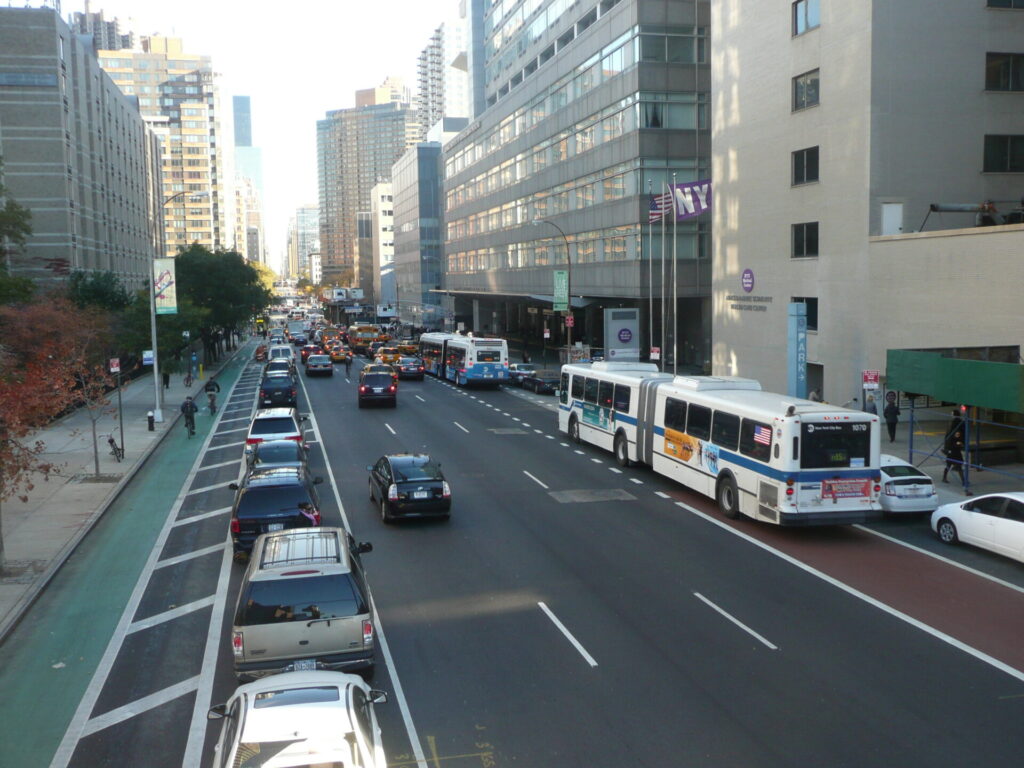
1To upgrade the street’s role within the transit and bicycle networks, transit and bicycle lanes can be placed on opposite sides of the street, reducing bicyclist stress and bike-bus conflicts.
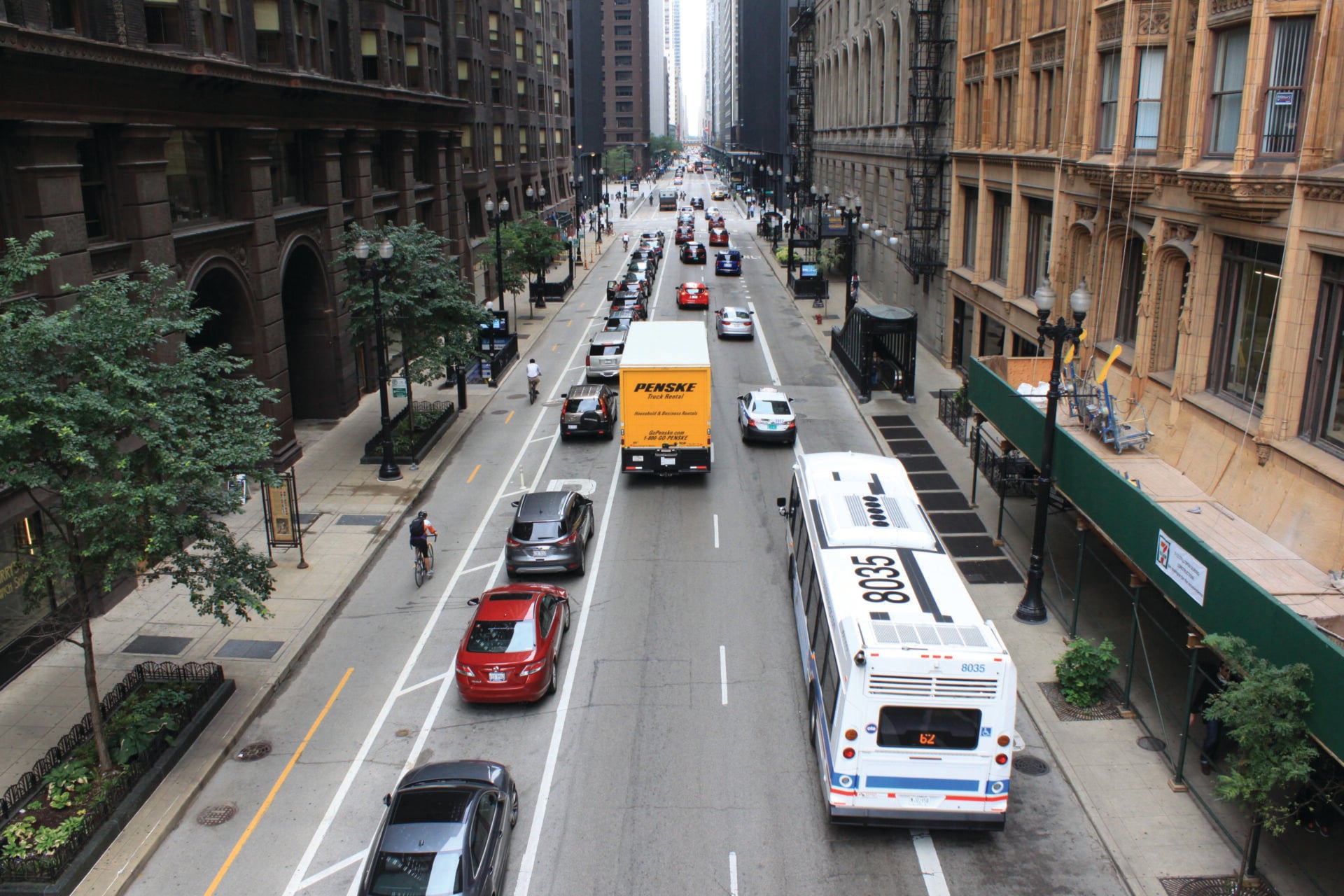
Allowing private vehicles to enter transit lanes degrades transit service and must be done strategically. See Intersections for treatments accommodating turning movements through the transit lane, and Transit Lanes and Transitways for additional guidance on transit lane design.
2Consider turning restrictions to mitigate conflicts by cars traversing transit lanes (see Turn Restrictions, for additional guidance and treatment selection).
Transit lanes can be enforced only at selected times, using methods such as dynamic signs to inform other road users of lane restrictions (see Peak-Only Bus Lane).
To gain the full benefit of transit lanes, integrate operational improvements to improve transit service reliability and comfort, including transit-friendly signal progressions, active TSP, all-door boarding, and extended or tiered stops.
If multiple routes operate along the same corridor, especially with heavy passenger loads or close stop spacing, evaluate skip-stop placement (see On-Street Terminal). Where possible, stops should be co-located to reduce pedestrian walking distance to make transfers.
Creating an easy-to-follow wayfinding system to direct passengers to the location of stops in both directions along a route is especially important for routes on one-way couplets.
3Freight and taxi/livery vehicle standing may intrude on transit or bicycle lanes. Designate curbside loading zones, potentially with additional width or on the opposite side of the street, to accommodate frequent curbside activities without impacting transit operation.
New York City Department of Transportation
Corinne Kisner