San Francisco Municipal Transportation Agency Photo Library
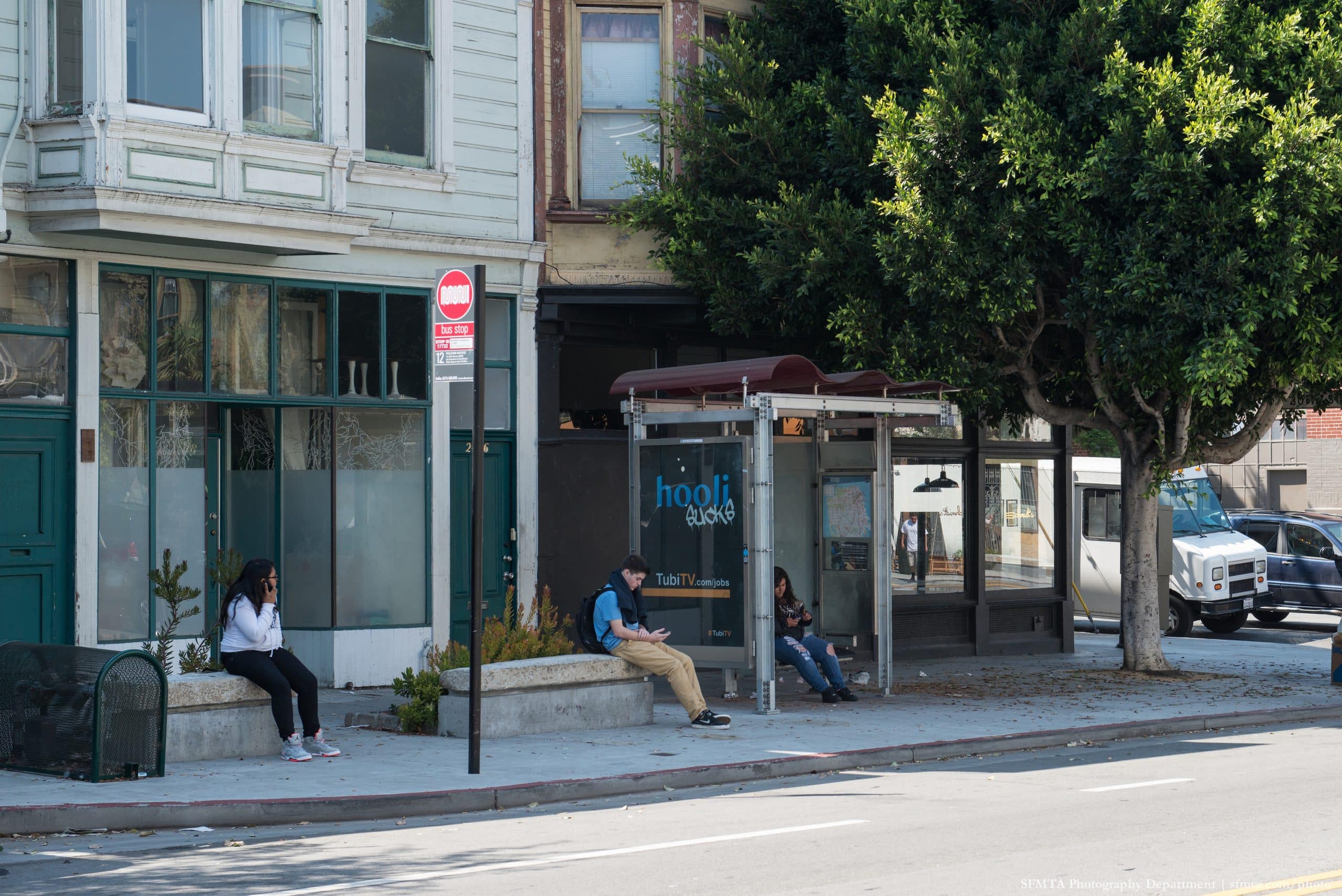
Improving on-street transit stops accomplishes a dual mission of making transit more attractive and highlighting the agency brand, while bringing immense benefits to accessibility and performance. Stops and stations are often where existing and potential riders first interact with a transit service; stops provide essential information and frame the level of comfort and satisfaction riders have with transit service.
Stops can be upgraded using interim design measures, but incorporating high-quality transit stop design and amenities into capital projects can expand pedestrian capacity and promote transit streets as a desirable place in the urban environment. Creating a simple, legible, and pleasant experience at the transit stop grows the capacity of the whole system, and can help transform transit from a basic coverage service to a desirable mobility option.
Stops are tools to attract riders, improve operational efficiency, build the brand identity of a system, and foster local economic development.
Transit stops exist on a continuum, from minimal sign-and-pole stops to fully enclosed stations. While financial constraints often limit the provision of stop elements on existing routes, investing in high-quality stops can change both the perception and reality of transit service. The design, prominence, and comfort of a transit stop is the first indication that people receive about their own potential experience as passengers. Stop elements and design have a bearing on all the key decision points in a transit trip, affecting whether a trip is taken by transit or a competing mode, and even whether to make a specific trip at a specific time of day or in uncertain weather. Platforms enable faster boarding, good maps and signage make trips easier, and integrating stops with adjacent buildings or green infrastructure can dramatically enhance the streetscape.