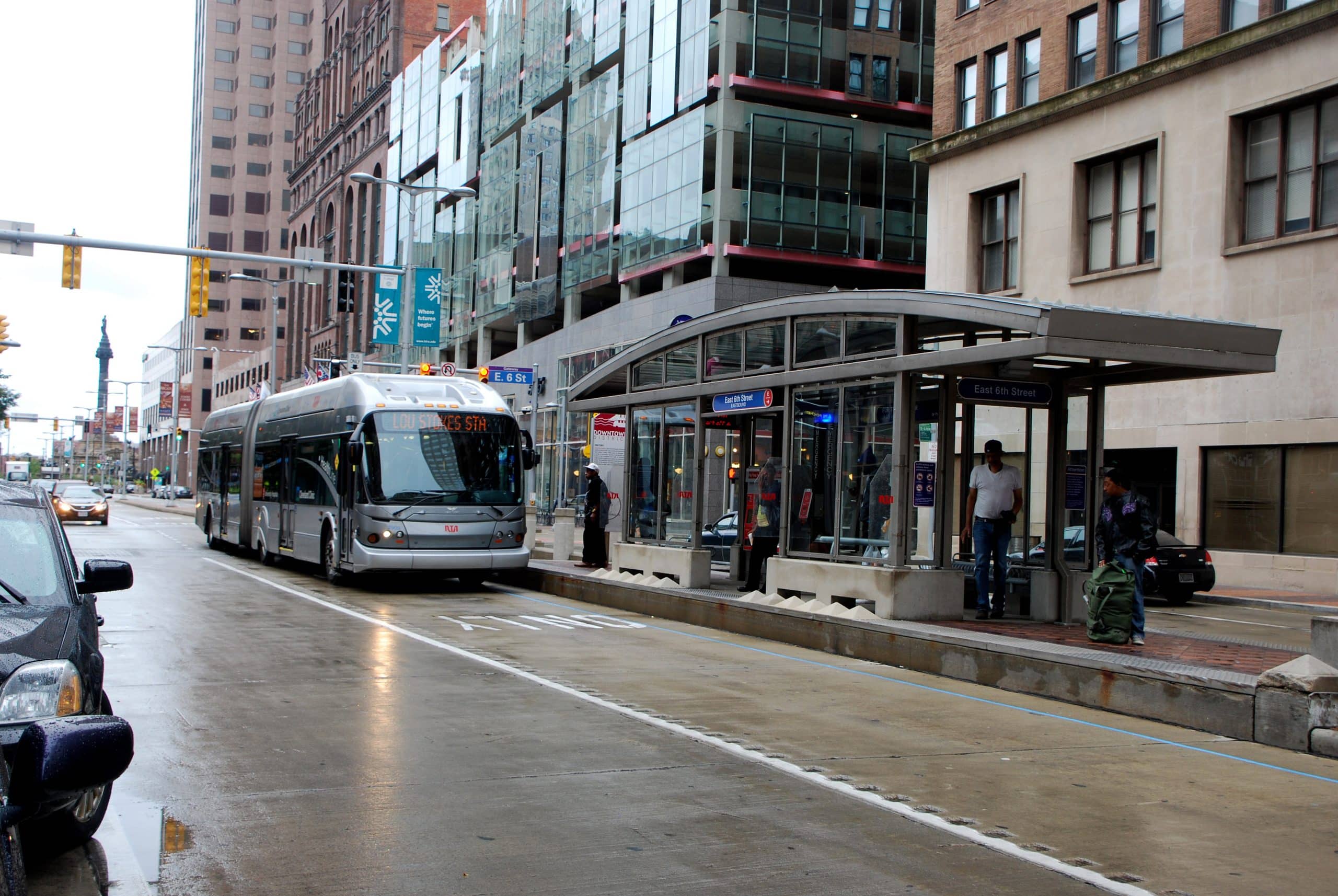
Center-median stops and stations offer the highest level of comfort and visibility for high-frequency and high-volume transit routes.
Combined platforms that service both travel directions deliver efficient service, clear boarding procedure, and excellent passenger amenities to enhance brand identity and service efficacy.
Passengers board from the center of the median through doors on the left side of transit vehicles.
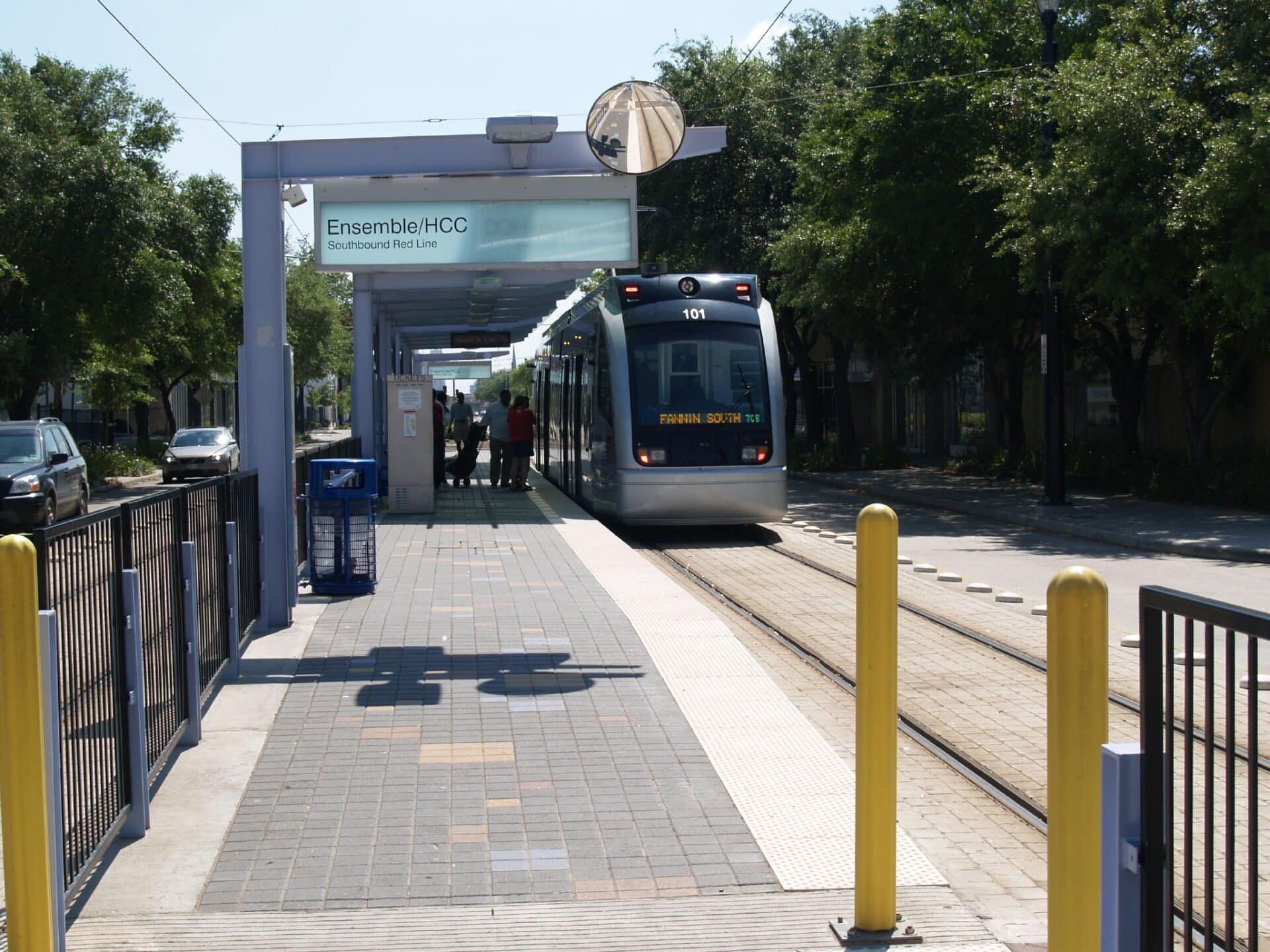
J. Daniel Malouff (Flickr user BeyondDC)
Application & Context
On streets with center-running transit lanes or a separated transitway, right-of-way width may be conserved by providing left-boarding platforms.
Left-boarding platforms may be combined, serving bi-directional service, or staggered, serving inbound and outbound stops opposite an intersection.
In downtown and corridor street contexts, where transit routes require high-capacity stops.
Benefits
The center median stop provides dedicated space for passengers boarding and alighting.
This space may be more comfortable for waiting passengers, as it is buffered from travel lanes by the transitway.
Median stops unlock streetscape improvement opportunities, including installation of green space, furniture, or public art within or in the shadow of the station.
Bi-directional platforms can reduce confusion in finding the correct platform for the desired travel direction.
Considerations
Passengers are required to cross travel lanes when entering and exiting stopsâprovide pedestrian improvements through design and signal strategies that reduce vehicle conflicts.
Left-turn restrictions or phase separation should be incorporated, especially near stations. Left-turning vehicles present common conflicts with pedestrians and transit vehicles.
Central platforms require left-boarding vehicles or special design consideration; left-boarding or dual-side boarding buses can be more difficult to procure.
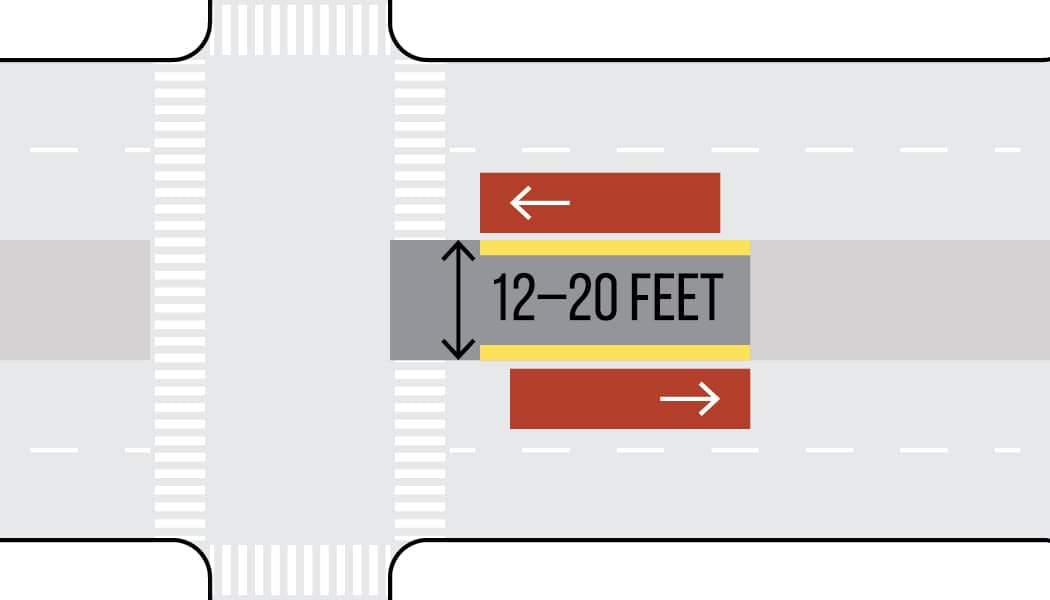
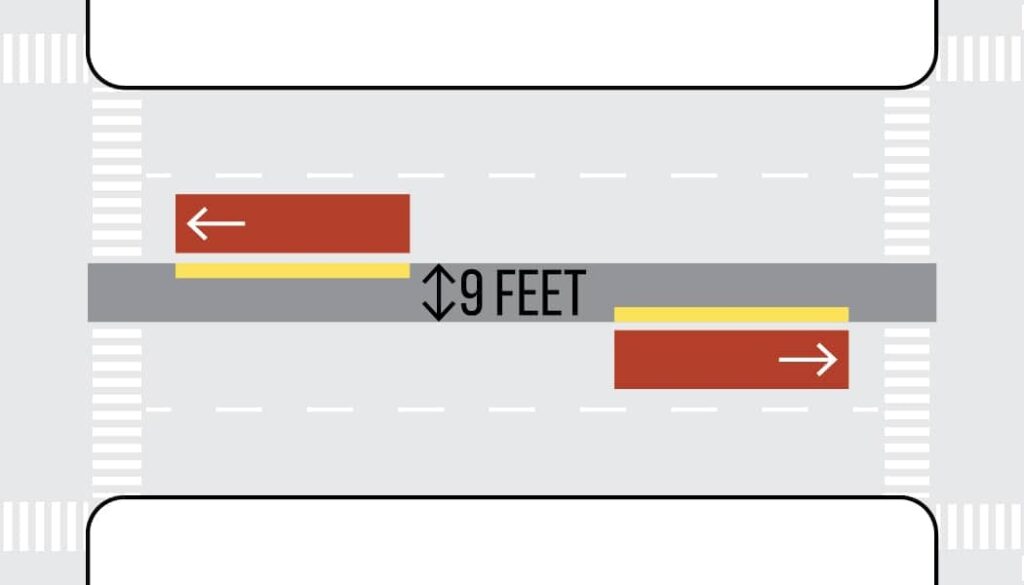
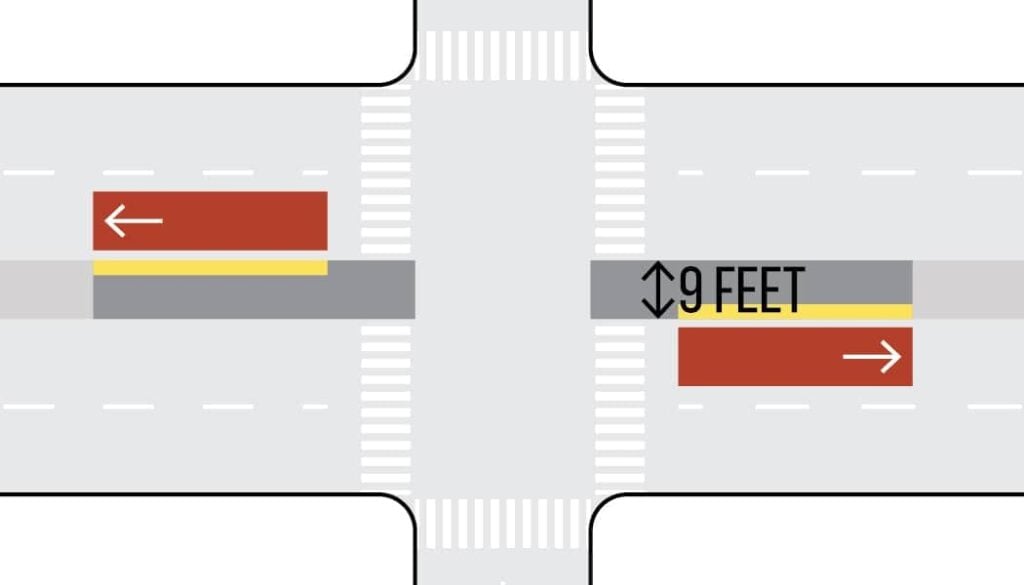
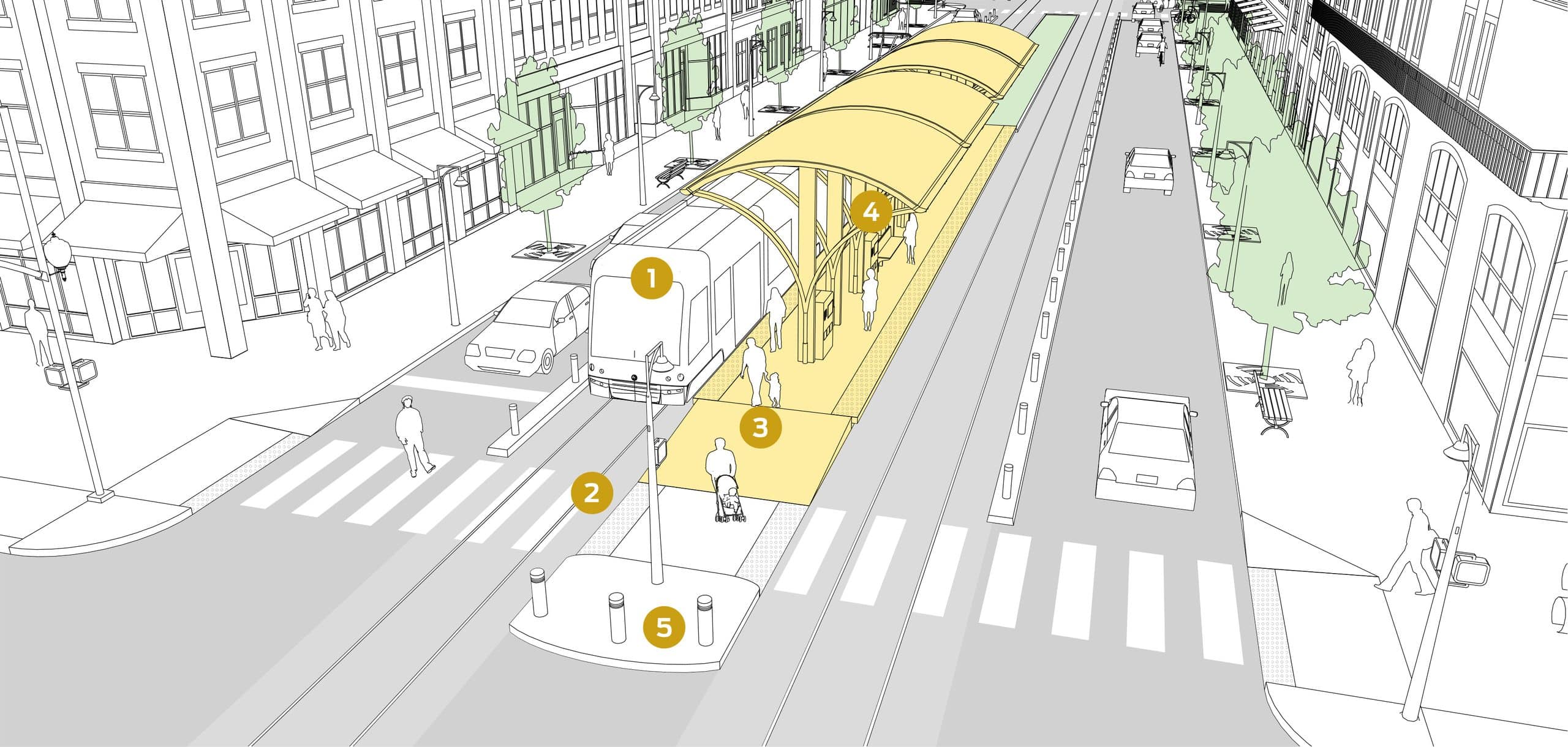
Three possible station and intersection configurations for median left-side stops, with minimum platform widths
Critical
1Left-side boarding platforms require compatible vehicles, either LRVs, streetcars, or custom buses.
Level or near-level boarding must be provided on median platforms. Center boarding stops are good candidates for fully level boarding, since route-specific vehicles are deployed in most cases.
On bi-directional platforms, 24-inch detectable warning strip must extend the length of the platform on both sides.
2Signage and pavement treatments, including markings or color, warn pedestrians to clear from unsafe waiting spaces.
If proof-of-payment fare payment is used, platforms may be open. Turnstile-controlled stations should be partially enclosed to control entry onto the platform, with openings located in alignment with vehicle doors (see Fares & Boarding).
Recommended
3While the minimum accessible platform width is typically 8 feet, platforms serving both travel directions require wider platforms, especially at busier stations. 12 feet is the preferred minimum width (10 feet in constrained conditions), expanding as capacity increases. Platforms serving only one direction may be a minimum of 9 feet wide (including space for a railing along the rear of the platform).
4Provide high-quality amenities like shelter, seating, schedules, real-time arrival, wayfinding, system information, and maps to nearby destinations.
Utilizing proof-of-payment systems and all-door boarding can improve on-time performance on high-traffic routes.
5A refuge island tip should be installed to provide pedestrians protection from vehicles. The pedestrian landing or refuge area must be large enough to accommodate peak passenger alighting volumes. Wider crosswalks (longer refuge areas) are the simplest way to achieve higher capacity. Provide bollards to prevent automobile use of this space for illegal movements.
Optional
In cold or rainy climates, stations may be enclosed to provide comfortable waiting space.
Integrate bicycling into transit access; provide bike parking within 50 feet of the platform entrance (see Bike Parking).
If bicycles are allowed on transit vehicles utilize signage and markings to direct bicycles to preferred doors. Separate bicycles from wheelchair areas on transit vehicles where possible.
Bryce Geisler via Flickr