Milwaukee’s city-owned and nonprofit-run bike share system, Bublr Bikes, is undergoing its largest transformation since its launch in 2014. Coined “Bublr 2.0”, the initiative will add 800 e-bikes and over 900 new docks by early 2027. The City’s investment, along with funding received through the regional planning commission, will create a denser network of stations that are right-sized to the community’s needs—leading to lower overhead costs and a more reliable system that will enable more trips.
Growing ridership while reducing operational overhead
Bublr Bikes launched in 2014 with 100 bikes and 10 stations in downtown Milwaukee. By 2019, the system had expanded to over 500 bikes, and ridership was at an all-time high. But like many bike share systems in the U.S., ridership was slow to recover from the COVID-19 pandemic. Although the system was continuing to expand its service area into 2024, many stations were underutilized, and the costs of installing and running the software for legacy docks had increased.
The City decided on a bolder path than simple expansion. They would completely restructure the system to reduce operating costs, maximize the usage of existing equipment, make the network more useful for riders, and attract ridership to grow revenue.
To fund this effort, the City looked to the Southeastern Wisconsin Regional Planning Commission for support. Bublr expansion was funded as a project in the regional Transportation Investment Plan (“TIP”) with federal Transportation Alternatives Program (TAP) and Congestion Mitigation and Air Quality (CMAQ) program funds. The City of Milwaukee provided the local match funds to unlock a total of $6.3 million for bike share.
Right-size stations for efficiency
The City procured over 900 free-standing, battery-powered docks that can be rearranged into different layouts. A smaller, more flexible footprint allows for stations to be installed in locations where traditional docks wouldn’t be feasible. To reduce software costs and make use of existing equipment, the City downsized 58 stations with lower utilization rates and replaced them with free-floating docks. And the docks from the downsized stations didn’t go to waste: Bublr used the equipment to replace 36 end-of-life stations.
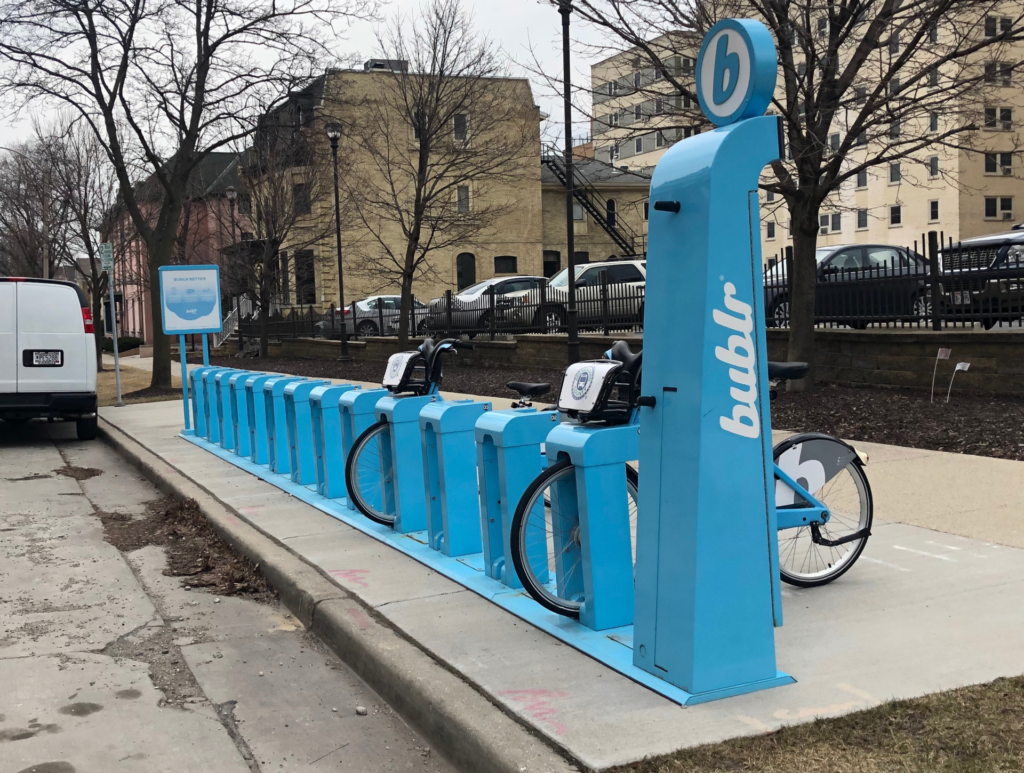
Photo Credit: City of Milwaukee
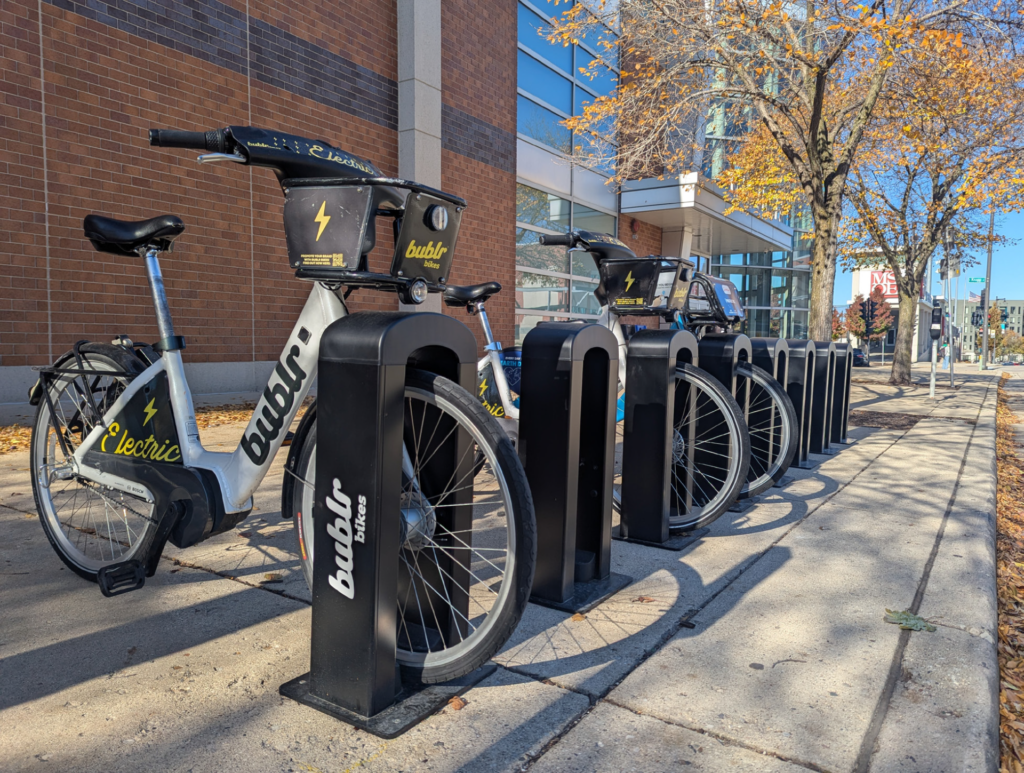
Photo Credit: City of Milwaukee
Densify the network
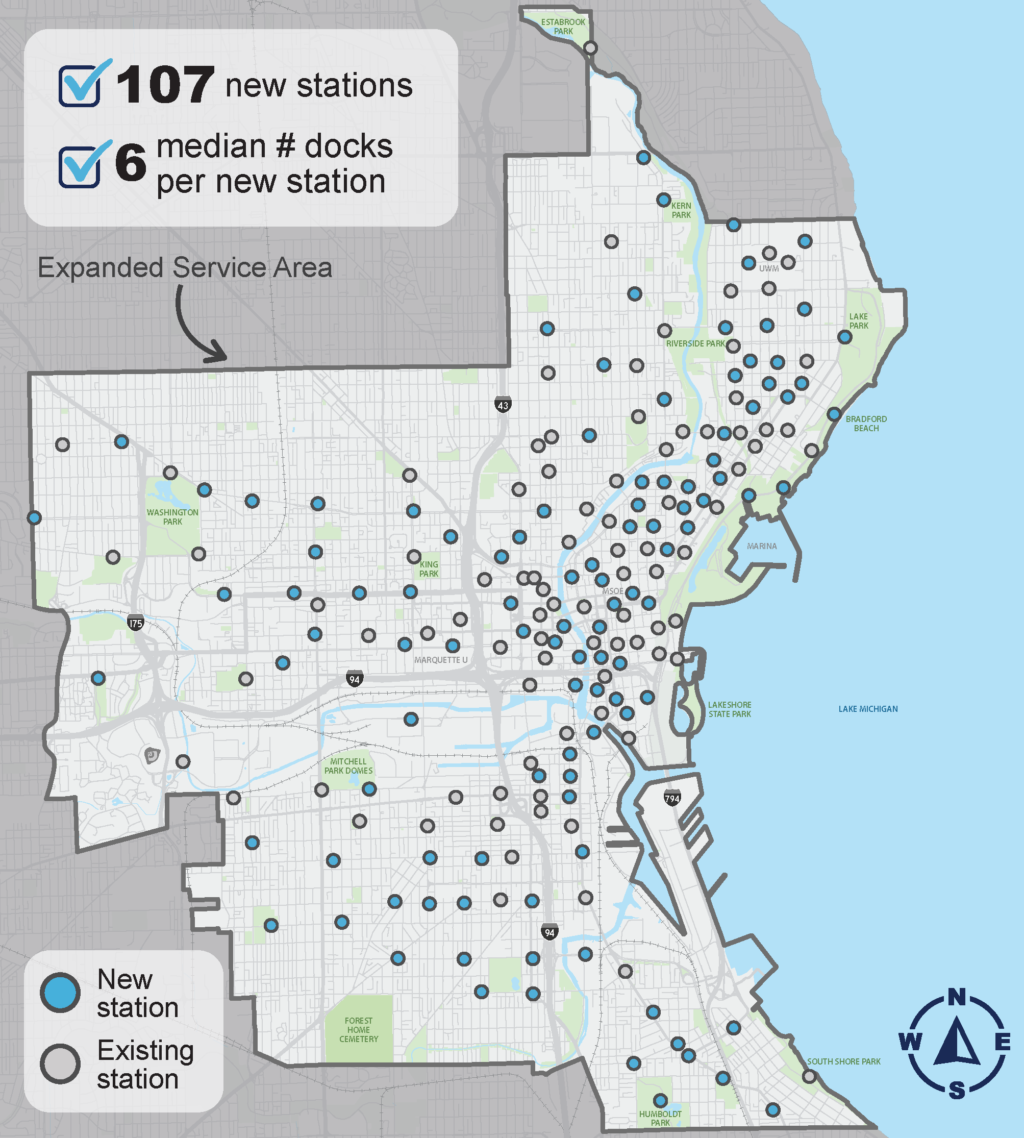
As part of the system redesign, Bublr will add 107 new stations, with a median of six docks per station. Smaller station footprints allow for more stations to be placed closer together, making the system more useful for daily trips. To ensure walkability, the City determined ideal station spacing: every three blocks (approximately 1000 ft/.3 km) in the city’s core, and every six blocks (approximately 2000 ft/.6 km) in surrounding neighborhoods. Proximity to the city’s growing protected bikeway network and transit stops were also key considerations in station placement and realignment.
Collaborate with communities
Community input played a major role in the system restructure. The City encouraged residents and riders to share their ideas on what changes they wanted to see in a reimagined system with an online mapping tool, and offered a 25% discount on an annual pass for submitting feedback. The outreach strategy proved to be a success–the city received over 550 suggestions from community members, with most voicing excitement and support for the expansion.
Outcomes
As of July 2026, the City is nearly halfway through installing new stations, and the data is already reflecting its success:
- 80% of Bublr stations are now co-located with transit stops
- Ridership is up by 32% compared to the same period in 2025
- The number of new, unique riders is up by 23%
- Revenue has increased by 21%
The City will continue to roll out the new e-bikes and stations into the Spring of 2027.