By making improvements for people walking, biking, and using public transit, a street redesign in Atlanta is improving safety and cutting travel times.
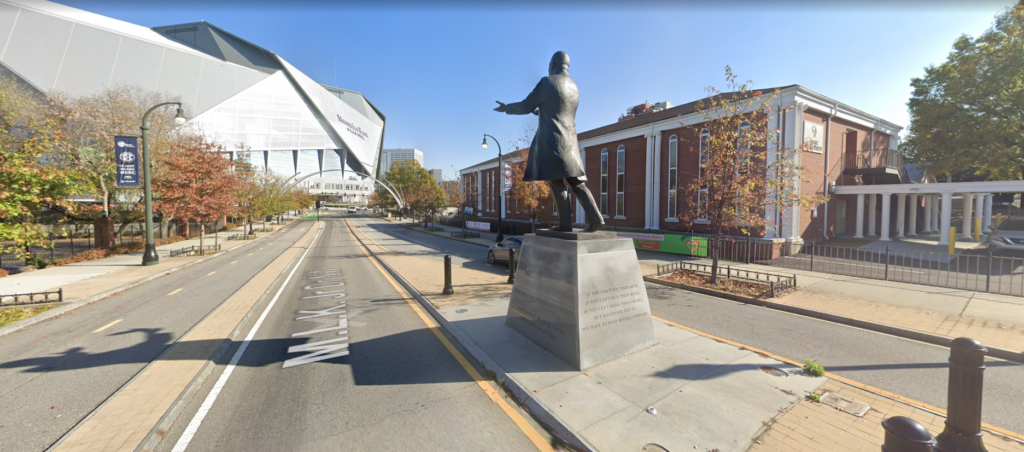
In 2022, the City of Atlanta finalized a comprehensive redesign of a 2.5-mile stretch of Martin Luther King Jr. Drive. It’s an important east-west connection, linking neighborhoods with downtown Atlanta, two MARTA stations, popular parks, schools, and the Atlanta Beltline.
The Project
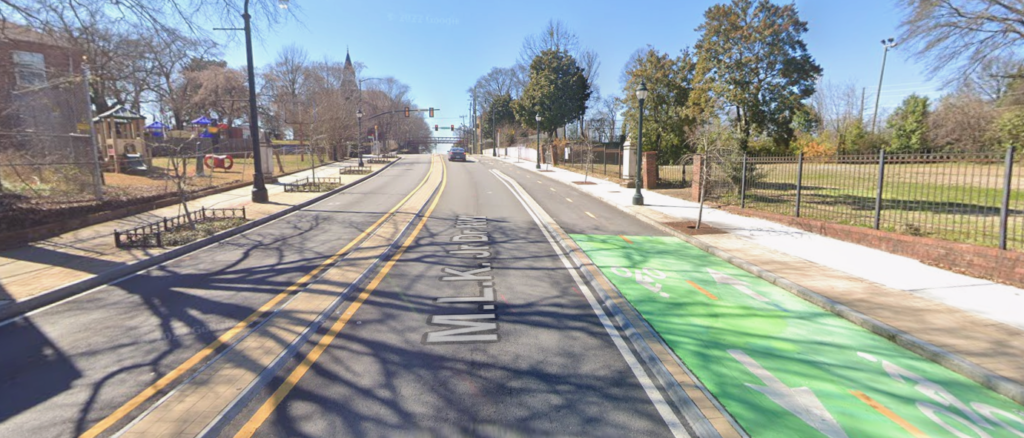
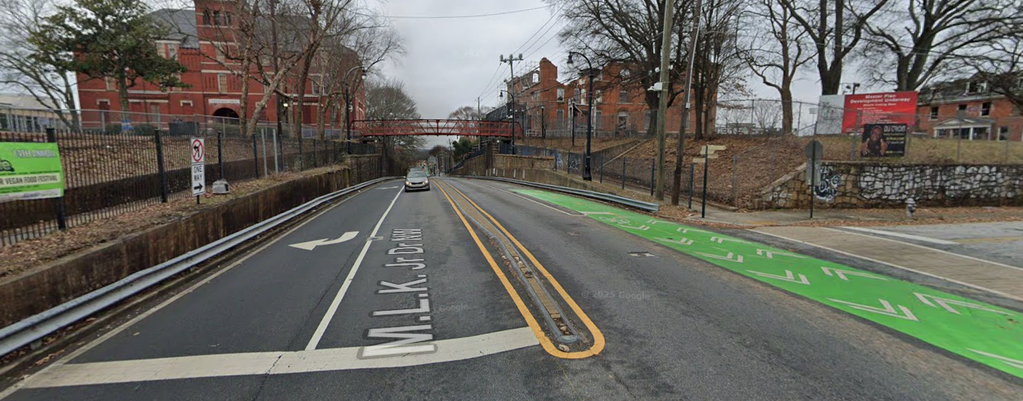
Planning for improvements to MLK Jr. Drive began in 2016, construction began in 2018, and construction finished in 2022. Before, the four-lane, high-crash roadway had no bike infrastructure. The corridor averaged two crashes and nearly one injury per day.
- Raised medians, pedestrian refuge islands, and curb extensions.
- Accessibility improvements, including curb ramp installations.
- Bikeways, including a stretch of two-way protected bike lanes, constrained bike lanes, and shared-use paths.
- Sections of newly-created on-street parking.
- New street furniture, including bus shelters and colorful bike racks.
- Sculptures honoring the city’s civil rights icons.
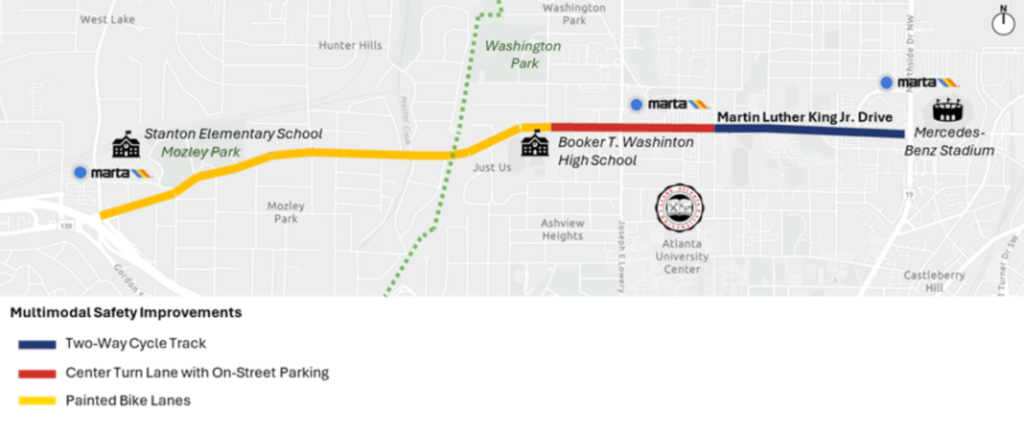
Image credit: City of Atlanta newsroom
Funding Sources
Atlanta’s voters made it clear that transportation infrastructure improvements like this one were priorities at the ballot box. The reconstruction of MLK Jr. Drive was partially funded by Renew Atlanta, a voter-approved bond initiative dedicated to clearing the city’s infrastructure improvement backlog, as well as a voter-approved sales tax that generated $260 million to fund transportation projects citywide. Atlanta identified complete streets improvements as a key priority for transportation bond and sales tax funds, and MLK Jr. Drive as a priority project. Other funding sources included Invest Atlanta (the city’s economic development authority) and two Transportation Investment Generating Economic Recovery (TIGER) grants from the U.S Department of Transportation.
Results
Four years after the project was completed, Atlanta’s before-and-after evaluation shows that the project delivered results.
Since 2022, there have been no fatal crashes, compared to four fatal crashes in the first six months of 2018. Crashes overall have decreased by 23%, pedestrian crashes have decreased by 56%, and head-on crashes have decreased by 46%. Travel times during the busiest times of the day decreased by approximately 30 seconds – an 8% reduction.
The Atlanta Department of Transportation will continue monitoring conditions along the corridor and use this data to guide future safety improvements where they are needed most. As their before-and-after evaluation shows, Complete Streets investments deliver life-saving results while making it easier for residents to get around.