NACTO makes available resources related to five proven safety countermeasures that were removed from FHWA website
Earlier this month, the Federal Highway Administration pared down its list of proven safety countermeasures: tools and strategies backed by research to save lives. Five strategies were removed: roadway reconfigurations (“road diets”), bicycle lanes, appropriate speed limits, speed safety cameras, and variable speed limits. In removing these measures, FHWA is stepping away from established research and practice—and from its responsibility to keep people safe on our roads.
Managing speeds and redesigning streets for safety are among the most important tools cities, counties, and states have to save lives. A change on a website doesn’t change what works on our streets. Local leaders, planners, and engineers will continue to rely on data-backed and real-world-proven street designs to keep everyone safe, whether they’re walking, rolling, biking, driving, or taking the bus.
Below, NACTO is making available the original FHWA resources, design guidance, and additional documents to support the continued use of these tools.
Road diets (Roadway configuration)
About
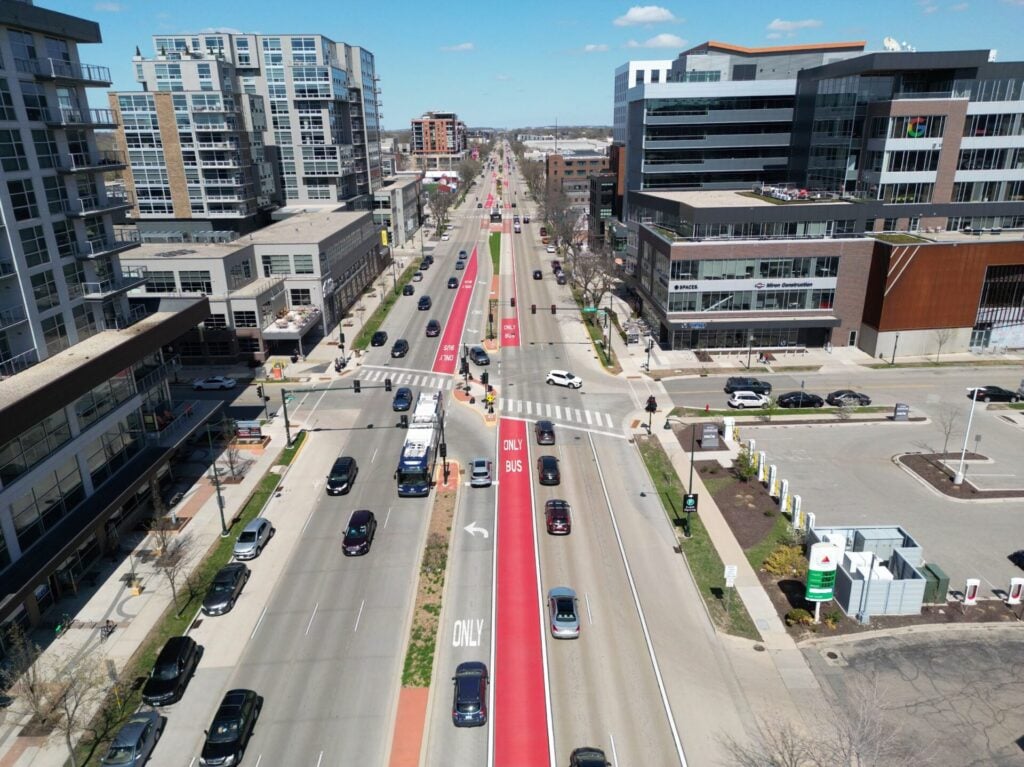
Road diets, also called roadway reconfigurations, are low-cost safety solutions that reduce crashes, keep traffic flowing, and provide opportunities for other street elements such as crossing islands, bike lanes, and parking. High-quality research studies demonstrated a 19% to 47% reduction in total crashes when implemented; this research informed the inclusion of road diets as a proven safety countermeasure.
Road diets have been part of the FHWA’s safety work for more than a decade. FHWA placed particular emphasis on the tool as part of the Everyday Counts initiative in 2015–2016 and again as a strategy for improving pedestrian safety through the STEP (Safe Transportation for Every Pedestrian) focus in 2017–2020. These efforts resulted in states from Connecticut to North Carolina to Washington developing their own materials on road diets and general adoption of road diets as an appropriate strategy for improving safety in urbanized areas.
Reallocating space through road diets can improve the driving experience by creating dedicated turn lanes. Separating left-turning traffic reduces delays at signalized intersections, and drivers may not need to switch lanes to avoid someone waiting to turn left. Drivers coming from a side street may find it less stressful to turn onto a street with fewer lanes to cross.
Research continues to prove the benefits of road diets, including a 2022 study based on road diets in Virginia and a 2023 review of high traffic-volume road diets in Los Angeles. Cities nationwide use data to inform decisions to reallocate roadway space, often in combination with signalization strategies, curb management, and other street design tools such as raised crosswalks and bike lanes to ensure safety without sacrificing mobility or access.
FHWA Resources
- Proven Safety Countermeasures – Road Diets
- Road Diet Case Studies
- Evaluating Road Diets: Recent Research and Case Studies Webinar (July 2020)
- Road Diet Facts (2016)
- Road Diet Costs (2016)
- Road Diet Information Guide (2014)
- Using Road Diets to Advance Healthy, Safe Communities (2014)
- Evaluation of Lane Reduction “Road Diet” Measures on Crashes (2010)
- Traffic Calming e-Primer

Bike lanes
About
Streets that are thoughtfully designed to prioritize biking are safer for everyone—not just people biking, but also those walking, driving, and using other mobility devices.
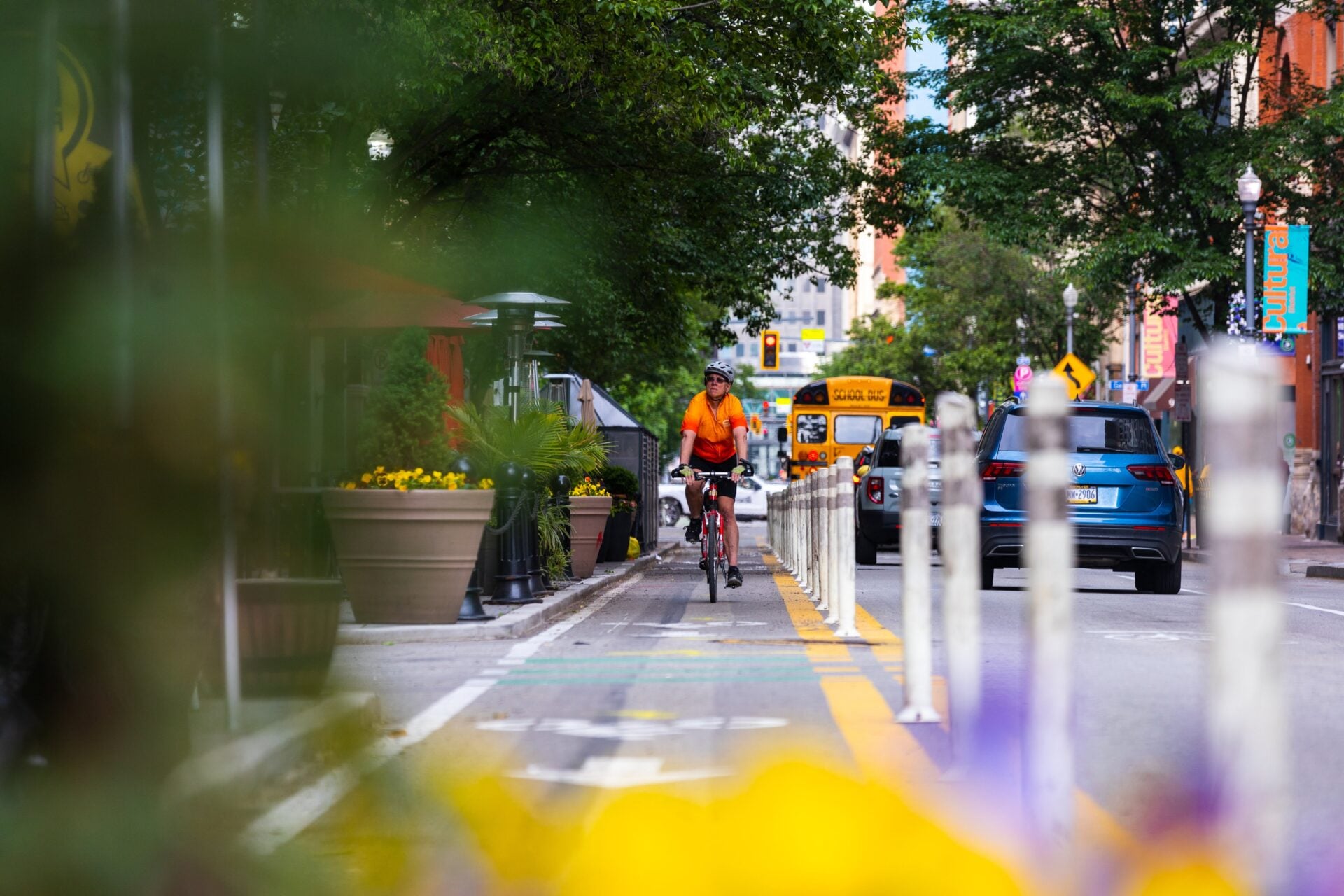
In a Safe Systems approach, bike lanes are a physical representation of human vulnerability. Separating users in space reduces the potential for conflict and results in fewer—and less serious—crashes. Adding bike lanes can reduce crashes by up to 49% on urban 4-lane roadways and 30% on 2-lane roadways. Converting bike lanes or buffered bike lanes to protected bike lanes with flexible delineators reduces crashes between people biking and driving by 53%.
FHWA has long supported states, regions, and local governments in adding appropriate and safe biking infrastructure. The agency produced dozens of guidance documents, each based in research and real-world experiences. Cities across the country regularly demonstrate that their bike projects resulted in fewer crashes and more bike riders, often without increasing drivers’ travel times.
FHWA Resources
- Proven Safety Countermeasures – Bike Lanes
- Separated Bike Lanes on Higher Speed Roadways: A Toolkit and Guide (2024)
- Exploring Risk Factors to Disparities in Pedestrian and Bicyclist Fatalities and Serious Injuries (2024)
- Guide for Maintaining Active Transportation Infrastructure for Enhanced Safety (2024)
- Developing Crash Modification Factors for Separated Bicycle Lanes (2023)
- Improving Safety for Pedestrians and Bicyclists Accessing Transit (2022)
- Bikeway Selection Guide (2019)
- Guide for Scalable Risk Assessment Methods for Pedestrians and Bicyclists (2018)
- Incorporating On-Road Bicycle Networks into Resurfacing Projects (2016)
- Guidebook for Developing Pedestrian and Bicycle Performance Measures (2016)
- Separated Bike Lane Planning and Design Guide (2015)
- Active Transportation Funding and Finance Toolkit (as of 2025)
Appropriate speed limits for all road users
About
Agencies around the globe agree: speed is a central factor in traffic deaths and injuries. As speed limits and speeds increase, so do fatalities and injuries. High-speed driving is particularly deadly when different types of road users share space and must frequently interact.
More than 11,000 people were killed across the U.S. in 2024 in speed-related crashes. Setting appropriate speed limits and designing streets to ensure safe speeds are among the most effective and important tools any agency has in keeping its residents safe.
States and localities can reduce statutory speed limits through legislative action. Research shows that speed limit changes alone can lead to measurable declines in speeds and crashes. And, reducing posted speeds creates opportunities for safer street design.
Transportation agencies at the state and local levels can set appropriate speed limits using engineering studies that consider community context. Doing so aligns with requirements in the Manual on Uniform Traffic Control Devices, which also provides a wide range of factors to use when setting speed limits, including the built environment, reported crashes, current street design characteristics, and the presence of people using transit, walking, or biking. NACTO’s Safe Speed Study methodology can support engineers in developing their studies.
FHWA Resources
- Proven Safety Countermeasures – Appropriate Speed Limites for All Road Users
- Speed Limit Setting Handbook (2025)
- Manual on Uniform Traffic Control Devices, 11th Edition (2023)
- Engineering Speed Management Countermeasures: A Desktop Reference of Potential Effectiveness in Reducing Crashes (2023)
- Safe System Approach for Speed Management (2023)
- Self-Enforcing Roadways: A Guidance Report (2018)
- Noteworthy Speed Management Practices – Setting Consistent Speed Limits for Vulnerable Users
- Speed Management Action Plan Template
Speed safety cameras
About
Speed safety cameras, when used appropriately, are an effective tool to deter speeders and reduce crashes. Fixed cameras can reduce crashes on urban principal arterials up to 54%, and point-to-point cameras can reduce fatal and injury crashes up to 37%.
In New York City, automated camera enforcement has had a meaningful impact on speeding and safety. According to a 2024 report, speeding at camera locations has dropped an average of 94% since the program began in 2014. Earlier results show significant safety improvements in school zones, where camera installation resulted in 17% reduction in injuries and 55% reduction in deaths.
The Insurance Institute for Highway Safety (IIHS) research shows that the proportion of drivers exceeding the speed limit by more than 10 mph declined 70-88% in the months after safety cameras were introduced. A study of Montgomery County, Maryland’s program showed that cameras resulted in a 39% reduction in the likelihood of a crash that resulted in an incapacitating or fatal injury.
Camera-based enforcement can be more effective at reducing speeding than manual enforcement. Manual enforcement, often the purview of a state or local police department, can create dangerous physical and mental health impacts for Black and Latine communities. Cameras are consistent and predictable, but must also be planned and monitored to avoid exacerbating disparities.
Variable speed limits
About
While setting appropriate speed limits for typical operating conditions improves safety, sometimes a time-based change in roadway conditions warrants further adjustment of the speed limit. Variable speed limits allow agencies to help set driver expectations in real time, slowing traffic in response to changing weather or near work sites.
Variable speed limits are particularly effective on high-speed roadways, including freeways and arterials between communities with speed limits above 40 mph. On freeways, variable speed limits can reduce crashes that result in injury or death by 51%.
Download Making Our Roads Safer One Countermeasure at a Time, FHWA’s compilation of all 28 Proven Safety Countermeasures as of 2021.
Photo Credits: Header photo via Bike PGH