The National Highway Traffic Safety Administration (NHTSA) recently asked for input on its updated Automated Vehicle (AV) Framework. In response, NACTO worked with our Autonomous Vehicles Working Group to submit a comprehensive list of recommendations to ensure the safe and accessible deployment of AVs in urban areas.
Read the full comment letter (pdf).
Our members’ real-world experience with robotaxis on city streets shows that positive outcomes require collaborative relationships between private interests and governments. When done right, AVs offer an opportunity to serve people who face barriers with existing transportation options—such as individuals with visual disabilities or trans travelers. When done haphazardly, incorporating AVs onto U.S. streets will make our cities less safe and more congested.
In the letter, NACTO outlines specific areas of improvement to the framework, including:
- Interactions with first responders: We’re asking NHTSA to update guidance to respond to the real-world challenges that first responders in NACTO cities have experienced, including the inability to move AVs quickly from emergency scenes.
- Remote assistance: We’re recommending that NHTSA outline expectations for the role and response times of remote assistance, especially in the event of citywide fleet issues or emergencies.
- Power and communications capacity: NHTSA should scrutinize reserve battery power protocols and communications redundancies for cases when loss of power or other issues strand vehicles on public roads.
- Emergency response coordination: NHTSA should also seek information about how manufacturers intend to work with local agencies before, during, and after major planned events and emergency incidents
- Crash reporting: We outline key challenges and improvements needed for AV crash reporting that will allow state and local governments to inform and enforce regulations, laws, programs, and plans.
- Public participation: We recommend expanded public input opportunities to engage first responders and city staff.
We also posed ideas for setting performance measures for AVs that reflect the potential to improve—or negatively impact—our cities’ transportation systems. We asked that NHTSA consider issues such as the volume of moving and civil violations issued, the frequency of first responders being called to an AV, and patterns of misunderstandings with hand signals offered by flaggers and police officers.
NACTO and our members look forward to conversations with the NHTSA to help shape an AV Framework that lays the foundation for a thriving AV industry, ensures safety on our streets, and represents the needs of cities.
Comments on the proposal have been extended and are due by September 30.
Read the full comment letter (pdf).
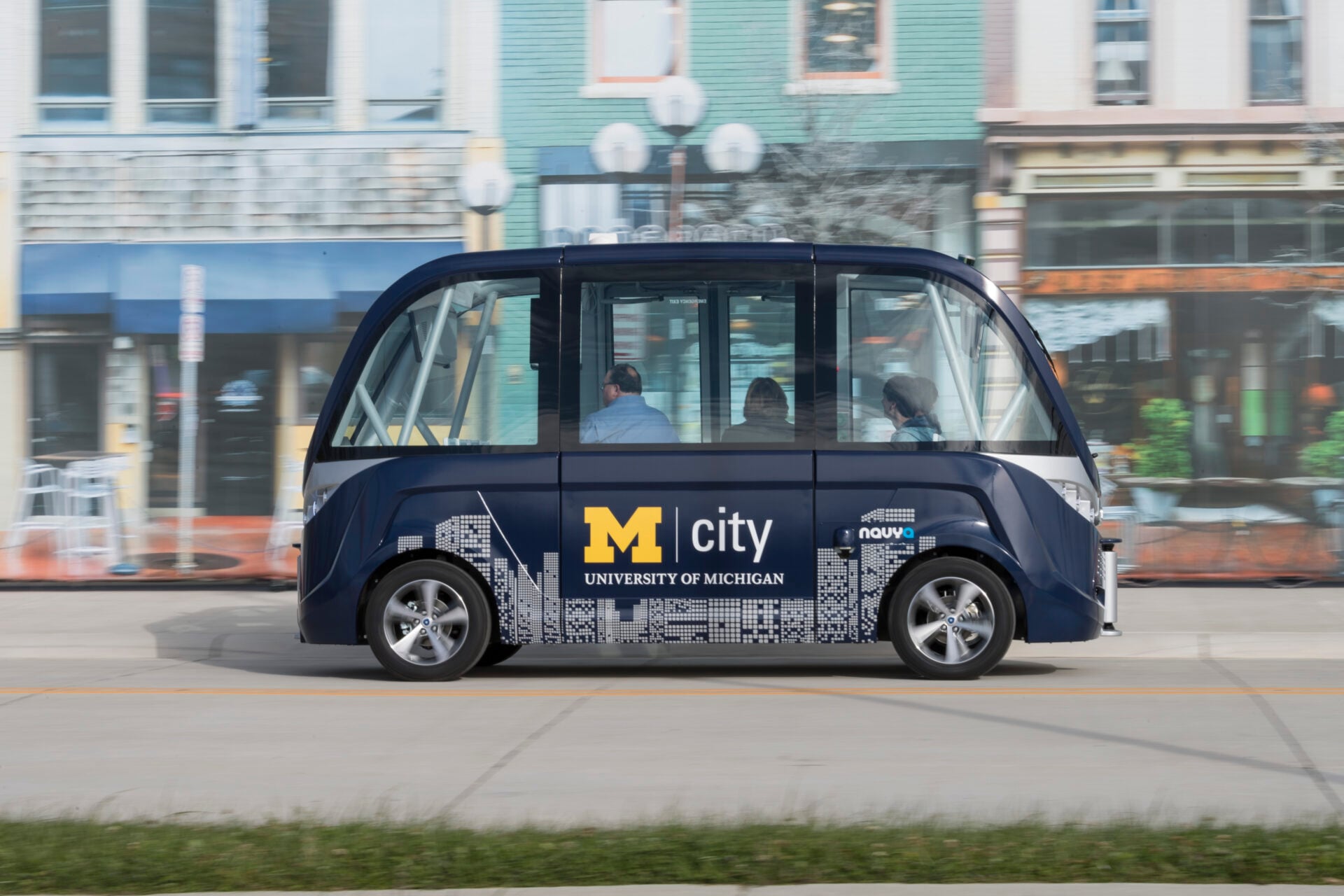
Photo Credit: University of Michigan