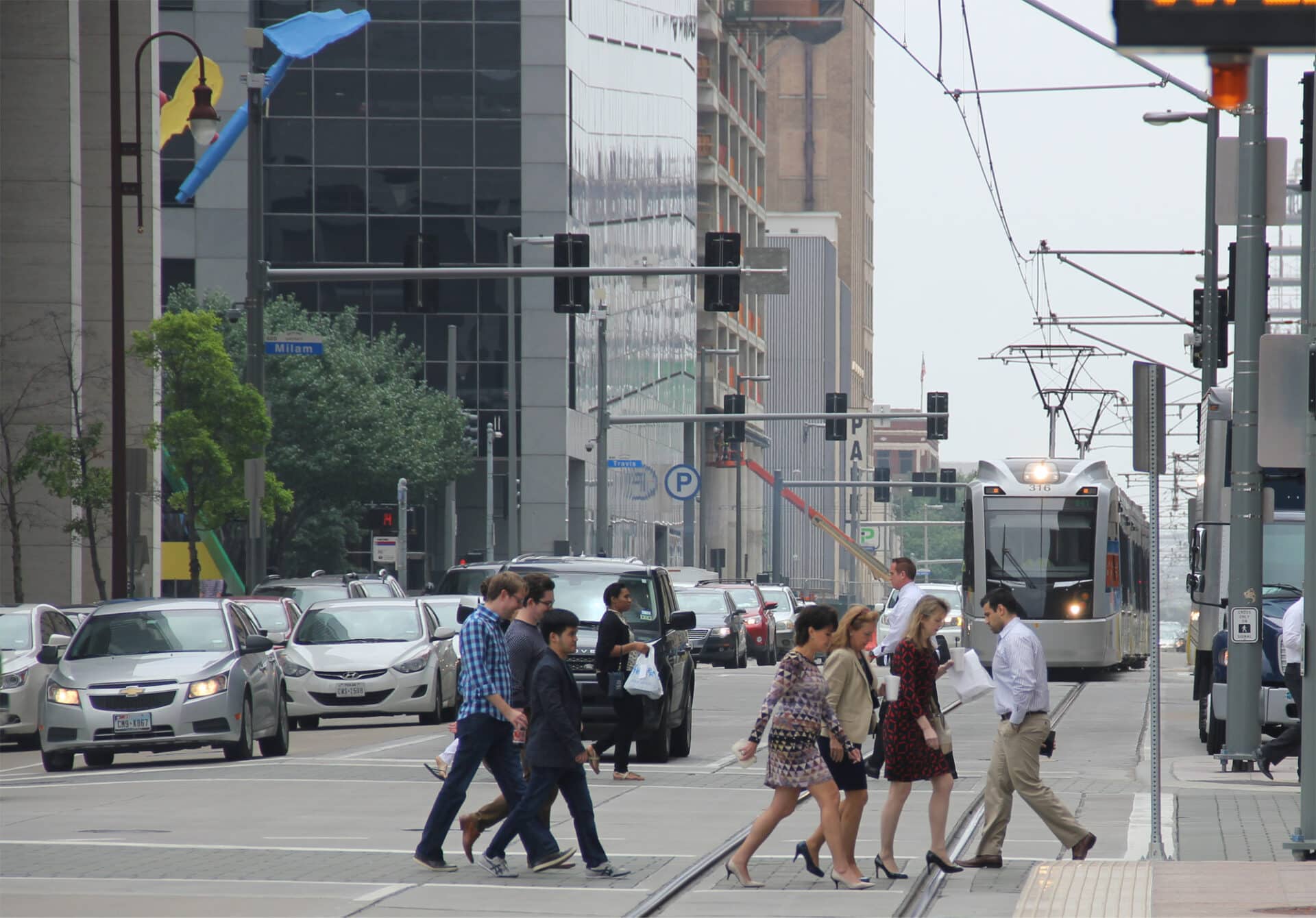
Traffic signals must not be considered in isolation, but rather as a system of multiple intersections. Because delay at traffic signals often accounts for one-quarter to one-third of a transit route’s total trip time, it is important to consider settings and technology that optimize the performance of the system—ideally, to keep transit vehicles moving between stops. In many cities, traffic signals and progression were traditionally designed primarily for auto traffic with little regard for other street users, especially transit.
Signal strategies should focus on the goal of moving people rather than favoring a single mode. Specific actions can increase transit convenience, reliability, and predictability while improving general traffic operations for all users. With or without transit signal priority, signal timing plans should be optimized to reduce person delay rather than vehicle delay, favoring pedestrian mobility. The signal network helps achieve goals of both the local agency’s policies as well as broader regional transit plans.