
Credit: New York City Department of Transportation
Whereas a Bike Network Plan sets the citywide vision for biking, an action plan prioritizes projects from the larger plan for implementation in the near term (typically 2-5 years, timed with a city’s capital budget). A successful action plan is ambitious but achievable.
An action plan is a communication tool. It allows city staff, stakeholders, and residents to see what’s next for the bike network. It should surface opportunities for collaboration across agencies while allowing time to align bike network needs with other projects, such as resurfacing or utility efforts.
An action plan can also be used to pursue funding for the design and implementation of the Bike Network Plan. U.S. Department of Transportation’s Safe Streets and Roads for All (SS4A) discretionary grant program, established in the Bipartisan Infrastructure Law, is an example of a funding source that prioritizes having action plans. This five-year program funds both the creation of action plans and their implementation. Other examples of potential funding pools for Bike Network Plans are state-level. California’s Active Transportation Program includes a competitive funding opportunity for municipalities to implement their Bike Network Plans. Similarly, the Massachusetts Department of Transportation’s Complete Streets funding program supports the development of action plans and specific funds for projects identified within.
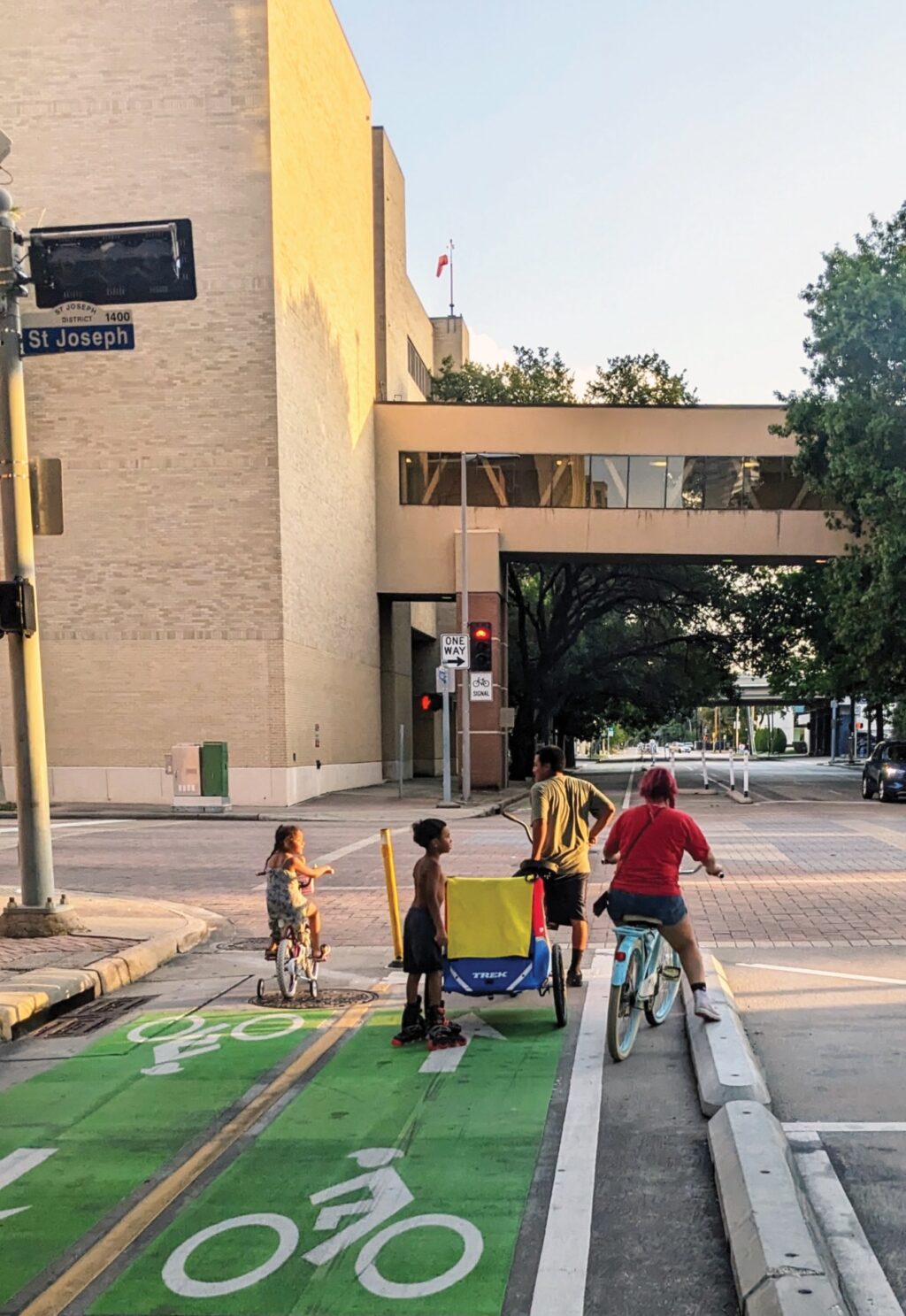
Credit: Houston Department of Public Works
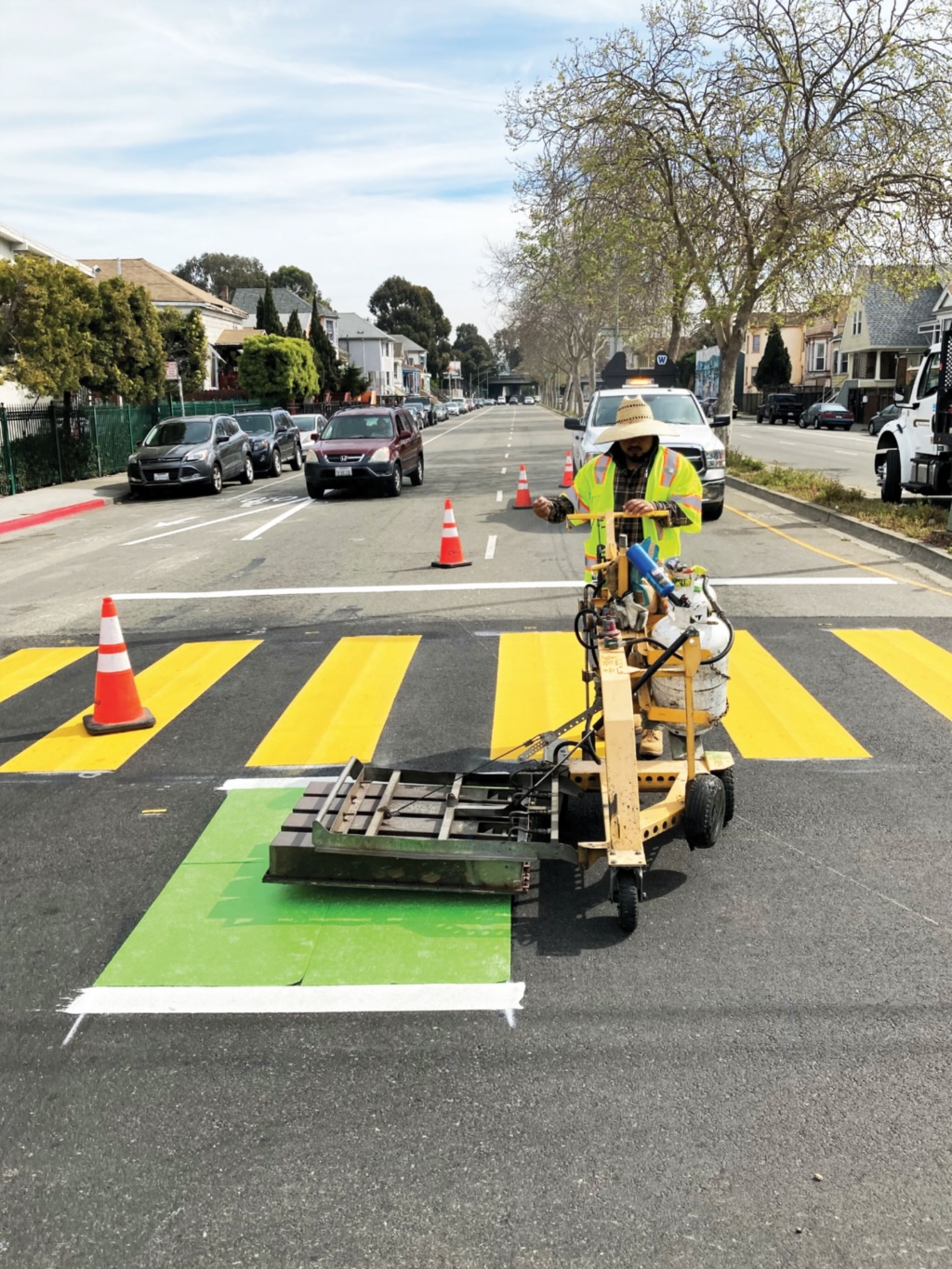
Credit: Oakland Department of Transportation
Without clearly communicating how and why projects were selected for the action plan, cities can break trust with important partners.

Identify Priorities
To equitably build out a Bike Network Plan, cities must intentionally prioritize projects. Otherwise, they may default to projects that are easier to implement or might respond to pressure from a specific neighborhood or advocacy organization. While these factors can be useful elements to include in a prioritization framework, it is important for those choices to be strategic so that the bike network is connected and includes critical projects in high-need areas.
A strong framework for prioritization helps program staff and department leaders clearly explain the decisions that deliver a safe and connected bike network. The framework can also include information related to pavement quality, upcoming utility maintenance, or adjacent development projects. Cross-referencing and coordinating other activities planned in the right-of way can identify new opportunities for bike projects to be delivered.
Analyzing metrics, such as the potential to serve schools and libraries or a history of traffic crashes, to compare projects creates a more objective and justifiable approach to prioritization, especially when community partners are included in developing metrics. It is not possible to prioritize every project every year. However, without clearly communicating how and why projects were selected for the action plan, cities can break trust with important partners.
Cities should start by ensuring they have adequate resources for engagement, design, and implementation.
Confirm Resources
An action plan should be responsive to available or attainable funding, staff capacity, and procurement timelines. Where necessary, additional resources should be budgeted or assigned to implement the action plan.
Cities should start by ensuring they have adequate resources for engagement, design, and implementation. This may include hiring more project managers, planners, outreach staff, and engineers. In many cities, it also means contracting with external organizations and companies, including non-profits with community roots and design firms. For implementation, existing contracts related to resurfacing projects, signal retiming efforts, or sidewalk construction can be analyzed for opportunities to expand the scope or procure materials to support bike network projects. Cities may also need to understand legal opportunities for producing “on-call” or indefinite-delivery, indefinite-quantity (IDIQ) contracts.
An action plan should estimate the initial budget needed to begin delivering priority projects. In the first year of an action plan, cities should allocate the full funding needed for engagement and design, as well as partial funding for implementation. Construction costs will be refined in project development and delivery, but cities should not wait until the final design stage to fund those projects.
Cities may need to review their existing design manuals and typical details, especially if they have not been updated recently. Establishing a process for updating these documents, as needed, should be part of the action plan. This will make design and approval processes simpler as more bike projects are developed. It also ensures outside agencies are able to build or restore bikeways that match the intent of the Bike Network Plan.
Create Space for Flexibility
Action plans should be treated as living documents. City staff and leaders should have the flexibility to take advantage of unexpected opportunities or adapt to unforeseen challenges. However, shifts in focus should not be fundamentally at odds with the priorities identified in the action plan or the process that resulted in the Bike Network Plan overall.
Political realities, such as the turnover of elected officials, can and do get in the way of great plans. Sometimes that requires city staff and community partners to accept less-than-optimal facilities. For example, a newly-elected city council member might oppose aspects of a parking-protected bike lane project identified in the action plan. In response, the city can look at alternative design options, such as swapping a turn lane for parking or installing a buffered bike lane, or opt to spend more time on outreach to ensure broader comfort with trade-offs.
As roadblocks emerge, so do opportunities. A newly announced utility project or a new private development project can make it possible to implement projects in the Bike Network Plan that weren’t on the action plan. City staff should evaluate these moments against the existing resources, planned priorities, and public expectations. Staff should judge whether these opportunities are unlikely to be recreated and act accordingly; some opportunities do not need to be acted on. Agency leaders should focus their teams’ efforts on the best and most important projects to achieve the Bike Network Plan.
If a priority project becomes more complex than initially anticipated, cities should publicize what this means for residents.
Report Progress
Regular public reports on the action plan are an authoritative source of information on timelines for planned projects and those already underway. Frequent reporting is good practice for transparent and accessible governance as well as helping to build, or rebuild, trust with
residents.
Annual reports are a great opportunity to engage across multiple audiences. Use clear, simple language, limited to an eighth-grade reading level, to maximize accessibility for residents. Plan ahead to translate documents and engage with residents in their preferred languages. Incorporate photos from the past year or two that are indicative of the work that was done. Update maps and charts to show how the city is meeting its Bike Network Plan goals.
Cities should also regularly share status updates on projects. Reconstruction projects may last years from project identification to completion; without transparent reporting, communities may get frustrated. To avoid this dynamic, cities can celebrate other moments, such as the year that the project gets funded or awarded for construction.
Cities should not shy away from reporting the realities of projects, either. If a priority project becomes more complex than initially anticipated, cities should publicize what this means for
residents.
Keep staff informed on leadership priorities. Elevate staff ideas to the director level and give them a part in the decision-making process.

Develop an Internal Strategic Plan
Cities across the NACTO network have used strategic planning documents to not only integrate biking more deeply into their vision and long-term goals, but to also align agency staff under a clear, unified agenda.
In cities such as Oakland1, Atlanta2, Chicago3, Detroit4, and Los Angeles5 agency leaders and consultants built strategic plans in direct partnership with staff through working groups and engagement meetings. The information gathered from staff informed specific goals and strategies as well as actionable, trackable metrics which could be measured over multi-year intervals. These processes not only kept staff informed on leadership priorities but also elevated staff ideas to the director level and gave them a part in the decision-making process.
Strategic planning elevates the need for effective internal communications and relationships. Improved internal collaboration and communication also improves projects for residents. For example, by connecting the field team who installs lane markings to the team who designs the lanes, the two can better learn each other’s goals, intentions, and limitations.
Strategic plans can include outward-facing press and communications, which helps establish the plans as key direction-setting documents among external partners. Several cities, including LA and Chicago, produced follow-up documents when they completed the original timeline of the plan, allowing for further engagement and adjustment.
- Oakland Department of Transportation. OakDOT Five-Year Accomplishments Report. OakDOT, 2022. ↩︎
- City of Atlanta, Georgia. One Atlanta: Strategic Transportation Plan. City of Atlanta, 2019. ↩︎
- Chicago Department of Transportation. City of Chicago Strategic Plan for Transportation. CDOT, 2021. ↩︎
- City of Detroit. Strategic Plan for Transportation. City of Detroit, 2018. ↩︎
- Los Angeles Department of Transportation. Strategic Plan Update 2021-2023. ↩︎