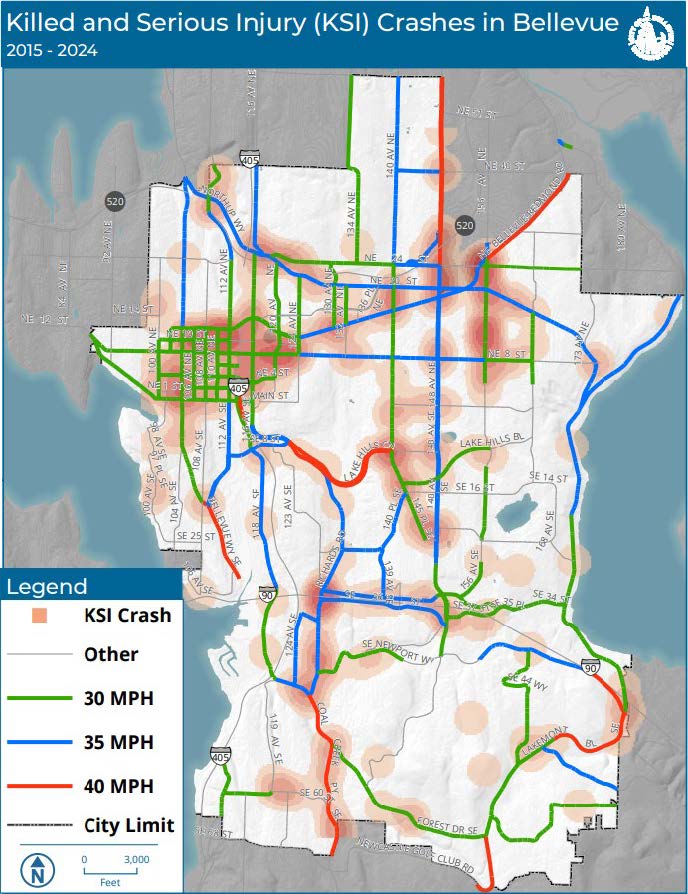
In Bellevue, Washington, arterials make up just 25% of city streets, but 88% of crashes where a person is killed or seriously injured happen there. Knowing that lower speeds save lives, the city is rolling out a long-term, citywide plan for lowering arterial speed limits.
The work to reduce speeds in Bellevue has been an iterative, ongoing process, with changes in city policies building the foundation for the planning changes that would soon follow. In 2020, Bellevue’s city council adopted the Safe System approach as part of its Vision Zero Strategic Plan. And in 2024, the council passed an ordinance lowering the speed limit on most local streets to 20 mph.
Safe Speeds Bellevue
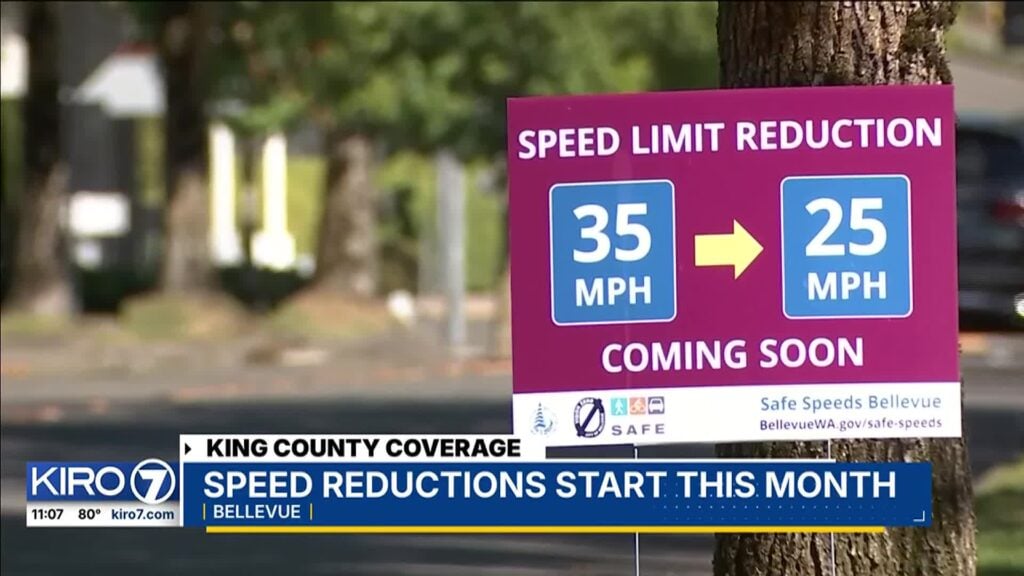
With speed limits lowered on local streets, Bellevue city staff turned their attention to higher-speed arterials. In May 2025, staff introduced Safe Speeds Bellevue, a long-term plan to reduce speeds on city streets by pursuing the city’s first comprehensive evaluation of arterial speed limits.
Funded by a FY2023 Safe Streets and Roads for All (SS4A) planning and demonstration grant, the city developed a five-step approach to lower speeds across the city:
- Develop an approach for setting target speeds on arterial roads
- Test target speeds
- Develop an implementation plan
- Implement target speeds
- Apply countermeasures
Developing a target speeds approach
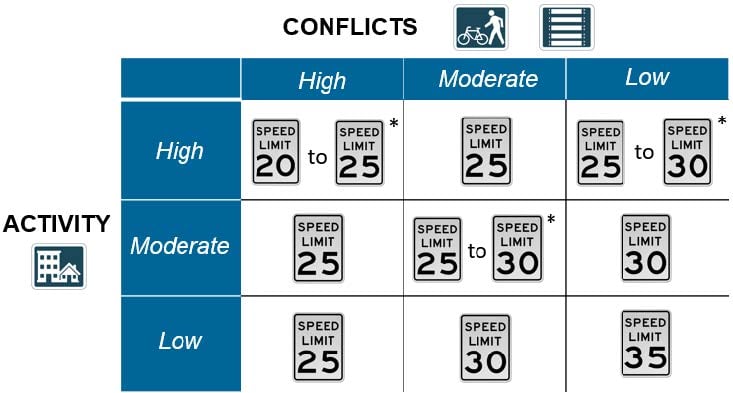
Bellevue began developing a way to set contextually appropriate speeds on all city streets with existing limits of 30 mph or higher. Adapting NACTO’s City Limits speed-setting guidelines to meet their needs, Bellevue developed a target speed framework for these streets that considers factors such as potential conflicts between different modes of transportation and levels of activity.
Conflict Types
- Crossing point conflicts: On streets with fewer opportunities for people to cross or enter at intersections, driveways, or mid-block crossings, the city recommended higher speed limits, while streets with more frequent points of conflict were proposed to have lower limits.
- Modal mixing: In areas where there is greater separation between people driving and those walking, rolling, and biking, the city suggested higher speed limits, while in areas with less separation between modes, they suggested lower speed limits.
Activity:
- The city assessed how active a street was now and is expected to be in the future, based on land use, modal plans, and the presence of public spaces. In areas with activity levels, the city suggests lower speeds than in areas with lower activity levels.
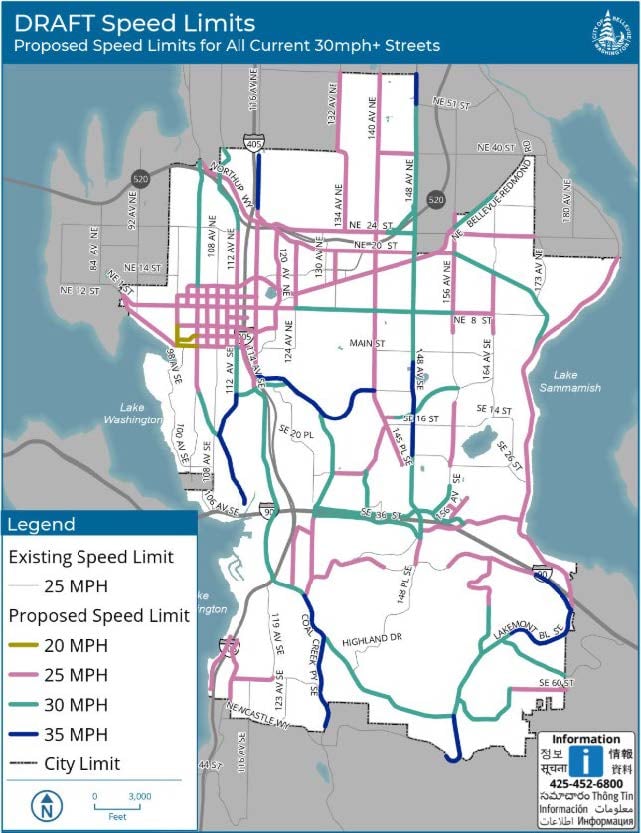
Based on the results of this assessment, Bellevue city staff proposed:
- Reducing speeds on 64% of the evaluated streets by 5 mph.
- Reducing speeds on 20% of the evaluated streets by 10mph.
- Leaving the remaining 16% of streets as-is.
Testing lower speed limits
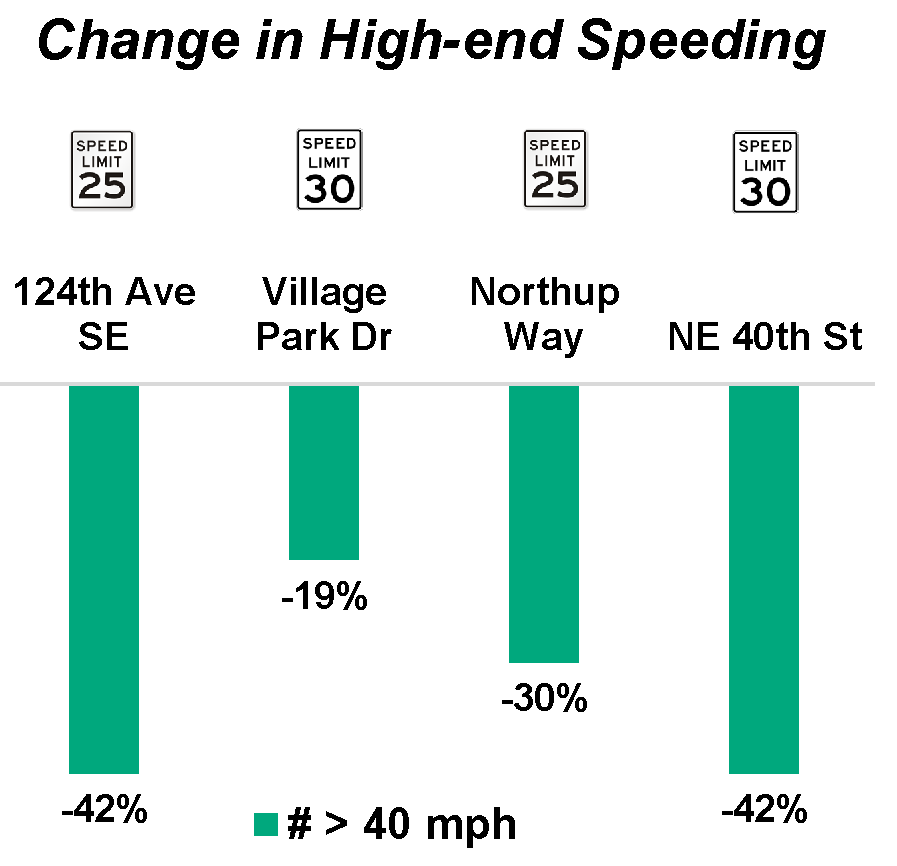
In 2025, Bellevue tested speed reductions on four 35 mph roads, dropping speed limits to 25 mph or 30 mph based on the assessment. They found that updating speed limit signs and educating residents—even without making physical street changes—reduced speeds on all four corridors. Before-and-after studies showed that “high-end speeders” (or people traveling at more than 40 mph) decreased between 19% to 42%.
In 2025, Bellevue tested speed reductions on four 35 mph roads, dropping speed limits to 25 mph or 30 mph based on the assessment. They found that updating speed limit signs and educating residents—even without making physical street changes—reduced speeds on all four corridors. Before-and-after studies showed that “high-end speeders” (or people traveling at more than 40 mph) decreased between 19% to 42%.
Developing an implementation plan
Following the success of their speed study, the city developed a plan to implement the new speed limits. The city conducted public outreach and mapped out a phased rollout: starting with streets in the urban core, moving next to the high injury network, and finally reaching all remaining corridors. The initial phase will include new speed limits, additional speed limit signs, and adjusted signal timing.
Next Steps
Implementing target speeds
Early this year, staff presented proposed speed limits, the findings from the four evaluation corridors, and an outreach summary to the city council, which has to approve all speed limit changes in Bellevue. Since completing public outreach about the proposed speed limits, the recommendations have been approved by the city council and will begin to go into effect in 2027.
Applying countermeasures
In an effort to improve safety outcomes, the city has planned additional layers of speed control after all signs have been updated, including radar feedback signs; improved pedestrian crossings; camera enforcement; and traffic-calming treatments such as lane width reduction, speed cushions, and medians.
The Power of Safer Speed Limits
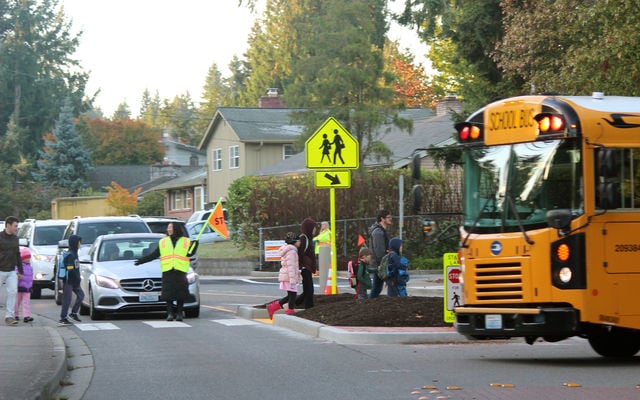
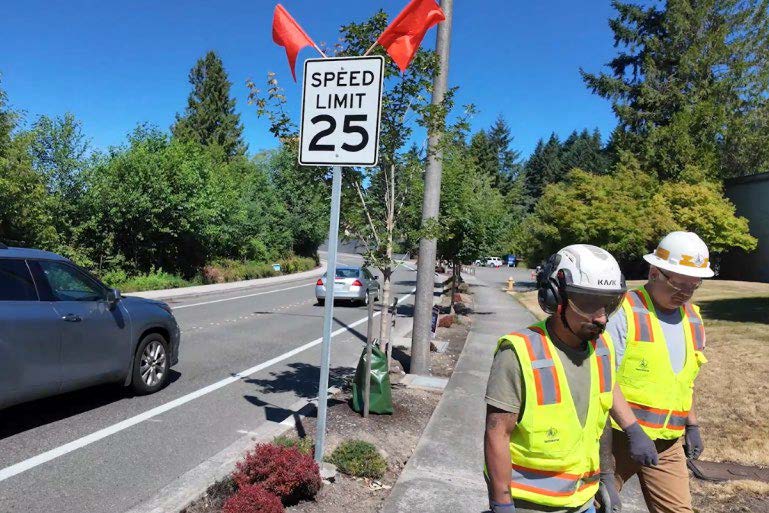
Research shows (and Bellevue’s initial results reinforce) that speed limit changes alone can lead to measurable declines in speeds and crashes. And reducing posted speed limits creates opportunities for safer street designs.
Setting appropriate speed limits and designing streets to ensure safe speeds are among the most effective and important tools any agency has in keeping its residents safe.