Common Elements
Temporary Walkway
The preferred minimum width for alternate pedestrian access routes is 6 ft (1.8 m) with an absolute minimum 4 ft (1.2 m).1 If the access route moves off the existing sidewalk, an accessible, temporary ramp and clear landing space must be provided. Temporary access routes that use existing sidewalks should be the same width or greater than those being closed.2
Temporary Bike Lane
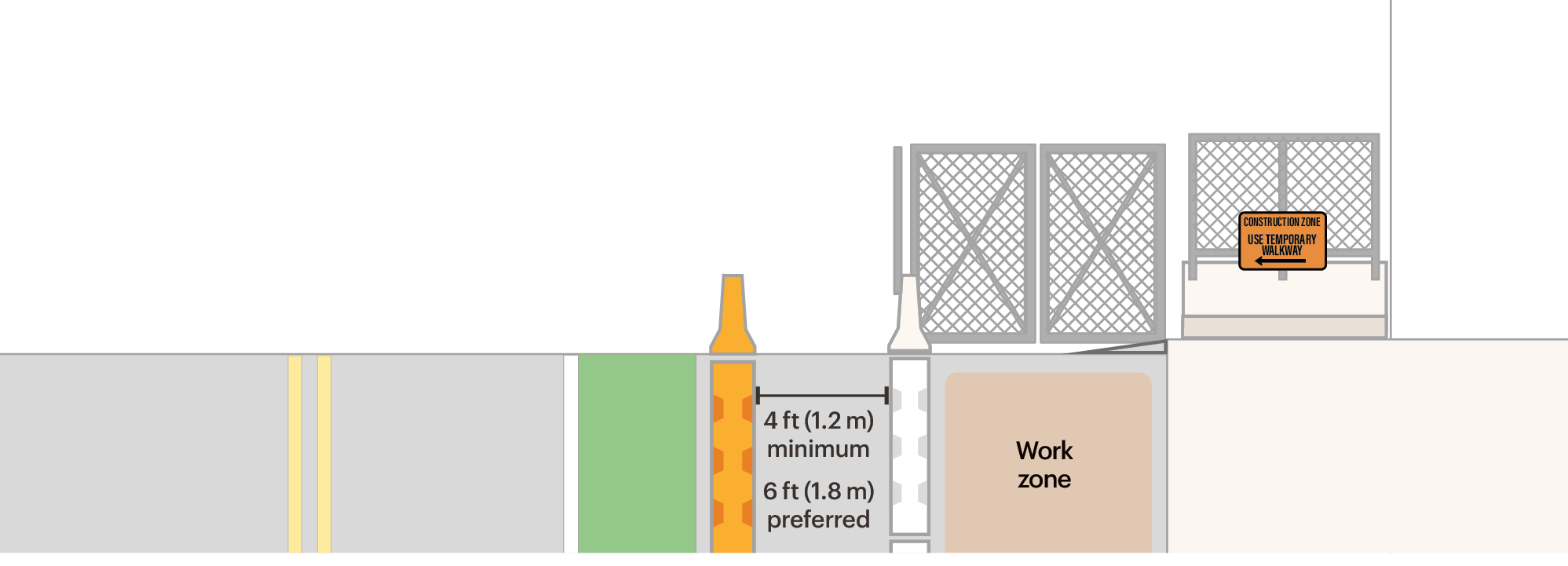
The preferred minimum width for bikeways is 6 ft (1.8 m) with an absolute minimum of 4 ft (1.2 m). Include a vertical clearance of at least 1 ft (0.3 m) adjacent to any continuous barrier.
Bikeway Taper
Transitions that move people on bikes between an existing protected bike lane and a temporary bikeway should follow minimum taper requirements (3:1), resulting in an 18-foot (5.4 m) long taper over a shift of 6 ft (1.8 m). Never abruptly end a bike lane without a taper transition, regardless of the type of bikeway.
Curbside Restrictions
Removing curbside access will be part of many traffic control plans and should consider special curbside uses. Accessible parking spaces must be prioritized for nearby replacement. Provide three weeks’ notice for bike share stations that need to be moved. Coordinate transit service changes and alternative bus stop designs with service planners.
Signs
Stands used for signage should not project into bikeways or pedestrian spaces, such as crosswalks or pedestrian safety islands. This creates a safety hazard.
Parking-Protected Bikeways
Unidirectional Bike Lane: Midblock Closure

1Taper the bikeway using a 3:1 ratio.
2 Remove any constructed islands or delineators, or adjust the work zone.
Unidirectional Bike Lane: Intersection Closure
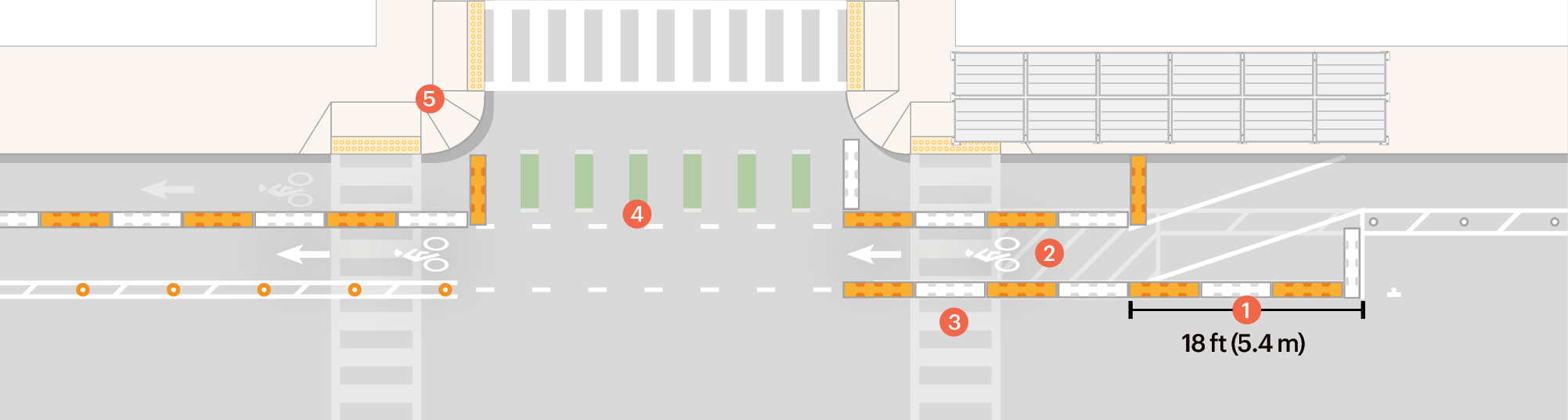
1Taper the bikeway using a 3:1 ratio.
2 Remove any constructed islands or delineators, or adjust the work zone.
3Use a more durable material approaching the intersection
4Eradicate existing crossbike markings. Use dotted lines to extend the bikeway.
5Evaluate intersection traffic control and add all-way stop or temporary signals
Unidirectional Bike Lane: Block End Closure
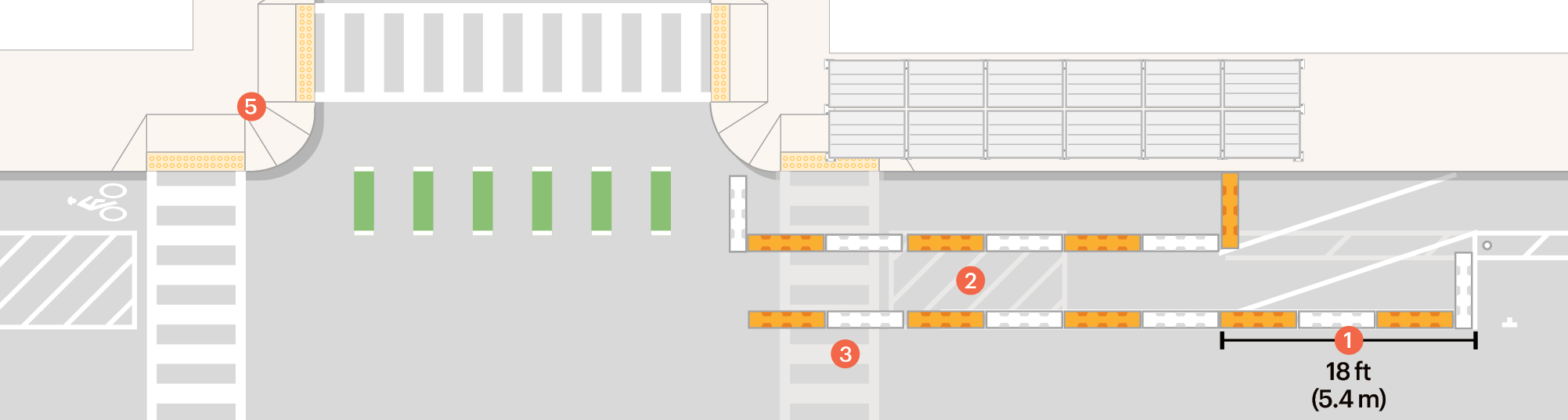
1Taper the bikeway using a 3:1 ratio.
2 Remove any constructed islands or delineators, or adjust the work zone.
3Use a more durable material approaching the intersection.
5Evaluate intersection traffic control and add all-way stop or temporary signals
Bidirectional Bike Lane: Midblock Closure

1Taper the bikeway using a 3:1 ratio.
2 Minimize potential conflicts with at least 6 ft (1.8 m) of bike lane before and after the work zone.
3 Use a more durable material approaching the intersection.
6Separation between two-way bike travel is optional.
Bidirectional Bike Lane: Intersection Closure

1Taper the bikeway using a 3:1 ratio.
2Minimize potential conflicts with at least 6 ft (1.8 m) of bike lane before and after the work zone.
3Use a more durable material approaching the intersection.
4Eradicate existing crossbike markings. Use dotted lines to extend the bikeway.
5Evaluate intersection traffic control and add all-way stop or temporary signals.
6Separation between two-way bike travel is optional.
7Remove any constructed islands or delineators, or adjust the work zone.
Curbside Bikeways on Streets Without Parking
Where parking is not present, appropriate accommodation can be provided for people on bikes. Reallocate dimension across the street segment, including minimizing the widths of general-purpose lanes, bike lanes, and buffers. Wider lanes may be necessary where buses pass in each direction at medium or high frequency.
Existing Cross-Section
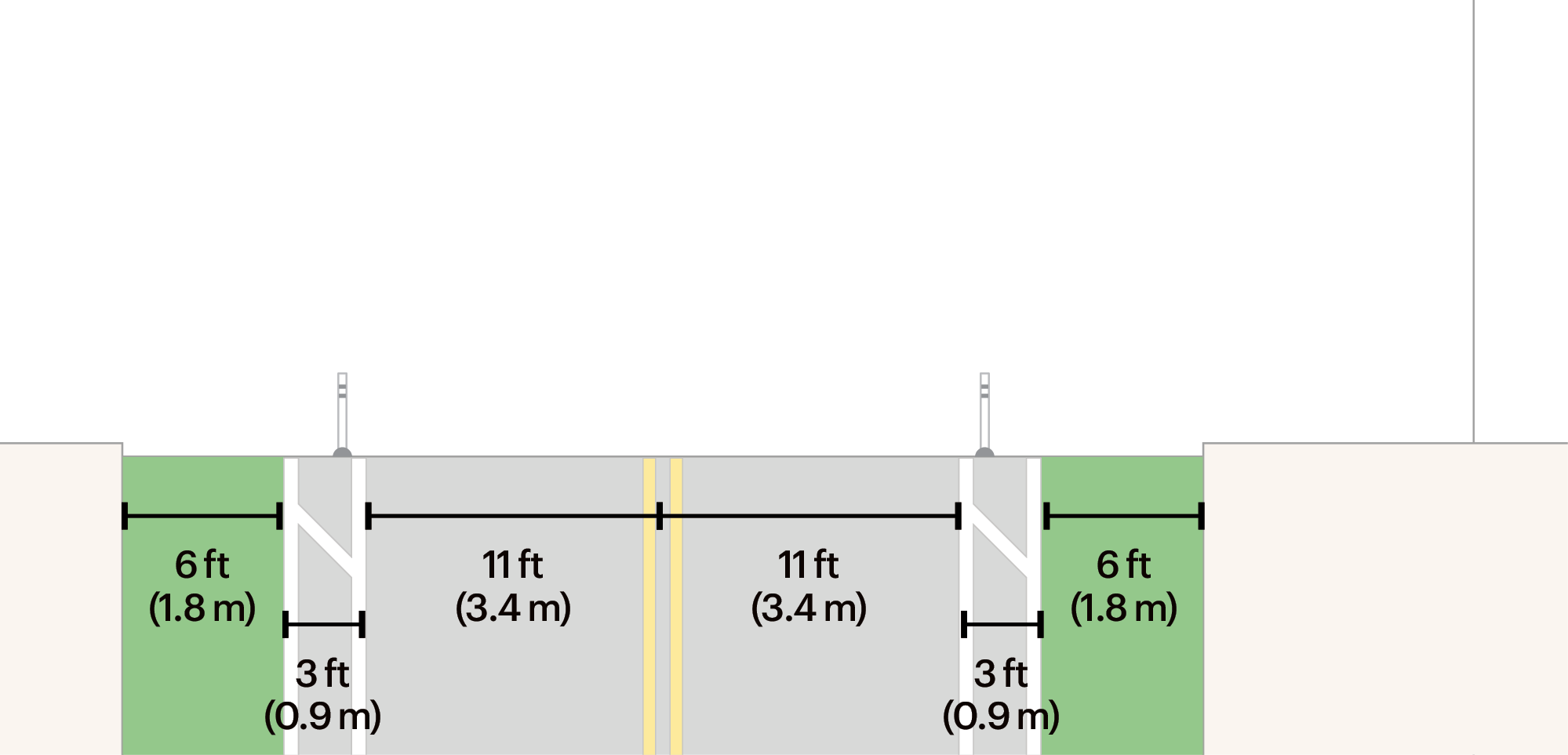
Retain Protection for Bike Lanes and Use Minimum Lane Widths
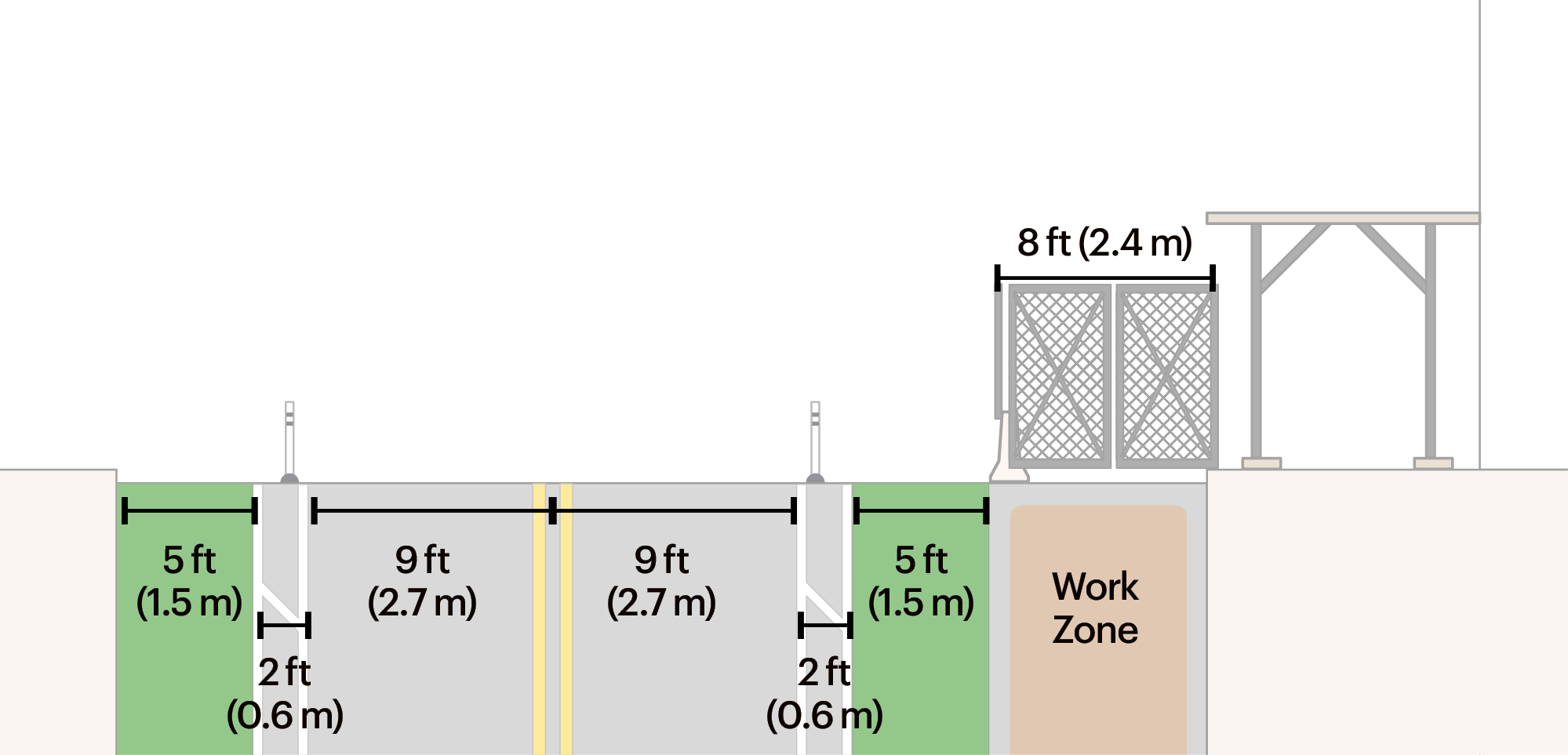
Constrained Bike Lane May be Necessary on Bus Routes

Two-way protected bike lanes must be kept intact during construction. Eliminate curbside uses on the opposite side of the street first. Use minimum widths for all elements of the street before minimizing the two-way bike lane.
Bidirectional Protected Bikeway: Existing Cross-Section

Eliminate Parking
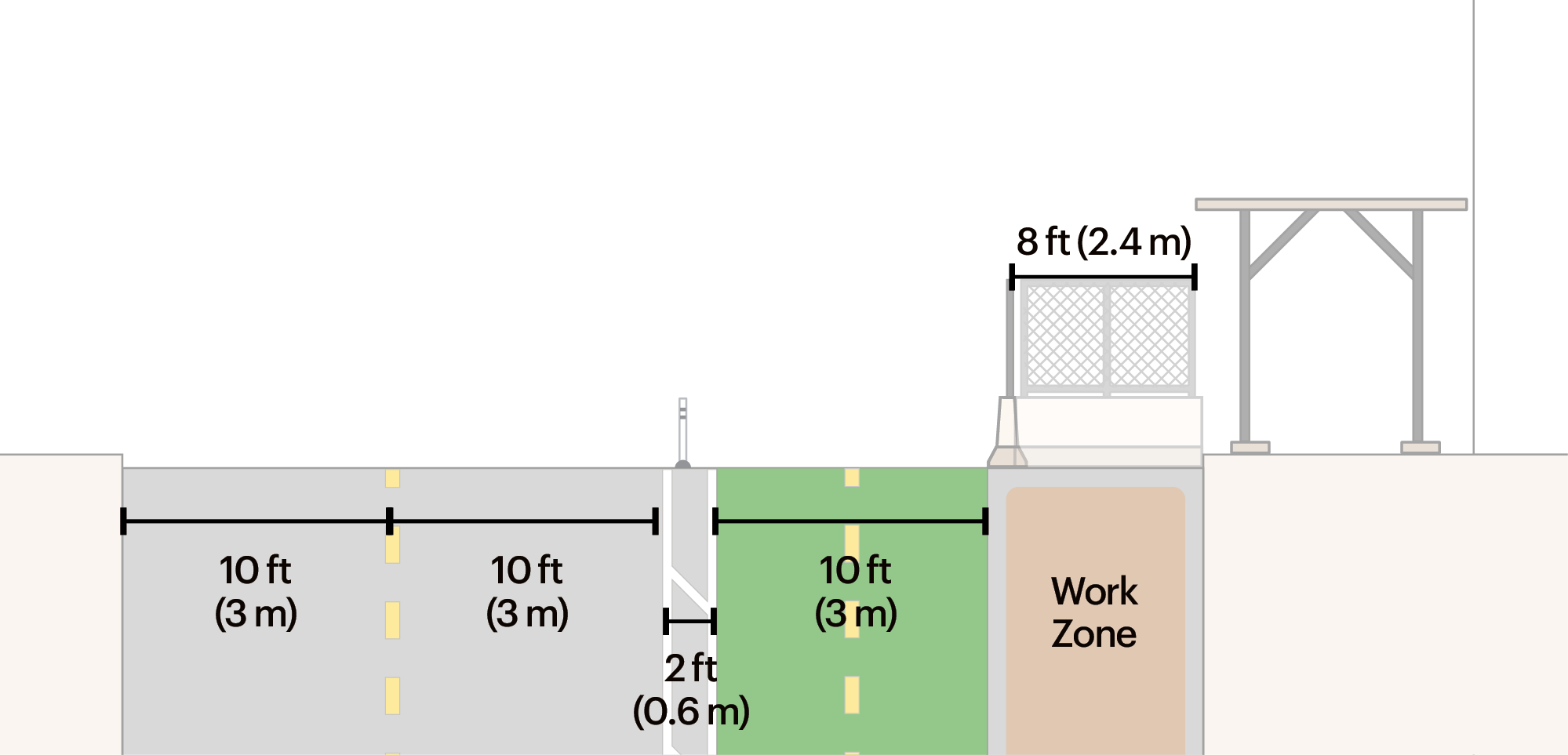
Non-Visual Navigation
All temporary traffic control plans must carefully address the needs of people with disabilities. Changes to the pedestrian route should be communicated using non-visual tools, including cane-detectable barriers, Tactile Directional Indicators (TDIs), and audible information devices. Provide a continuous, smooth, hard surface and, where people are required to move from sidewalk to street level, accessible ramps with a maximum running slope of 1:12 and cross slope of 1:48.

1Install an audible warning sign to indicate the sidewalk closure.
2Install a temporary curb ramp.
3Continue detectable edge using fencing or a tactile warning delineator.
4Orient TDIs with the direction of travel.
4aCenter TDIs in the temporary pedestrian route.
4bPlace 24 in (600 mm) wide TDI perpendicular to the direction of travel. Place TDIs to one side of the curb ramp, so other pedestrians, including those using mobility aids, can avoid traveling on it.
Sidewalk and Bikeway Closures
Where construction impacts both the sidewalk and the roadway, it is still feasible and important to preserve the bikeway. Aim to maintain separate facilities for walking and biking.
In the United States, the Public Right-of-Way Accessibility Guidelines specify requirements for alternate pedestrian access routes. If using a fence, cones, drums, or other barricade, it must be used for the length of the route, be no lower than 32 inches (815 mm), and no more than 2 in (51 mm) above the walking surface.3 Proximity-actuated audible signs or other non-visual means of conveying the alternate pedestrian access route and TDIs should be used.
Bikeways may share space with the alternate pedestrian path, if necessary. During construction, the pedestrian path will become more difficult to navigate. Additional care should be given to encourage people on bikes to stay clear of the pedestrian path. Follow all accessibility requirements for sidewalk closures. Include signs, markings, and tactile warning delineators.
Option: Separate with Tactile Warning Delineators
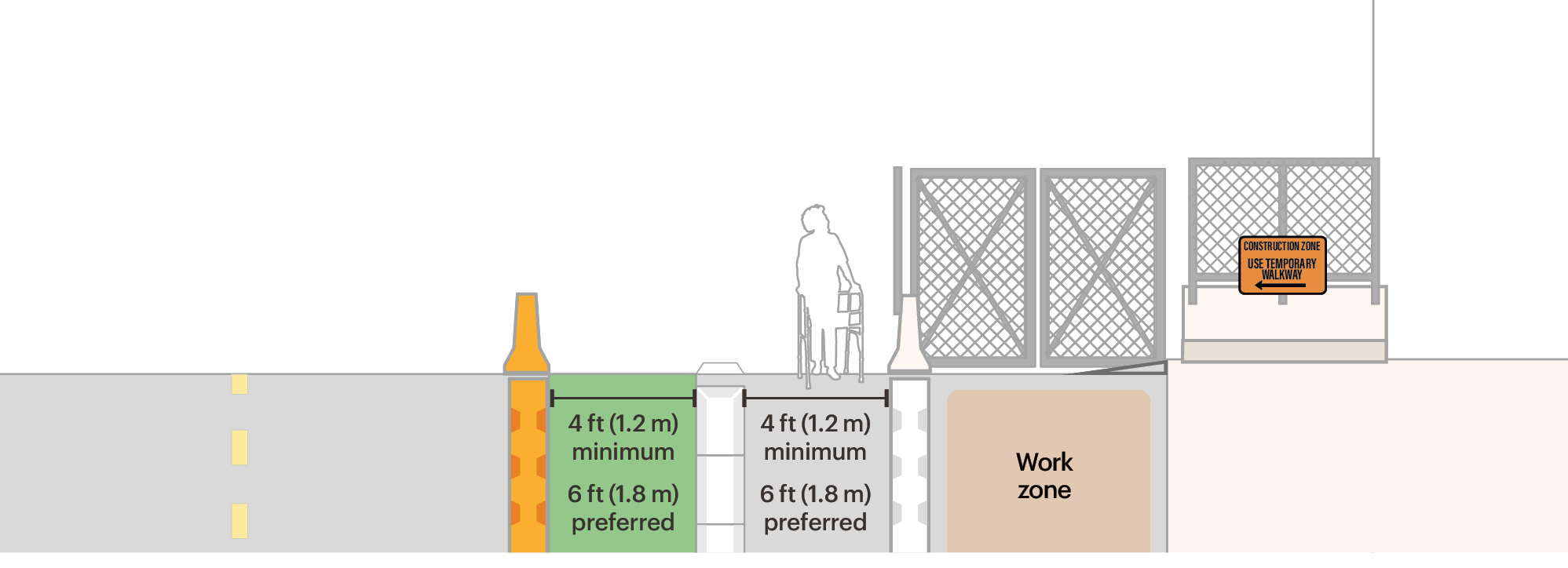
Option: Separate with Continuous Barriers
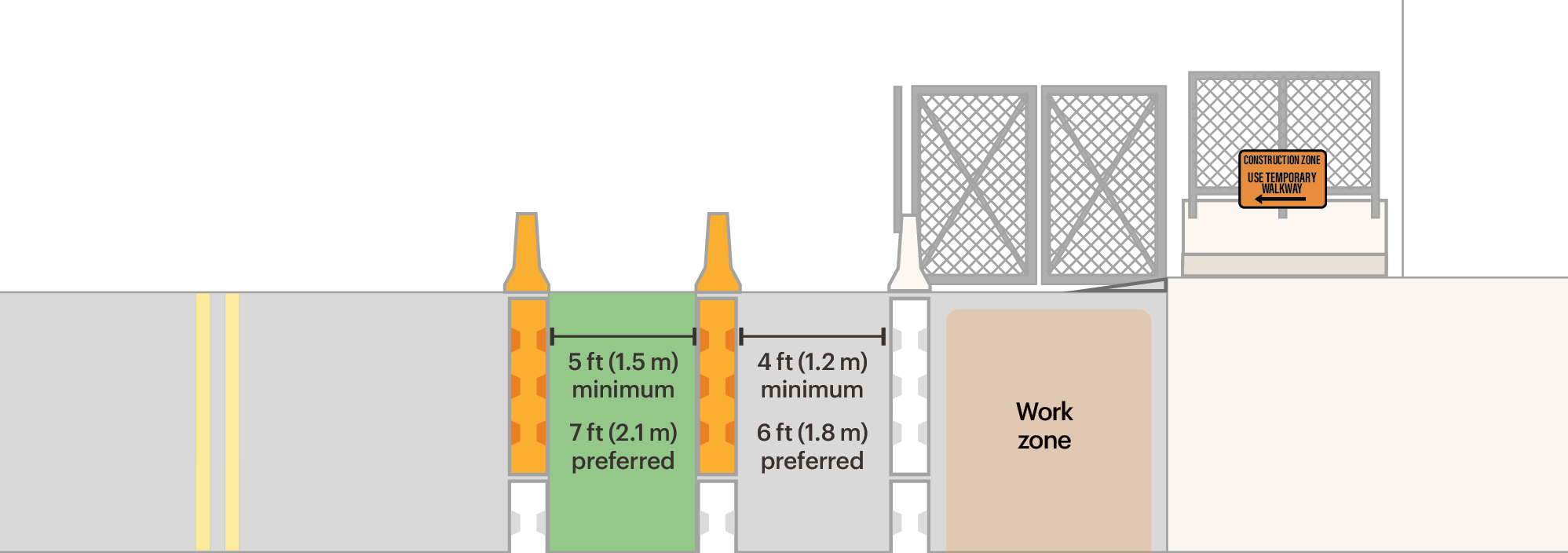
Option: Downgrade to Constrained Bike Lane
- US Access Board. Public Right-of-Way Accessibility Guidelines. US Access Board, 2023: Section R303.4 Continuous Clear Width. https://www.access-board.gov/prowag/technical.html#r3034-continuous-clear-width ↩︎
- US Access Board. Public Right-of-Way Accessibility Guidelines. US Access Board, 2023: Section R303.4 Continuous Clear Width. https://www.access-board.gov/prowag/technical.html#r3034-continuous-clear-width. ↩︎
- US Access Board. Public Right-of-Way Accessibility Guidelines. US Access Board, 2023: Section R303.6 Detectable Edging of Channelizing Devices. https://www.access-board.gov/prowag/technical.html#r3036-detectable-edging-of-channelizing-devices. ↩︎