
Shared spaces are comfortable, attractive public spaces, designed for ‘staying activities’ rather than primarily for transportation. All shared spaces are pedestrian-first environments and can support biking by people of all ages and abilities at low speeds for short distances. Shared spaces include both permanent operational designations, such as plazas and shared streets, and temporal designations, such as festival streets, curbless streets, or school-time play streets.
In shared spaces, all users may be present in the central zone of the street. The design of shared spaces should prioritize accessibility for pedestrians of all abilities and limit the volume and speed of motor vehicles. Bike riders must yield to people walking, and motor vehicle drivers must yield to all other users. Drivers are slowed with vertical deflection such as raised intersections and horizontal deflection such as configuring street furnishings to create a chicane. It’s impractical to expect all bicyclists to travel at pedestrian speeds. Rumble strips, speed bumps, or chicaning the bikeway are unlikely to result in noticeable speed reduction and create an environment where expectations are not aligned.
If a shared space is planned to be a major part of the bike network–even for a short segment–a designated and detectable bike facility should be part of the design.
Designing for All Ages & Abilities
Operating speeds for all users should be very low; typically no greater than 10 mph (15 km/h) and as low as 5 mph (10 km/h). Where motor vehicles are permitted users, their volumes should be as low as possible to maintain comfort for people walking and bicycling together in the shared roadway. Traffic volumes of fewer than 60 vehicles per hour (i.e. one vehicle per minute) are preferred.
| Bikeway | Target Motor Vehicle Speed |
Motor Vehicle Lanes In Same Direction |
Motor Vehicle Volume Per Day |
Motor Vehicle Volume Peak Hour in Peak Direction |
|---|---|---|---|---|
| Shared Street |
≤ 10 mph ≤ 15 km/h |
No centerline | ≤ 1,000 | ≤ 60 |
Design Guidance

Markings
Roadway markings such as centerlines and edge lines are not typically used in shared spaces. However, street materials should designate different operating spaces. Use distinctive, smooth materials such as flat granite, concrete, or asphalt to demarcate the bikeable path.
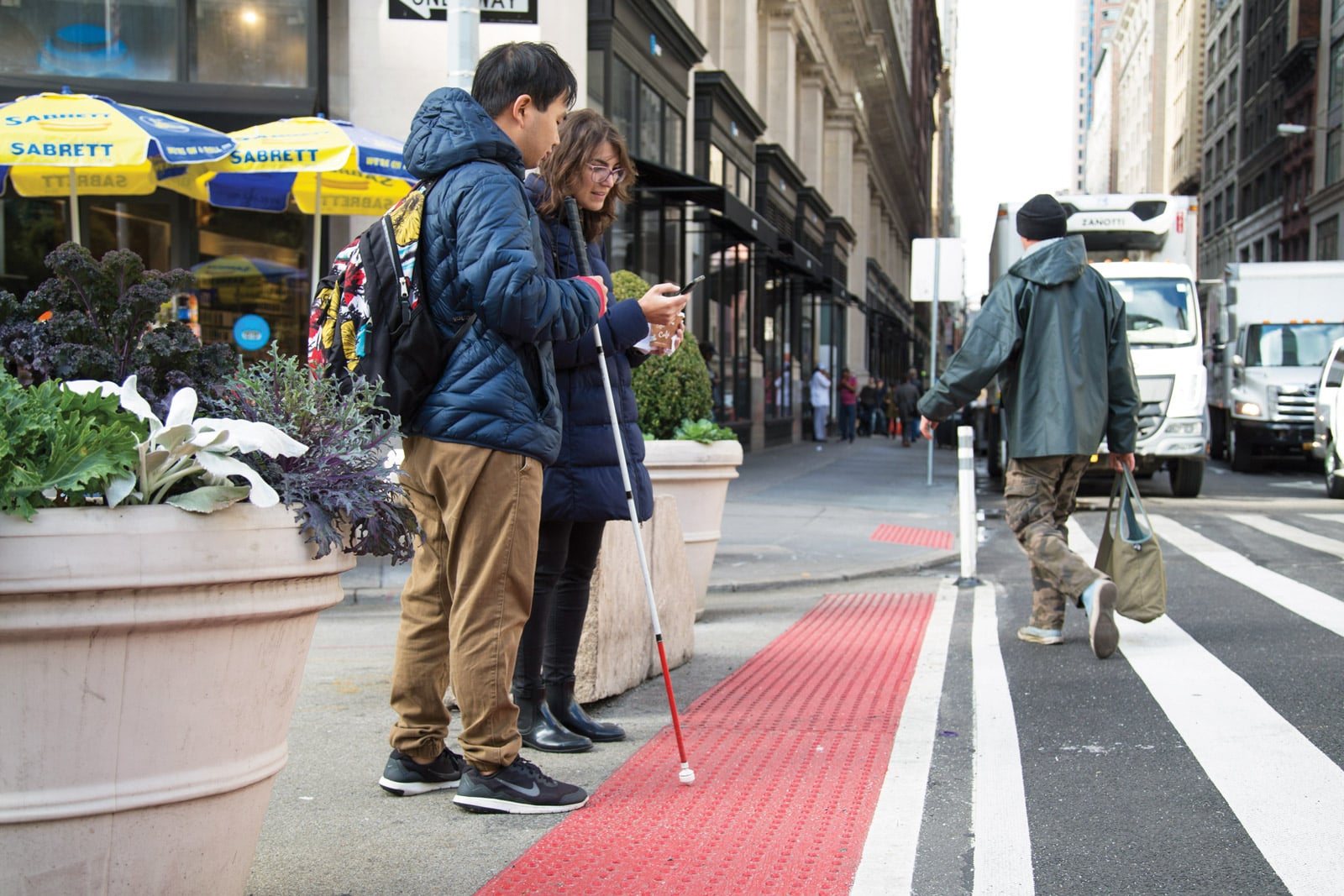
Detectable edges for non-visual navigation should be used to ensure pedestrians who are blind or low-vision are aware of potential conflict with bicycle travel.1
Shared-lane markings or custom bikeway markings may be placed regularly, approximately 100-250 ft (30-75 m) apart, to indicate where people should ride.

Signs
NO MOTOR VEHICLES (R5-3) signs should be installed where motor vehicles are banned from the shared space by statute or ordinance. Customized welcome signs to indicate the street is a shared space may be posted at the entrance to the space. These signs are informational and are not traffic control devices.
A 5 mph (10 km/h) or 10 mph (15 km/h) advisory speed limit (MUTCD W13-1P) sign and shared street warning sign should be placed near the motor vehicle entrances of the street.
BIKES YIELD TO PEDESTRIANS (MUTCD R9-6) sign may be placed near the entrances to permanent shared streets.

Intersections
In temporary shared spaces, signage and fencing may be used to discourage through-movement by motor vehicle drivers and to channel bike riders.
Permanent shared spaces should include physical and visual cues indicating that the space operates differently than typical streets. Raised intersections, raised crosswalks, curb extensions, and diverters are common tools.
- Federal Highway Administration. Accessible Shared Streets: Notable Practices and Considerations for Accommodating Pedestrians with Vision Disabilities. Publication Number FHWA-HEP-17-096. USDOT, 2017. https://www.fhwa.dot.gov/environment/bicycle_pedestrian/publications/accessible_shared_streets/. ↩︎