Bikeway design should be proactive and aim to serve a large and diverse community of people on bikes, cargo bikes, e-bikes, e-scooters, kick scooters, skateboards, and other devices with small wheels. Bikeways should allow for side-by-side riding, accommodate people moving at different speeds, and respond to different abilities to understand and react to surrounding street users.
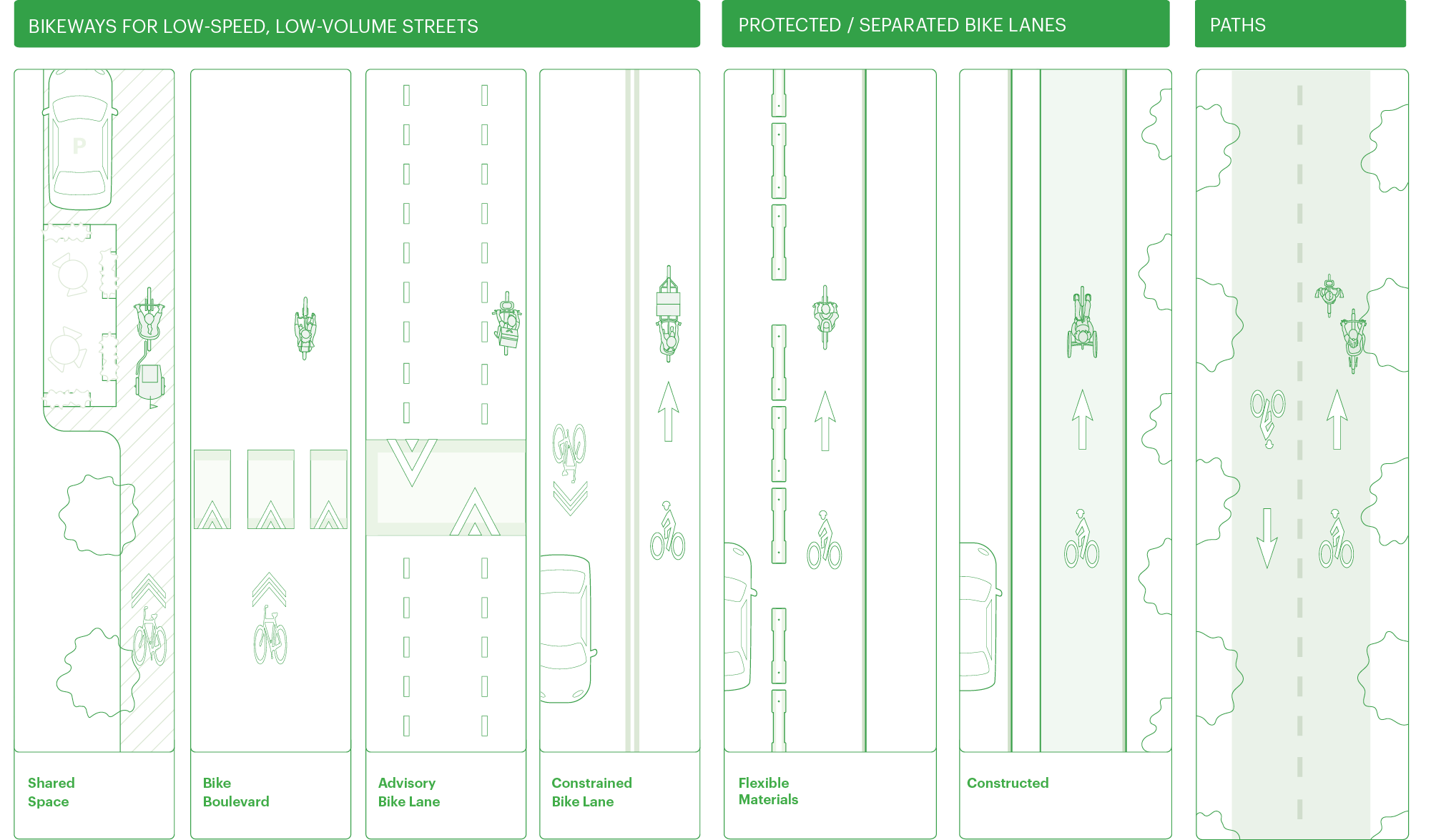

Build for comfort, not for speed. Bikeways that provide comfortable, low-stress conditions for people on bikes will encourage more people to ride bikes. Polling indicates that nearly two-thirds of the adult population of the U.S. would be interested in riding more often if they had better places to ride, particularly protected bike lanes.1 Safe, comfortable bikeways will attract traditionally under-represented bicyclists, including women, children, and older adults.
Design for growth in biking and micromobility. Build bikeways with an eye toward tomorrow. More people will bike when there’s a connected, safe, and comfortable network of bikeways that helps people reach everyday destinations and opportunities. When making decisions about allocating space or slowing down motor vehicle drivers, assume that benefits for people on bikes will multiply as time passes.
Invest in lasting infrastructure to improve safety. Plan for durable bikeway separation approaching intersections and driveways to reduce conflicts and boost safety–even for non-protected bike lanes and shared conditions. Build appropriate traffic-calming and volume-management tools for long-term, dependable, and positive impacts on overall street safety.
In this Section
- Dill, Jennifer, and Nathan McNeil. “Revisiting the Four Types of Cyclists: Findings from a National Survey.” Transportation Research Record: Journal of the Transportation Research Board 2587, no. 1 (2016). https://journals.sagepub.com/doi/10.3141/2587-11. ↩︎