The high amount of impervious surface cover in cities is a fundamental contributor to urban stormwater challenges. Decreasing the amount of impervious surface cover through the use of permeable pavement materials allows water to infiltrate through streets and sidewalks, reducing runoff.
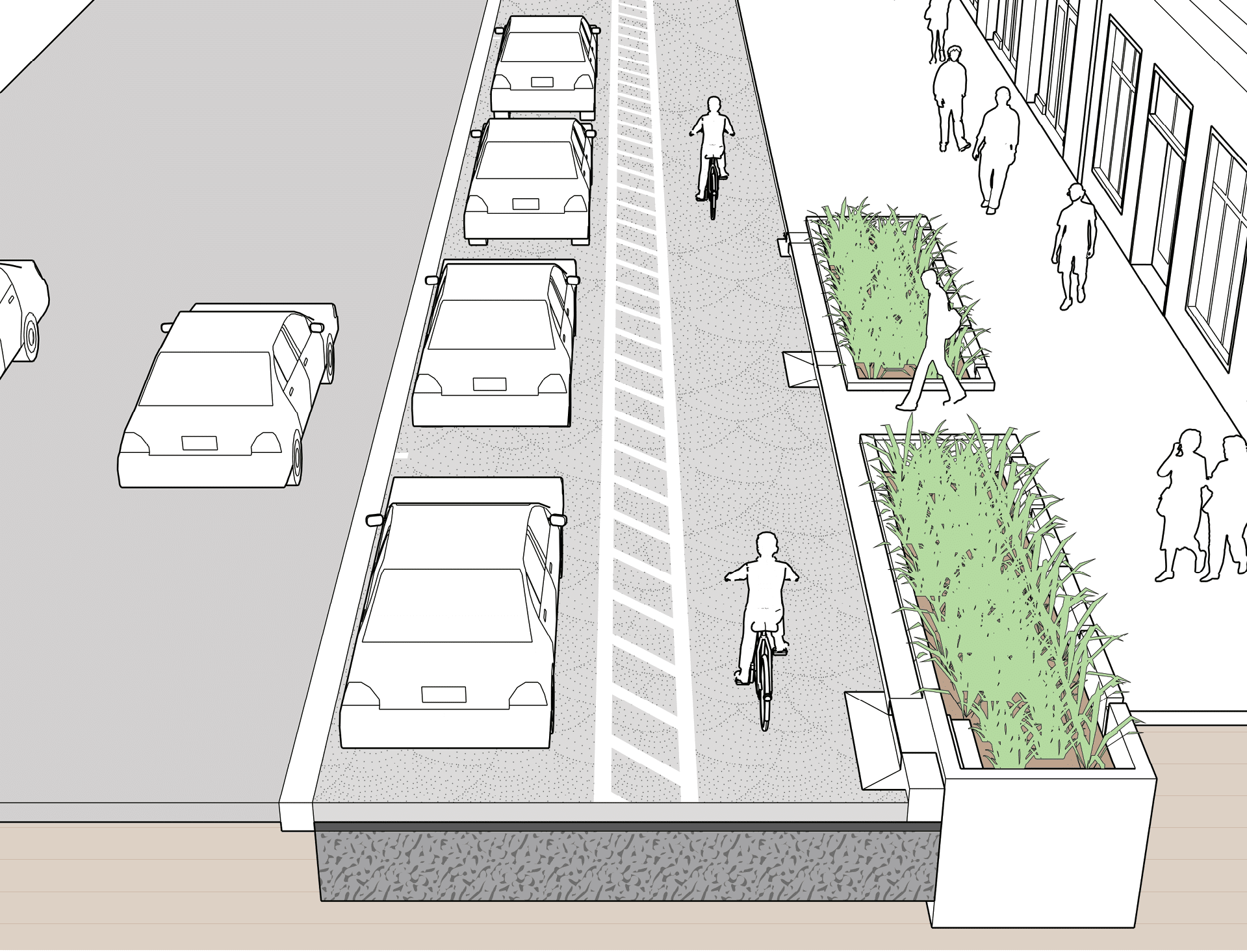
Application
Porous ashpalt, pervious concrete, permeable interlocking concrete pavers, and grid pavers provide infiltration of stormwater directly under the street surface, and can be applied on any portion of the street provided appropriate surface and sub-surface conditions.
Pervious pavements are most often applied on bikeways, parking lanes, and streets with lower vehicle traffic volumes and limited heavy vehicles. Sidewalks may also employ porous concrete to increase infiltrative area.1
Benefits
Permeable pavements add space for infiltration, especially in contexts such as alleyways or against the curbline, where nuisance flooding and other issues must be addressed without sacrificing space for mobility.
Many different types of pervious surface can be applied to different contexts, adding quality and performance to the urban environment.
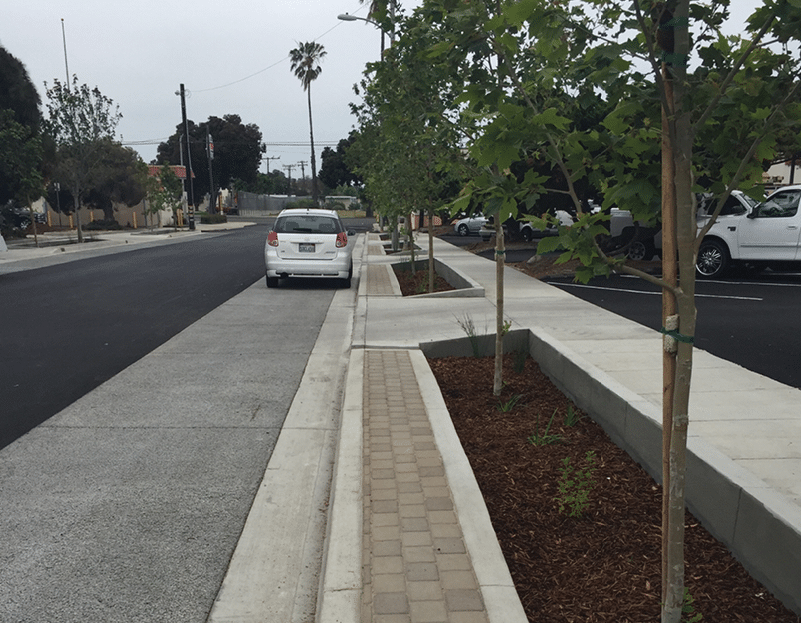
Tom Mericle
Considerations
Pervious treatments must be carefully selected and installed for context and expected usage; permeable pavements are often not appropriate for travel surfaces with high volumes, heavy vehicles, or where frequent starting and stopping place additional force on road surface.
Interlocking pavers may settle or buckle, reducing surface smoothness and creating accessibility issues.
Review adjacent surfaces and assess where soil is more likely to erode or be tracked onto the permeable pavement surface (such as from gravel driveways on private property). More frequent street vacuuming of those areas may be required to remove sediment.
Permeable street surface requires regular maintenance to remain effective. Develop detailed plans and responsibilities for appropriate cleaning and maintenance of permeable pavements installed in the right-of-way, which may include sweeping, washing, or vacuuming to remove grease, oil, and other sediment.
Permeable pavements are most effective on shallow slopes (5% or less) to allow water to infiltrate and for efficiency in spacing temporary subsurface storage.
Assess operations during snowy conditions. Avoid placement of snow piles onto permeable pavements since those are areas where higher concentrations of sediment will occur, thus increasing maintenance cleaning of the permeable pavement surface. Consider integrating alternative plowing and de-icing techniques to maintain the longevity of the infrastructure.
For interlocking pavers, aggregate used between paving blocks may need to be periodically replaced as it becomes loose or is pulled from between blocks.
Recommended
For pervious bicycling surfaces, apply porous asphalt or concrete rather than interlocking pavers, which may settle over time and become much less comfortable for bicycling.
If the bike lane is adjacent to a curb, consider not using a gutter and pave the permeable pavement up to the curb in order to avoid water flowing down the gutter and bypassing the permeable pavement. The curb can also be extended in depth to act as a barrier for deterring lateral movement of water once it has passed through the surface layer.
People riding bicycles usually prefer smaller voids in the porous asphalt and pervious concrete as riding surface, which provide smoother riding surface. Select a mix that has a lower water content, cementious ratio, and smaller aggregate.
Review the amount and characteristics of run-on flowing onto the permeable pavement system for the whole roadway (not just the parking or bike lane) and adjacent areas. Run-on, especially from areas with erosive soils, will increase the maintenance frequency for cleaning the pavement if the source of the sedimentation is not addressed.2
While bike lanes are not pollution generating surfaces, if the bike lane receives run-on from adjacent pollution generating surfaces (e.g. parking or travel lane), review local codes for regulatory requirements related to water quality treatment. In some cases a water quality treatment soil media layer may be required within the pavement section prior to stormwater infiltrating into the subsurface native soils.
For more detailed technical guidance on the design and implementation of pervious paving treatments, refer to ASCE’s Permeable Pavements Recommended Design Guidelines.
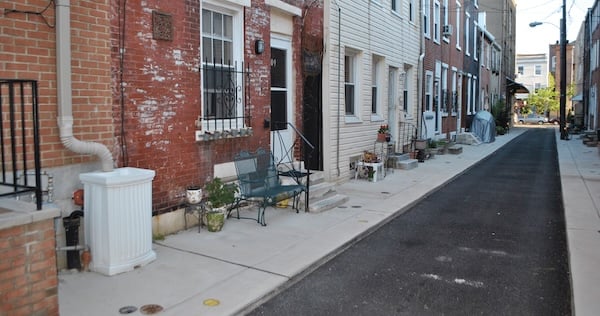
Philadelphia Water Department
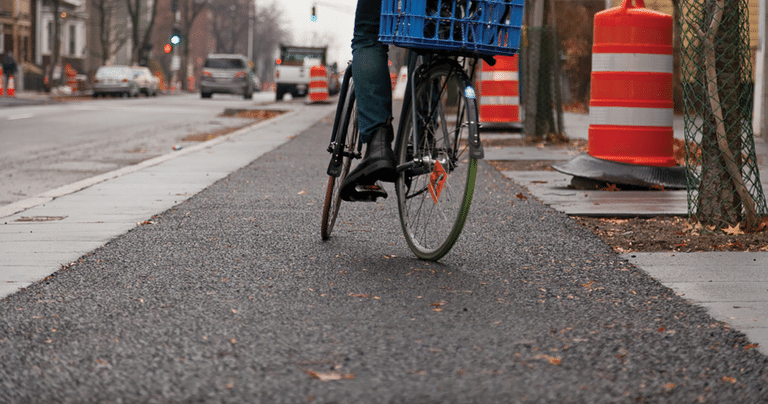
Nathaniel Fink

BL Ross
Case Study
Southeast Atlanta Permeable Paver Roadways Project
- United States Access Board. “Ch. 3 Building Blocks.” US Department of Justice, Washington, DC: accessed Nov. 2016 (https://www.access-board.gov/guidelines-and-standards/buildings-and-sites/about-the-ada-standards/ada-standards/chapter-3-building-blocks). ↩︎
- See ASCE guide for recommendations on ratio of run-on to permeable pavements. ASCE Permeable Pavements Recommended Design Guidelines. ↩︎