Mike Nakamura
The opportunity is ripe to reimagine how streets function in cities, not just as mobility corridors and public spaces, but as part of the natural ecosystem. With re-urbanization, aging infrastructure, and a changing climate, sustainable stormwater management is a core challenge for resilient cities.
Historically, streets have formed an impermeable paved layer on top of green space, disrupting hydrological cycles and requiring expensive stormwater infrastructure to manage stormwater runoff and protect ground and surface water quality. As cities face storm events of increasing frequency, duration, and intensity, as well as more persistent drought conditions, it is time to ask more of our streets.
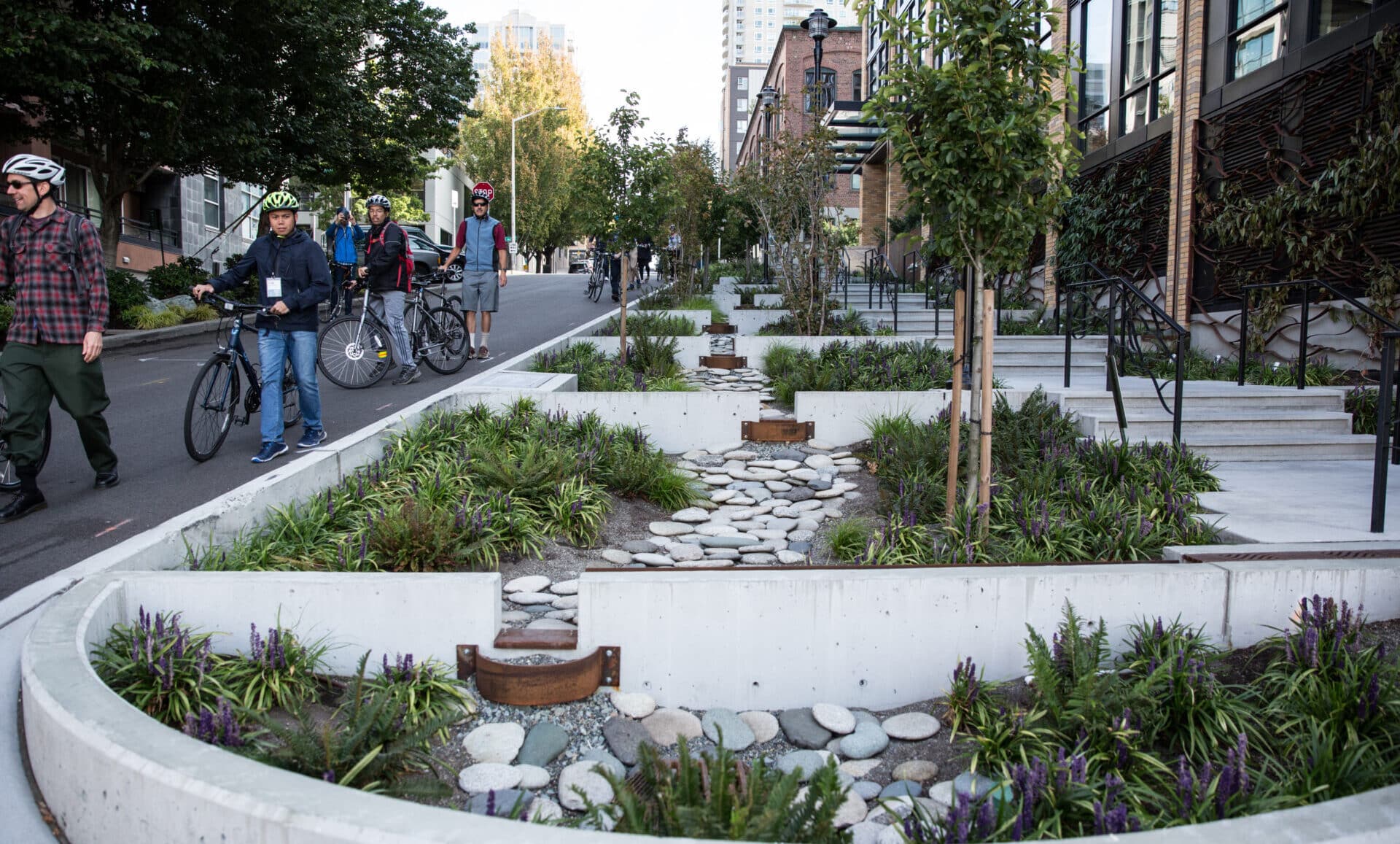
Urban streets can reconnect rainfall to the environmental life of the city. Forward-thinking planners, engineers, and designers are treating streets as part of the ecological fabric of cities, integrating green infrastructure into the street alongside transit infrastructure and safe places for people walking and biking. By thinking of streets as ecosystems, we can build cities that are more resilient, sustainable, and enjoyable places to live.