Building momentum and leveraging opportunities for green infrastructure requires deliberate coordination.
From identifying and securing new program funding mechanisms, to permitting, implementation, and maintenance, public agencies must collaborate between departments and levels of government, as well as with non-governmental partners. Strong collaboration helps build public support for green streets and leads to better-designed projects and programs.
Interagency Coordination for Programmatic Success
Coordinate among agencies responsible for water, streets, parks, and transit. Coordinating street design projects that include green infrastructure investments provides the opportunity to meet multiple concurrent goals. Transportation projects that require curb line changes in support of pedestrian safety or transit improvements are also opportunities to manage stormwater. Integrating street changes adjacent to publicly controlled land (such as parks or greenways) increases the volume of stormwater that can be managed as part of the project. Interagency coordination also increases the ability of street infrastructure investments to provide a triple-bottom-line benefit to the community at large.
Multi-agency projects require aligning not only priorities, but engineering and construction timelines as well. Coordination should be deliberate and regular throughout the process, from planning to design to implementation and maintenance.
Codify responsibilities. Memorandums of Agreement or Understanding are important steps in developing joint programs and building and managing joint projects. On a programmatic basis, MOAs and MOUs indicate executive leadership’s enthusiasm and commitment for collaborative projects, an important signal to project managers. On a project level, memorandums are important for codifying maintenance and operational responsibilities, such as clarifying maintenance tasks and responsibilities between transportation, parks, and water & sewer departments.
Maintenance of infrastructure is a critical component of ensuring the longevity of green infrastructure systems. Evaluate each department’s abilities and constraints to perform different maintenance functions, and clearly establish expectations for level of maintenance.
New York, NY
New York City’s Departments of Environmental Protection, Transportation, and Parks & Recreation have a three-party MOU that outlines each agency’s responsibilities related to the construction, maintenance, and operation of green stormwater infrastructure.
Partner for funding. Coordinated investments facilitate project funding by tapping into multiple different programmatic sources. Local agency funding for GSI can be used as a match to pursue grant funding from states, MPOs, or federal funding streams.
For example, funding dedicated to Safe Routes to School investments can be coupled with GSI investments to support bioretention in curb bulbouts around schools, shortening crossing distances for students, parents, teachers, and staff. Funding for stormwater street trees can augment economic development investments on commercial corridors. Or funding for a transit line can be leveraged alongside funding for stormwater management, creating opportunities for high-impact green transitways. Such coordinated investments make projects more cost-efficient and promote good fiscal stewardship of public dollars.
Often, partner agencies have different limitations on what they can fund, due to legislation or other requirements. Understanding funding restrictions is critical for project financing.
Public-Private Collaboration
Regulations and procurement policies can support the development of green streets facilities. While most regulatory frameworks for infill development do not support the development of green streets directly by developers, impact fees, credits, planned unit development regulations, and green street purchasing agreements can be utilized to finance or develop green streets. Special taxing districts such as business districts and homeowners associations can also be part of a strategy to implement green infrastructure in the right-of-way.
Programs and partnerships can facilitate public-private partnerships to build green infrastructure. Whether by supporting third parties to aggregate projects along or on private property or contracting private enterprises as program managers to oversee GSI development, these partnerships may develop GSI at a lower cost. Successful partnerships carefully delineate responsibilities, facilitate monitoring, and support data and plan set sharing within contracts and partnership agreements.
Advocates are powerful allies in developing support for green street programs and garnering local project level support.
Public Outreach, Education & Partnerships
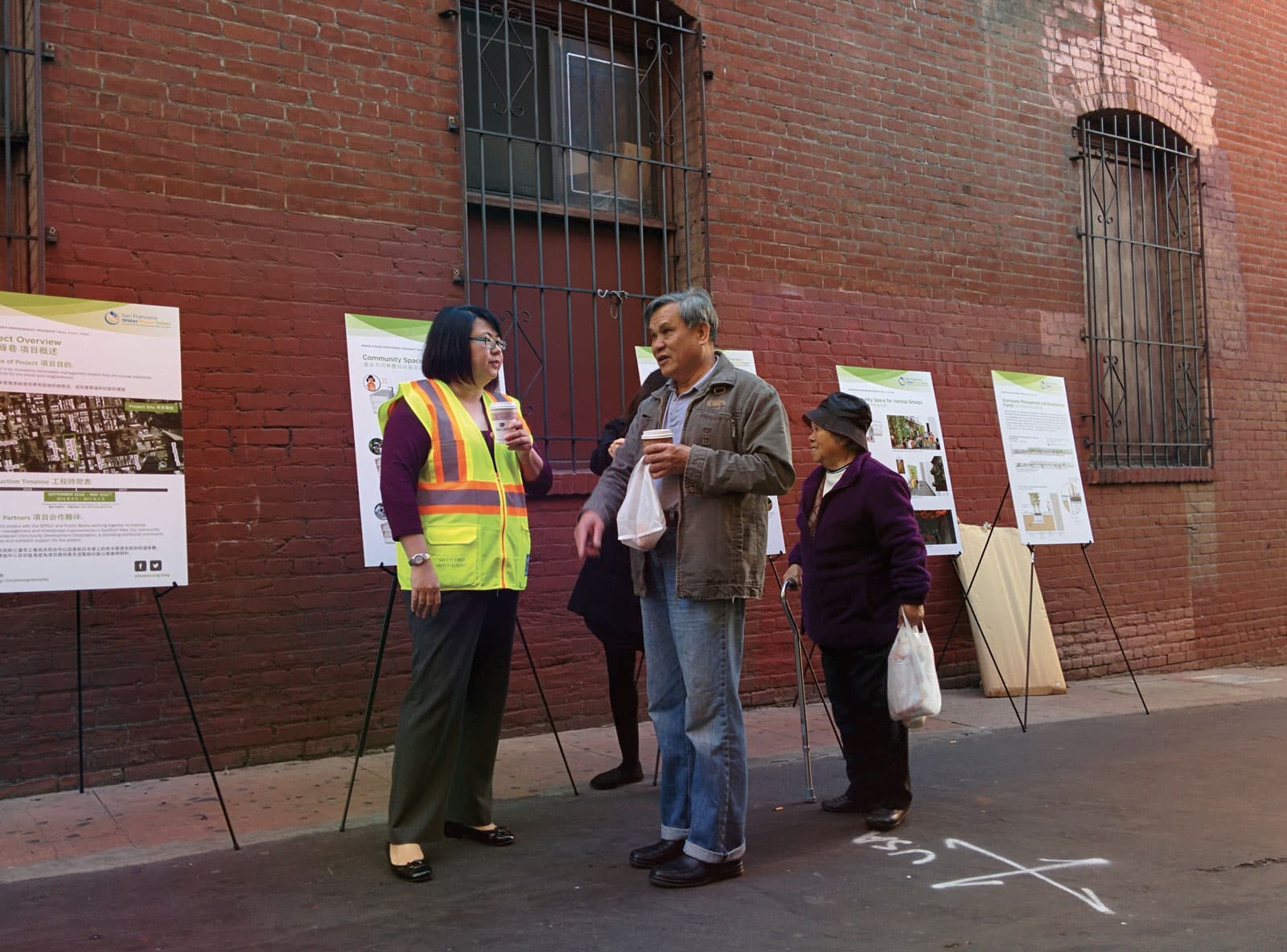
When communities invest money and other resources into new programs, they often create oversight committees made up of different stakeholders and experts to help guide the public investments. When developing a program to implement bioretention in the ROW, these committees can also help with outreach and coordination to the groups that they represent.
Programs are not successful unless they implement functioning infrastructure. Many cities assist local designers, engineers, contractors and residents with technical training classes, informational materials, design standards, and manuals to assist in the successful long term implementation of the program.
Portland % For Green
In Portland, capital projects in the right-of-way contribute 1% of construction costs into the % For Green program fund. Community stakeholders can apply for grants to implement green infrastructure that treats stormwater from the public right-of-way. Funds are used for projects that go above and beyond the Stormwater Management Manual’s requirements.
San Francisco Urban Watershed Stewardship Grants
San Francisco has a competitive grant program for community-based GSI projects. Non-profits, neighborhood groups, and schools can apply for funding to plan, design, and construct green stormwater facilities.
Non-governmental organizations can provide education and training. They can also offer a venue for volunteers to help maintain bioretention facilities, especially in residential areas or in business districts. NGOs can assist with grant applications and/or distribution of grant funding.
Cities can develop formal partnerships with community groups through grant programs or maintenance agreements, giving local residents and businesses a stake in the program’s success.
The media can play an important role in the outreach and communication about programs and policies. Proactive communication about the purpose and benefits of the program can potentially reduce resistance and/or concerns about bioretention facilities.
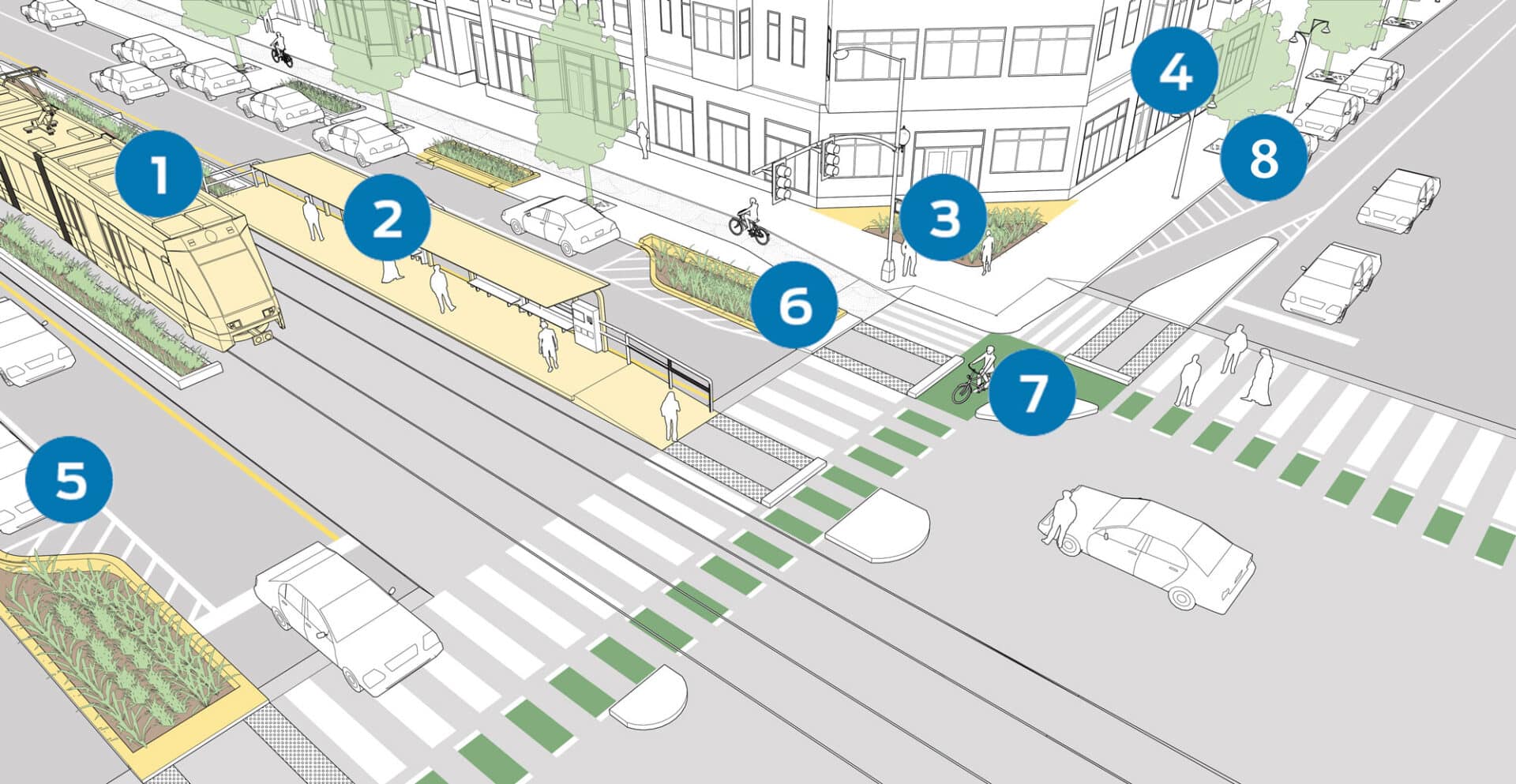
1Federal Support: Project, block, & formula grants
2State & Transit Agency: Transportation funding from taxes and user fees
3Public-Private Partnership: Privately-owned public spaces
4Department of City Planning: Zoning overlay district
5Public Works: Public ROW maintenance & enforcement
6Business Improvement District: Light maintenance & project branding
7Department of Transportation: Street design, construction, & operations
8Parks & Recreation: Vegetation selection & maintenance