Selecting the appropriate soil media(s) and plant species is critical for successful bioretention facilities. Soil characteristics should be chosen to support drainage, pollutant removal rates, and plant health and viability. Plantings should include a diverse community of native species.
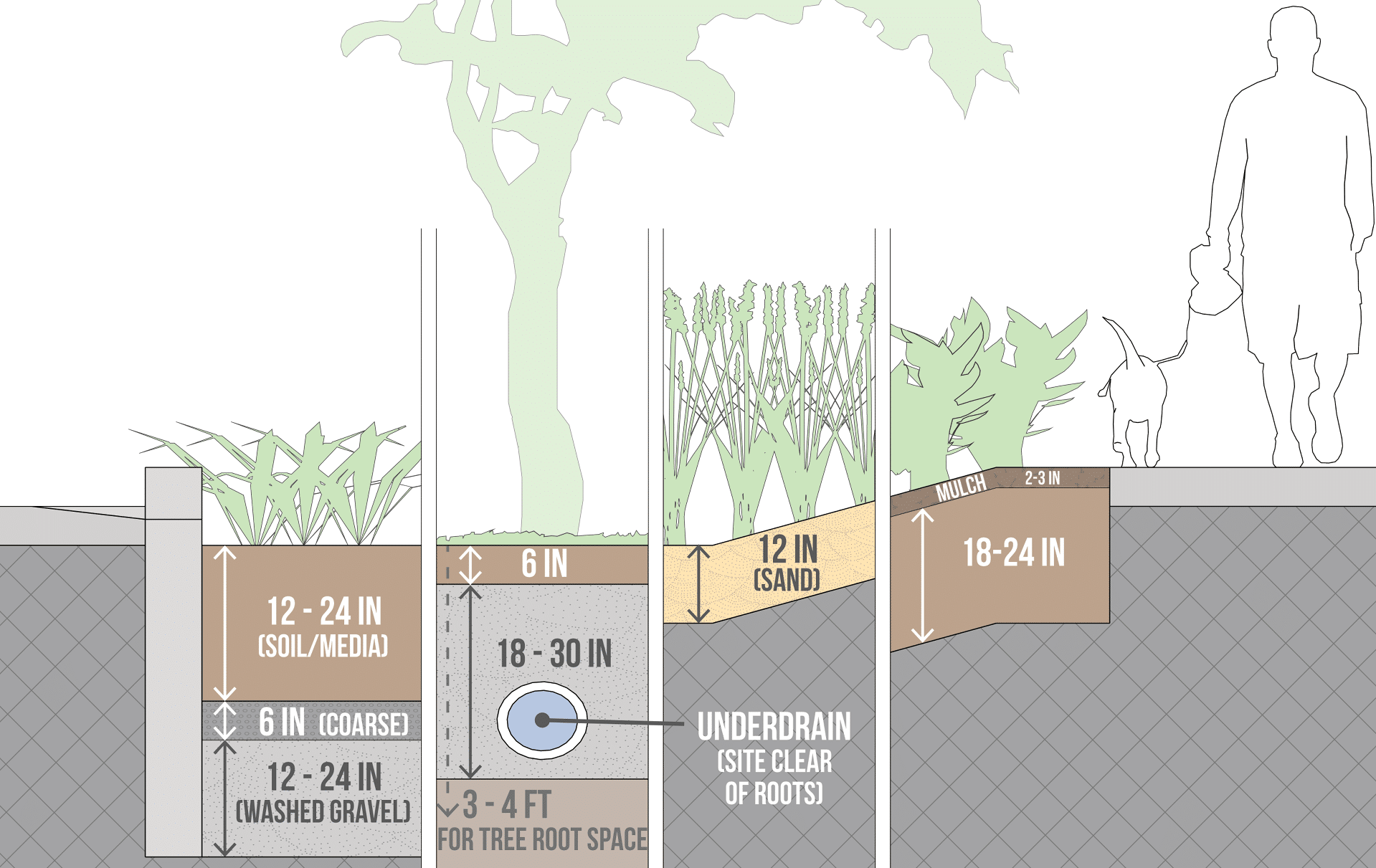
Soil Media
The type(s) of soil media used in a bioretention facility varies based on region-specific conditions, water quality treatment requirements, flow attenuation, and regulations. The soil must:
- Have proper permeability to drain;
- Absorb the targeted pollutants and capture suspended solids;
- Include the proper materials to avoid exporting pollutants such as nutrients or pathogens;
- Sustain vegetation.
The characteristics of the bioretention soil media will affect the infiltration rate. Slow draining media infiltrates less than 1 inch/hour, while faster draining media can infiltrate 10 inches/hour or more.1
Plants & Trees
Plants and trees used in the bioretention cross-section provide a stormwater function and also improve the green aesthetic experience in the right-of-way. Trees, plants, and their root structures help with absorption of stormwater, uptake of nutrients and pollutants, soil stabilization, and sustaining the bioretention soil media infiltration rate over the long term.
The type of plants and trees suitable for a bioretention facility varies across regions. When selecting plants, consider regional or local climate conditions and the species’ ability to withstand varying wet and dry conditions. Plantings should include a diverse community of species appropriate for each specific site. Native plantings are preferred, but vegetation appropriate to each climate enhances the aesthetic and performance of the infrastructure. Consider salt tolerance in winter climates and flooding tolerance in regions with heavy storms.
The type of bioretention soil media will affect the type of plant species that can thrive. Media with higher concentrations of organics will allow for a wider selection of plants. Bioretention soil media that drains quickly (in cells with an underdrain or with native soils with high infiltration rates) may limit the types of native plants that can be used.
Plants and trees in green stormwater infrastructure can provide habitat for bees and other pollinators. Select a diversity of species to improve ecological health and minimize susceptibility to infestation or disease.
Consider tree placement carefully at the beginning of the project design phase. Trees should be sited adjacent to and/or within the bioretention facility so that adequate soil is provided for healthy long term tree growth. During the siting and selection of bioretention facilities, review the placement of trees along the street in coordination with other infrastructure and setback requirements.
Trees can be planted within the bottom of cells or on the side slopes of the bioretention facility. Consider the branching form as the tree grows to ensure that there is adequate height clearance on both the sidewalk and roadside.
When planting trees on the side slopes of bioretention swales, in order to have space for the tree pit and watering ring, the bottom width of the bioretention swale can narrow and the side slopes for tree planting can increase to 2H:1V to transition to the bioretention swale’s sides.
Narrow bioretention planters or other facilities that are lined can limit the ability to plant medium to large trees, and smaller trees may not have a branching structure for sidewalk clearance. In cases where the bioretention facility type and/or location limits the ability to plant trees, consider widening the gaps between bioretention cells to make space for street trees, which help with stormwater absorption. Coordinate bioretention cell types and locations to optimize stormwater management and vegetation health.
Consider operations and maintenance needs and available resources when selecting soil media and plant species. Choose low maintenance plants that minimize the need for mowing, pruning, weeding, and irrigation. Avoid using fertilizers or pesticides.
Critical
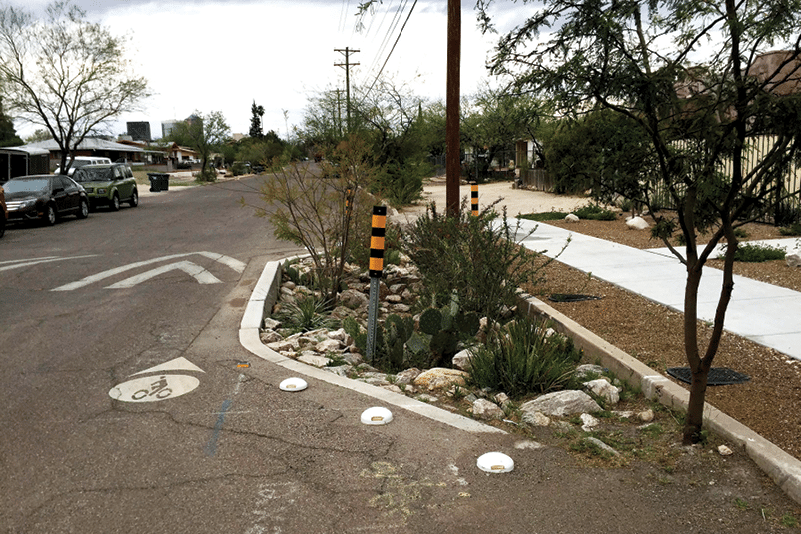
In bioretention swales with graded sides, vegetation should be planted in a contour pattern with regard to each plant’s role in infiltration; plants at the lowest grade of the cell that will be submerged during storm events must be able to withstand flooding well, while plants along the graded side slopes must be effective at stabilizing soil and controlling erosion.
When selecting vegetation, review the plant species’ mature height. For bioretention facilities near intersections, pedestrian crossings, and driveways, use a maximum mature plant height of 24 inches for sight clearance and visibility. If plants are planted in the bottom of the cell, the mature plant height can be greater so long as the height above street grade does not exceed 24 inches near crossings.
Joe Gilpin
Recommended
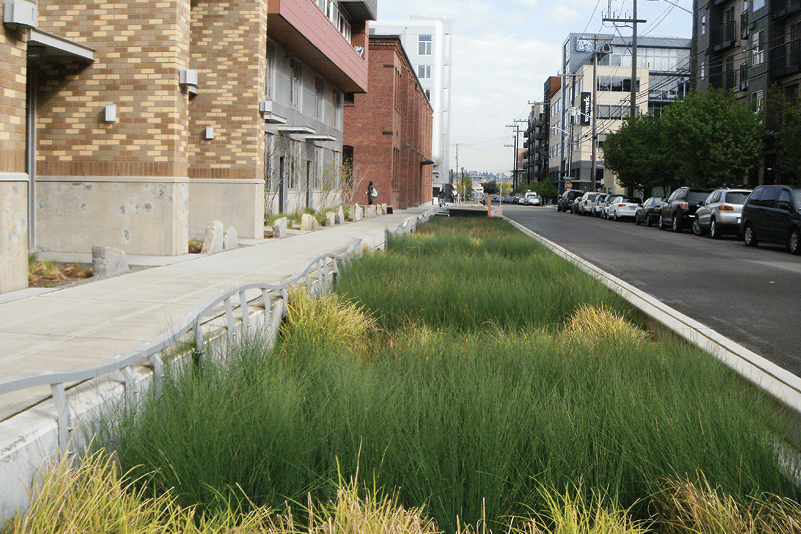
The depth of bioretention media ranges based on the area being treated. A 12-inch depth of bioretention media is appropriate for managing runoff from non-pollution-generating surfaces such as sidewalks while at the same time supporting plant growth. When managing runoff from pollution-generating surfaces such as streets, driveways, or vehicular loading zones, depending upon the bioretention soil media and pollutant loading targets, the depth of the media ranges from 18–24 inches.
Layering media types within the bioretention cross section with an underdrain can help achieve water quality treatment goals. Consider using bioretention soil media for the top layer and a gravelly, sandy layer around the underdrain pipe to provide bedding for the pipe and an additional treatment layer prior to the filtered water flowing into the underdrain.
Seattle Public Utilities
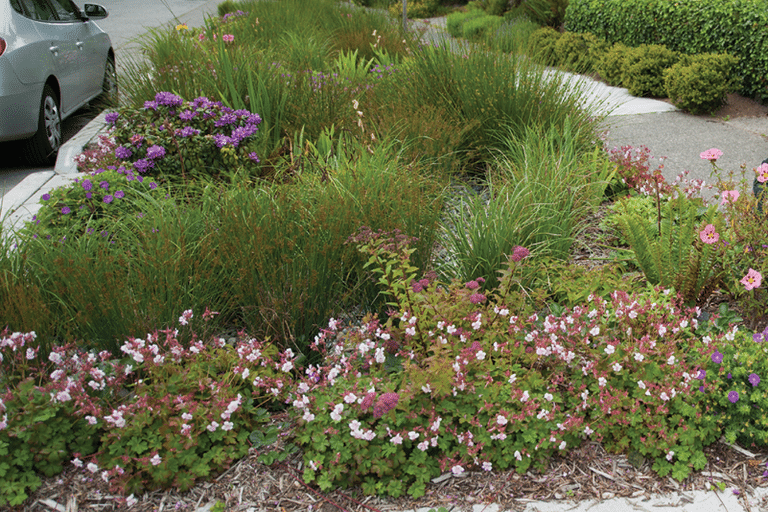
A 2- to 3-inch mulch layer may be placed over the bioretention soil media to protect plants, control weeds, lessen the need for watering, and capture many of the water pollutants before they filter through the soil.
Materials for mulching can vary. For residential streets with low volume on-street parking, chipped woody material works well within the step out zones/level areas off the curb and on the upper side slopes. Place the mulch after weeding and in the drier months of the year to allow it settle and integrate into the bioretention prior to the wet season. Compost mulch or rock mulch can be used in the bottom area and/or on the sides in the areas frequently subjected to ponding. Mulch in the bottom may only be required at installation if plants establish well or may need to be reapplied if plants in bottom of cell are pruned to the ground.
Shanti Colwell
Aaron Villere
- Maimone, Mark, D. E. O’Rourke, J. O. Knighton, and C. P. Thomas. “Potential impacts of extensive stormwater infiltration in Philadelphia.” Environmental Engineer 14 (2011): 29-39. ↩︎