Where infiltration cannot be accomplished due to contextual characteristics, native soils, or other constraints, walled planters can be designed with an impermeable base and supporting drainage infrastructure that collects water, filters runoff downward through soil media, and channels treated runoff through an underdrain (perforated) pipe. Biofiltration planters provide water quality treatment and reduce runoff volumes, and may be applied in more limited rights-of-way.
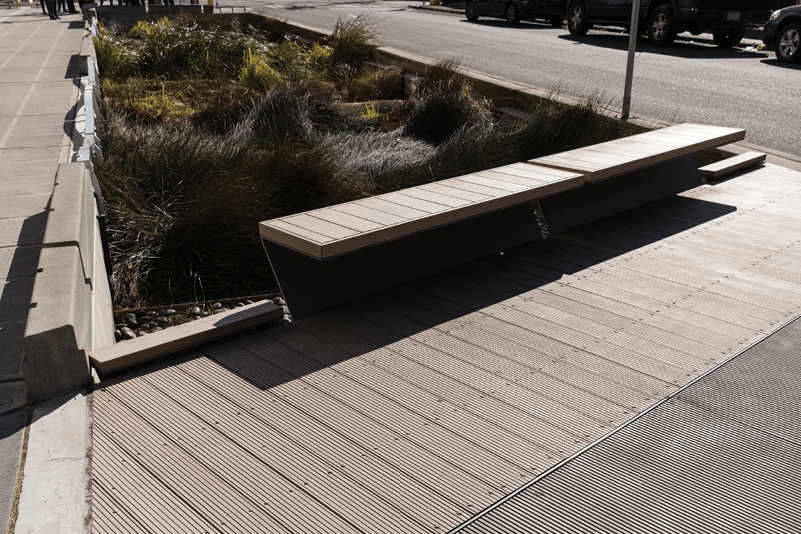
Mike Nakamura
Application
In areas where infiltration of stormwater is not conducive—including constrained sites next to buildings or with setback limitations, where existing soil conditions limit infiltration, adjacent to steep slopes (>4%), or in areas with contaminated soils—non-infiltrating bioretention planters with a subsurface drain system may be utilized to still manage stormwater volume and treat water quality.
The bottom of the bioretention planter at subgrade may be made of concrete, or may have a liner attached to all sides of the planter in order to deter water from infiltrating.
Benefits
Biofiltration planters offer high capacity for stormwater water quality treatment and peak flow rate reduction, and can be sited flexibly in contexts where infiltration is not possible or desired.
Considerations
The underdrain pipe may be directly connected back to the storm sewer system or may have an orifice control structure (e.g. located within a catch basin or manhole) at the end of the pipe to regulate the rate at which water flows out of the system. If a structure is installed at the end of the underdrain pipe, consider using it also as the overflow structure if sited within the planter or locate it outside of the planter for ease of maintenance access.
With the added layer of an underdrain pipe, the overall excavation for installation of the bioretention planter will increase, which may require more adjacent areas (e.g. sidewalk or roadway edge) to be restored in order to install the deeper planter walls.
Structured footings may be needed given sidewalk or street conditions to prevent lateral movement of the walls of the biofiltration planter.
Critical
The soil and drain rock layers must be encased either by constructed walls (often concrete) or liner to prevent infiltration into surrounding soil.
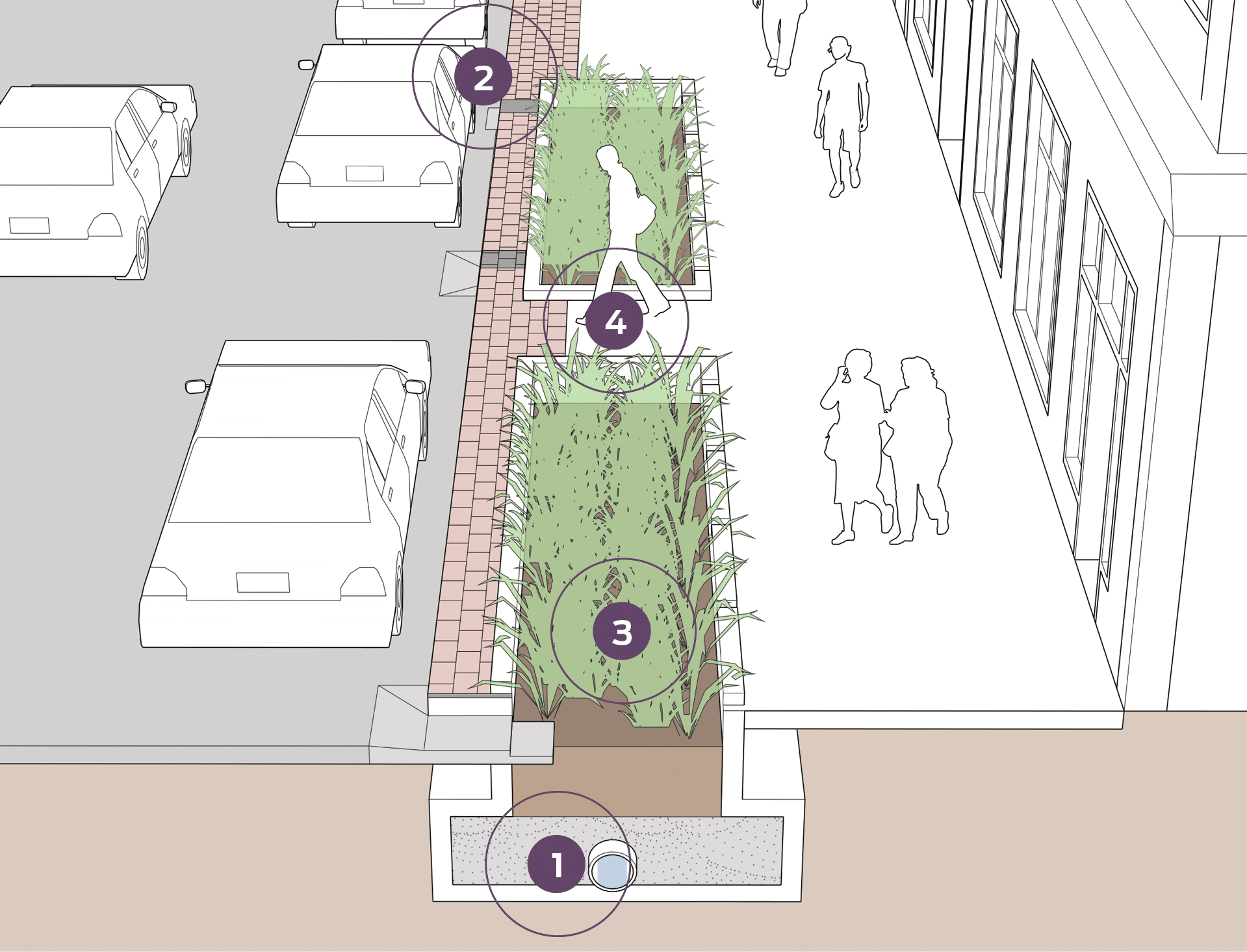
1Install a perforated pipe at the base of the facility to collect the treated runoff.
2Use a raised drain or curb cut (as illustrated) to drain overflow back to the gray water system that exceeds the design rain event.
The planter must be designed to drain within 24 to 72 hours.
Recommended
3Maximize the surface footprint of the biofiltration cell, especially if multiple cells drain into a continuous rock layer below. Multiple surface expressions can be connected to maximize the bioretention footprint of a facility. Under-sized surface cells may be at risk for increased erosion or large amounts of debris.
4Provide a pedestrian cut-through (at least 5 feet wide) approximately every 20 to 40 feet to facilitate access to the curb. Cut-throughs may separate cells or be provided as ramps.
Use native plantings that are suitable for each site or micro-climate, are able to handle seasonal flooding or drought, and require minimal irrigation or maintenance.
Optional
Discourage pedestrian trampling and reduce soil compaction by using low barriers or hardy vegetative ground covers.
Seating can be incorporated into the planter sides to improve the public realm for people. Review overall vertical drop from bench to bottom of facility. If drop exceeds 30 inches, review if bracing or fencing at back of bench may be needed.