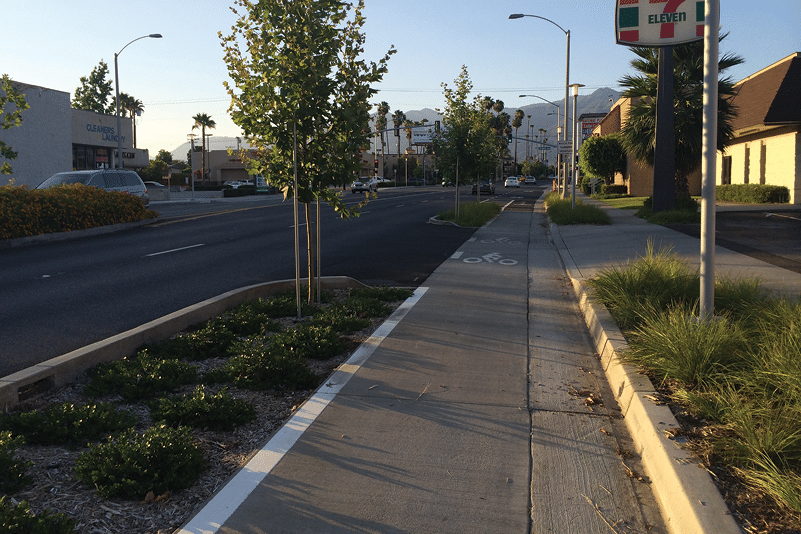
Vegetated space on pedestrian refuge islands, bikeway buffers, transit boarding islands, or other constructed elements that are offset from the curb can improve the streetscape and provide space for street trees. Bioretention planters may sometimes be incorporated into islands, provided suitable topography and thoughtful design.
Cherie Walkowiak, Safe Mountain View
Application
Due to space considerations, walled bioretention planters are typically most applicable on “floating” street design elements.
Benefits
Providing green, vegetated space on pedestrian refuges, transit islands, and bikeway buffers can enhance the quality and aesthetic of transportation infrastructure that confers strong mobility benefits. Elements that calm traffic, shorten crossing distances, and protect people bicycling can open new opportunities for trees and vegetation that enhance the streetscape.
Considerations
Calm motor vehicle speeds and maximize visibility of floating elements to limit the risk that someone will drive a motor vehicle into the bioretention facility.
Critical
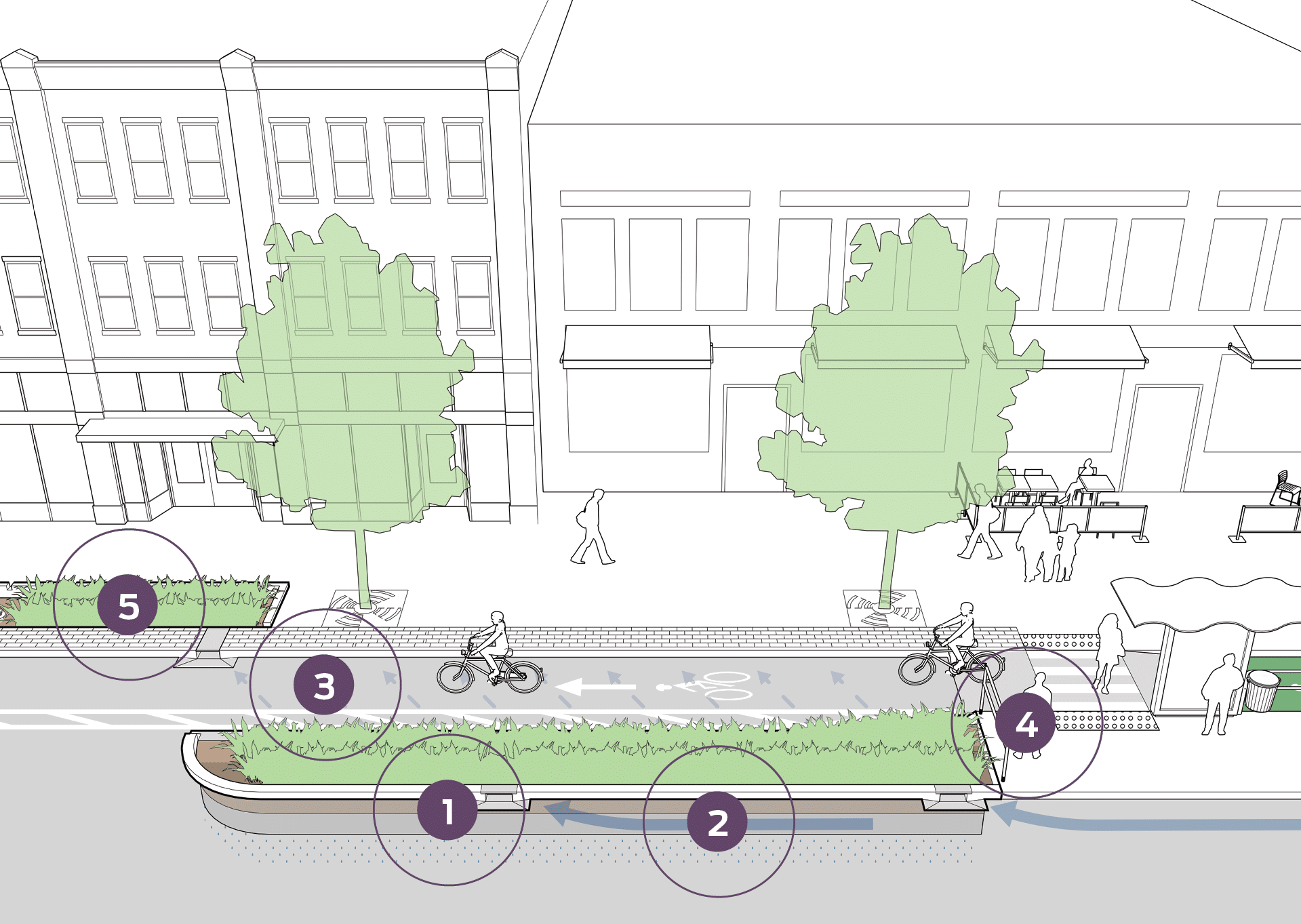
1Runoff is directed into the island planter either as sheet flow or using trench drains, gutter pans, or linear curb to efficiently collect stormwater.
2Overflow runoff must be managed along the curb as well to prevent pooling in the curbside lane.
Recommended
While raised curbs are recommended to protect against vehicle incursion into planters, curbs with inlet cuts or depressions may gather less runoff than curbless stormwater planters. If a curb is not installed, consider using vertical reflectors or bollards to discourage vehicle entry into planters.
3Maintain at least 5–8 feet between a floating planter and the curb to allow sweeping and maintenance between elements. Special sweeping equipment may be required for lanes under 8 feet.
Use low plantings to maintain sightlines and visibility, especially where pedestrians enter or exit the the island.
4On transit boarding islands, railings provide space for transit riders to lean while waiting and also prevent people from entering bioretention facilities.
5Where a constructed buffer exists between travel lanes and a bikeway or curbside lane, install curbside bioretention to reduce pooling against the curb. Floating and curbside bioretention elements may be designed to work together—any excess runoff from the island planter is directed to a downstream curbside facility to reduce loading on both facilities.
Trees may be incorporated into transit islands and pedestrian refuge islands if width is available for the root space, and provided branches will not grow to impede travel lanes or reduce visibility.