Green stormwater infrastructure performance can improve over time if facilities are properly maintained. As vegetation establishes, roots can capture and retain more stormwater. Healthy vegetation and soil increases transpiration, reduces urban heat island effects, supports groundwater recharge, and restores natural ecological cycles and resources.
Robust and iterative operations and maintenance plans are critical to fully capitalizing on the potential of green infrastructure. Include maintenance staff in the project planning process to reduce oversights in the design and ensure that green stormwater infrastructure can achieve its full potential.
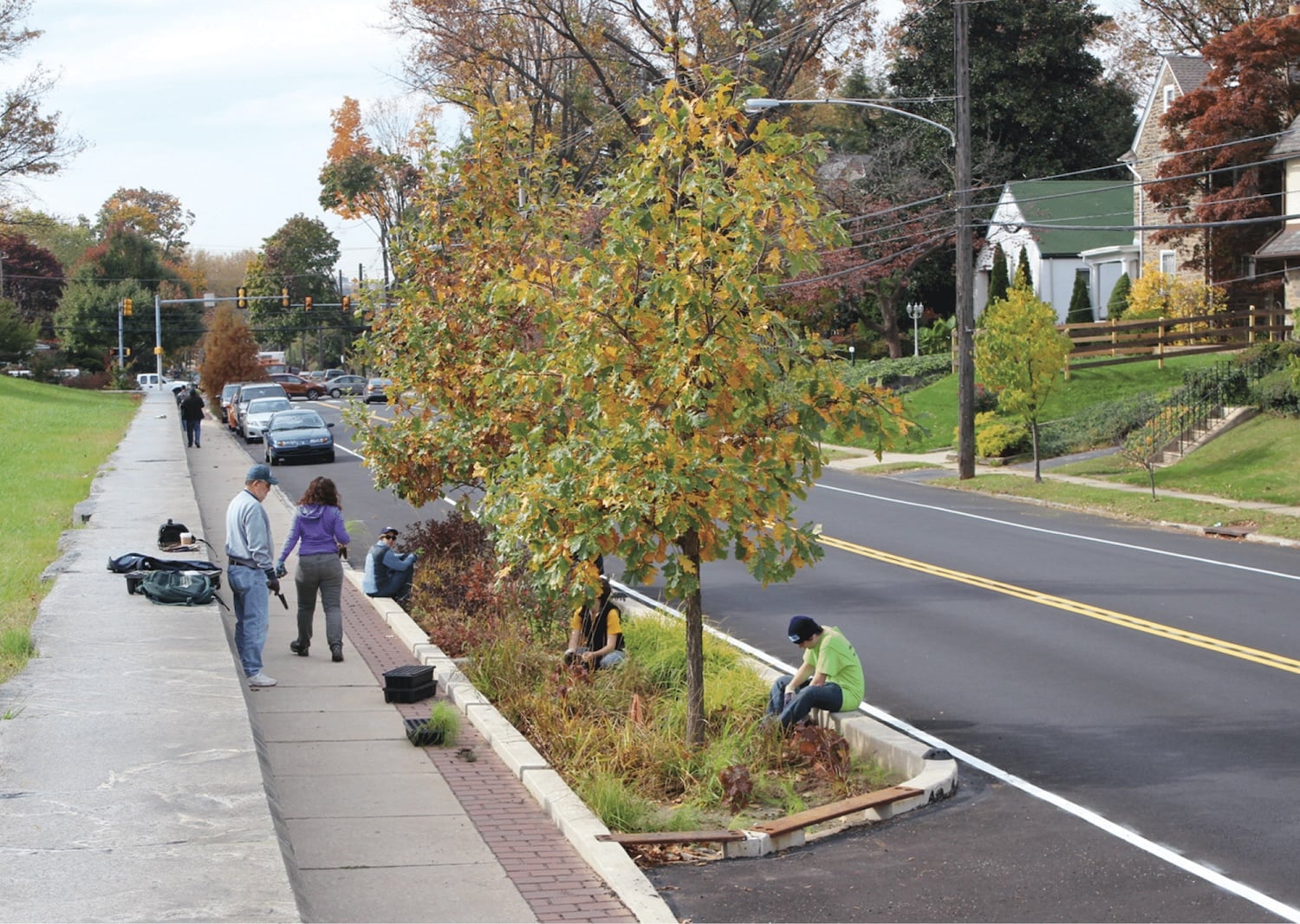
Philadelphia Water Department
Establish Level-of-Service Standards
Establish policy standards for an acceptable versus unacceptable level of service for maintenance of green infrastructure facilities. These performance standards must be clear and easily communicated.
Phased level of service standards differentiate between the establishment period and long-term maintenance of green infrastructure. During establishment, facilities may be irrigated and not receiving runoff to allow plants to take root; weeding and pruning are more carefully monitored for 1–3 years after installation.
Projects located along streets with commercial or business districts may have higher standards of care for pruning and trimming compared to projects located in residential neighborhoods. It is critical during the project planning phase to review expectations for the level of service with the adjacent properties.
Define Roles & Responsibilities
Clear responsiblities for tracking, inspection, and maintenance of green stormwater infrastructure are essential both within and across departments and agencies. Establish clear roles and protocols for the care and monitoring of assets during the design process. Enact agreements or memorandums during the design process with clear delineation of responsibilities and identified partners, and clearly define the protocols for both routine and corrective maintenance.
Cities under consent decree to implement green infrastructure typically enact maintenance and operations roles as part of regulatory agreements.
Maintenance may be completed by city departments or contractors as a course of implementation, with codified roles and protocols. Define clear tasks and schedules for maintenance needs. Staff training and procurement of suitable equipment are key components.
Business Improvement Districts, community organizations and stewards, and property owners may be valuable maintenance partners, provided appropriate training and education.
Track & Manage Assets
As green infrastructure programs scale, an accurate and current database of GSI assets is a powerful tool for maintaining a high level of system performance. Asset management may track facility locations, age, design elements (such as subsurface design), purpose of installation and regulatory reporting needs, and past inspection records.
Asset tracking systems should include information on what monitoring and maintenance is required for a specific facility. Results from monitoring can also be used to improve and adjust standard details.
Tracking GSI systems at the individual cell level, rather than at a corridor or project level, can assist with better understanding and projecting annual maintenance needs.
Create feedback loops between monitoring, maintenance, and design staff; thorough understanding of actual performance is essential to improving the design of future facilities, especially when designs are individualized for context rather than standardized for broad implementation.
Surface Maintenance
Surface-level maintenance is necessary both for ecological performance and for aesthetic value. Remove trash, sediment, and debris from stormwater facilities and tree trenches; this routine maintenance should be completed frequently, anywhere between weekly and quarterly. Partner with a community group or Business Improvement District where possible.
Erosion repair and control, as well as structure or pavement inspection (and potentially repair), should occur at least once annually by a trained crew.
For permeable pavement systems, street sweeping and vactoring should be completed frequently, as often as weekly, to ensure that pores remain open for water to drain through. Small stones and aggregate between pavers should be replaced periodically, as small materials will gradually be removed through the course of normal wear.
Monitor bioretention facilities according to their design goals. Use water sampling monitoring or infiltration testing to ensure the facility drains as intended. Monitor the rate of sediment accumulation and adjust the frequency of cleanings and maintenance as necessary.
Identify opportunities to work with non-profit and neighborhood organizations to provide additional landscaping and cleaning, especially at high-profile locations such as a commercial district. Consider the partner organization’s capacity when outlining a scope of work or maintenance contract.
Vegetation Maintenance
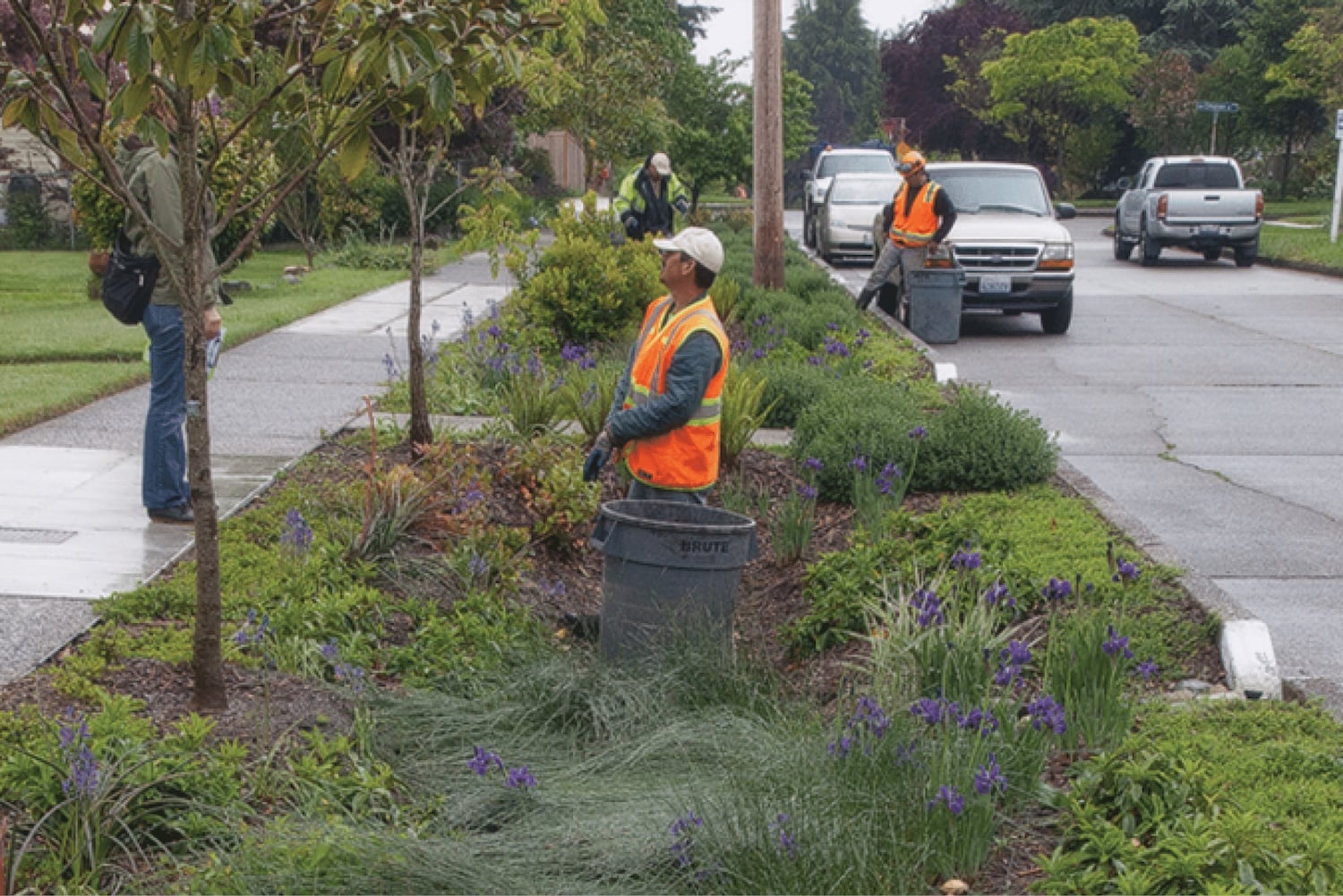
Watering and irrigation are essential during the establishment period of new bioretention facilities, and should be done as often as daily at first. Piped irrigation systems or watering bags can reduce the amount of labor required to nurture new plantings.
Weed removal is critical to facility health and performance, especially in the period after installation. Crews or maintenance partners may need to care for new facilities weekly.
Mulch and soil should be inspected periodically for loss, compaction, or other issues that can affect vegetation health.
Maintenance crews or trained partners and stewards should complete pruning or trimming typically at least once per month as part of routine superficial inspection and care. Ensure partners receive proper education so plants are not over-pruned. Perennials should also be trimmed back each winter in cold-weather climates.
At the end of a facility’s design life, major maintenance or full reconstruction may be necessary to replace feature components such as soil, mulch, or vegetation.
SubSurface Maintenance
More involved subsurface cleaning and maintenance may be completed either semi-annually or annually, depending on what types of systems are installed, and what intensity of use is placed on the system by regional climate and performance need.
Typical subsurface tasks may include vacuum cleaning and jet-rodding of cleanouts and sewer pipes to ensure proper drainage rates and volumes.
While the expected lifespan of green infrastructure varies by cell type, construction materials, climate, and the amount of stormwater managed and treated by the facility, plan for cyclical replacement of soil and media, and possible need for full reconstruction of stormwater facilities. These infrequent maintenance tasks may be needed after 10 to 20 years of performance, though design life varies widely and should be broadly planned for during the design process. Regular maintenance can extend the life cycle of green infrastructure assets.