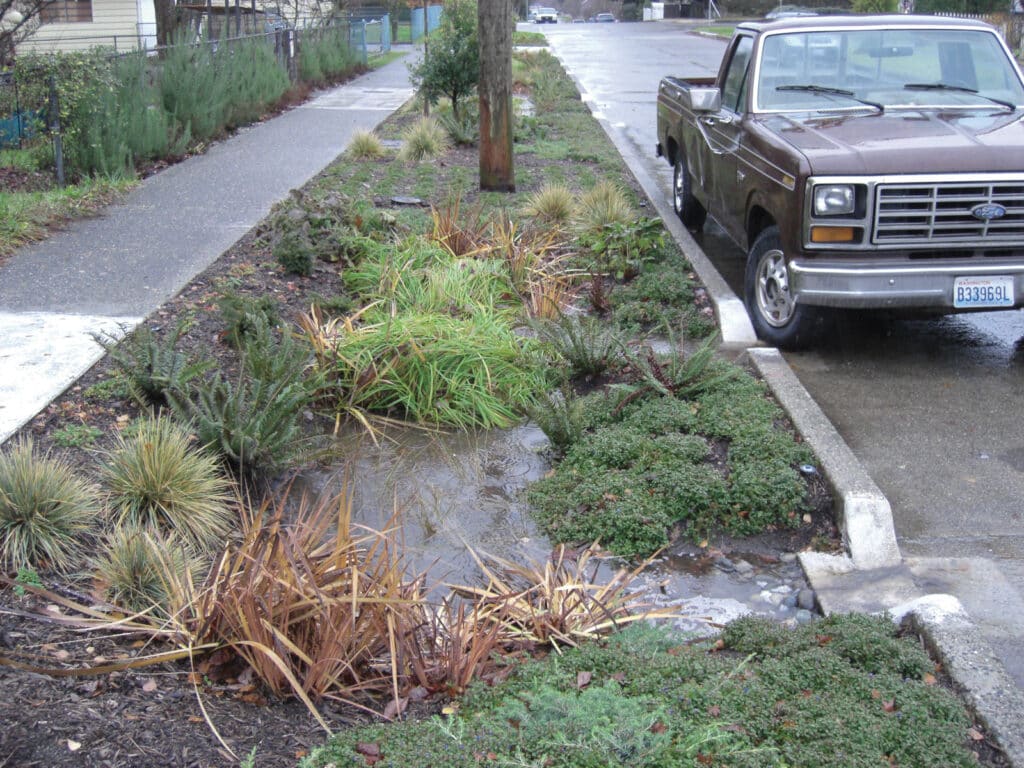
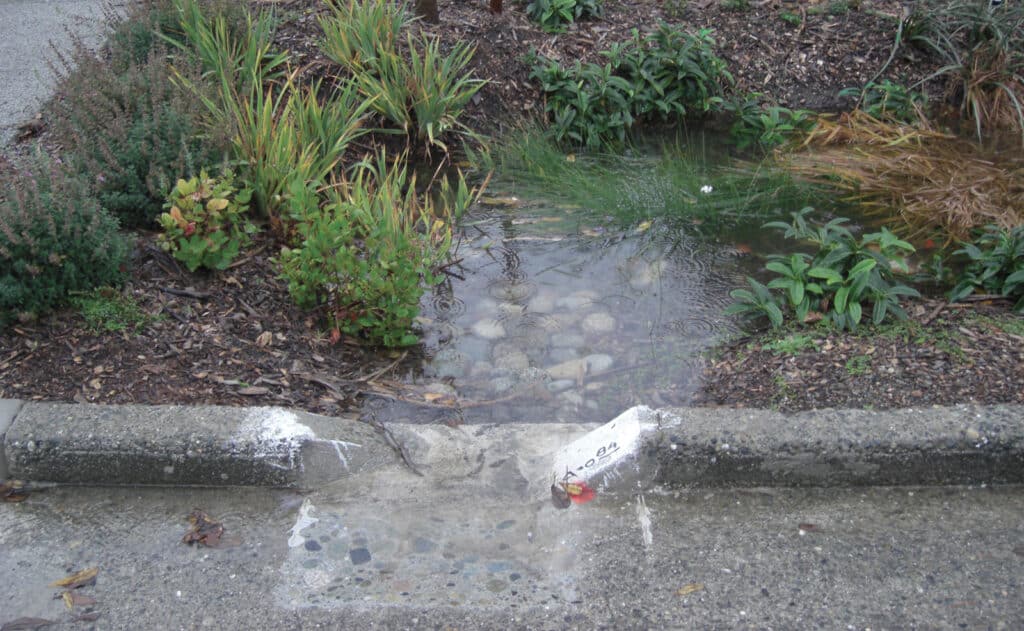
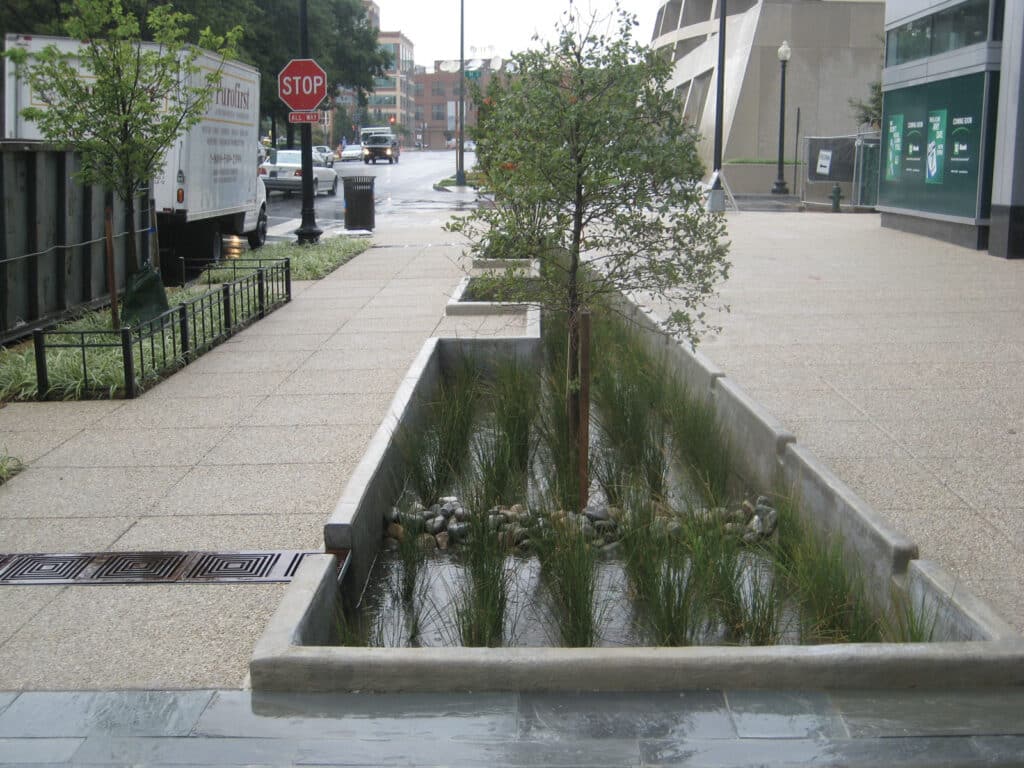
Inlets convey stormwater runoff from the surrounding street catchment area into the bioretention facility. Details of inlet design—including width, grade, and location—guide the stormwater into and out of the stormwater cell.
Discussion
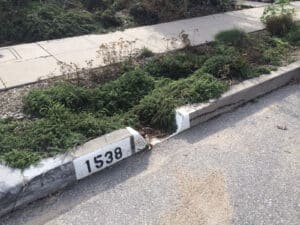
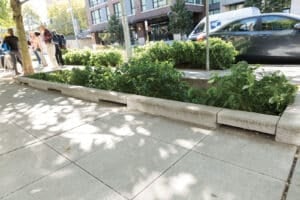
The width and number of inlets determines the stormwater inflow and outflow capacity. Inlets should be wide enough to accommodate the expected stormwater volume, but their minimum size is usually related to the type of maintenance equipment that will be used to clean the curb cut (for example, the minimum width of a shovel). Inlets are typically 8–12 inches wide, but inlets up to 24 inches wide are not uncommon.
MIG | SVR
MIG | SVR
Dan Reed
If there are multiple cells in a series or multiple inlets in a cell, some water can bypass the first inlet and then flow into the next inlet downstream.
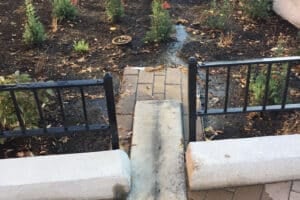
Building an inlet often involves minor modifications to the existing flow path in the gutter or pavement at the face of the curb. These changes can include a sloped surface through the curb cut to the cell to facilitate conveyance of stormwater into the cell, as well as a stabilized surface inside the cell at the inflow point (e.g., cobbles or a concrete pad) to minimize erosion as flow enters the cell.
Carefully evaluate the slope of the inlet to ensure flows can enter the bioretention cell. Small differences in slope may mean that low-flow runoff bypasses the inlet.
Vertical notches can be installed along the sidewalk edge of the facility. A width of at least 4 inches will provide convenient maintenance access whileminimizing the risk that people will get their feet caught in the openings.
Design inlets to minimize the opportunity for entry by vehicles. Even narrow curb cuts can allow incursion, especially if perpendicular to the parking lane. Metal or concrete lids can reduce incursion risk.
Design inlets to resist blockage. The accumulation of garbage, debris, or sediment at the inlet will prevent runoff from entering the bioretention cell, causing stormwater flows to bypass the cell and eliminating its value for flood prevention and runoff capture. Consider how ice and snow may block inlets and mitigate for this issue if necessary. Include a designated presettling zone—at the inlet for the first cell in a series, or at the primary inlet for a single cell on a block—for collecting debris and sediment, and to allow cleaning efforts to focus on a small space within each project.
MIG | SVR
Mike Nakamura
Portland Bureau of Transportation
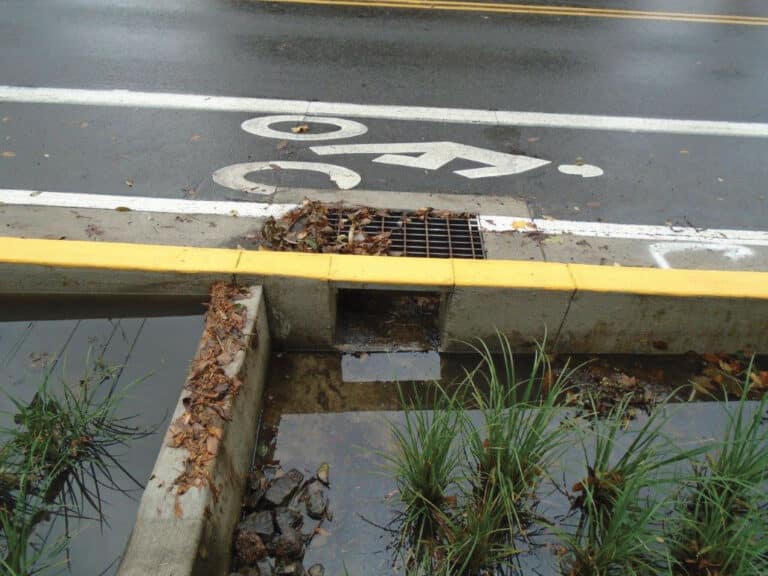
Apron/Depressed Gutter
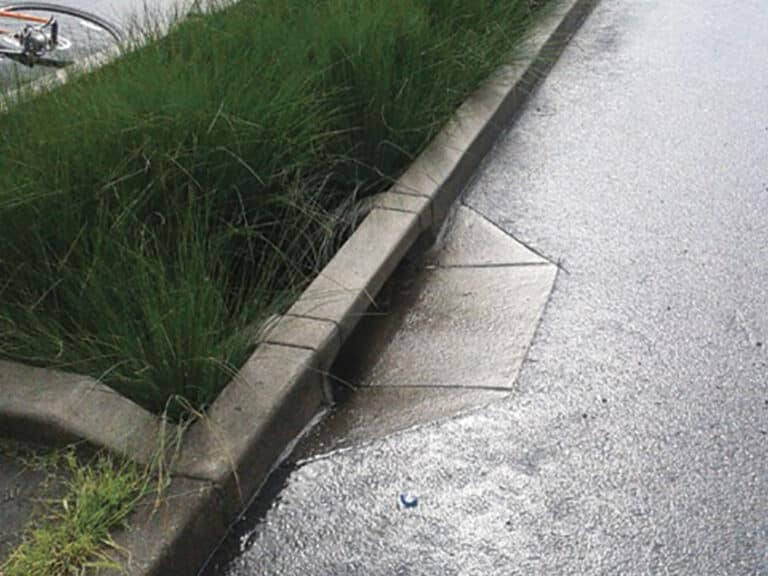
Inlet aprons or depressions increase inflow effectiveness. Aprons typically drop 2 inches into the bioretention cell, with another 2-inch drop behind the curb to maintain inflow as debris collects.
Gutters with steep cross slopes can create hazards, especially to people bicycling. Curbside and protected bike lanes along concrete aprons should be at least 6 feet wide to give bicyclists adequate clear width from the curb and any pavement seams.
Where the curb alignment along the street is straight, the curb opening may optionally have a bar across the top of the inlet. For aprons into bioretention swales, the curb may angle into the cell to improve conveyance of gutter flow into the facility in the planting strip.
A depressed concrete apron can be cast in place or retrofitted in by grinding down the existing concrete pavement.
Portland Bureau of Transportation
Depressed Drain
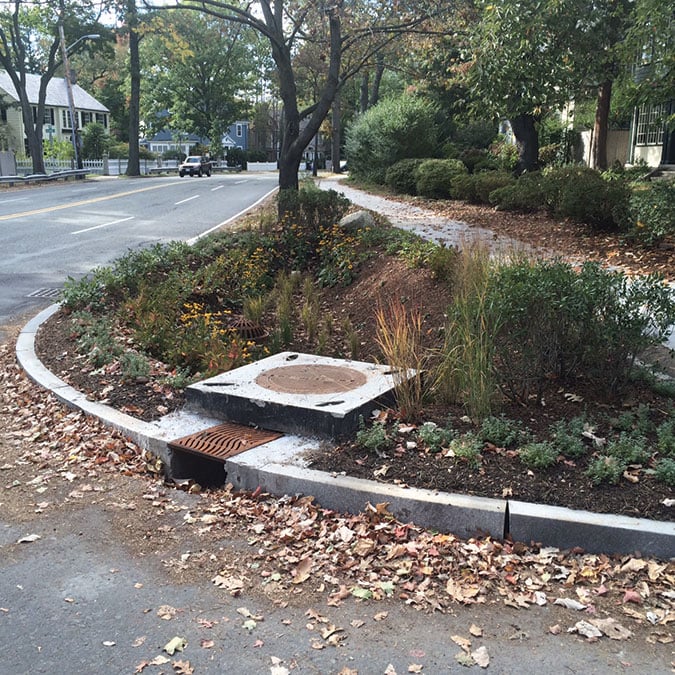
In a depressed drain, runoff in the gutter drops into a grate-covered drain before flowing into the cell. Drain covers must be selected for compatibility with bicycling and walking; grid covers are preferred.
Depressed drains are a potential solution for bioretention cells on sloped streets where directing runoff into the cell is a challenge.
The curb is also fitted with an opening inlet to maintain runoff capacity into the cell in case debris collects on the grate.
Cambridge Department of Public Works
Inlet Sump
Where a large amount of debris is expected, an inlet sump can settle and separate sediment from runoff before entering the infiltration area.
Runoff drains into a catch basin, which collects debris in its sump. After presettlement, water drains via a pipe daylighting into the swale or through an opening in the catch basin’s walls to the infiltration area.
Inlet sumps convey flow to the subsurface via a perforated underdrain pipe that distributes the flow to bioretention cells or connected tree trenches.
Avoid siting sump inlets where pedestrians will have to negotiate with them, such as at the curb return or immediately next to the curb ramp.
Aaron Villere
Trench Drain
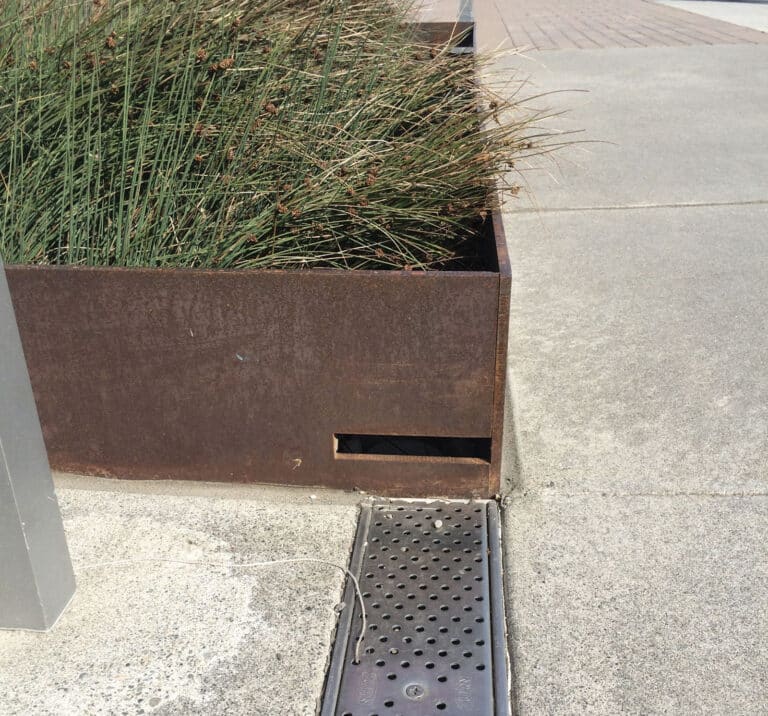
A trench drain is a long, covered channel that collects stormwater and can direct it into the green or gray system. Trench drains are often used atop an existing gutter or stormwater path, and are an excellent solution for streets where walking across the entire surface is to be encouraged.
Trenches may either be shallow (where runoff volume is less of an issue) or deep and covered by a metal grate. Deeper trench drains may gather sediment and require frequent maintenance.
Trench drains may be configured either perpendicular or parallel to the flow direction of the roadway, collecting runoff and directing it to a single inlet in the bioretention cell.
Trench drains can be designed as detectable edges or part of a detectable edge, and may be used to help define flush or curbless streets, especially shared streets. Review current ADA code for grate requirements if trench drain is within sidewalk zone and/or ADA path of travel.