Atlanta Department of Public Works and Department of Watershed Management
Location: Atlanta, GA
Street Context: Residential Streets
Project Length: 4 miles
Right-of-Way Width: varies
Participating Agencies: City of Atlanta Departments of Watershed Management and Public Works
Timeline: Planning started 2012, Construction 2015–2016
Cost: $15.8 million, including $1.1 million utility allowance and 3 years of maintenance costs
Goals
Flood mitigation: Manage the rainfall of a 25-year, 4-hour rain event akin to the storms in 2012 that caused neighborhood flooding.
Stormwater management: Reduce the volume of stormwater entering the combined sewer system, which serves about 10% of the city.
Overview
After back-to-back storms caused severe flooding in the Atlanta neighborhoods of Peoplestown, Mechanicsville, and Summerhill in 2012, the City dedicated funds to improve the area’s stormwater management. The neighborhoods, which are more than 60% covered by impervious surface, fall at a choke point within the combined sewer area, so larger storms caused neighborhood flooding and CSO events. City staff studied the entire sewer shed to map drainage patterns and define the project area and goals.
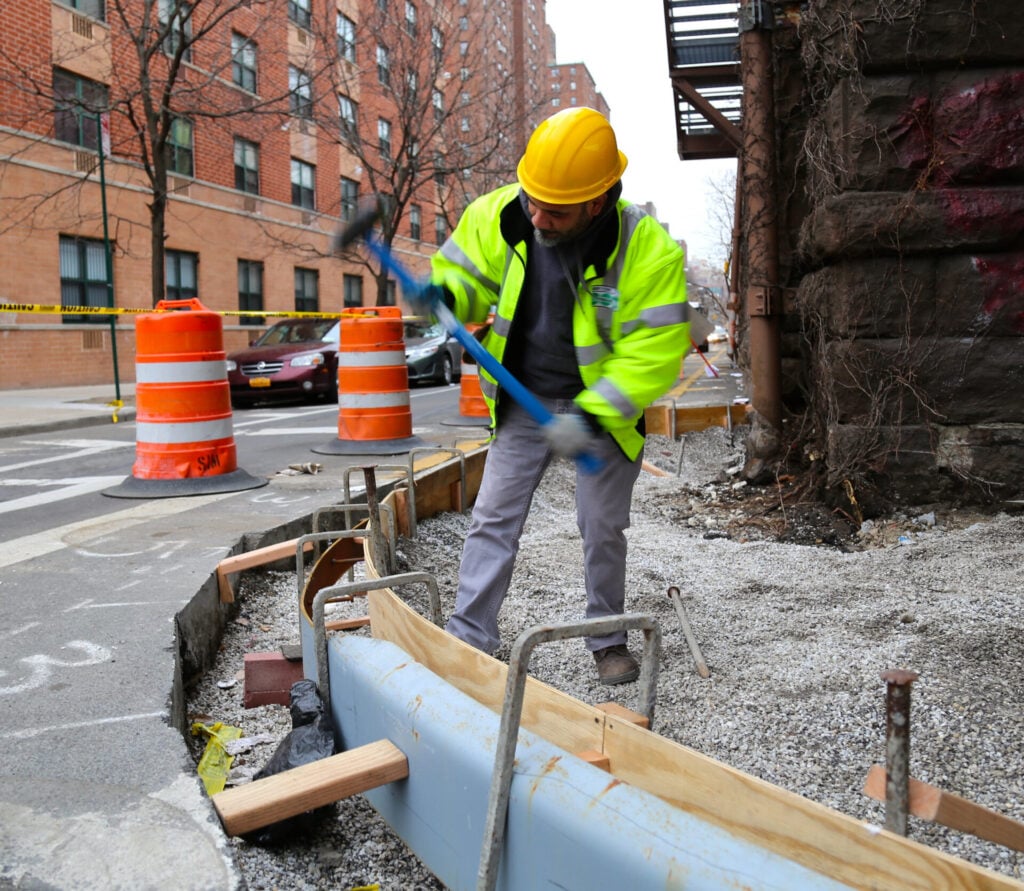
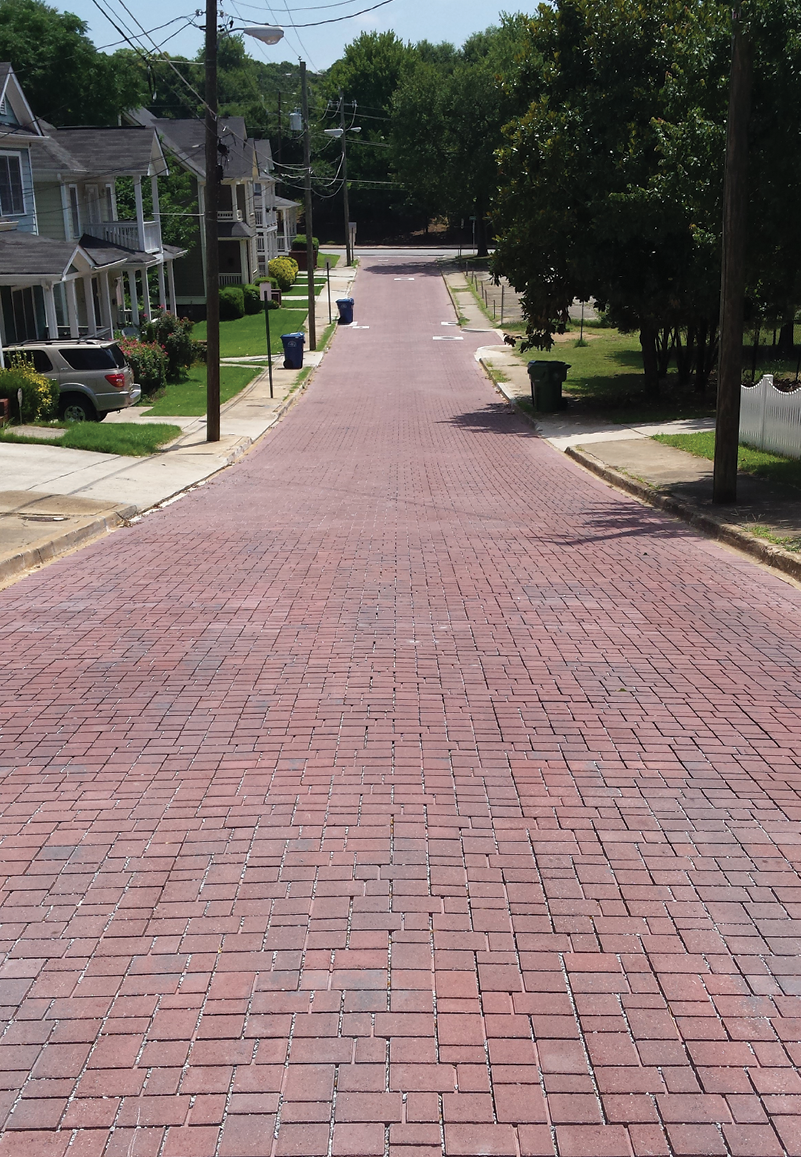
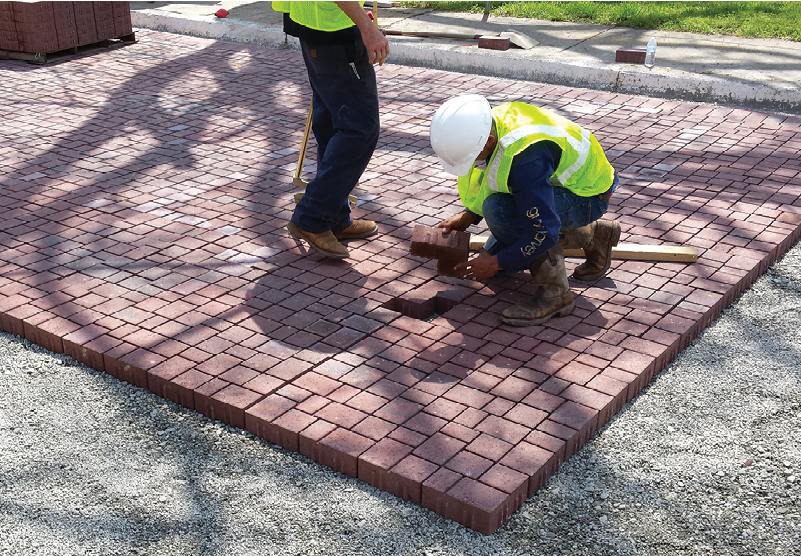
Four miles of streets within the project neighborhoods were milled, excavated, and resurfaced with permeable pavers atop an infiltration reservoir. This design allows stormwater runoff to infiltrate through the street surface, mitigating flooding and reducing overflow events.
Atlanta Department of Public Works and Department of Watershed Management
Atlanta Department of Public Works and Department of Watershed Management
Design Details
Typically, new developments are required to use green infrastructure to reduce the volume of runoff generated from the first inch of rainfall. This project had more robust goals: manage the rainfall from a 25-year, 4-hour storm event, or about 3.68 inches of rain.
The project scope included the installation of approximately four miles of permeable pavers within the flooding area and at the head waters of the drainage system. Though the original design called for six miles of permeable pavers, utility conflicts limited opportunities on two miles of streets. Permeable pavers have not typically been used in the US for an entire roadway, but the goal of this project was to manage as much volume as possible.
Designers maintained a gentle crown on the roadway so that water would still funnel toward the curb in the case that the entire permeable surface was clogged. Below the permeable pavers, 3–4 feet of aggregate provide the required storage volume to manage the design storm plus structural support for streets with vehicle traffic and bus routes.
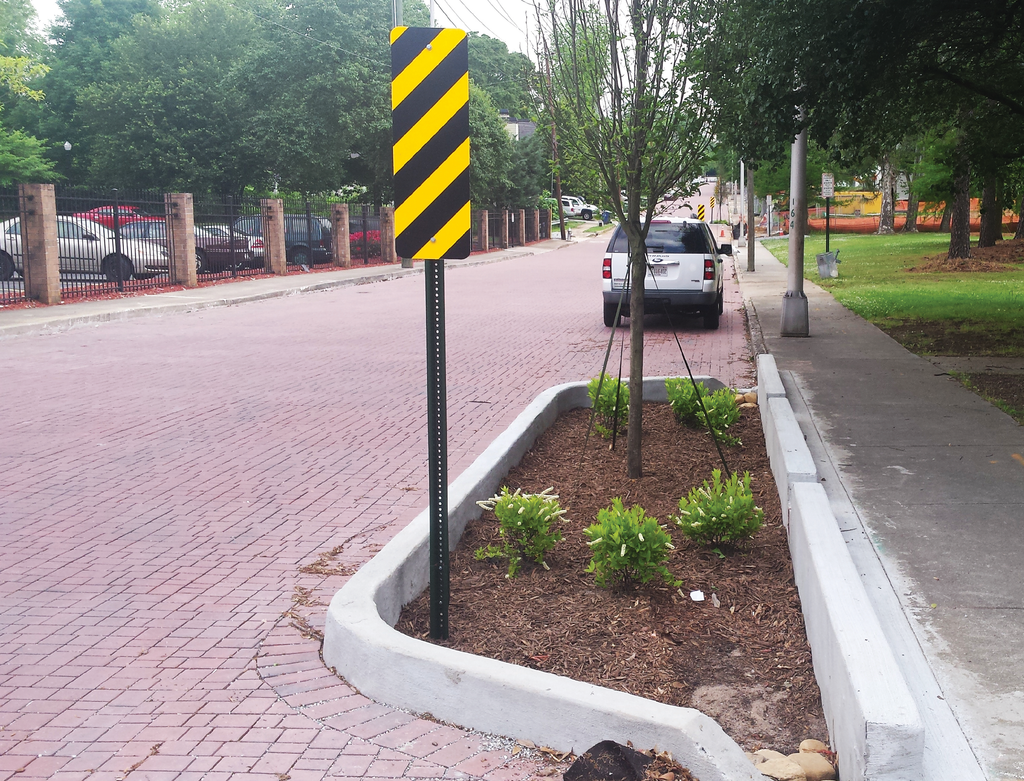
In addition to the permeable pavers, the City of Atlanta integrated about 30 stormwater planters to intercept runoff from the sides of the roadway. The soil within the planters rests atop a thin layer of gravel that is directly connected to the gravel reservoir underneath the permeable pavers on the roadbed; this design allows wicking to keep the vegetation in the planters watered during smaller storms.
An impermeable liner was installed on the sides of the streets to prevent water seepage into private properties.
Some steeper streets within the project area—up to 13% grade—posed a challenge for permeable pavers, which are easier to install on flatter streets. The design used impermeable liner check dams every 15–20 feet to break up the flows and allow better absorption into the subsoils on steep grades.
Keys to Success
Use a design-build contract that includes maintenance. The City developed 60% of the design drawings before involving a design- build contractor. The contractor is also responsible for three years of maintenance, covering tasks like repairing cracked pavers and performing street sweeping. After three years, the City will assume maintenance responsibilities.
Lessons Learned
Communication is key. The project required closing private driveways for short periods during construction, so the Department of Watershed Management required the contractor to have a public information officer on-site at all times while work was being done.
Expect utility conflicts. Utilities, streetcar tracks, and gas lines presented unexpected complications to the project. Although the project scope needed to be modified, a design-build contract improved the City’s ability to work through unexpected utility challenges. Assess the existing utilities, protect those that are in good condition, and budget time and money in the project plan for any necessary utility replacement or relocation.
Identify maintenance hot spots. The City pinpointed specific places within the four-mile project area that need extra attention. Regular street sweeping is performed with a regenerative air sweeper.
Outcomes
In addition to managing stormwater runoff, the permeable pavers, along with bumpouts and planters, provide a traffic calming element. Flow monitoring equipment and infiltration wells were installed in certain locations to assess the performance of the system. Though it is too early to evaluate results, preliminary findings show improved combined sewer flows in the system resulting in less neighborhood flooding.
Urban Street Stormwater Guide
Learn more about transit streets in NACTO’s Urban Street Stormwater Guide.