
Discussion
As traffic speeds and volumes increase, so too does the level of protection desired by pedestrians. Where vehicle speeds and volumes are high and pedestrian access is expected at regular intervals, signalized crossings preserve a safe walking environment. Where anticipated pedestrian traffic is low or intermittent, or where vehicle volumes are lower and pedestrian crossings shorter, designers may consider the use of unsignalized crossing treatments such as medians, hybrid or rapid flash beacons, or raised crossings.
On streets with low volume (<3,000 ADT), low speeds (<20 mph), and few lanes (1–2), marked crosswalks are not always necessary at the intersections. At schools, parks, plazas, senior centers, transit stops, hospitals, campuses, and major public buildings, marked crosswalks may be beneficial regardless of traffic conditions.
On streets with higher volume (>3,000 ADT), higher speeds (>20 mph), or more lanes (2+), crosswalks should be the norm at intersections.
Designers should take into account both existing and projected crossing demand. Frequent crossings reinforce walkability and have the potential to fuel greater demand. Where signalized or stop-controlled pedestrian crossings are not warranted but demand exists or is anticipated, designers should continue to work toward goals of safety and comfort for people walking through other means, such as actuated crossings or enhanced crossing treatments.
Judgment on the application of a crosswalk should be based on multiple factors, including land uses, present and future demand, pedestrian compliance, speed, safety, and crash history. Volumes alone are not enough to determine whether or not a particular device should be used.
The presence of a crosswalk does not, in and of itself, render a street safe. Based on their surrounding contexts, speed, and overall roadway width, crosswalks often require additional safety measures such as safety islands, signals, or traffic calming.
While pedestrians generally have the right to cross at any intersection regardless of crosswalks, designers should be sensitive to the misperception that a crosswalk is the only legal place to cross the street. Use crosswalks as both a guide for pedestrians and a way to communicate crossings to motorists.
The practice of discouraging pedestrian crossings by leaving uncontrolled crossings unmarked is not a valid safety measure. Instead, it encourages unsafe, risk-taking behavior and discourages walking citywide. Efforts should be made to enhance or highlight desired crossings wherever practicable. Hybrid beacons, rapid flash beacons, raised crossings, medians, and other safety counter-measures may be suitable and less expensive than full signalization. These should all be considered before leaving an uncontrolled crossing unmarked.
Critical
All legs of signalized intersections must have marked crosswalks unless pedestrians are prohibited from the roadway or section thereof, or if there is no actual pedestrian access on either corner and no likelihood that access can be provided. Pedestrians are unlikely to comply with a 3-stage crossing and may place themselves in a dangerous situation as a result.

NO PEDESTRIANS (MUTCD 2B.36, R510c, or R93a) signs should not be used unless they are accompanied by a physical barrier and positive information about where pedestrians should cross the street.
Pedestrian countdown signals create a more predictable crossing environment and give adequate warning to pedestrians attempting to cross a roadway. All new crosswalk signals should include pedestrian signals with countdowns.
Pedestrian crossings should be at grade except in instances where they are crossing limited-access highways. Pedestrian overpasses and underpasses pose security risks from crime and are frequently avoided for a more direct (if less safe) crossing.
Pedestrian noncompliance increases with relative detour and delay. Delays exceeding 40 seconds at signalized crosswalks and 20 seconds at unsignalized or yield-controlled crosswalks may cause risk-taking behavior. Countdown signals and shorter cycle lengths can help to increase compliance, and may be paired with other strategies.
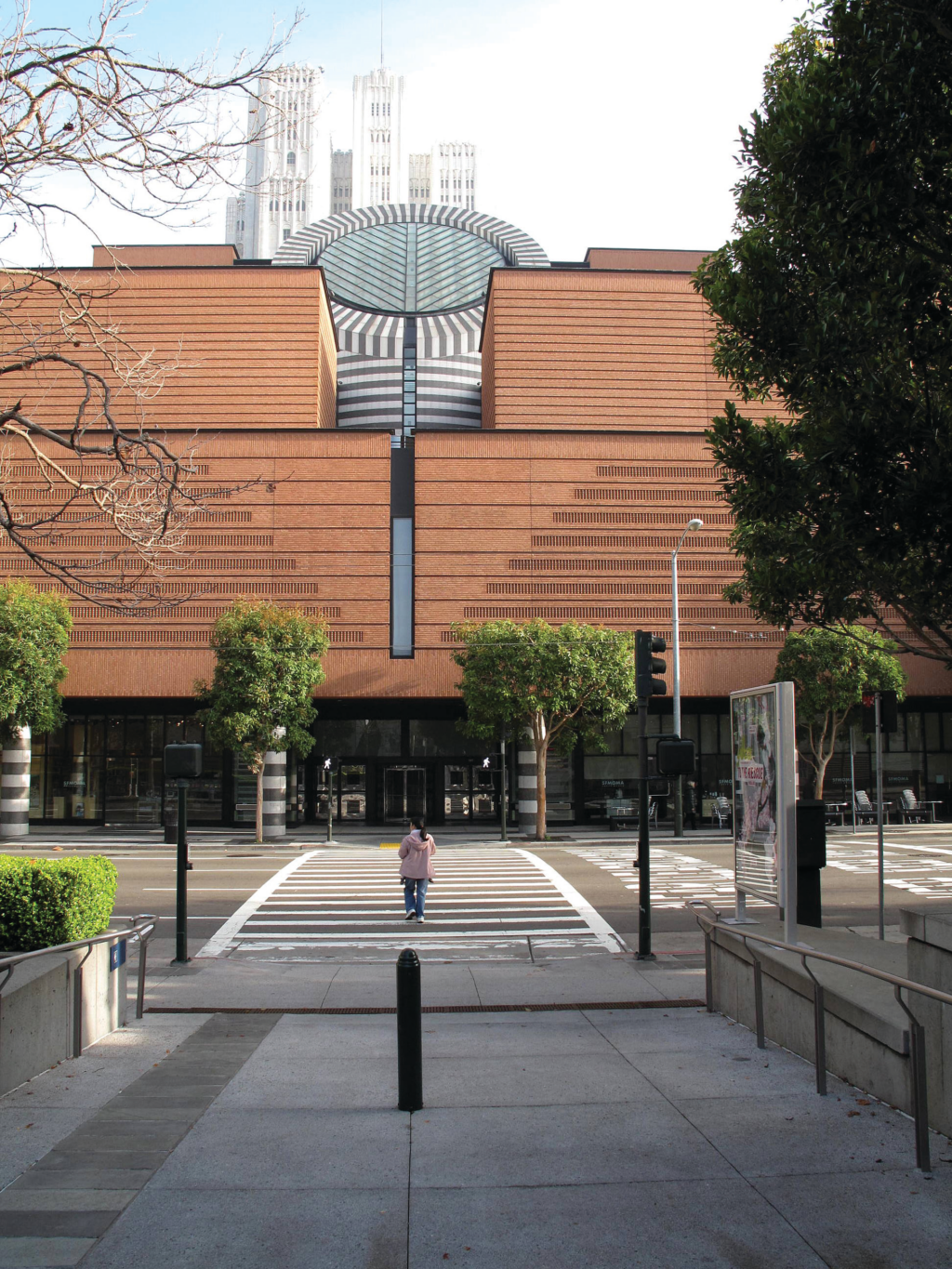


Recommended
Map the pedestrian network and crossing locations to understand how it corresponds to the bicycle, transit, and vehicle networks. Pedestrians interact with the environment at a fine-grained level and have frequent demand for accessing destinations.
Signalized crosswalks are permitted at all intersections where they are deemed necessary by current or projected conditions, with input from professional judgment, regardless of existing warrants (MUTCD 2009, Section 4C.05, Paragraph 04). They should typically be permitted at a minimum of 200-foot spacing (or approximately one short city block). Unsignalized crosswalks may be provided at closer intervals.
Pedestrians, including elderly and disabled persons, should be able to cross an intersection in a single cycle, rather than two cycles, unless a street is segmented by a transit, bus, or other destination median.
Channelized turning “porkchop” islands are not recommended and should be avoided. Turning traffic often fails to yield to pedestrians crossing at these locations.
Optional
Crosswalk spacing criteria should be determined according to the pedestrian network, built environment, and observed desire lines. In general, if it takes a person more than 3 minutes to walk to a crosswalk, wait to cross the street, and then resume his or her journey, he or she may decide to cross along a more direct, but unsafe or unprotected, route. While this behavior depends heavily on the speed and volume of motorists, it is imperative to understand crossing behaviors from a pedestrian’s perspective.
