While the separation of the street and the sidewalk is generally defined through on-street parking, street furniture, and physical elements that buffer pedestrians from motorists, curbsides have the potential to host a wide variety of uses beyond parking.
On-street parking spaces or curbside travel lanes may be converted to bus lanes or cycle tracks. 2–4 parking spaces can be replaced with a parklet or bike corral. On weekends or at lunch time, curbsides can host food trucks or vendors that activate street life and create a destination within the street.
Interim Sidewalk Widening
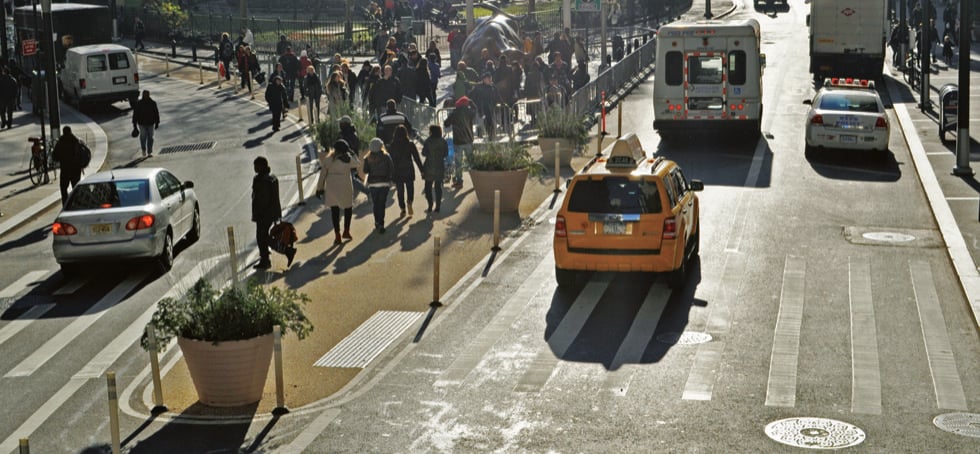
As neighborhoods change and develop, the intensity of a street’s uses may also change. Sidewalks can be expanded using interim materials, such as epoxied gravel, planter beds, and bollards, easing pedestrian congestion in advance of a full reconstruction.


Traffic Calming
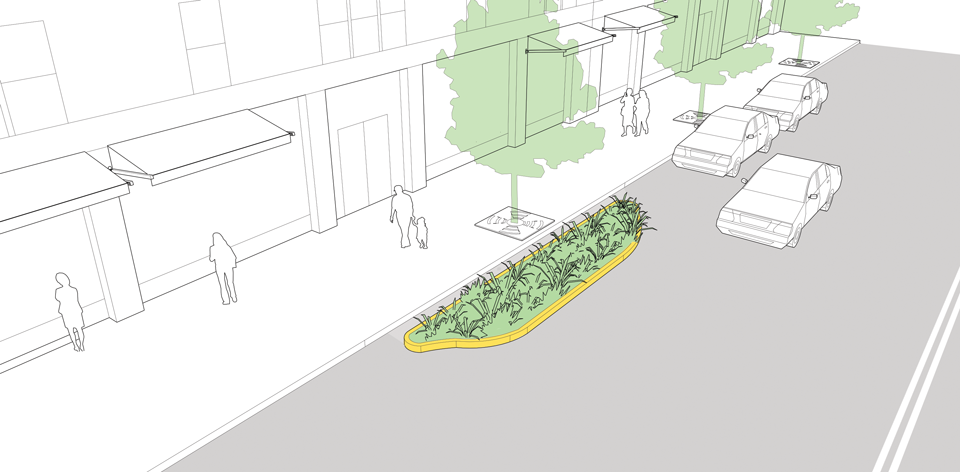
Temporary traffic calming devices may be installed using a narrow drainage channel. These offset islands help slow speeds in advance of a full reconstruction.
See Curb Extensions


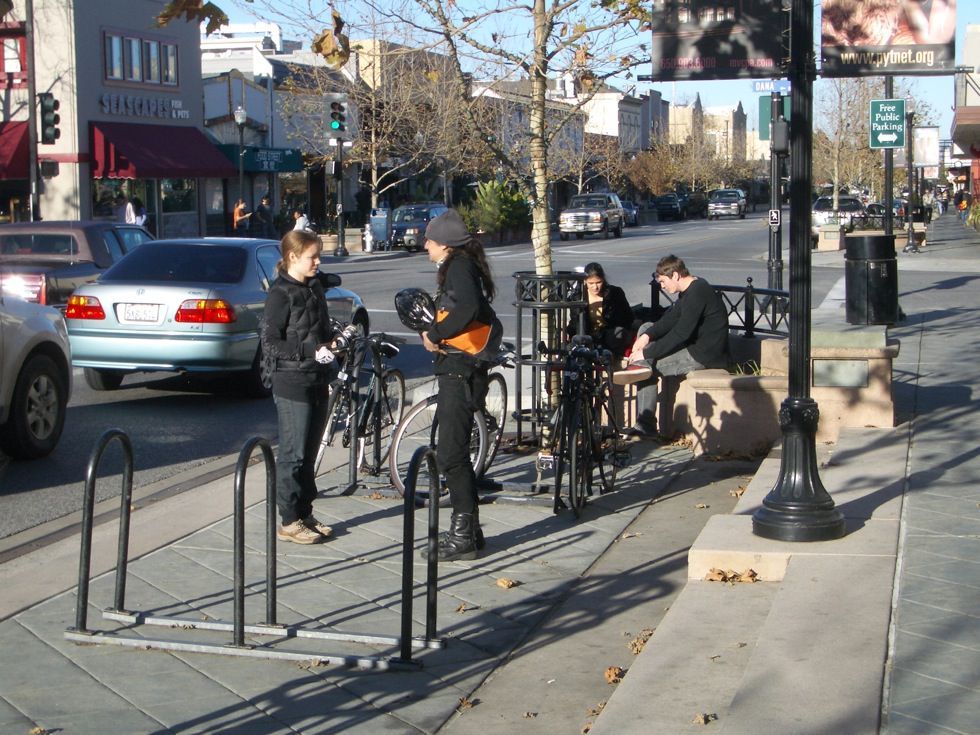
Bike Corral
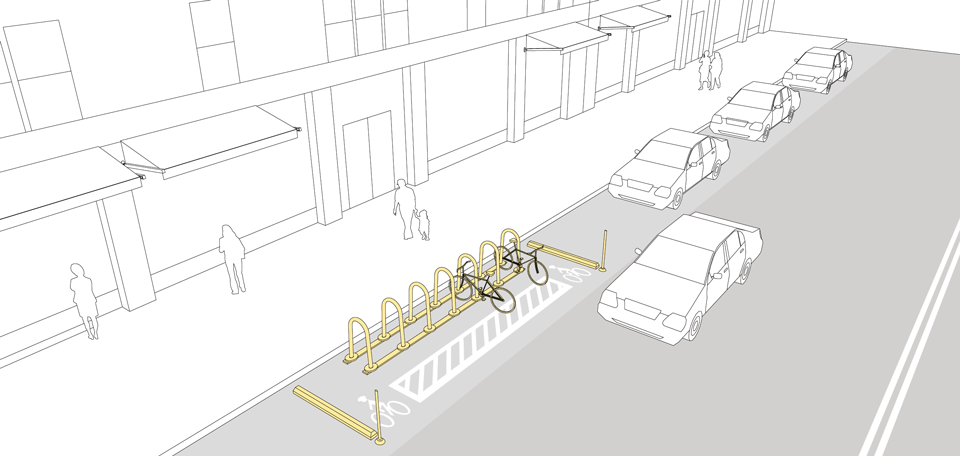
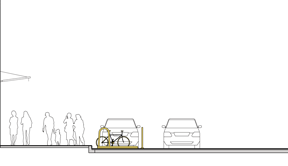
Bike corrals typically replace one parking space at the request of a local business or property owner and accommodate 12–24 bikes. Corrals can be installed at corners to daylight an intersection since bicycle parking has no effect on the visibility of pedestrians to moving vehicle traffic. Bike corrals have been shown to have a positive impact on business.1
Bike Share
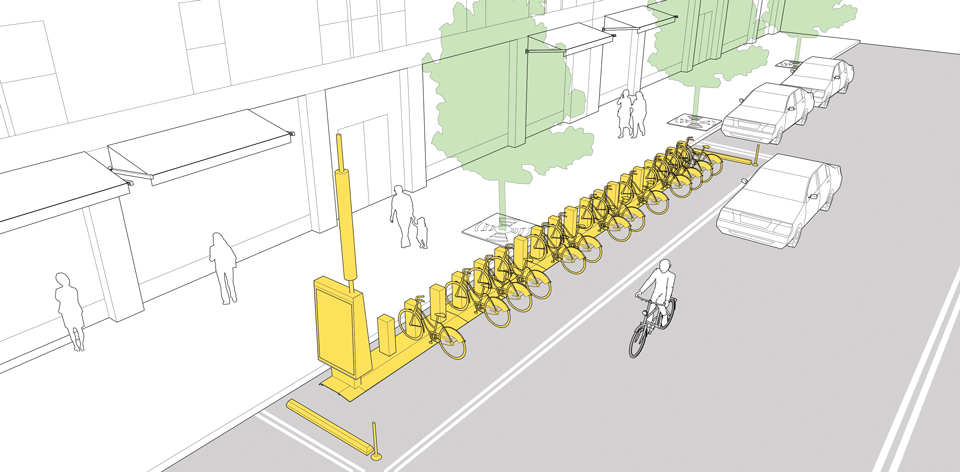
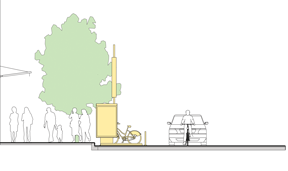
Bike share stations can serve as an integral part of the public transit system. Station maps and kiosks can serve as a focal point that orients tourists and visitors while drawing people to key destinations.

Parklet
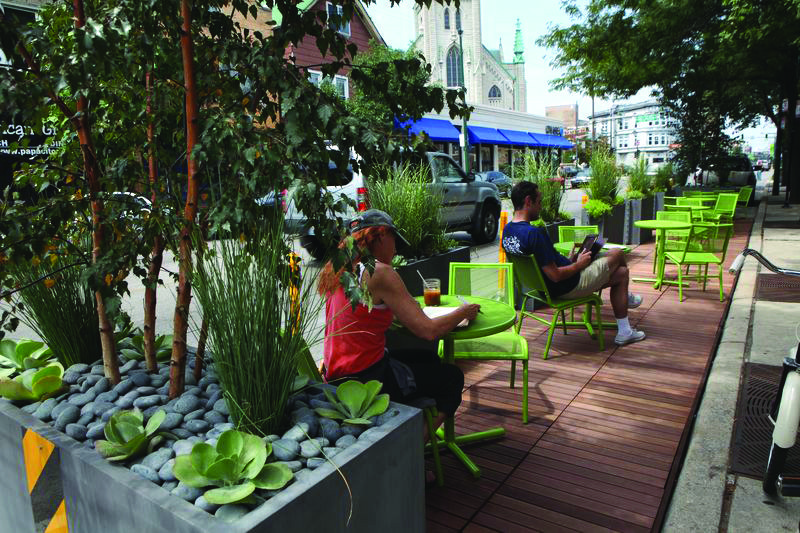
Parklets are public seating platforms that replace several parking spaces. They serve as a gathering place for the community and can energize local stores and shops.


- Drew Meisel, Bike Corrals: Local Business Impacts, Benefits, and Attitudes (Portland: Portland State University, 2010). ↩︎