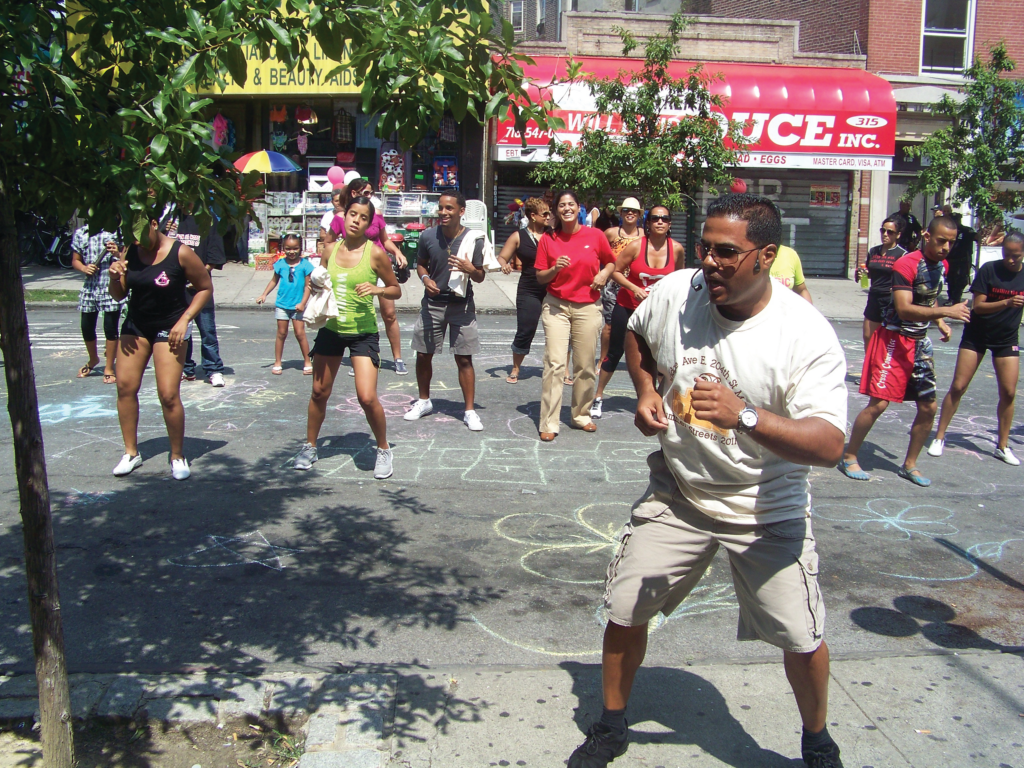
Temporary streets closures, such as play streets, block parties, street fairs, and open streets, demonstrate the range and diversity of ways in which a city’s streets may be utilized. Whether done as a precursor to a future project or as a seasonal or weekly event, temporary closures can activate the street and showcase participating businesses and communities. Depending on a street’s usage and characteristics, temporary street closures can take multiple forms, ranging from an emphasis on active recreation, biking, or exercise to business activity, food, or arts.
Discussion
Temporary street closures allow cities to take better advantage of their roadways, especially at off-peak hours and weekends.
Closures call attention to neighborhood businesses and destinations and increase foot traffic on designated corridors. Data collection can support public perceptions of the success of a temporary implementation and may be especially helpful toward creating a permanent public space.1
When themed around active recreation and exercise, temporary street closures may be aligned with a city’s larger public health goals and encourage residents to take advantage of parkways and boulevards as recreational amenities.2
Closures typically require additional trash pickup and street cleaning in the evening or the following day to ensure that local residents and businesses remain active and supportive.
Critical
A removable traffic control device or barrier should be used to ensure that vehicles do not encroach on a street closure. Police enforcement is not necessary or desirable in all cases.
Recommended
Where regularly scheduled, especially if daily or weekly, a regulatory sign should be posted to indicate the closure.
Closures are most successful when programmed with events and activities throughout the day. Programs may include performances, seating, food stalls, and other activities.3
Street furniture, including chairs, tables, and lighting, can help to activate a closed pedestrian street.
On days of closure, loading and unloading should be permitted for local businesses in the morning and evening hours.
Naming conventions for temporary pedestrian streets should be carefully considered. Branding should be analyzed based on the intended audience and participants.
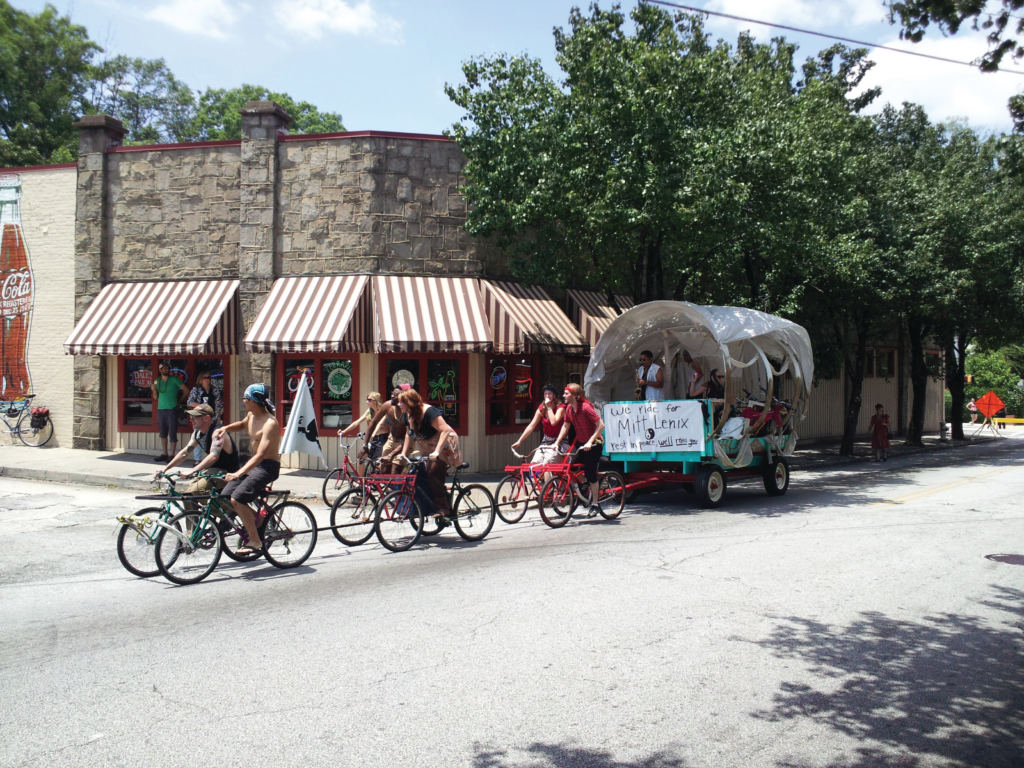
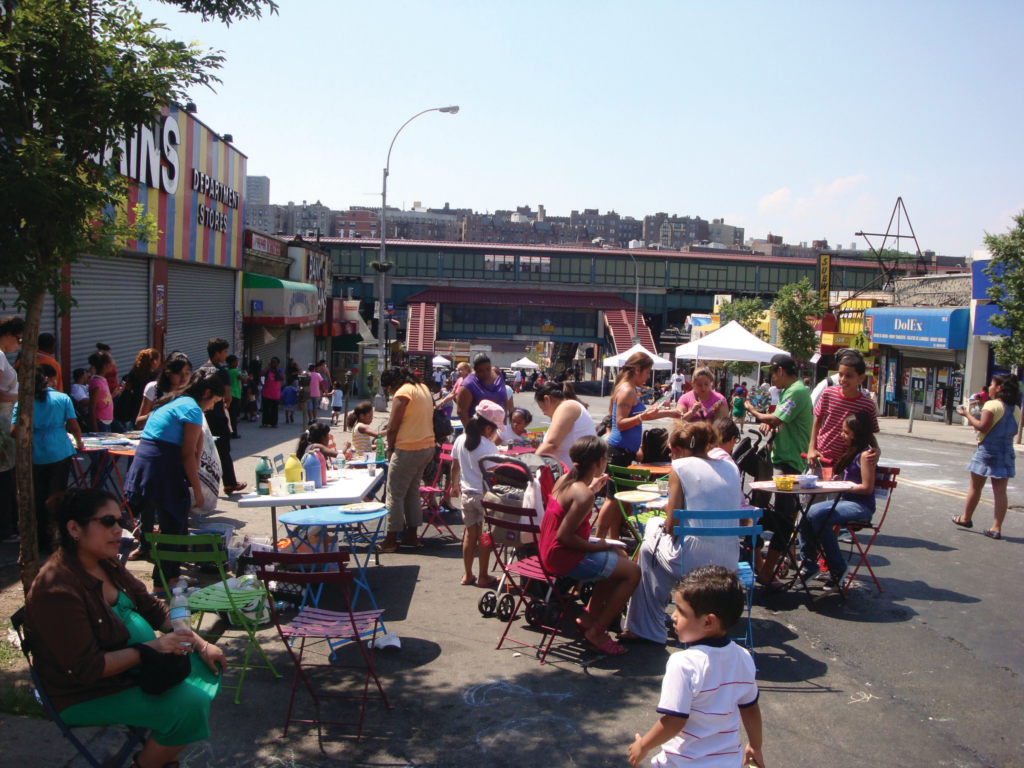
“Weekend Walks” is a 5-year-old program provided by NYC DOT and local partnering organizations. The program provides community street events throughout the city from May to October.
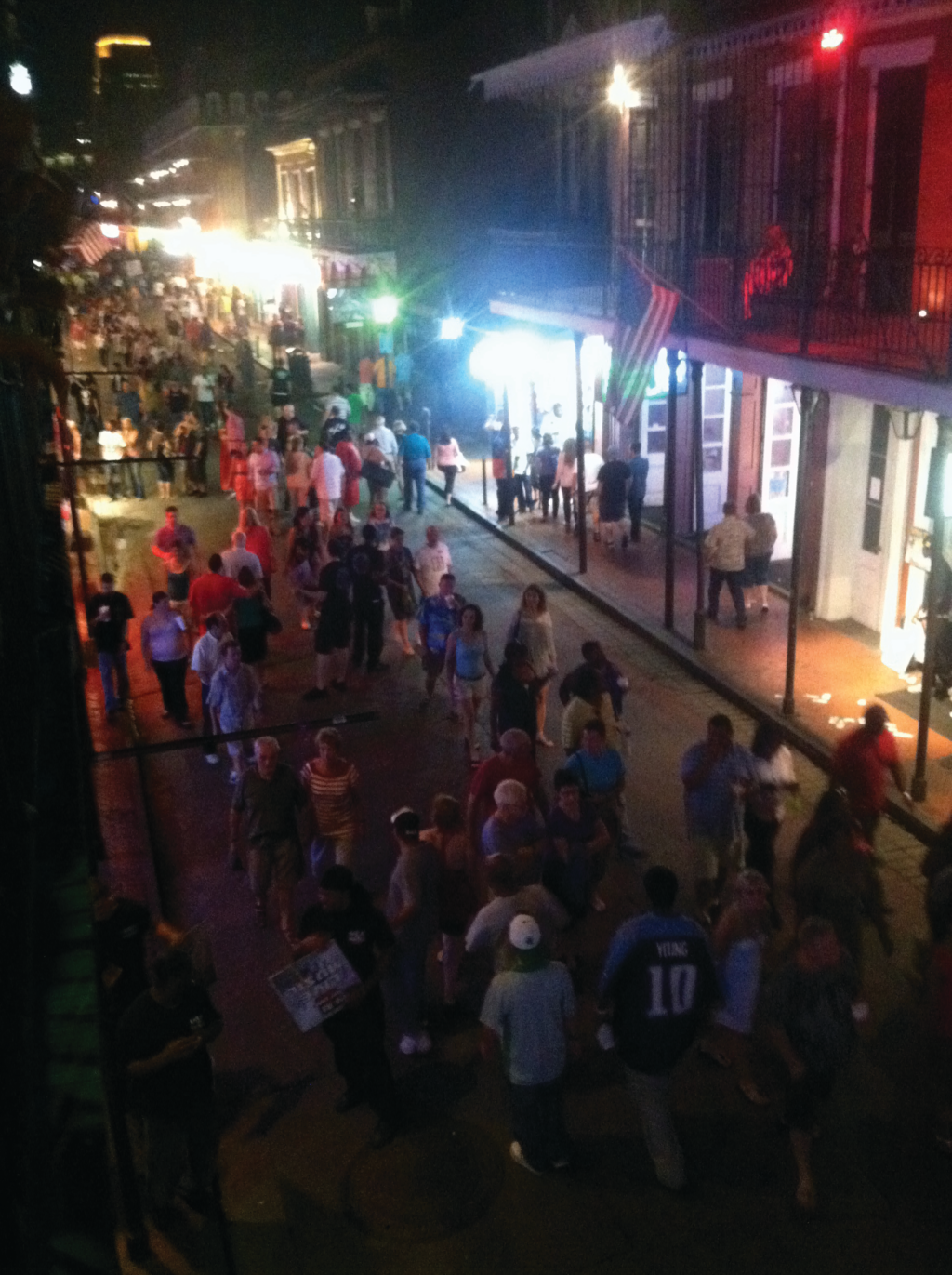
Bourbon Street closes every night, year-round.
Optional
For certain streets, night closures may be desirable. Night closures should be more closely monitored and protected from traffic due to the potential lack of visibility for drivers. Extra lighting may be required and police enforcement is recommended at night.
Bicyclists may be permitted to ride through temporary street closures in certain cases. Typically, shared use by bicycles should be determined based on anticipated pedestrian traffic as well as a street’s available width. Bicyclists should always be permitted to ride through “open streets” events. (See table at right.)
Types of Street Closures
Temporary street closures restrict a street to pedestrians — and in some cases bicyclists, rollerbladers, and skateboarders — at specific times of day, specific days of the week or during the year, or for certain seasons. While many streets are periodically closed to traffic for special events, temporary street closures refer to streets with a regularly scheduled closing, such as a pedestrian street, play street, or farmers market. Temporary street closures are often applied in the following scenarios:
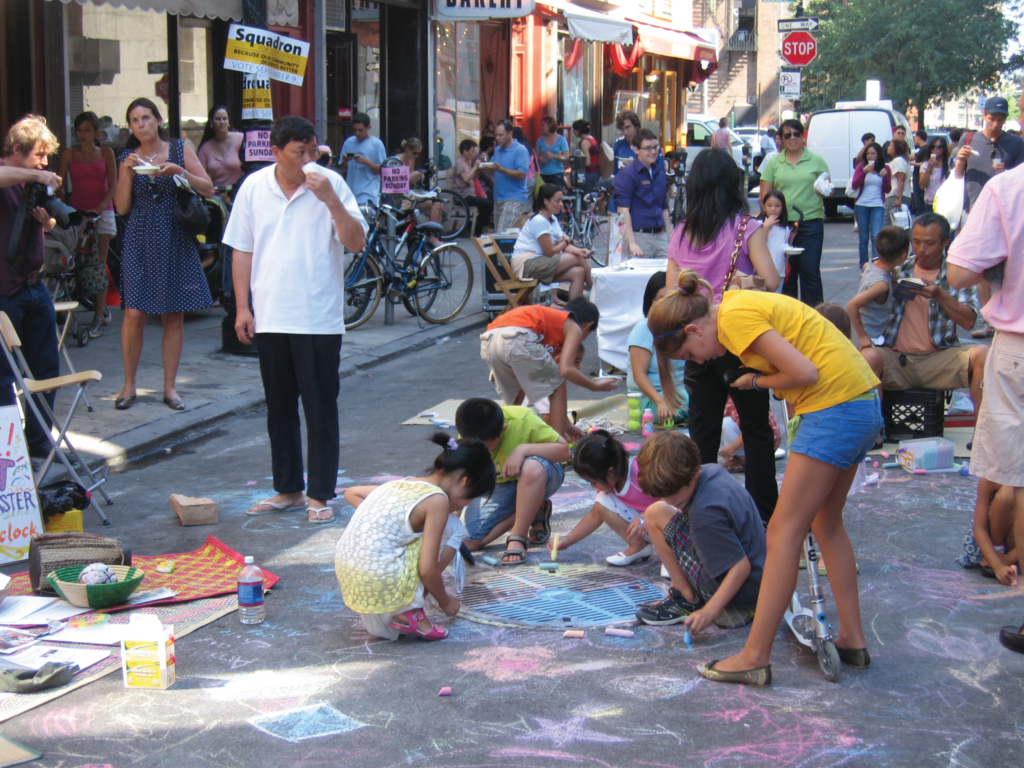
Play Street
Low-volume, local streets closed for a specific portion of the afternoon and/or weekend for play and recreation, play streets are often adjacent to playgrounds, schools, or residential areas with limited park space in the vicinity.

Pedestrian Street
Pedestrian streets are typically held either on weekends or seasonally on neighborhood main streets. They are based around cultural and community programming and events, rather than commercial activity or street food.

Market
Streets adjacent to public parks, landmarks, or along key corridors that are fully or partially closed for a food fair or farmers market. Markets are often seasonal and open only during daylight hours.

Open Streets
Major boulevards or parkways closed on weekends for a specific set of hours. Open streets typically include pedestrians, bicyclists, and other recreational users, as well as limited static activities near the curbside.
Los Angeles’ CicLAvia Initiative
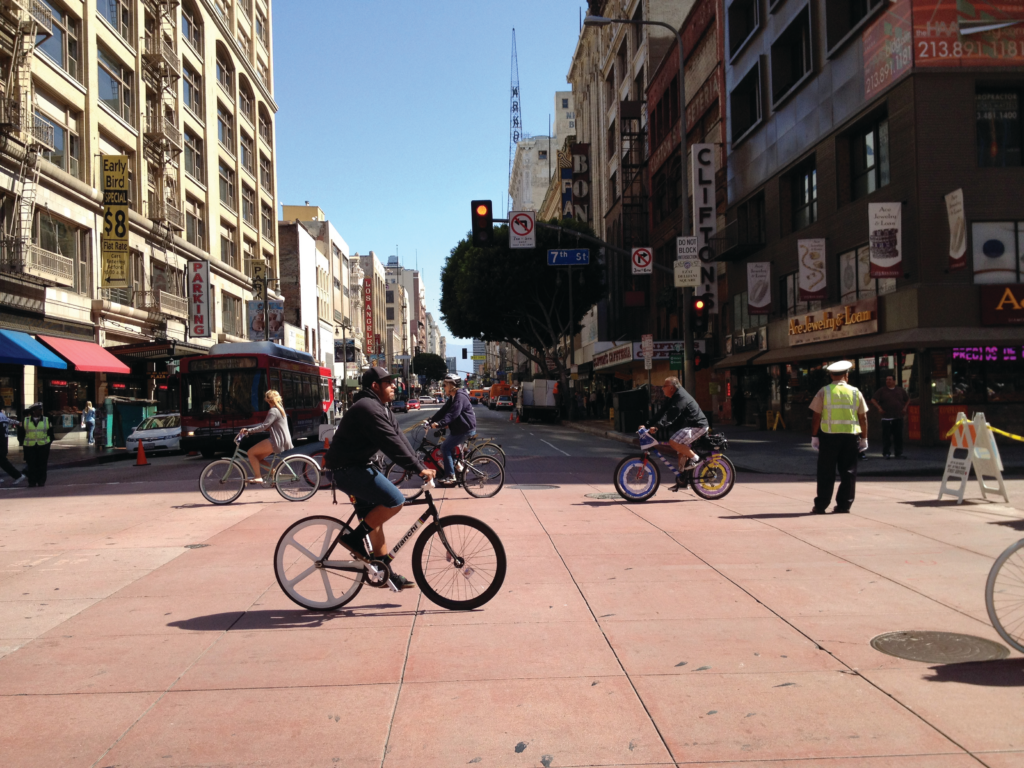
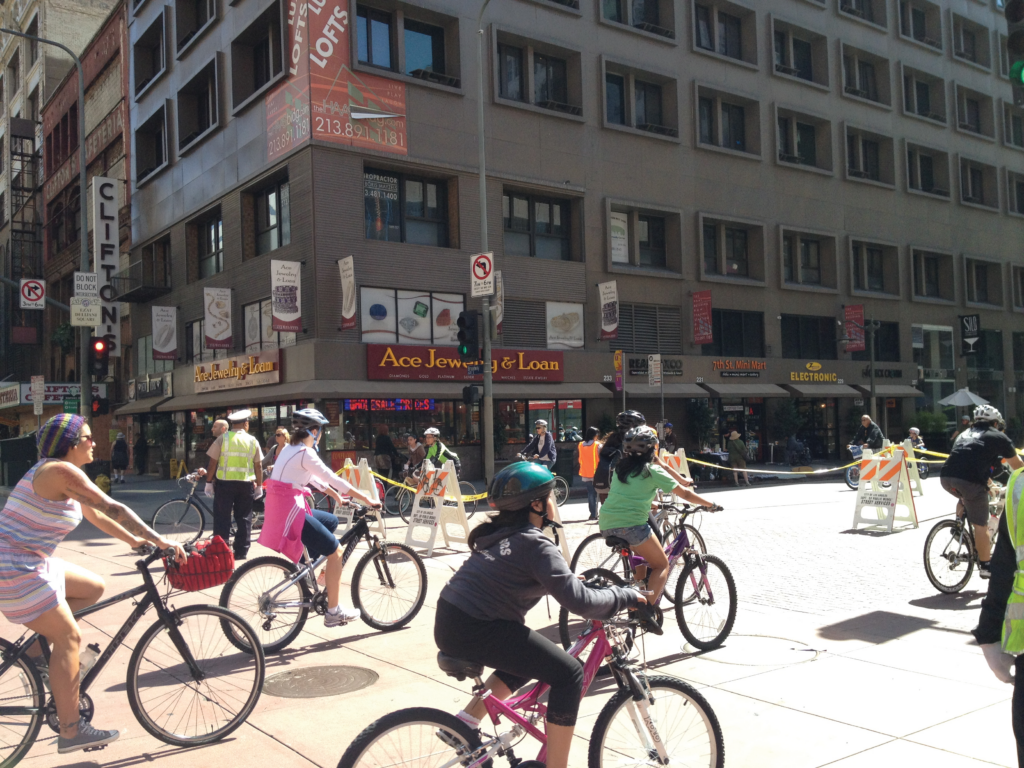
Los Angeles’s CicLAvia initiative opens city streets to bicyclists, pedestrians, skateboarders, and rollerbladers, temporarily transforming the city’s largest public space, its streets, into major active transportation corridors. Initially conceived by a group of volunteers in 2008, CicLAvia will soon hold its 7th annual event. Routes have ranged between 6.3 and 15 miles, with the most recent CicLAvia drawing an estimated crowd of 150,000.
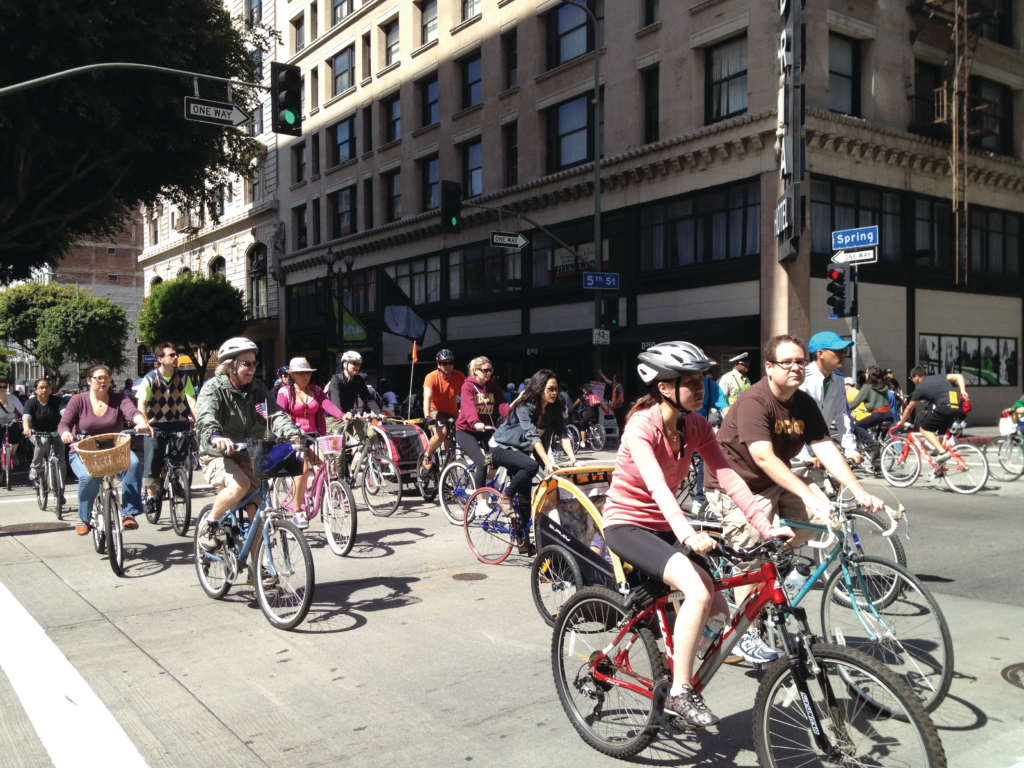
Public-Private-Nonprofit Partnership
Drawing inspiration from ciclovias in Latin America, a group of volunteers began conceptualizing a Los Angeles version of the event in 2008. After incorporating as a nonprofit in 2009, CicLAvia staff visited neighborhood council meetings to build support and demonstrate community interest. With an energized constituency behind them, CicLAvia teamed up with the Mayor’s Office and the Los Angeles Department of Transportation (LADOT) to plan logistics for the event. The resulting public-private nonprofit partnership benefits all stakeholders. The nonprofit sets the overall vision for CicLAvia, holds liability insurance, and fundraises for the event. Funding stems from a mix of government grants, foundation dollars, and private sponsorships. A private production company manages logistics, graphic design, and staffs the events. The LADOT and the Mayor’s Office coordinate traffic management, permits, and policy.
Design
Route selection for the CicLAvias looks at population density, transit connections, commercial corridors, and destinations, such as parks, plazas, or notable buildings. Planners typically avoid streets with steep grades and work with city staff to patch potholes and provide a smooth surface along the designated route. Each CicLAvia tries to use a new route to showcase different neighborhoods in Los Angeles, though staff have also found a benefit to repeating routes, especially as they build relationships with businesses and test more creative ways of engaging with participants.
CicLAvias remain permeable to motorists at designated crossing points, minimizing disruption to the transportation network and reducing the potential for road closures that isolate one half of the city from the other. LADOT’s Special Traffic Operations Division, which handles events, produces a traffic management plan for each CicLAvia, detailing intersection modifications, roundabouts, and other temporary infrastructure designs that will manage the traffic flow of participants and remove conflict points. CicLAvia staff are responsible for implementing the plan from LADOT.
Permits
Using the city’s Street Closure Provisions and Application Procedures for guidance, CicLAvia applies for permits before each event. Through a conditional exception, CicLAvia does not need 51% approval from neighbors to close a street, but instead must post an informational flyer to every business and residence along the route in advance of a CicLAvia.
Community Engagement
In advance of every CicLAvia event staff canvas the route to inform business owners and residents of the upcoming street closure, including what to expect and how to participate. LADOT policy requires parked cars to be moved from the route for public safety reasons. Prior to each event, CicLAvia staff alert motorists to the parking restriction to avoid cars being towed. Los Angeles Bike Coalition volunteers assist with this large-scale community engagement effort.
- Pedestrian & Transit Malls Study (Memphis: Center City Commission, 2008).
NYC DOT’s report Measuring the Street found that various public space initiatives resulted in a 172% increase in retail sales.
Measuring the Street: New Metrics for 21st Century Streets (New York: New York City Department of Transportation, 2012). ↩︎ - A Journal of Urban Health study examined the costs and health benefits of four Ciclovia events. The study found that benefits—in terms of economy and health—far outweigh the cost of the event. This is mostly because such events utilize existing infrastructure and are often the result of partnerships between public and private agencies.
Felipe Montes et al., “Do Health Benefits Outweigh the Costs of Mass Recreational Programs? An Economic Analysis of Four Ciclovia Programs,” Journal of Urban Health: Bulletin of the New York City Academy of Medicine, 89:1 (2011).
Many health care providers have sponsored open street events. Blue Cross Blue Shield of Minnesota sponsored Open Streets events in 7 communities.
Blue Cross and Blue Shield of Minnesota, “Blue Cross expands “Open Streets” events to seven Minnesota communities in 2012.” ↩︎ - For a compendium of case studies on open streets programs, see:
The Open Streets Guide (New York: Street Plans and Alliance for Biking & Walking, 2012). ↩︎