Across North America, cities are building bike networks with imagination, resilience, adaptability, and drive. They’re planning high-quality bikeways that rely on more than paint to protect their users. They’re creating infrastructure for riders of all ages and abilities. They’re not giving up at intersections. And they’re not undertaking these changes in a vacuum—they’re learning from and sharing with each other.
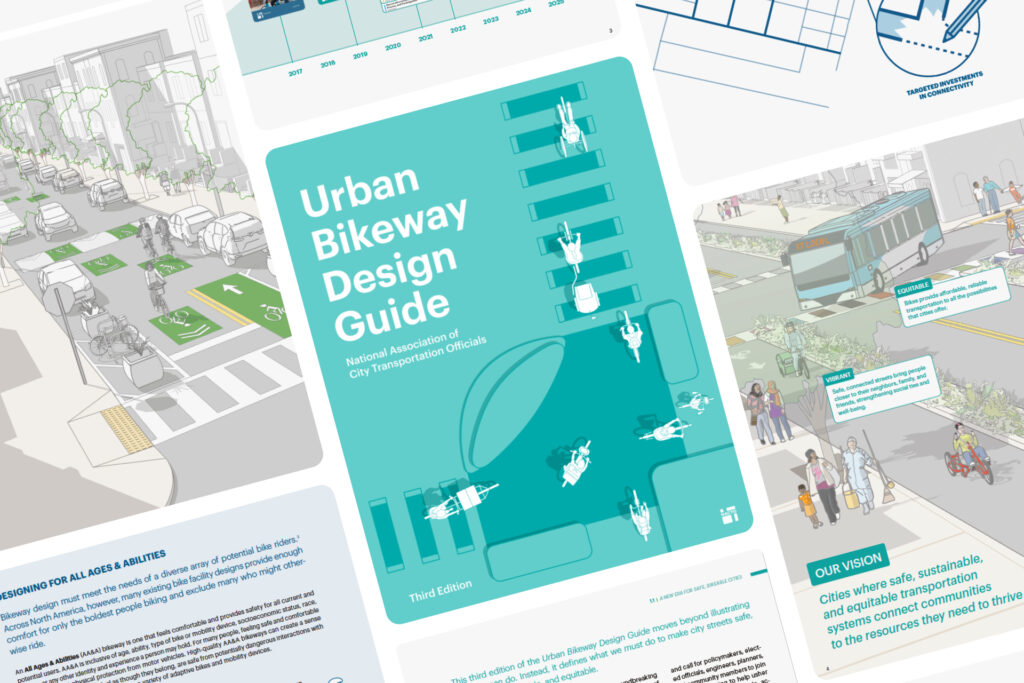
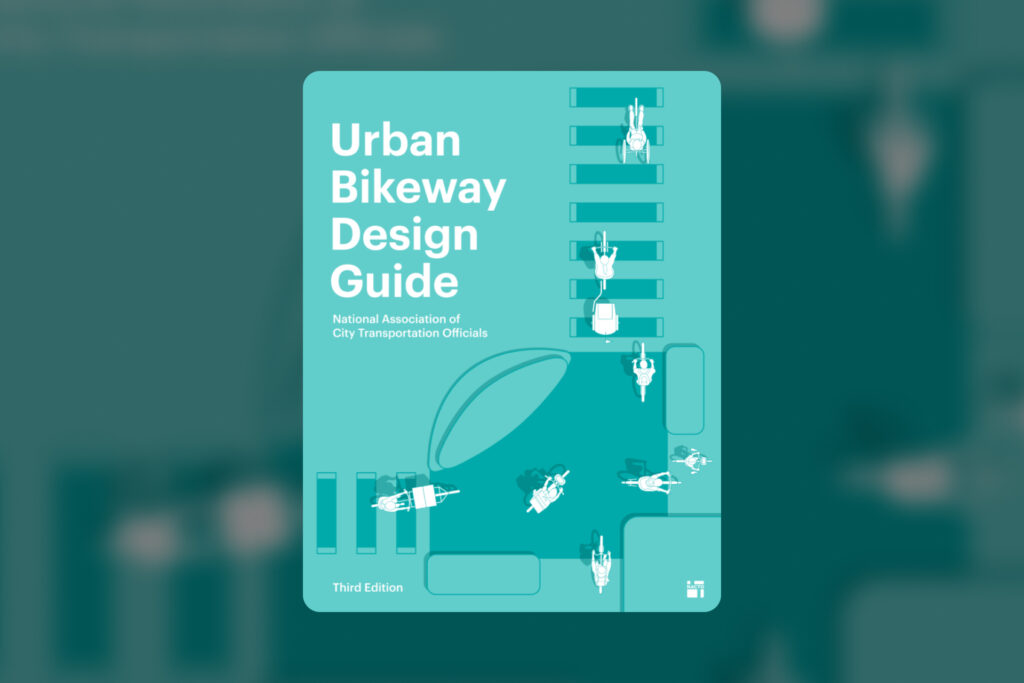
This spirit of collaboration was central to the creation of the NACTO Urban Bikeway Design Guide. Developed for cities, by cities, the third edition of the Guide is a blueprint for designing complete bike networks on city streets. And this fall, NACTO members had an exclusive opportunity to take a deep dive into the book’s content, learning how to apply the new Guide to their cities—from building a successful bike program to making streets fully accessible to all.
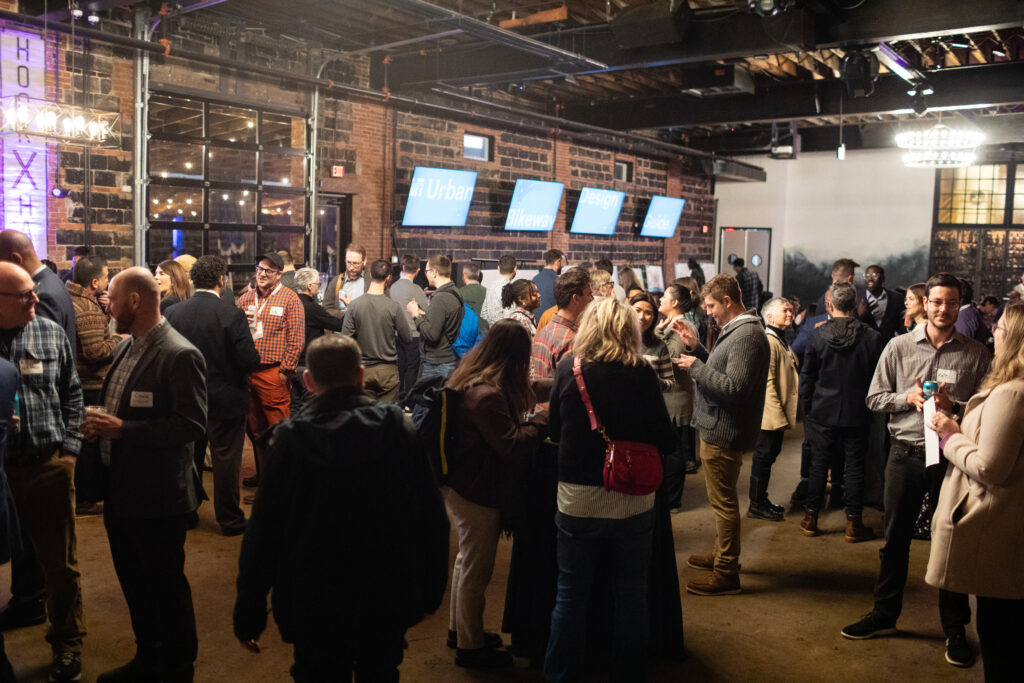
Between September and December, NACTO trained hundreds of North America’s bike lane builders with our Urban Bikeway Design Guide training series. Attendees heard about how cities can plan and implement bike networks that account for the many different types of people who may be using the street.
Here’s (some of) what we learned.
10 takeaways from the Urban Bikeway Design Guide training series
- Transformative change starts with a bold vision. To make streets safer and cities healthier and more joyful, leaders must pave the way with real resources, structures, and backing when progress gets tough.
- For successful network planning, community collaboration, and project development, cities need to have a clear, transparent decision-making process.
- Bikeway design should be proactive and aim to serve a large and diverse community of people on bikes, cargo bikes, e-bikes, e-scooters, kick scooters, skateboards, and other devices with small wheels.
- All bikeways in a bike network should be All Ages & Abilities bikeways, but they don’t all have to be designed for the same volumes or mix of users. Context is key!
- Incremental change is meaningful. Balance what’s possible with a need to build and design for the future. You’ll probably need to upgrade your projects at some point. As the bike network connects and expands, ridership and support will increase—and with every iteration, your design and policies will improve.
- Vehicle speed and volume management is part of bikeway design.
- Building bike infrastructure is an opportunity to address accessibility needs. Accessibility is required on all streets, and many bikeway projects offer an opportunity to provide for people with disabilities. Look for opportunities to add non-visual navigation tools.
- When designing intersections for people, don’t expect to eliminate all conflicts and don’t expect perfect actions. Create spaces where users are mutually aware of one another, visible, and generally predictable in their actions. This reduces crash rates and severity.
- Make decisions that reduce complexity. Base design decisions on modal priorities, not the existing lane configurations.
- Put pedestrians on a pedestal! Don’t forget about people walking when designing bikeways and intersections—make sure to make decisions with pedestrians in mind.
A unique opportunity for NACTO members
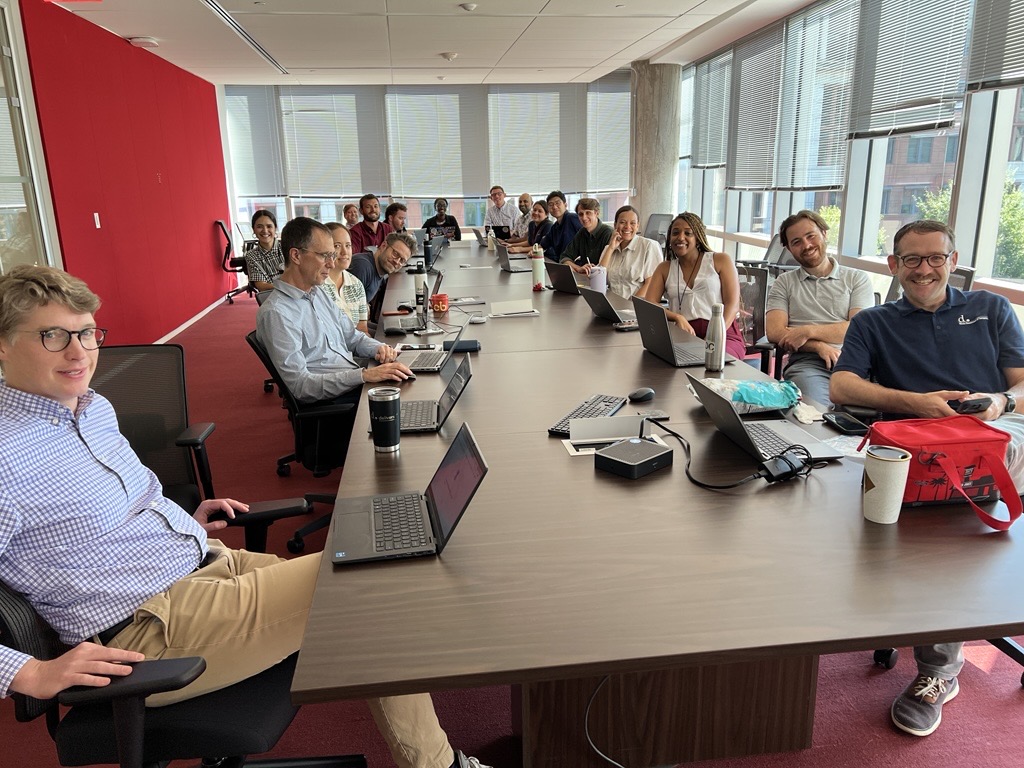
At five trainings, staff from NACTO member agencies received chapter-by-chapter insights into the Guide’s design principles and tools. And at 10 related workshops, attendees applied these principles in real-world contexts.
The trainings covered building comprehensive bike programs, design controls, designing accessible bikeways, and designing bikeable intersections. (See the full curriculum.)
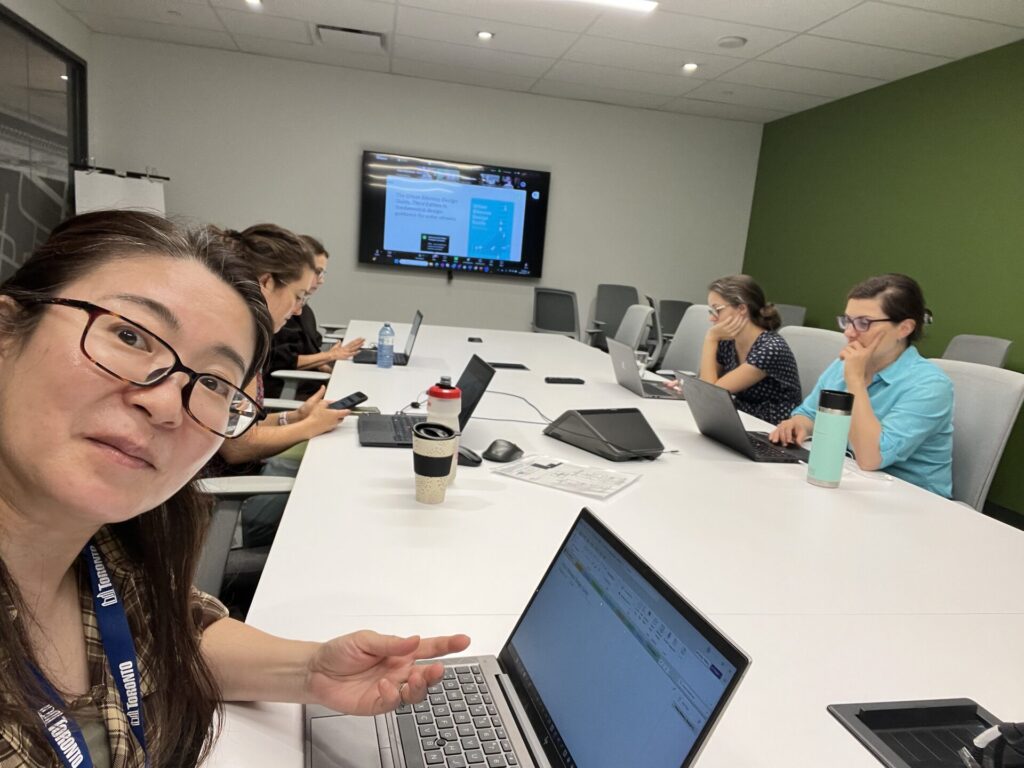
Across the online series, NACTO counted 700 participants from 91 member agencies, with many attending in groups from city conference rooms.
The trainings and workshops were grounded in real-world examples and challenges, featuring dozens of project examples from member cities and 10 speakers from across our membership. Featured cities included:
- Austin, Texas
- Cambridge, Massachusetts
- Denver
- Fort Collins, Colorado
- New York City
- Phoenix, Arizona
- San Diego
- San Francisco
- Seattle
- Somerville, Massachusetts
- St. Petersburg, Florida
- Toronto, Ontario
- TransLink (the transit agency serving the Vancouver, British Columbia, metro area)
- Tucson, Arizona
- Vancouver, Washington
What’s next?
It takes more than a training to make transformative change. Next, we challenge our members—and cities across North America—to put these principles into practice and create city streets that are safe, joyful, and accessible for all.
The full NACTO Urban Bikeway Design Guide is available online. But nothing beats having a hard copy! Order yours from Island Press, and use code UBDG3 for 20% off the list price.
These trainings were made possible, in part, thanks to support from Alta Planning + Design, Fehr & Peers, Gilpin Transportation Consulting, Stantec, and T.Y. Lin International.