
The NACTO Urban Bikeway Design Guide provides more than just a kit of parts for designing a bike lane: it provides the how-to blueprint and strategies for creating a whole bike network for people of all ages, abilities, and identities.
In fall 2025, NACTO members were invited to attend an online training series covering the third edition of the guide. Members received chapter-by-chapter insights into the Guide’s design principles and tools and had hands-on opportunities to apply them in real-world contexts.
We invited anyone who works at a NACTO member city or transit agency to attend the series.
We covered the Guide in five modules. Each module consisted of a Principles & Tools training and a follow-up workshop to apply the concepts from the Principles & Tools training.
- Principle & Tools trainings had unlimited registration. We encouraged staff from the same city to attend together in a conference room so that staff could collaborate on how to apply NACTO principles and tools in a local context.
- Workshops were open to a limited number of registrants to allow for an interactive space. Each Workshop was conducted twice to increase the opportunity for members to attend.
This training series lasted from September to December 2025. Learn about the curriculum below, and read about our takeaways on the NACTO blog.
Miss the training series?
NACTO member agency staff have access to the training content. If you work for a member city or agency, visit NACTO’s online community forum to review training videos and slides.
Module 1
Building a Successful Bike Program
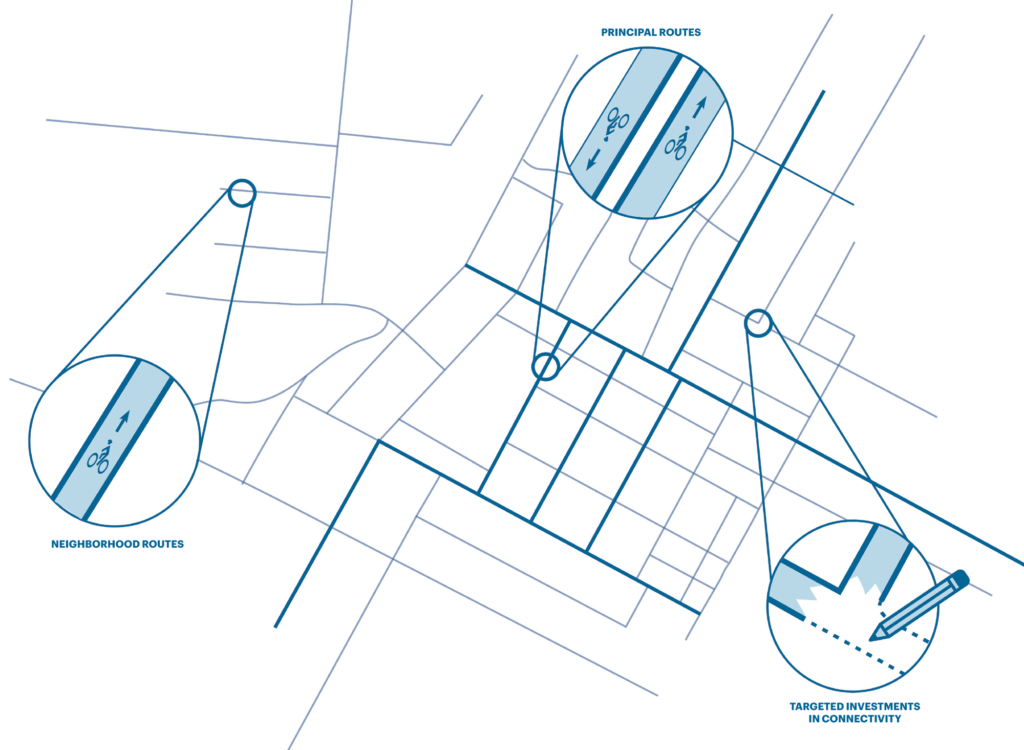
Delivering on residents’ needs for safe, multimodal streets and an All Ages & Abilities bike network means setting up your internal systems for success. Drawing from chapter 1 and chapter 2 of the NACTO Urban Bikeway Design Guide, we’ll cover strategies from organizational capacity building to project development.
This module is relevant to a broad audience, including department leadership teams involved in making the strategic decisions required to implement the vision for a bikeable city and teams working on the details of project prioritization, design, and delivery.
Principles & Tools Training
This training is open to staff at NACTO member agencies.
Wednesday, September 3, 2025
3 p.m. ET/noon PT
Follow-Up Workshop
Workshops are capped at 25 seats each. Registration opens during the principles and tools training.
Option 1: Wednesday, September 10, 2025
3 p.m. ET/noon PT
Option 2: Thursday, September 11, 2025
3 p.m. ET/noon PT

Module 2
Design Controls for All Ages & Abilities Bikeways
All Ages & Abilities bikeways are designed to meet the needs of a diverse array of potential bike riders. Drawing from chapter 3 of the Guide, this module covers the design controls and contextual guidance for All Ages & Abilities bikeways.
This module is most relevant to planners, designers, and engineers who scope, design, and deliver projects. Those who lead community engagement, traffic analysis, and project management processes will also benefit from the material introduced in the training.
Principles & Tools Training
This training is open to staff at NACTO member agencies.
Wednesday, September 24,2025
3 p.m. ET/noon PT
Follow-Up Workshop
Workshops are capped at 25 seats each. Registration opens during the principles and tools training.
Option 1: Wednesday, October 1, 2025
3 p.m. ET/noon PT
Option 2: Friday, October 3, 2025
3 p.m. ET/noon PT

Module 3
Designing Accessible Bikeways
Designing for All Ages & Abilities doesn’t just mean creating bikeways that work for all bicyclists; it also means designing bikeways that are navigable for pedestrians of All Ages & Abilities as well. Drawing from chapters 3-5 of the Guide, this module introduces design principles and tools to create accessible bikeways with a specific focus on designing for people with low or no vision.
This module is relevant to a broad set of planners and engineers interested in designing accessible streets. While focused on aspects of bikeway design, the principles and design tools are applicable to many projects in the right-of-way.
Principles & Tools Training
This training is open to staff at NACTO member agencies.
Wednesday, October 15, 2025
3 p.m. ET/noon PT
Follow-Up Workshop
Workshops are capped at 25 seats each. Registration opens during the principles and tools training.
Option 1: Wednesday, October 29, 2025
3 p.m. ET/noon PT
Option 2: Thursday, October 30, 2025
3 p.m. ET/noon PT

Module 4
Designing Bikeable Crossings
Comfortable bikeway crossings are necessary in a high-quality, connected network of All Ages & Abilities bikeways. Drawing from chapter 4 of the Guide, this module demonstrates how principles of intersection design can be applied to unsignalized intersections.
The focus is on creating bikeable connections, but this module is directly applicable to the work of any planner or engineer interested in designing safer street crossings.
Principles & Tools Training
This training is open to staff at NACTO member agencies.
Thursday, November 13, 2025
3 p.m. ET/noon PT
Follow-Up Workshop
Workshops are capped at 25 seats each. Registration opens during the principles and tools training.
Option 1: Wednesday, November 19, 2025
3 p.m. ET/noon PT
Option 2: Thursday, November 20, 2025
3 p.m. ET/noon PT
Module 5
Prioritizing People at Signalized Intersections
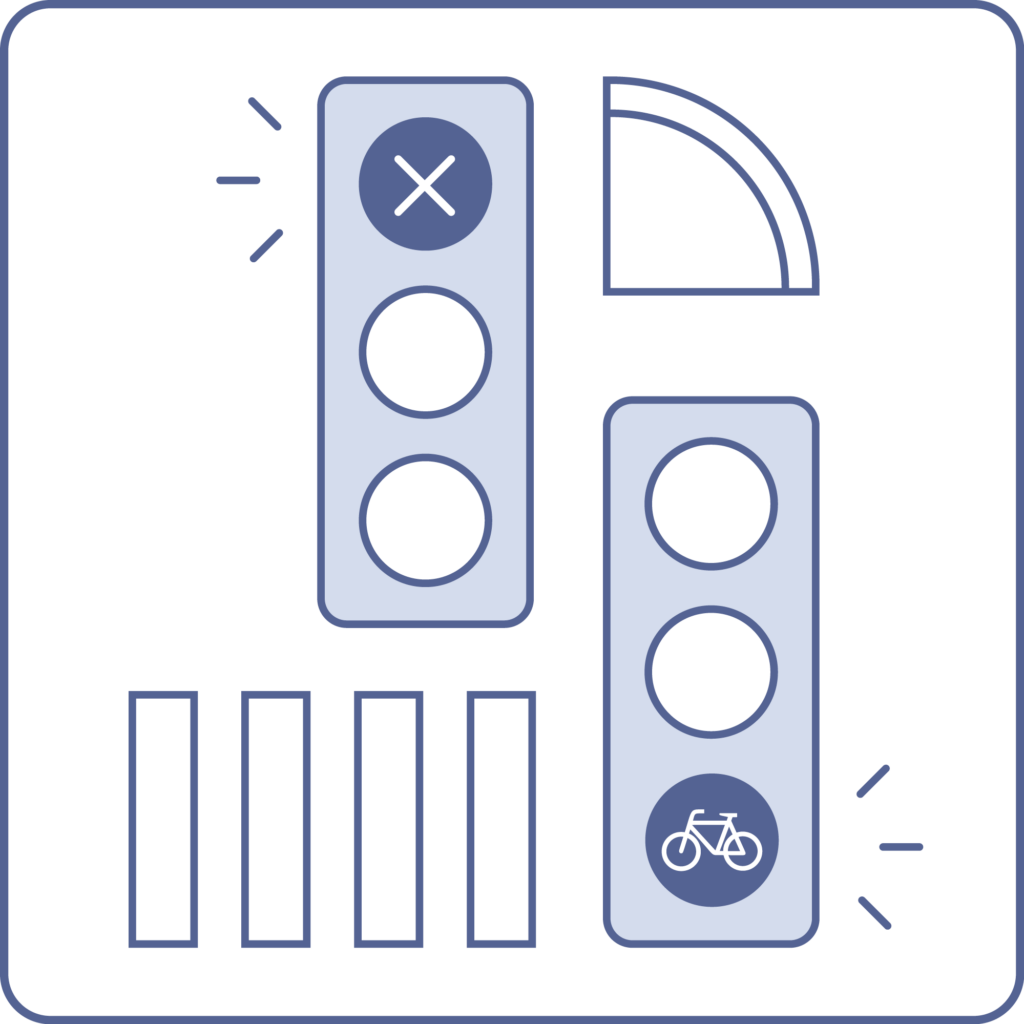
Improving safety for people biking through signalized intersections can benefit other users—and can require trade-offs. Also drawing from chapter 4 of the Guide, this module addresses the specific opportunities to provide safe, comfortable, and predictable intersections using geometric and signal design strategies.
This module is designed for both planners and engineers interested in learning about combining signal timing strategies with geometric design tools to create bikeable intersections. The focus is on creating bikeable connections at signalized intersections, but this module is directly applicable to designing safer signalized intersections overall.
Principles & Tools Training
This training is open to staff at NACTO member agencies.
Wednesday, December 3, 2025
3 p.m. ET/noon PT
Follow-Up Workshop
Workshops are capped at 25 seats each. Registration opens during the principles and tools training.
Option 1: Wednesday, December 10, 2025
3 p.m. ET/noon PT
Option 2: Thursday, December 11, 2025
3 p.m. ET/noon PT
These trainings were made possible, in part, thanks to support from Alta Planning + Design, Fehr & Peers, Gilpin Transportation Consulting, Stantec, and T.Y. Lin International.
FAQ
I missed the training series! Can I still see the content?
NACTO member agency staff have access to the training content. If you work for a member city or agency, visit NACTO’s online community forum to review training videos and slides.
Who should attend?
Generally planners and engineers working on bikeway planning, design, and delivery are best suited for the entire training series. However, each module will have a slightly different focus – see descriptions for more details.
Who is eligible to register for the trainings and workshops?
All NACTO members are eligible to join the training and workshops. But note that the workshops will have registration caps to allow interactive discussions.
How do I sign up?
For trainings: Sign up using the links above—they will bring you to NACTO’s members-only community platform. If you do not have an account, request one and NACTO staff will approve your request within two business days.
For follow-up workshops: Registration opens during each training.
Are sessions eligible for professional development credits?
All Trainings and Workshops will be eligible for AICP credits
Upon request, NACTO can provide a certificate of completion for all trainings and workshops that participants can submit for Professional Engineering CE credits with their state certifier. Submit your request to events@nacto.org.
What materials do I need? Will I need a copy of the Urban Bikeway Design Guide?
All of the content from the NACTO Urban Bikeway Design Guide is available online. However, nothing beats having a hard copy! Order yours from Island Press, and use code UBDG3 for 20% off the list price.
Any other recommendations for attending?
It’s more fun to attend in a group! Get your coworkers together and book a conference room. We’d love it if you sent us a photo of you together, as well. (Send this to events@nacto.org).