Credit: Beyond DC, Flickr
Supporting delivery by bike will look different from city to city. Some of these strategies will require minor modifications or changes in focus, while others may require a programmatic change or dedicated funding.
Connected Bike Network for Deliveries
Necessary for all types of deliveries
Many cities in the U.S. and Canada are developing bike networks. Expanding their scope to specifically include the needs of delivery workers and their bikes will result in more bike deliveries.
Bike networks must include wide protected bike lanes, safe local streets, and off-street bike paths designed to accommodate faster speeds and a wider range of devices, including e-bikes and cargo bikes. Intersections should be designed to accommodate larger volumes of bikes and the specific handling needs of cargo bikes as they turn.
People who work using bikes also benefit from infrastructure that limits interactions with police, as every interaction risks lost time and money.
Bike Parking
Important element for all types of deliveries
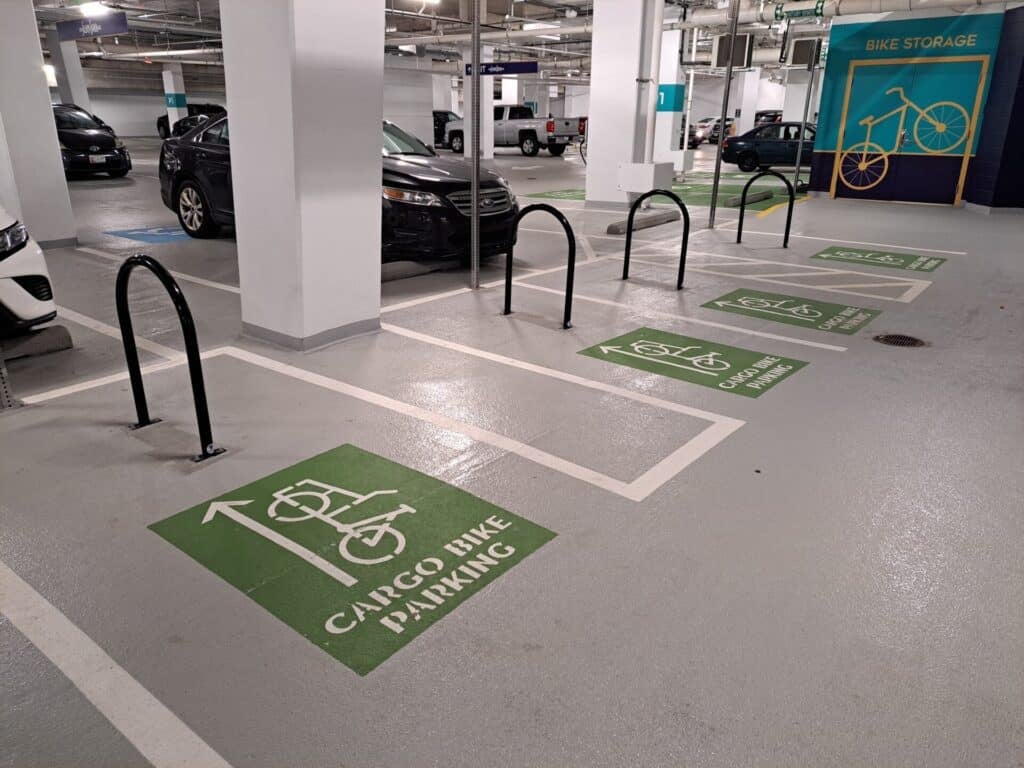
People delivering packages by bike require frequent opportunities to securely park. Municipalities should establish or adapt bike parking programs to offer parking, including on-street bike corrals, where deliveries frequently begin and end. Cities should also clearly communicate the parking rules for bikes of various sizes.
Interviews with delivery riders can inform bike parking investments, as parking needs will vary based on delivery stages, types of deliveries, and types of bikes. For example, a delivery rider, working against the clock when dropping off a single package at a residential address, may prefer to use a wheel-lock in an on-street parking space instead of locking to a bike rack halfway down the block. Conversely, a delivery rider waiting for an order may want to lock their bike to a secure rack.
Microhubs
Important element for parcel deliveries
A microhub is a physical location where large volumes of goods are transferred onto bikes. It can be a small logistics center where packages are transferred from trucks or an additional loading space in front of a business with frequent deliveries (e.g., a busy restaurant or grocery store). Microhubs can be located in on-street parking spaces, off-street parking lots, or inside designated storefronts.
Aside from the physical space to load packages, microhubs may have additional infrastructure that supports delivery operations. Models may include:
- Microhubs designed to transfer goods directly from a truck to a bike, often designated with simple markings and signs.
- Microhubs with storage areas, such as a shipping container or a storefront, allow truck drivers to drop off or pick up packages without needing to transfer packages directly to or from bike delivery riders.
- Microhubs with modular bike lockers or battery charging cabinets that support delivery riders during breaks, extend delivery ranges, and provide designated areas for bike storage.
When designating a microhub, review zoning and land use codes and regulations to determine if microhubs are a supported use. In some cases, allowing microhubs may require enabling legislation, zoning changes, or other regulatory updates.
Battery Charging and Swapping
Helpful for all types of deliveries
Setting up charging locations or secure battery swapping stations helps people make more trips efficiently and safely. Unregulated batteries carry risks: if batteries or chargers don’t meet safety standards, they may overheat, leading to explosions or fires. Charging infrastructure that meets ULSE standards for battery safety can help centralize charging activities and reduce fire risks. Cities can require delivery riders and companies to use safe batteries and incentivize this practice by providing safe locations to charge.
Subsidy Programs
Helpful for on-demand delivery, could support parcel delivery
Subsidy, rebate, or bike library programs can help delivery workers or small businesses shift their trips from car or moped to bike when the cost is a barrier.
A delivery bike subsidy program could be developed as a stand-alone program for local workers or incorporated into a broader bike subsidy program. Program designers may consider partnering with local businesses, employers, or third-party delivery apps to identify workers who would benefit from the program.
Local needs should inform efforts to subsidize delivery bikes. Common strategies include:
- Directly purchasing or offering a rebate on e-bikes for delivery workers interested in transitioning from mopeds or automobiles to e-bikes.
- Offering trade-in programs to incentivize delivery workers to trade in potentially unsafe e-bikes for those that are tested and certified to meet UL standards.
- Incentivizing third-party bike rental services to increase local access to e-bikes. Such programs typically offer monthly rentals with maintenance services, and some provide a rent-to-own option.
- Incubating or subsidizing a third-party business to offer bike delivery to other local businesses.
Cities may consider implementing an education and training program alongside delivery bike subsidies, especially if the program serves workers who had previously been using automobiles or mopeds. Safe spaces to learn how to handle heavier cargo-carrying bikes, adjust the electric-assist settings, and safely navigate city streets can be especially helpful.
Business Permitting
Helpful for all types of deliveries
A permitting program for businesses using bikes for deliveries can establish minimum safety standards and create a process for registering businesses and bike fleets. This aspect of a bike delivery program may involve a city’s economic development, small business, or law departments in partnership with transportation staff.
Outreach, Education, and Training
Helpful for all types of deliveries
Outreach and training efforts are a powerful way to support and invest in delivery workers and businesses interested in bike-based delivery services. Cities may establish voluntary opportunities for bike delivery operators to participate in these programs, or require logistics companies to participate as part of a delivery by bike permitting system.
Effective programs equip delivery riders with the knowledge and confidence they need to make the shift to deliveries by bike through:
- Outreach: Create connections and communication channels with delivery workers. This allows city staff to have meaningful dialogues with the people operating delivery bikes and understand their needs. Delivery workers can also share their feedback on bikeways and bike parking with the city.
- Education: Ensure workers know their rights regarding wages, safe working conditions, and how to get help in the event of a crash. Delivery workers also need to be informed about battery safety.
- Training: Share practical guidance to help bike operators navigate their jobs, especially those new to making bike deliveries. A curriculum might cover how to maintain e-bikes, safely charge and switch out batteries, and operate bikes—especially larger e-bikes used for deliveries—on city streets.
Delivery workers must be informed about the policies that affect them, from bike registration and parking guidelines to helmet requirements. Involve delivery riders, unions, and employers to ensure that training and education programs reflect real-world needs and open the door to further dialogue.