Credit: GRID Alternatives
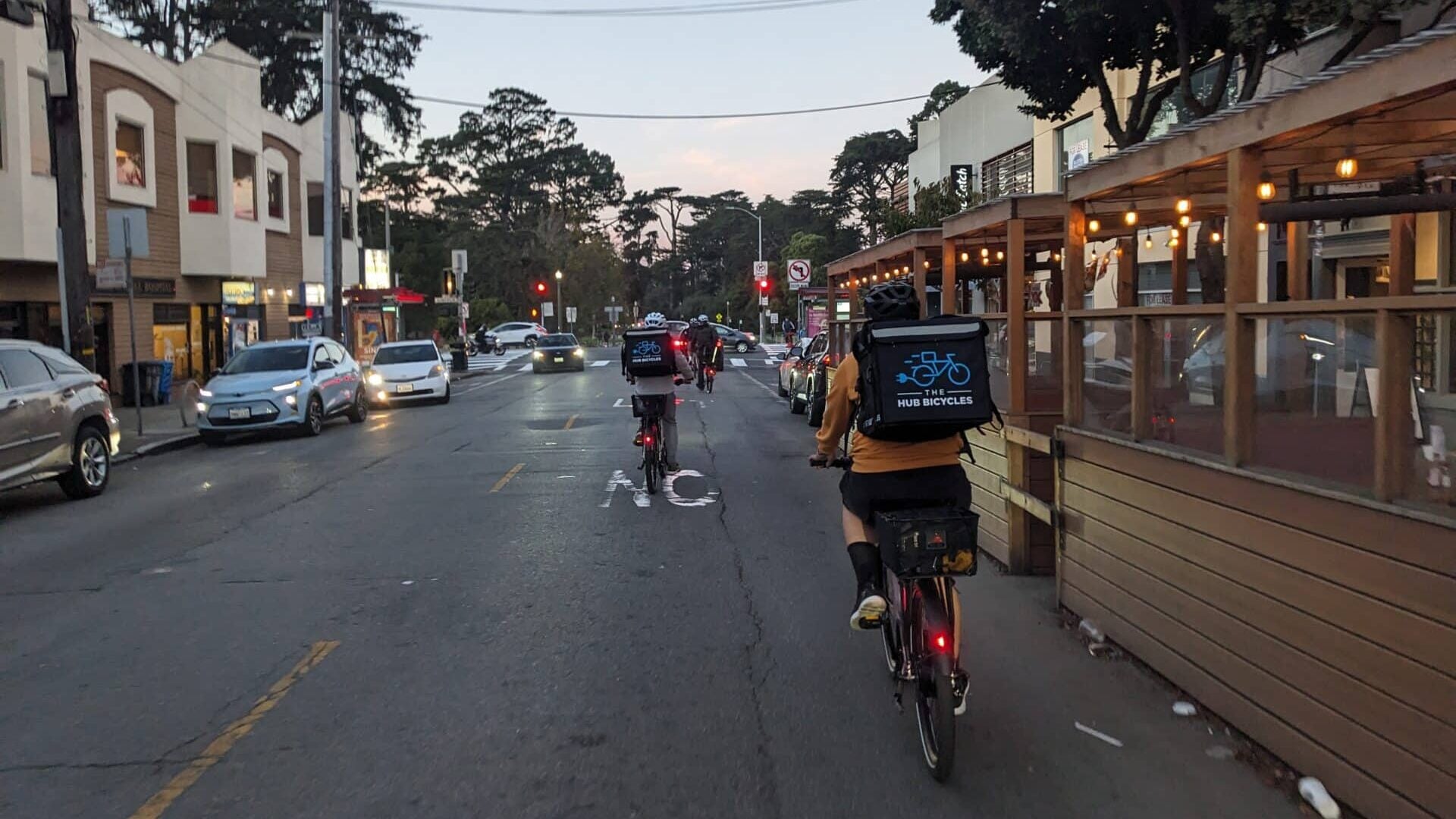
Bike deliveries are already happening in cities across the United States and Canada. City transportation leaders and staff can ensure they are ready to support bike deliveries by evaluating the city’s regulatory landscape, current curbside delivery environment, and the bike network quality.
Laws, Regulations, and Policies
Determining local opportunities for delivery by bike must include a review of existing laws, regulations, and policies at the state and local levels. This understanding will shape programmatic work, training, or communications around bike delivery.
In most locations, state law defines the physical requirements for bikes and e-bikes and where they may operate. Cities need to understand the regulatory landscape, including:
- Definitions: How do state laws define bikes and types of e-bikes? Are any bike types not defined in state law? What types of bikes are legal? Any definition of a bike that limits the width, length, weight, number of wheels, speed, or other specific mechanics may prohibit using a specific type of delivery bike.
- Operations: Do state laws or regulations dictate where bikes or certain types of bikes can operate? What types of bikes are allowed in bike lanes, bike paths, general travel lanes, and on trails? Legal requirements to ride in bike lanes or that prohibit bikes on paths may limit the potential for bike delivery or introduce personal safety challenges for riders.
- Local control: Do municipalities have the ability to further define legal operations via local regulations? Local rules and regulations are most likely where bike parking is addressed, but other programmatic needs may be governed through local permitting, traffic regulations, or other local functions.
- Gaps: Are there gaps or potential inconsistencies in current laws, regulations, and policies? These will impact what types of delivery programs are practical in the short and long term. For example, explicitly allowing quad bikes and some cargo bikes to operate on city streets or bike lanes may require changes to either state or local laws and regulations.
Before engaging with delivery partners and stakeholders, get clear on what is and isn’t present in the regulatory landscape. The equipment to start delivering goods by bike can be expensive. A supportive regulatory environment allows private companies and individuals to confidently invest in delivery by bike.
Curbside Delivery Environment
Most cities face challenges when managing curbside access for the increasing number of deliveries. The extent of these challenges will inform the scale to which deliveries can be shifted from vans and mopeds to bikes.
Shifting some deliveries to bikes can help address:
- Congestion from large trucks, vans, or cars double-parking or parking on the curb while completing deliveries.
- Safety impacts from delivery vehicles blocking sidewalks and bike lanes while completing deliveries.
- Worsened air quality from vehicles idling while making deliveries.
City policies and strategies around delivery by bike can help address:
- On-demand delivery riders congregating on sidewalks, blocking pedestrian access.
- Unsafe or unregulated e-bikes, mopeds, and e-scooters.
- High-speed electric devices being ridden unsafely in bike lanes or on high-volume sidewalks.
Bikeable Street Network
A connected network of safe bikeways makes biking within and between neighborhoods efficient and convenient. From wide protected bike lanes to traffic-calmed local streets, a bikeable street network allows private companies and individuals to confidently invest in making their deliveries by bike.
When planning bike networks, cities should take delivery needs into account by:
- Building all ages and abilities bike facilities— including protected bike lanes, local bike routes, contraflow bike lanes, and bike paths—that are appropriate for the local context, motor vehicle speeds, and motor vehicle volumes
- Designing bikeways and intersections that accommodate wider and longer bicycles.
- Considering high-traffic or potentially high-traffic bike delivery routes when designing networks and prioritizing projects
See NACTO’s Urban Bikeway Design Guide for guidance in developing and delivering a bike network that is safe and convenient for all bike riders.