When the COVID-19 pandemic first hit, city governments and transit agencies were on the front lines: Around the world, they responded to the direct threat and constantly-evolving challenges posed by the global public health crisis.
To help, NACTO’s Streets for Pandemic Recovery and Response Grant Program, funded by Bloomberg Philanthropies, provided $750,000 to fund 20 projects in member cities across the country, along with NACTO support and expertise. Using the funding, 17 member transportation agencies partnered with community-based organizations to implement changes to streets to meet the needs of populations disproportionately harmed by COVID-19.
Leveraging community-rooted partners’ local expertise and relationships alongside city staff’s ability to implement projects in the public right-of-way, these city-community partnerships implemented dozens of projects.
2020 Grantees
- Alexandria, VA: Built a WiFi-connected outdoor space for students to study. (Partner: Casa Chirilagua)
- Atlanta, GA: Created three pop-up shared street spaces used for voter registration, COVID-19 testing, food distribution, and discussions about Atlanta’s Vision Zero program. (Partners: Georgia STAND-UP and the TransFormation Alliance)
- Denver, CO: Provided technical assistance and materials to help four businesses in defined equity areas enhance or expand outdoor patios. (Partners: Denver Streets Partnership, BuCu West, Federal Boulevard BID, and The Fax Partnership)
- Detroit, MI: Temporarily closed streets to create outdoor hubs for young people near schools and parks. (Partners: Urban Neighborhood Initiatives (UNI) and Brilliant Detroit)
- Durham, NC: Engaged residents on what would make a Shared Street feel safe and inclusive, then implement five Shared Streets/Calles Compartidas incorporating art, culture, recreational equipment, and signage. (Partner: SpiritHouse)
- Long Beach, CA: Conducted door-to-door and telephone outreach with businesses in four underserved communities where fewer businesses were taking advantage of the city’s free parklet program. (Partner: The Long Beach Conservation Corps)
- Minneapolis, MN: Partnered with community organizations to create programming at the city’s Mobility Hub sites. (Partners: West Bank Business Association, Marc Woods, Alexis Pennie, St. Anthony East Neighborhood Association, Native American Community Development Institute)
- New York City, NY: Created “The Rockaway Wellness Way” under the elevated A Train, providing space for food distribution, outdoor COVID-19 testing, and information distribution. (Partner: Rockaway Initiative for Sustainability & Equity (RISE))
- Philadelphia: Worked with businesses in neighborhoods with predominantly non-white populations to discuss barriers related to outdoor dining and provide design concepts for restaurants. (Partners: Oxford Circle Christian Community Development Association (OCCCDA), Community Design Collaborative)
- Portland, OR: Created a physically-distant public plaza for small businesses in Albina, a historically Black community and center of Black arts, small businesses, schools, and faith institutions. (Partners: Soul District Business Association, Self Enhancement, Inc., Albina Vision Trust)
2021 Grantees
- Baltimore, MD: Added traffic calming measures at the main bicycle and pedestrain access points of Druid Hill Park and Lake Montebello, hosted community events to celebrate the improvements, and added traffic calming public art chosen by residents. (Partners: Black People Ride Bikes, Bikemore, Graham Projects)
- Denver, CO: Closed Clarkson Street to vehicular traffic to maximize space for people and businesses and created a shared cafeteria-style outdoor dining set-up. (Partner: Five Points Business Improvement District)
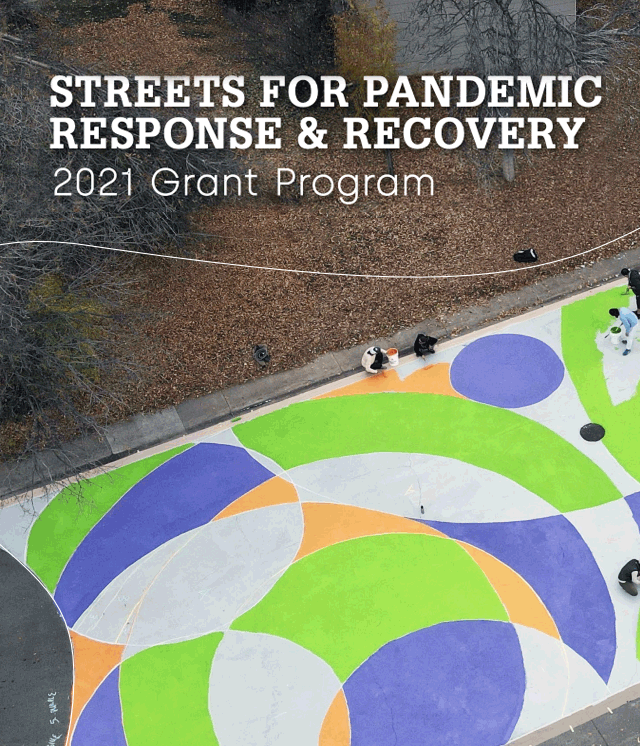
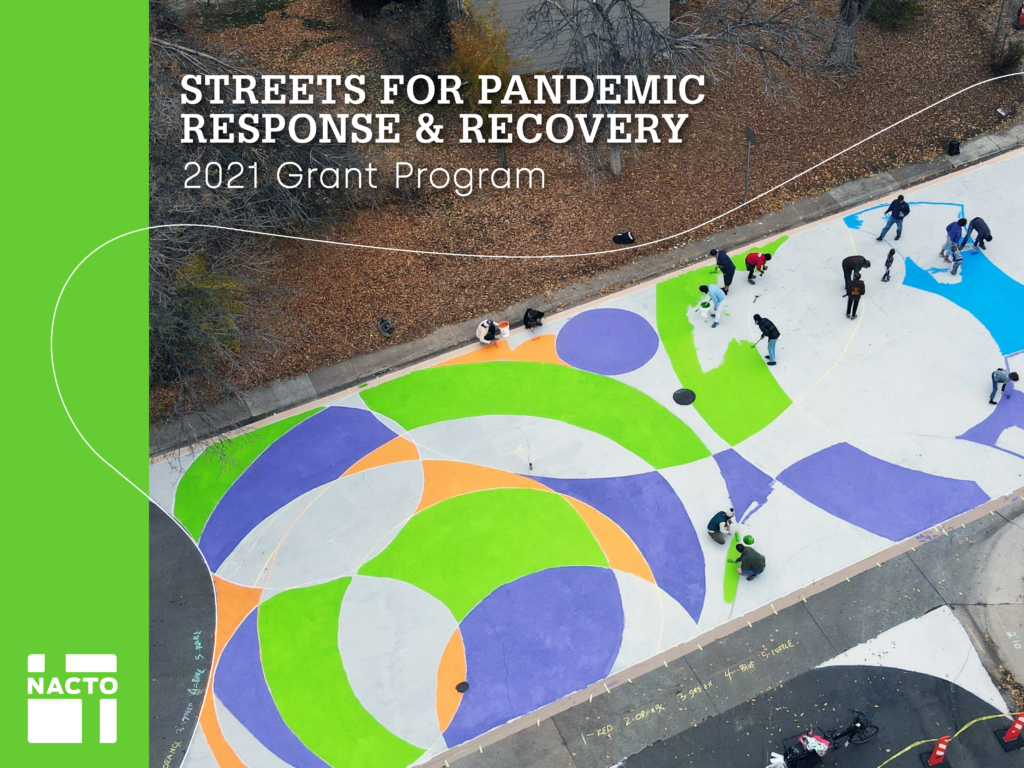
- Fort Collins, CO: Established a community-driven asphalt art program, including a “Paint Pot” that funds local artists and low-income residents to design, install, and maintain asphalt art projects in their own neighborhoods. (Partners: Bike Fort Collins, Mujeres de Colores)
- Los Angeles, CA: Created a temporary pedestrian/bicycle-only zone during student drop-off near Dayton Heights Elementary’s main entrance and hosted virtual design workshops to understand safety and travel concerns. (Partner: Los Angeles Walks)
- Madison, WI: Offered a guaranteed sales program to minority-owned mobile vendors who were newly operating in city parks and hosted food-based community events to feature vendors and build community. (Partner: Latino Chamber of Commerce)
- Minneapolis, MN: Developed a transportation study to foster solutions for permanent safety changes near 18th Ave and Little Earth and implemented temporary demonstration projects to deter speeding and add street art reflective of Indigenous culture. (Partner: Little Earth of United Tribes)
- Portland, OR: Piloted a project in East Portland to convert a neighborhood parking lot into an open market space. (Partner: Rosewood Initiative)
- San Francisco, CA: Expanded pedestrian space in the Tenderloin district, where there was a massive increase in unhoused people, to provide more physical distance and provided community programming and resources to people living on the block. (Partner: Tenderloin Community Benefit Distrcit)
- Seattle, WA: Closed part of a street in the Little Brook neighborhood to cars to create open space and offer community programming, and installed traffic calming measures to address community concerns about speeding. (Partner: Lake City Collective)
- Washington, DC: Created a shared outdoor dining area at the Columbia Heights Civic Plaza and provided open space for free outdoor events. (Partner: District Bridges)

FEATURED
COVID-19 Transportation Response Center
Read about more ways the NACTO supported city governments and transit agencies during the COVID-19 pandemic.