Shaw Street was busy with bikes, but it wasn’t working for everyone. There were too many motor vehicles using the street for riding to be comfortable for people who weren’t confident biking, including children, older adults, and new cyclists.
But in 2020, the City of Toronto undertook a project that decreased vehicle volumes by up to 60% and tripled the number of people biking in some places on the street.
The Challenge
Shaw Street is a one-way street just west of downtown Toronto, lined with trees and homes, that crosses several commercial corridors. The City of Toronto added southbound shared lane markings and a northbound contraflow bike lane in 2013, and the street quickly became a popular route for cyclists.
In 2019, the City identified Shaw Street as a “major city-wide cycling route” on its Cycling Network Plan. More than 3,000 people biked along the corridor a day, and residents of nearby neighborhoods had a strong cycling culture, taking between 14% and 29% of trips by bikes.
But there were too many motor vehicles using the street—about 180 at the peak hour— and biking wasn’t comfortable for cyclists of all ages and abilities. To make Shaw Street an All Ages & Abilities bike boulevard, Toronto staff needed to decrease the number of vehicles using the road.
All Ages & Abilities Bike Boulevards
In NACTO’s Urban Bikeway Design Guide, All Ages & Abilities (AA&A) bike boulevards are characterized by slow motor vehicle speeds and low motor vehicle volumes. People biking should be passed only infrequently by motor vehicles and are ideally able to ride several blocks without being overtaken by a motor vehicle driver.
According to NACTO guidance, the bike boulevards that are most comfortable for people on bikes have a target motor vehicle speed no greater than 20 mph (30 km/h), target volumes of 500 vehicles per day, and no more than 50 motor vehicles per peak hour—although motor vehicle volumes can be higher as long as long as speeds stay low.
Designing Bike Boulevards for All Ages & Abilities
| Bikeway | Target Motor Vehicle Speed |
Motor Vehicle Lanes In Same Direction |
Motor Vehicle Volume Per Day |
Motor Vehicle Volume Peak Hour in Peak Direction |
|---|---|---|---|---|
| Bicycle Boulevard |
≤ 20 mph ≤ 30 km/h |
Single lane or none | ≤ 500 - 2,000 | < 50-150 |
These low-vehicle volume conditions don’t often happen organically. Usually, AA&A bike boulevards require elements of speed or volume management to meet these conditions.
Toronto’s On-Street Bikeway Design Guide (draft at the time) sets the maximum peak-hour volume at 75 vehicles, and calls for the city to pursue volume management on any bike boulevard where the motor vehicle volumes exceed the target maximum.
The Solution
Toronto collected the data to make the case for improvements and understand how changes would impact residents. A 2019 Origin-Destination study found that 20% to 30% of drivers on Shaw Street weren’t accessing local destinations, and parking studies showed that average parking demand was 77% along Shaw Street, with spaces available on neighboring streets. (The project ultimately removed 18 on-street parking spaces—just under 3% of the approximately 600 on-street parking spaces within the project area’s Permit Parking Zone.)
The City also shared several design options with the community for feedback, including information about the project’s purpose and goals, and the pros and cons of various options.
This engagement ultimately resulted in the city choosing to reverse the direction of motor vehicle travel for several blocks of Shaw Street.
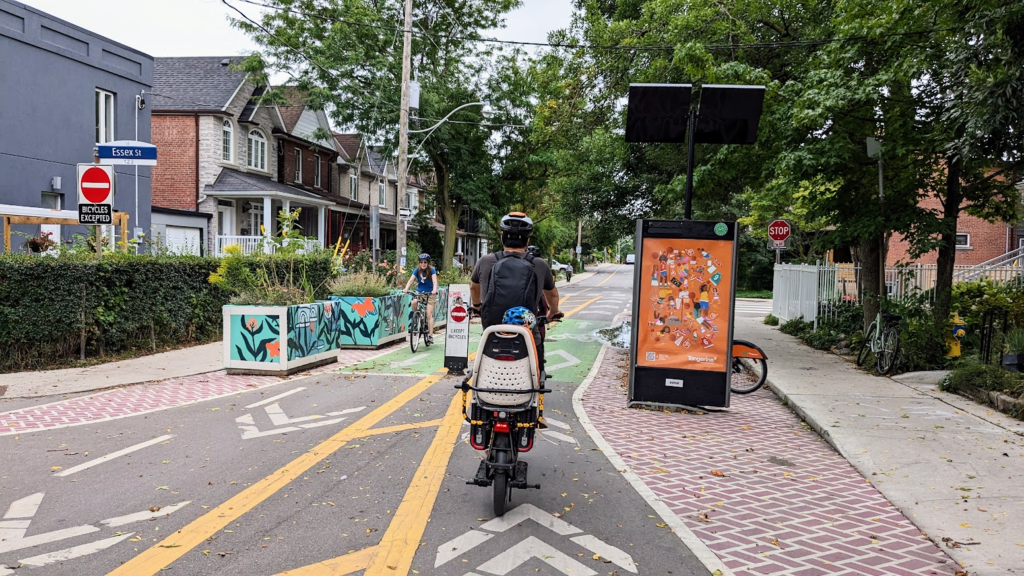
To implement this operational change, Toronto needed to make adjustments at intersections to accommodate the new direction of travel, including modifications to signalized intersections. Toronto also added a traffic diverter—a physical barrier that prevents motor vehicles from cutting through, but keeps access for people biking, walking, and rolling.
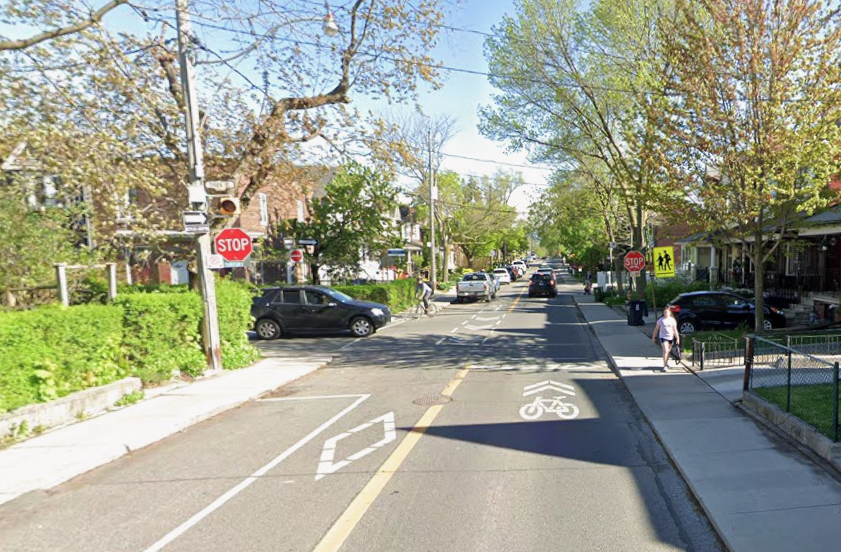
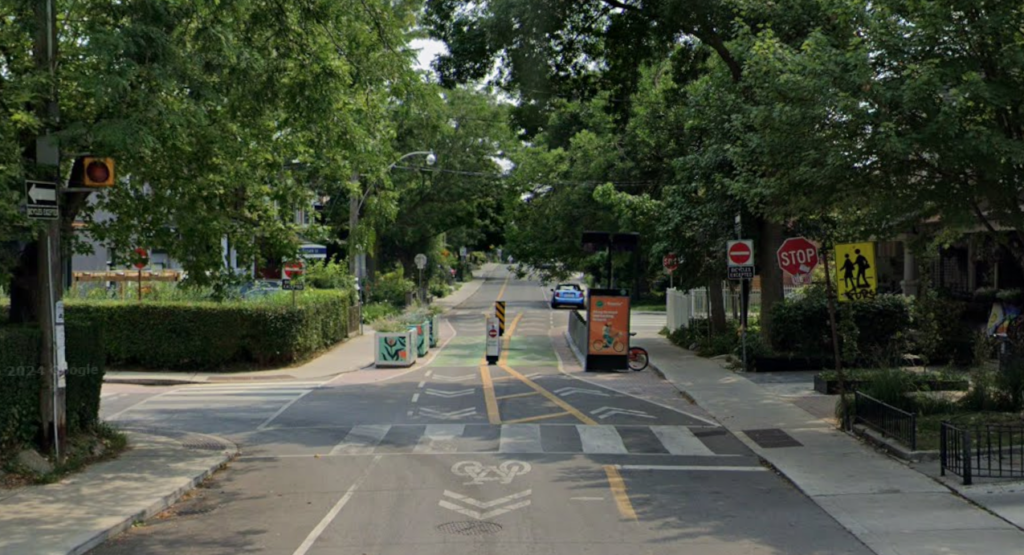
Diverters can reduce cut-through motor vehicle traffic and lower vehicle speeds without restricting local access. Combined with the one-way direction changing, the diverters on Shaw Street prioritized people biking and walking.
The City also moved the contraflow bike lane out of the parking door zone. Before the project, drivers had to cross over a contraflow bike lane to park. The project reconfigured the cross-section to flip the parking to the other side of the street, with the contraflow bike lane against the curb.
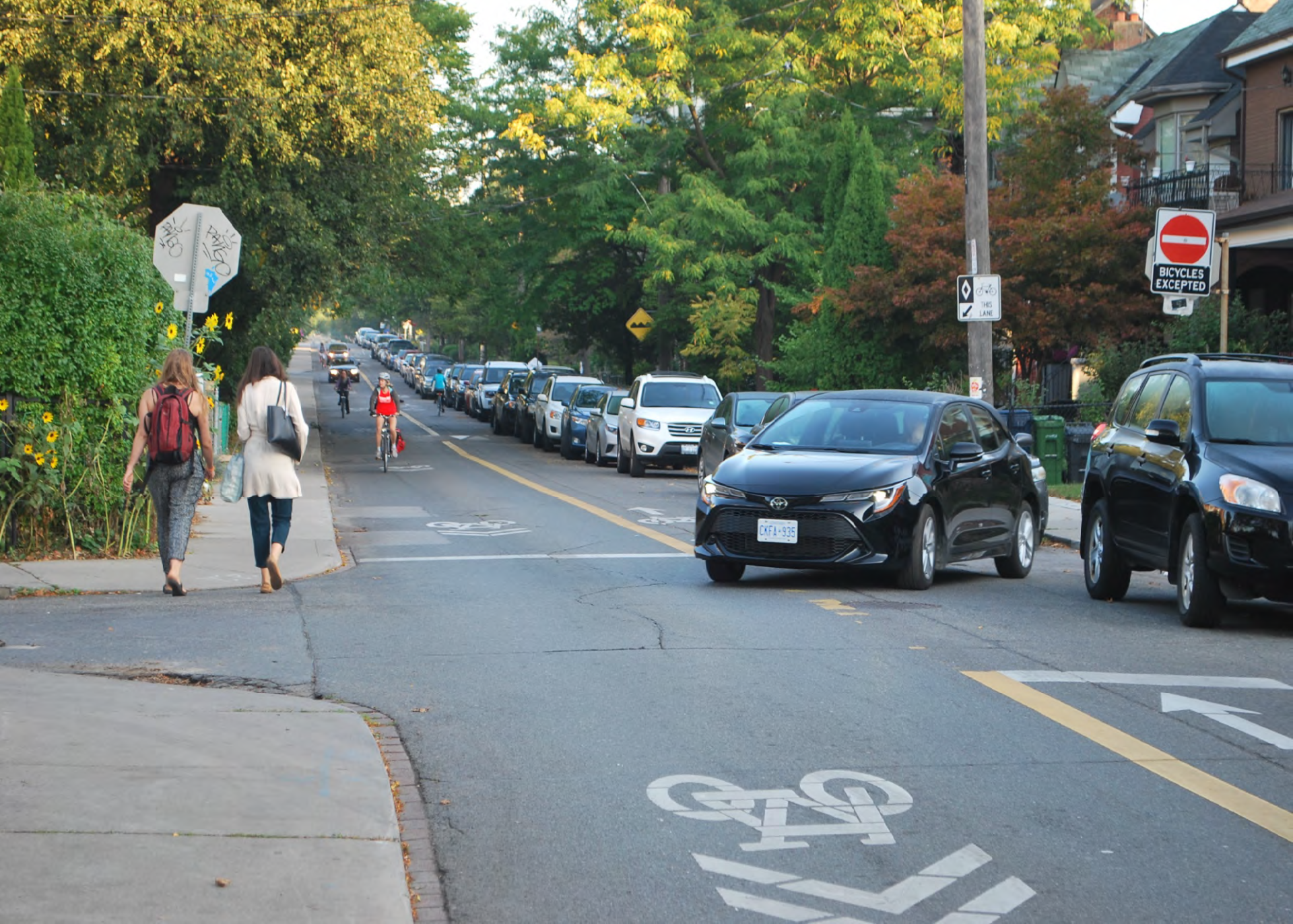
Drivers had to cross the contraflow bike lane to park
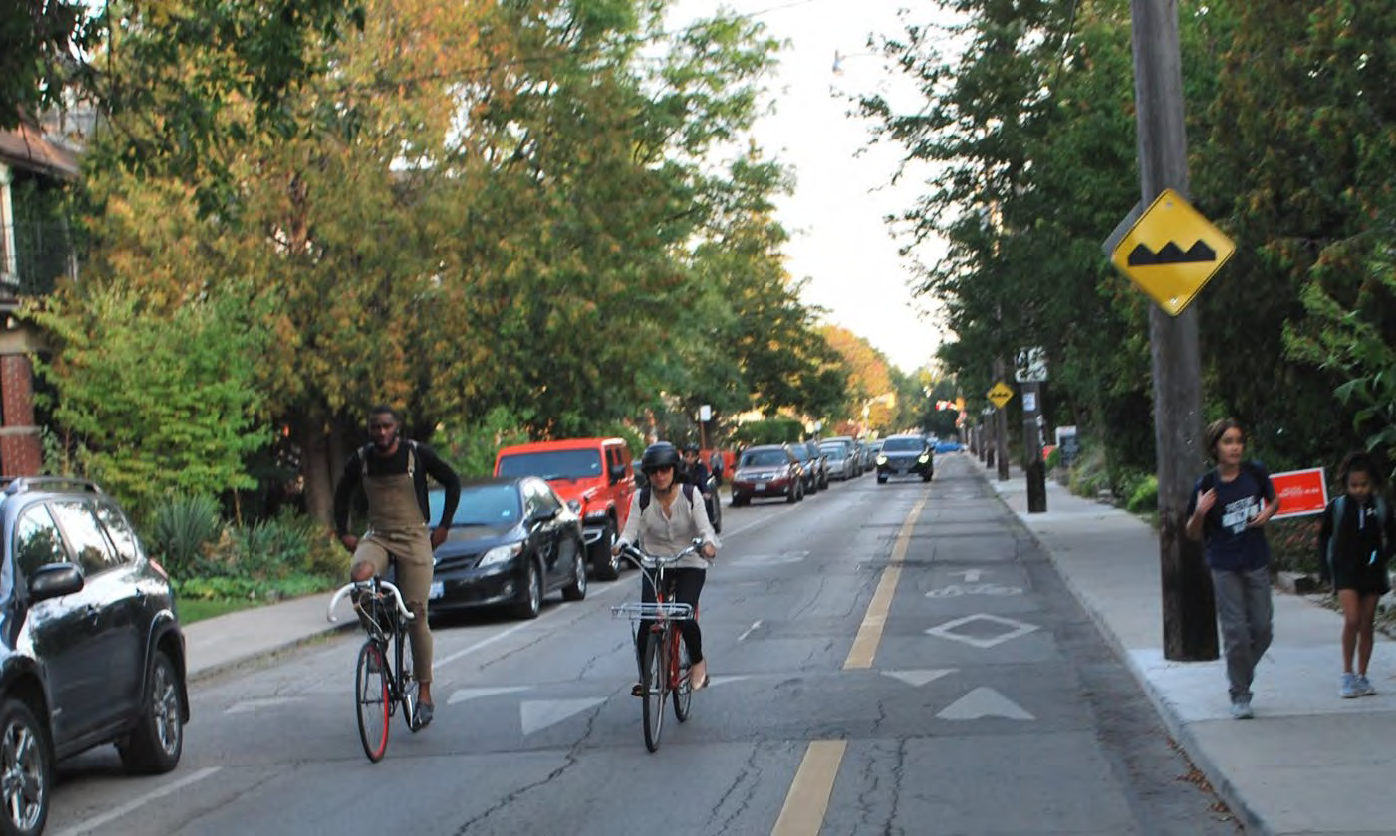
Parking located next to the general travel lane
Typical Cross Section
7.3 meters (24 feet) curb to curb
- 2.0 m | 6.5 ft residential parking lane
- 3.3 m | 11 ft general-purpose lane (motor vehicles and bikes)
- 2.0 m | 6.5 ft contraflow bike lane
Toronto also paid careful attention to how people biking, walking, and driving experienced intersections.
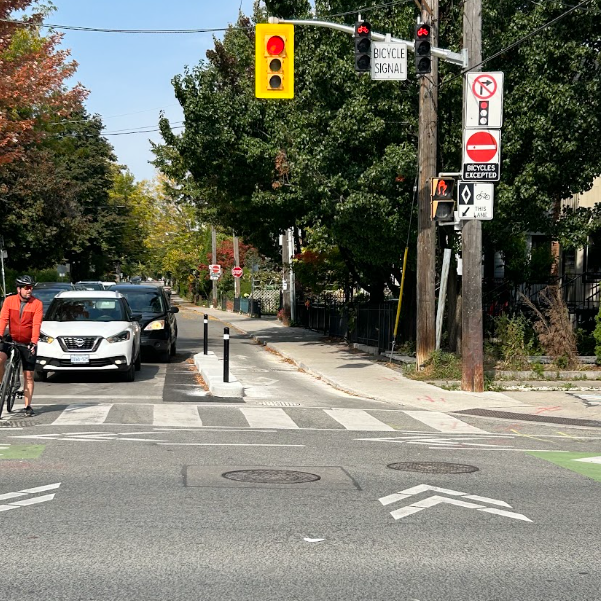
At one intersection, the City separated the bike approach with quick-build materials. In late 2024, they replaced those flex posts with concrete curbs. (Protected bike lane departures and approaches like this one can help organize intersections and provide distinct paths, regardless of the type of bike facility approaching the intersection.)
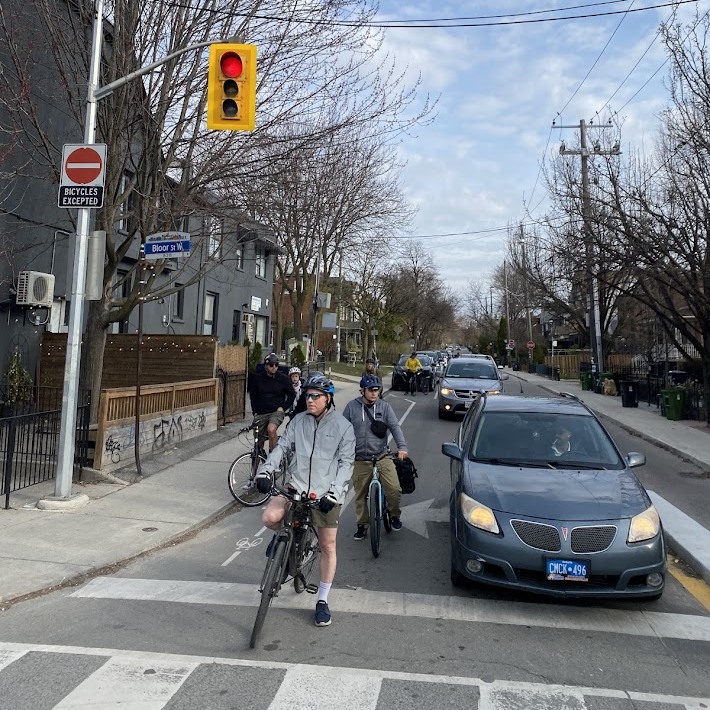
In 2025, Toronto made improvements at the busy intersection with Bloor Street, setting back parking further and installing a bike lane to help prioritize bicycle movements.
The project was delivered using quick-build materials and signal modifications. Because there were concerns about traffic being displaced to nearby streets, the use of quick-build treatments provided flexibility—allowing for adjustments following evaluation.
The Outcome
Toronto built a monitoring and evaluation phase into the project, which allowed the City to collect good before-and-after data. Along Shaw Street, average cycling volumes increased between 90% and 310% and average motor vehicle volumes decreased between 8% and 60%. Along nearby streets, average motor vehicle volumes decreased as well.
By prioritizing safety and comfort for people biking, the Shaw Street bike boulevard demonstrates what’s possible when cities design streets for everyone—not just cars.
More Information
NACTO Design Guidance
Developing and Delivering Bike Projects
Designing for All Ages & Abilities
Links from Toronto
- Shaw Street Safety Improvements Project webpage (Navigate to “Safety Improvements Overview” for diagrams of directionality changes)
- Public engagement materials
- On-Street Bikeway Design Guide
- Cycling Network Plan
Thanks to the City of Toronto for photos and project details!