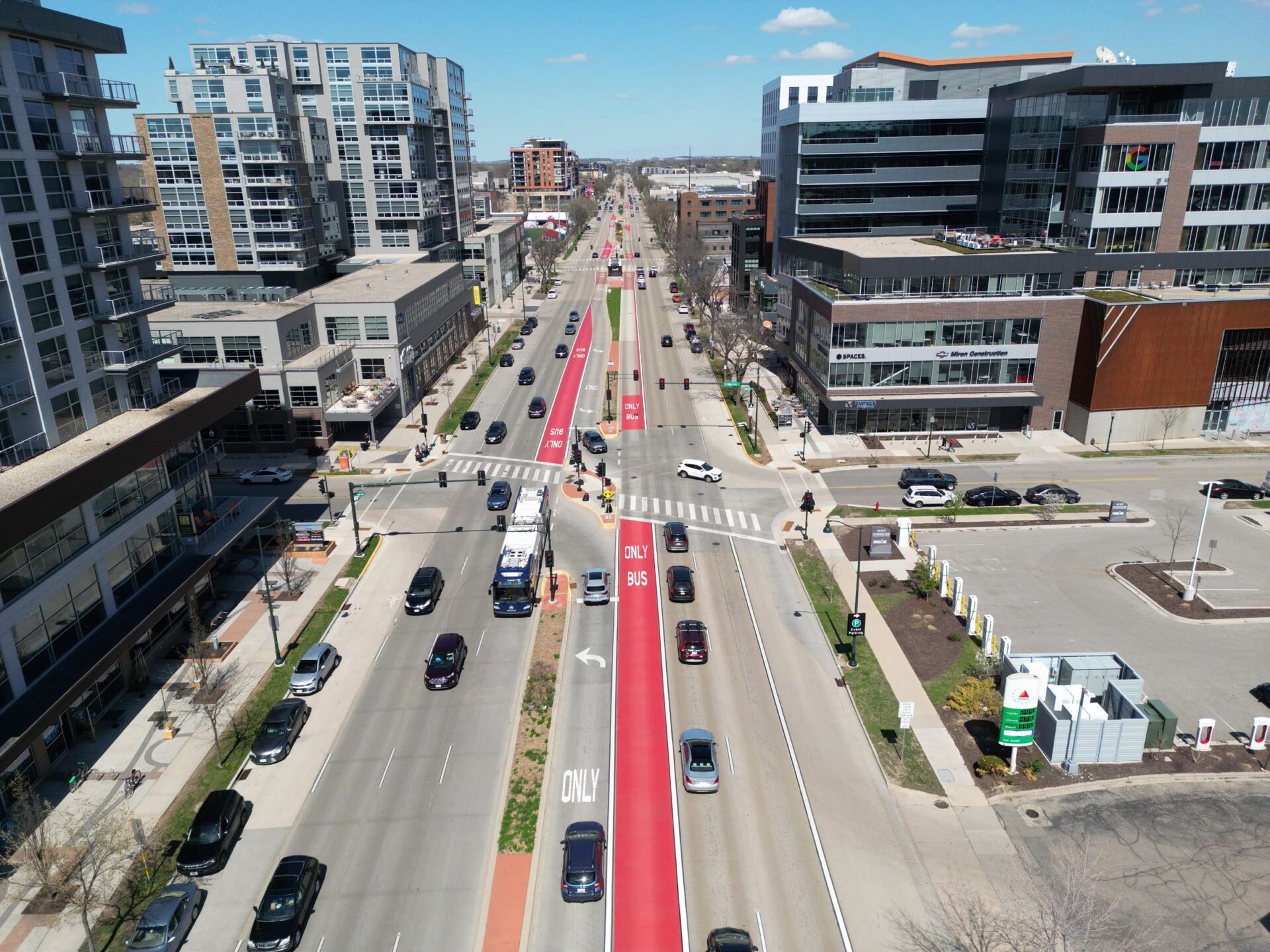
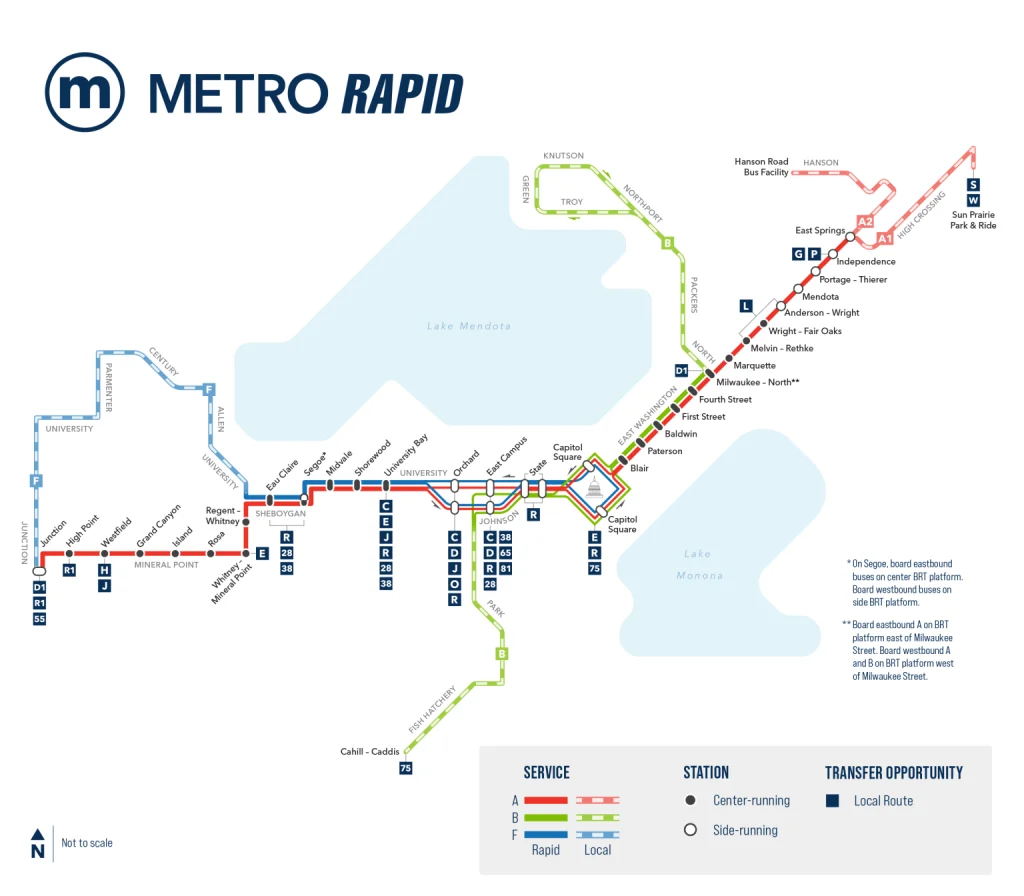
Madison, Wisconsin’s, first-ever bus rapid transit (BRT) line is delivering faster transit along a busy 15-mile corridor, increasing ridership, and improving safety for all road users.
Completed in 2024, the improvements led to a 55% increase in ridership on the route between March 2024 and March 2025.
Madison’s “Rapid Route A,” an east-west route, included a series of major road redesigns through some of the most congested roads in the region, including major destinations such as Madison College, downtown Madison, the University of Wisconsin-Madison campus, and the Capitol.
The project serves Madison and the neighboring communities of Fitchburg, Middleton, and Sun Prairie. Five routes feature 15-minute headways for most of the week, but service can be as frequent as every seven to eight minutes because multiple routes use the corridor.
Delivering a Faster Ride
To move buses efficiently, the BRT route features:
- Transit-only signals and priority.
- Transit-only lanes, often placed against the median to reduce conflicts with deliveries, parking, and new bike lanes.
- All-door boarding with a tap-to-pay system.
- 60-foot articulated electric buses, with doors on both sides.
- Ticket machines on most BRT platforms.
- Arrival time signs at each station.
Street Redesigns
The $194 million project, largely funded through federal dollars, was a 12-year collaboration, from feasibility study to active operation, between the City of Madison Divisions of Engineering, Traffic Engineering, Transportation Planning, Parking, Planning, Zoning, Economic Development, and Metro Transit.
Street redesigns along the BRT route delivered safety and mobility improvements to better serve the needs of this growing social and economic center.
East Washington Avenue
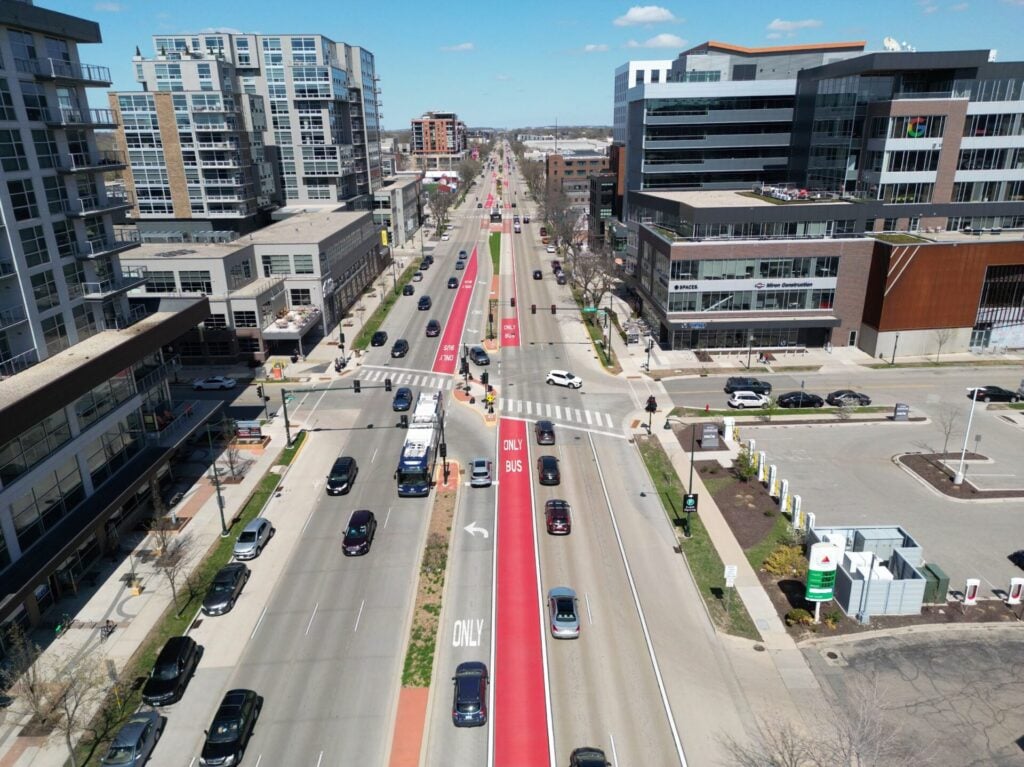
The longest stretch of the BRT line runs along East Washington Avenue. Here, the road includes flexible curb lanes that transition from traffic lanes during peak hours to parking during off-peak hours. The project also included the installation of grassy medians and planting strips with street trees.
Outcomes
- Crashes down 35%
- Injuries down 55%
- Fatalities down 29%
Segoe Road
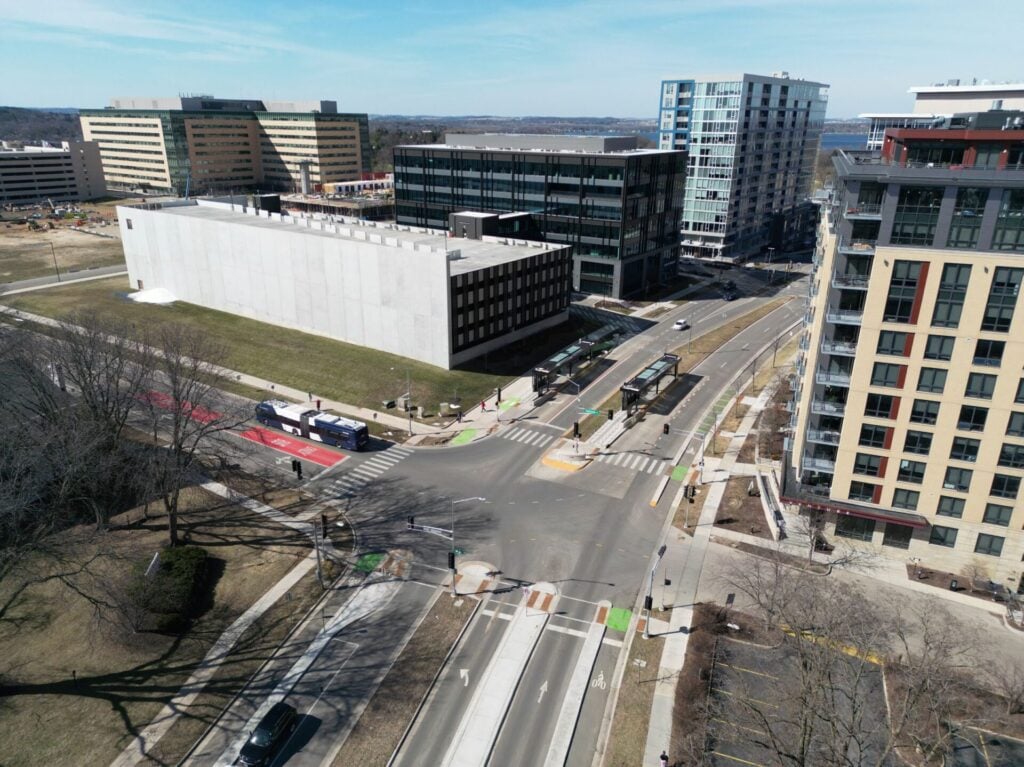
Photo Credit: City of Madison
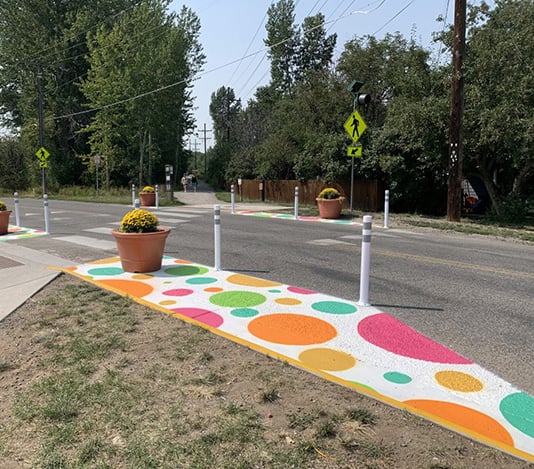
Segoe Road, formerly four divided lanes, was redesigned as two general traffic lanes with protected bike lanes, bump-outs, and pedestrian safety islands.
At the intersection of Segoe Road and Sheboygan Avenue, eastbound bus riders board on a median BRT platform and westbound riders board at a bus boarding island next to the protected bike lane.
Outcomes
- 60% reduction in crashes (reduced from four crashes per year to 1.6 crashes per year)
Mineral Point Road
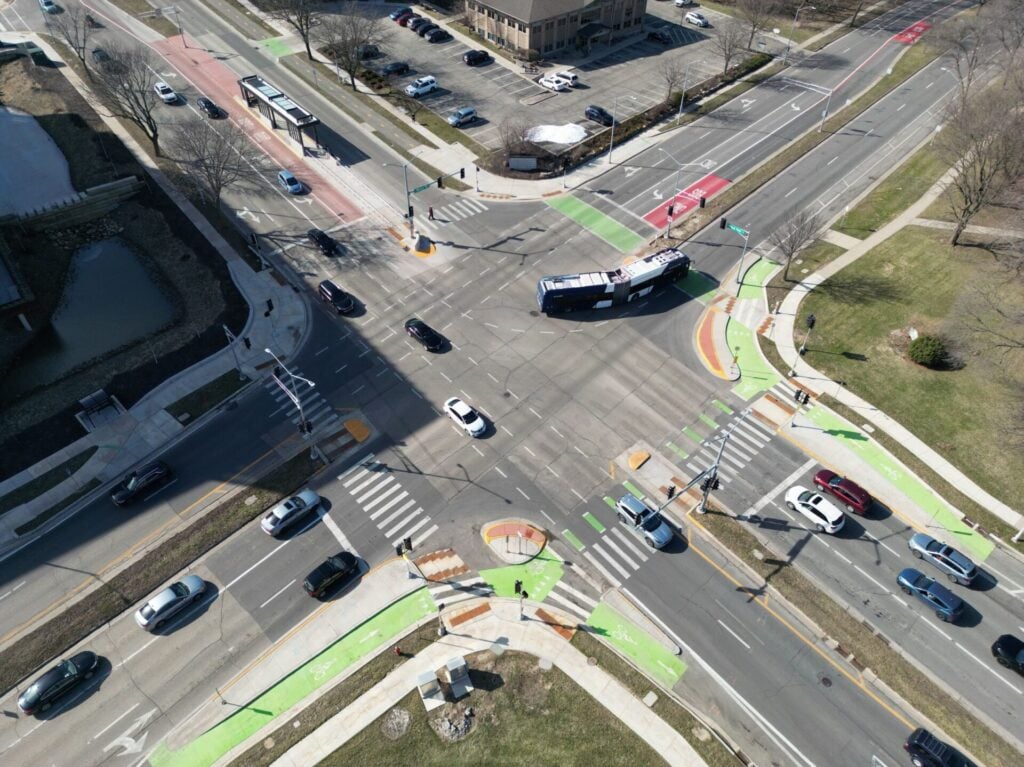
The Mineral Point Road reconstruction included protected left-turns, new signal heads aligned over each lane, a high-visibility crosswalk, and solid green crossbikes connecting bike lanes to new multi-use paths.
Outcomes
- >99% compiance for red bus lanes
- 40% reduction in injury crashes
- 20% reduction in severe injury crashes
Building the next corridor
The creation of the BRT line met the need to move more people through Madison’s busiest economic and social centers while reducing their reliance on cars, thereby easing traffic congestion. Since its opening, the city has reported a 24% increase in systemwide ridership, the highest since before the pandemic.
The City is currently designing a North-South BRT corridor to complement the completed East-West corridor. Route B will feature 9.1 miles of new bus lanes, 24 stations, and transit signal priority.
Resources