Robotaxi operations will affect multiple city departments, and managing a city’s response will require new or deeper coordination between staff. The robotaxi point person, or other designated lead, will need to build an internal structure and organizational approach to everyday issues and to unexpected and urgent challenges.
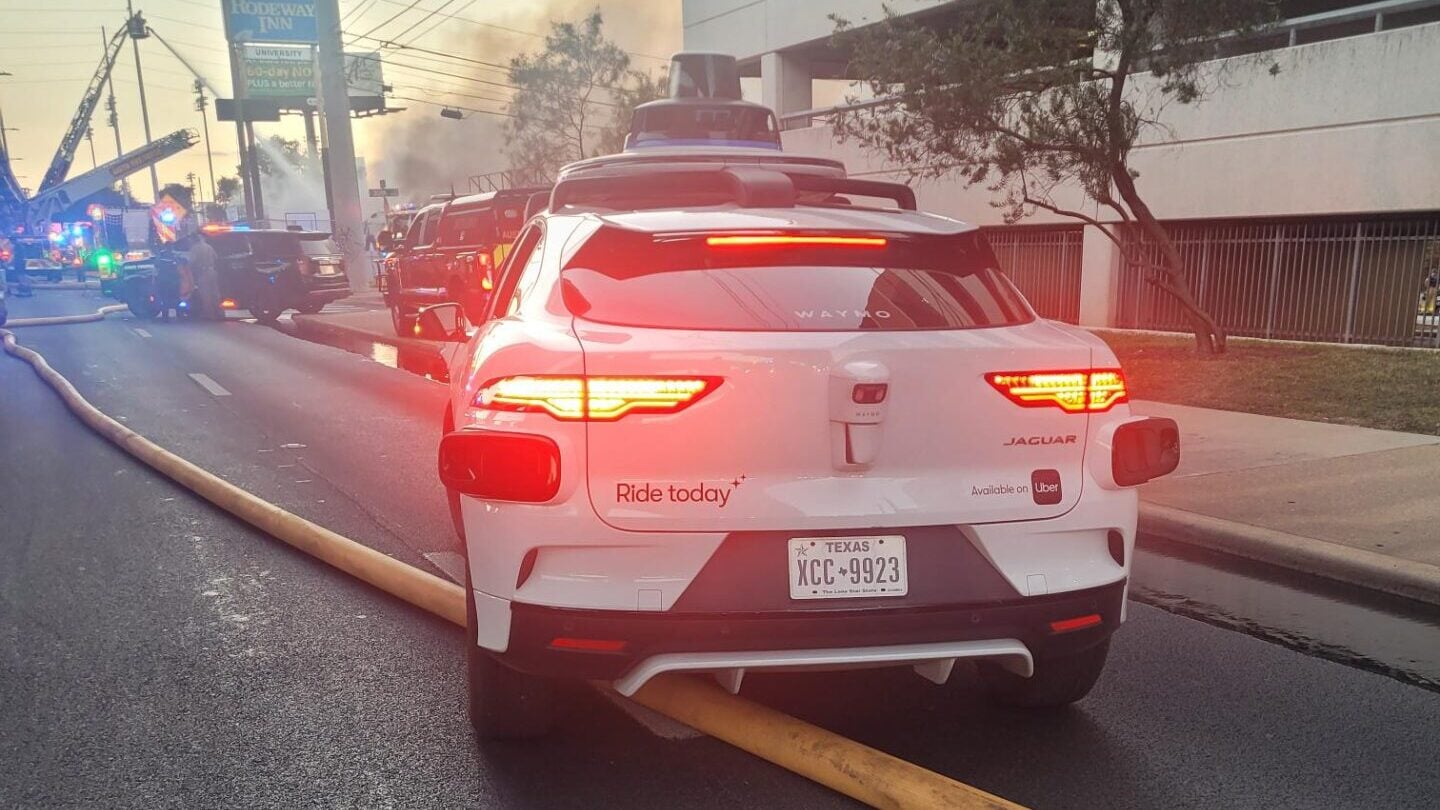
A robotaxi stops on top of a fire hose during an active fire response. Credit: City of Austin
Create a working group
An interagency robotaxi working group or task force provides a structured means of internal communication across city departments regarding robotaxi policy, rules, and operations. Include, at a minimum, city staff with the following areas of expertise: policy analysis, legal, technology, traffic engineering, communications, law enforcement, fire, and emergency response.
Typical steps for establishing a working group:
- Identify a chair. This should be an individual in a leadership or executive role or the city’s point person.
- Create a decision-making framework. Stakeholders will represent different interests and have different priorities. Sometimes the working group can accommodate multiple perspectives, and other times it must make a single decision among competing priorities. Agree on a decision-making process early on.
- Organize meeting notes and agendas. Build a file management system that everyone can access, and ensure that agendas, meeting notes, and contact information are saved and updated regularly.
Critical Working Group Participants
- Senior transportation leadership: If the designated point person is not part of the city’s transportation agency leadership, the working group should include high-level leadership from transportation functions. This includes the leadership from a city department of transportation, public works, and traffic operations.
- First responders and law enforcement: First responders are on the ground, interacting with robotaxis in emergency situations. Transportation department staff who regulate or collaborate with robotaxi companies have found that their most valuable relationships are with their police and fire departments. First responders know what the pain points are and can verify—or discredit—each company’s stated operational and emergency protocols.
Working collaboratively with the police and fire departments aligns goals internally and creates a more effective case for change at the state or provincial level. When making the case for local regulatory control, police and fire department leaders can often make more compelling cases than transportation department leaders.
First responders will need direct access to robotaxi companies so they can:- Respond to emergency situations involving robotaxis, including collisions, fires, and extracting people from locked vehicles.
- Remove, move, or tow vehicles from any location closed to motor vehicle traffic or where parking or idling is prohibited such as in construction zones, parks, parade routes, city parks, commercial loading zones, bike lanes, or travel lanes.
- Direct traffic flow that includes AVs and robotaxis during special events, signal outages, congested areas, or around hazards in the roadway.
- Issue parking tickets and moving violations.
- Address any other emergent issues or concerns that the company may need help resolving with first responders.
As a member of the working group, first responders will need to discuss whether, when, and how first responders can enter robotaxi vehicles and whether there are reasonable measures to reduce property damage. First responders will also need to know if the vehicles can be driven by people on scene or remotely, and how to do so. For vehicles without steering wheels or those difficult to override, the best solution in an emergency may be to use a large vehicle to physically push the robotaxi out of the way.
Robotaxi companies have led training sessions with first responders on how to interact with their vehicles. This may be successful today, but at scale, with expanded operations and more companies, each with different protocols, the logistics of managing such a complexity of vehicles will become overwhelming. The working group should grapple with this issue internally and collaborate with peer cities to propose appropriate solutions.
- City mayors’ and city managers’ offices staff: Given the more political nature of their offices, your mayors’ or city managers’ offices should either participate or stay apprised of the working group’s activities. Autonomous vehicle and robotaxi companies will contact their offices, and those other key internal and external stakeholders, directly. The Working Group should establish a framework for sharing information internally and consolidating external responses.
- Policy, legal, and communications staff: These staff members will likely represent several departments or divisions in your city. Together, these experts should be well-connected, understand the local political environment, and be open to collaborating on creative problem-solving as challenges arise.
Additional Working Group Participants
As robotaxi operations expand, additional internal stakeholders need to be involved. While their participation in the working group may be optional or as-needed, well-developed relationships between this wider group are important for consistent internal coordination and communication.
- Teams permitting lane closures and special events: These teams will need to develop, support, and review communication strategies to ensure closures are clearly communicated to robotaxi companies. Robotaxis interpret road closures differently from humans, and cities should provide fact sheets for permit holders on how to mark lane closures so robotaxis and other automated vehicles can process the information correctly. Their inclusion in the working group will illuminate these specific needs across city agencies, and the working group can help develop and distribute fact sheets and other new, important materials.
- Technology and data privacy experts: Your city will need to request data from robotaxi companies as part of the city’s management of robotaxi services and transportation networks overall. (Refer to develop a data management plan below.) Given the potential for future sensitive data requests, city technology experts can help navigate data privacy concerns and data management needs.
- Planners and engineers working on street design, Vision Zero, parking or curb management, and traffic operations: Including many disciplines within the transportation department can help anticipate and address challenges. Some cities have leveraged Vision Zero working groups to build on the interdepartmental relationships established to support safety. Parking or curb management teams can help create a process to regulate where and how robotaxis can access passenger pick-up and drop-off areas and how to enforce any illegal pick-up or drop-off operations.
- City planners focusing on land use and zoning code: Robotaxis will need space for vehicle storage and, depending on the company, charging. These uses can disrupt communities by adding traffic to local streets and causing noisy overnight operations. Anticipating these concerns with planning staff will help identify whether the zoning code needs to be updated or clarified, and how to engage with different neighborhood stakeholders.