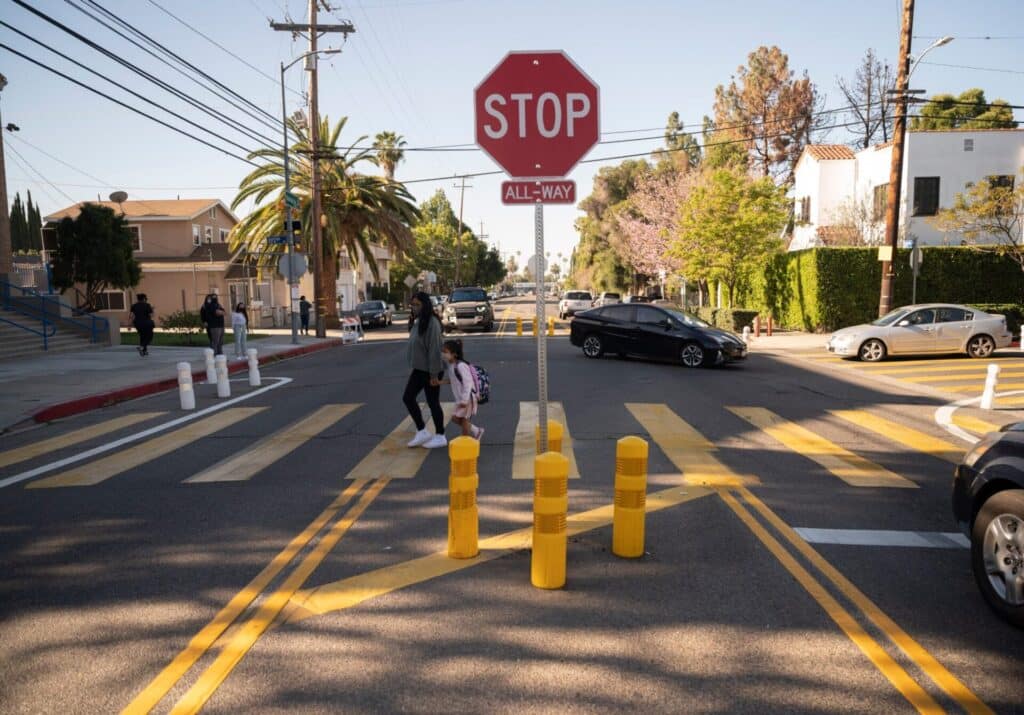
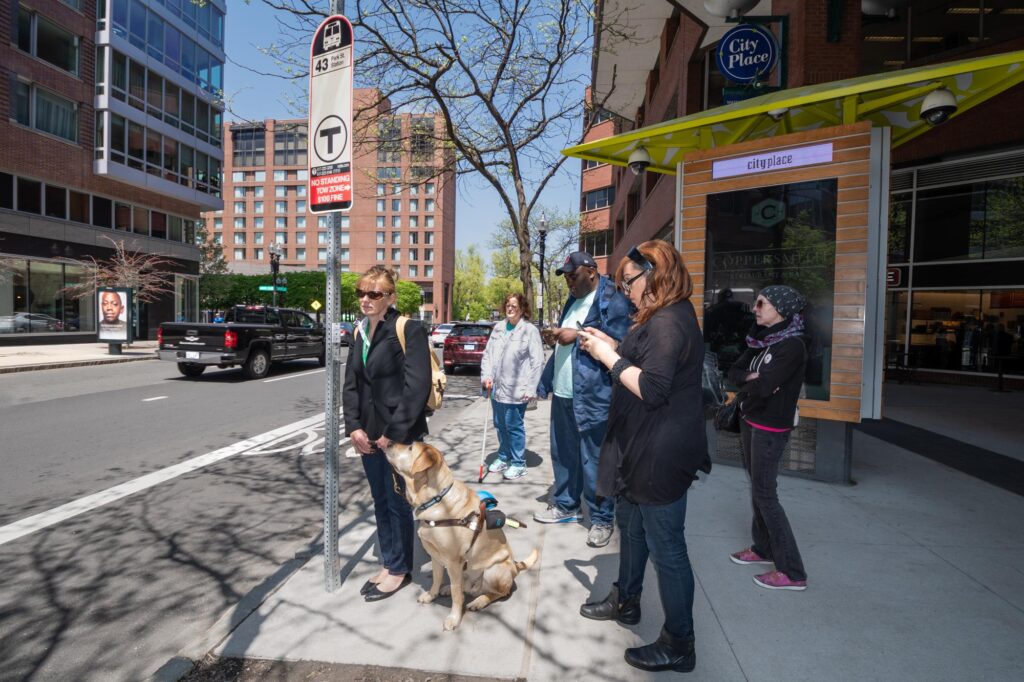
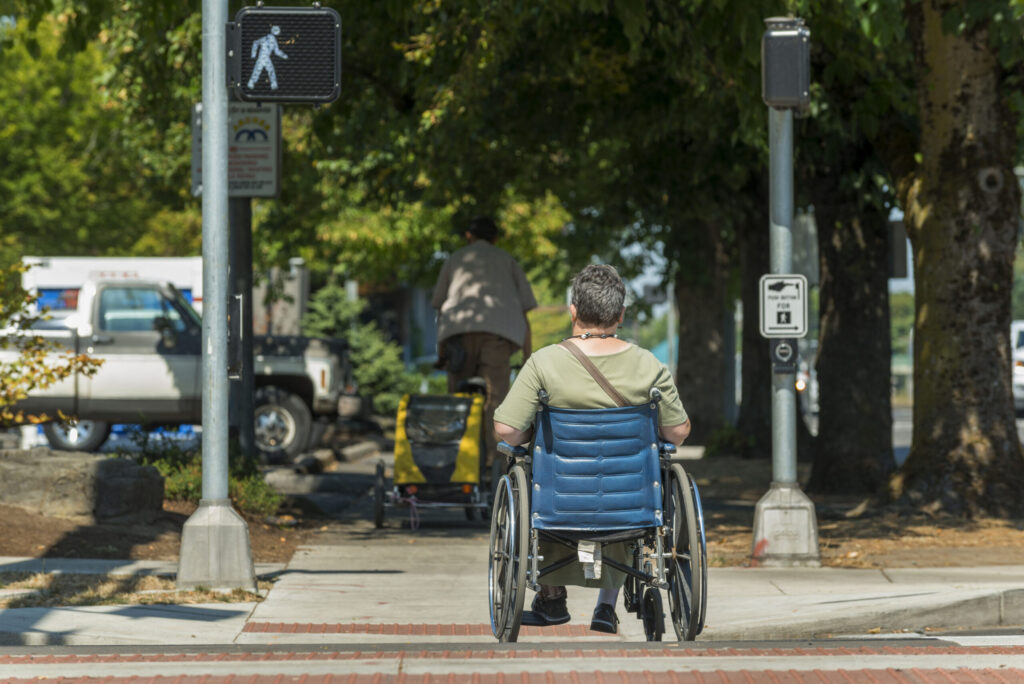
It’s been two years since the Federal Highway Administration published the 11th Edition of the Manual on Uniform Traffic Control Devices (MUTCD), which was the first update to the manual in almost 15 years.
In the years since the MUTCD was adopted, NACTO has worked to understand the changes in the 11th edition, communicated the most important information to our members, tracked state adoption of the document, and developed recommendations to improve future guidance.
Understanding the MUTCD
The MUTCD sets highly detailed standards for road markings, speed limits, stop signs, and traffic signals on roads throughout the United States—often prioritizing vehicle throughput over street designs that promote safety. The new edition made important steps toward a safer, more people-focused transportation system, but it does not include every necessary reform to create safe streets.
Over the course of 2024, the NACTO team organized a series of webinars to help members understand what changed, what didn’t, and how to use engineering studies and judgment to advance safe streets.
Positive changes include modernizing the method for setting speed zones, making it easier to install crosswalks, and explicitly allowing the use of green bike lanes, red transit lanes, and asphalt art.
State Adoption
The release of the 11th edition of the MUTCD triggered a two-year clock for all state departments of transportation (DOTs) to incorporate it into their state standards. States can choose whether to:
- Adopt the national MUTCD directly
- Adopt the national MUTCD and a state supplement to address specific state laws
- Adopt a unique state MUTCD
All three approaches require states to submit their MUTCD to their state’s Federal Highway Administration (FHWA) division office and receive a letter demonstrating substantial compliance. The deadline for states to complete the adoption process is January 18, 2026.
In the two years since the release, NACTO has been tracking the required state MUTCD updates across the 31 U.S. states in which we have members.
- 10 states adopted the 11th edition of the MUTCD directly, including Georgia
- 13 states adopted the 11th edition and a state supplement, including Ohio
- 8 states adopted a separate state MUTCD, including California and Texas
For a document that emphasizes uniformity and rigidity, there is inconsistency and a lack of transparency in the states’ updates to the MUTCD, especially among the 68% of states that adopt state supplements or state MUTCDs.
State DOTs do not consistently have webpages that clearly outline the process for updating their MUTCD, identify the representatives responsible for the update process, or explain how practitioners can provide feedback.
States are also not required to include any stakeholders outside of the state DOT in decision-making. This results in a range of public comment processes with varying opportunities to substantially influence final state rules.
For example, Texas released a version of the state MUTCD for public comment in summer 2025 and organized a local advisory committee to provide feedback. However, the state made a significant change targeting aesthetic surface treatments outside of this review process. The final November 2025 document included a last-minute provision that aimed to prohibit crosswalk art—a change that was not subject to public comment or scrutiny from practitioners, is inconsistent with the other states’ MUTCDs, and has already impacted local communities across Texas.
The review for substantial compliance is conducted by state FHWA division offices and not by the technical staff at FHWA headquarters, which is responsible for reviewing and publishing updates to the MUTCD. This can lead to inconsistencies in compliance by the state FHWA offices.
FHWA also does not make the adoption process by each state publicly accessible. There is currently no way to know which states are in substantial compliance with the 11th Edition. The only map that currently exists is from the 2009 MUTCD.
Up Next
Cities are where the rubber meets the road, and city officials have accountability to the traveling public, but states and U.S. DOT set the rules. Our streets are unsafe due to their design. To save lives, we must remove institutional roadblocks and advocate for the creation of national standards that support pedestrian safety treatments, all-ages-and-abilities bikeways, transit priority treatments, and complete street designs.
By law, as part of the Infrastructure Investment and Jobs Act, the FHWA is required to update the MUTCD every four years. Rulemaking on the MUTCD update is scheduled to begin in late 2026 to meet the deadline of December 2027.
We’re also still awaiting rulemaking for the known errors in the MUTCD 11th Edition that were acknowledged in the first few months of 2024, following the document’s original publication.
NACTO members are invited to join the National Standards Committee to help inform national guidance and integrate city-proven designs into documents such as the MUTCD. Over the past few years, the committee has been invaluable in understanding how the changes to the MUTCD impact cities, developing materials to explain issues, and recommending changes.
NACTO will continue to advocate for reform of the MUTCD. The process needs to be more inclusive, transparent, and better reflect the needs of cities. Both the FHWA and state DOTs should adhere to minimum transparency requirements to track compliance and prevent inconsistencies.