
In December 2023, the Federal Highway Administration (FHWA) published the 11th Edition of the MUTCD, the first update to the manual in almost 15 years.
The new edition provides additional flexibility and guidance for cities, counties, and states looking to design safer, more people-focused streets. It provides more opportunities to add safe crossings, modernizes the method for setting speed zones, and explicitly allows for transit lanes, safe bike lanes, and asphalt art.
However, the 11th Edition does not include every necessary reform to create comprehensively safe streets. The MUTCD still falls short in areas that play an outsized role in the unsafe design of our streets.
Over the course of 2024, the NACTO team organized a series of webinars to help members understand what changed, what didn’t, and how to use engineering studies and judgment to advance safe streets.

February 27, 2024
Overview of the new MUTCD
The 11th Edition of the Manual for Uniform Traffic Control Devices (MUTCD) is finally here. The significant improvement over the draft document is thanks to multiple years of advocacy from our members. Working with member agency staff across the country, we’ve identified how the new edition will affect your design projects. We’re reporting back to you, our members, on the good and the bad of the MUTCD and the work ahead in 2024.

April 24, 2024
Setting speeds and the new MUTCD
The new edition of the MUTCD modernizes how jurisdictions can set speed zones. In this webinar, we review the exact language in Section 2 and discuss what the changes may mean for states, counties, and cities. We discuss the tools that jurisdictions are allowed to use in setting speed limits, including guidance from NACTO’s City Limits.
Additional resources

June 26, 2024
City approaches to setting speed limits
Speakers from NACTO member cities Atlanta and Austin shared how they approach setting speed limits in their cities. The Atlanta Department of Transportation’s Deputy Commission of Strategy and Planning, Betty Smoot-Madison, shared the agency’s multi-pronged approach to setting slower, safer speed limits on streets across the city. Joel Myer, Transportation Safety Officer, and Eric Bollich, Managing Engineer, described how Austin adopted an Expert Systems approach for arterials and developed comprehensive engineering studies to set safer speed limits on multiple streets.
Additional resources

August 29, 2024
Crosswalks and asphalt art
The 11th Edition of the MUTCD made some positive changes for crosswalks, making installing and improving crosswalk markings easier and aligning them with best practices. Asphalt art is also now explicitly allowed under the MUTCD, a significant change from the previous edition. Art is not a traffic control device and can be used both in the roadway (such as in an intersection) and outside (such as in a paint-and-post curb extension or on the sidewalk).
Additional resources
October 30, 2024
Bikes and bike signals
Part 9 of the MUTCD covers traffic control for bike facilities. These chapters include many new features for the first time, including separated bike lanes, protected intersection design principles, and two-stage turn boxes. Other updates to the 11th edition, such as the untested signs accompanying bike signals, may complicate bikeway design.

December 12, 2024
City approaches to bikeway design
In the final webinar, speakers from the District Department of Transportation and the City of San José discuss their work on biking infrastructure within the context of the MUTCD and how you can apply similar strategies in your city. Will Handsfield, a Transportation Specialist with DDOT, explained the District’s design and evaluation of advisory bike lanes as an official MUTCD experiment. Patrick Lee, Senior Engineer with San José, discussed the city’s bikeway network build-out and how the city will work with both the California MUTCD and the new 11th Edition from the Federal Highway Administration.
Additional resources
LEARN MORE
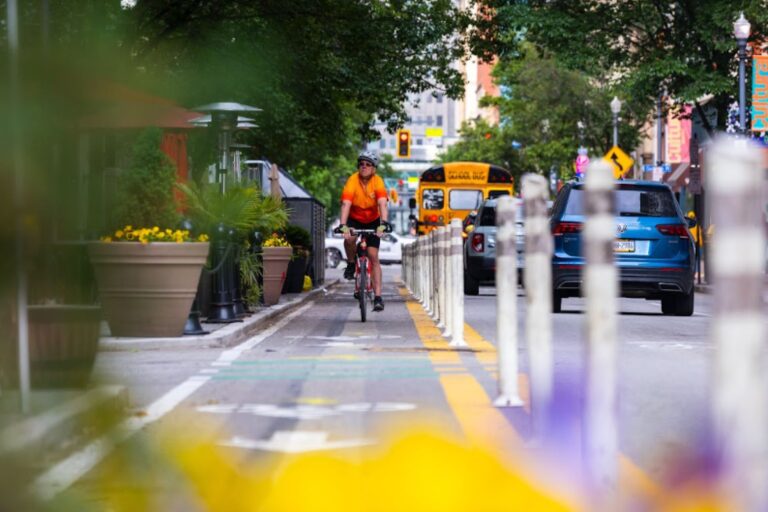
MUTCD and National Design Standards
NACTO works to integrate city design principles into national standards and guidance documents.
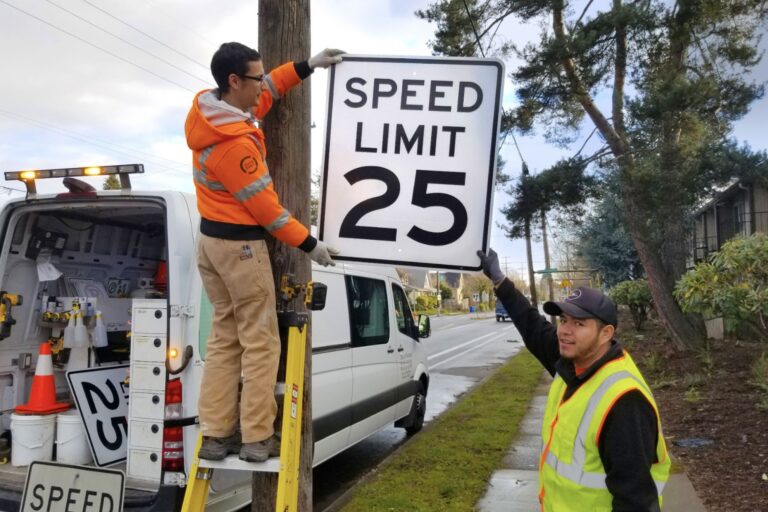
Safe Speeds
NACTO helps cities slow speeding drivers through multimodal street design, lower speed limits, and automated enforcement.

Convening Practitioners
We convene transportation practitioners around North America through dynamic and engaging events.