Insights from 20 cities at the March 2026 Better Bike Share Partnership Shared Micromobility Roundtable in Tucson, Arizona
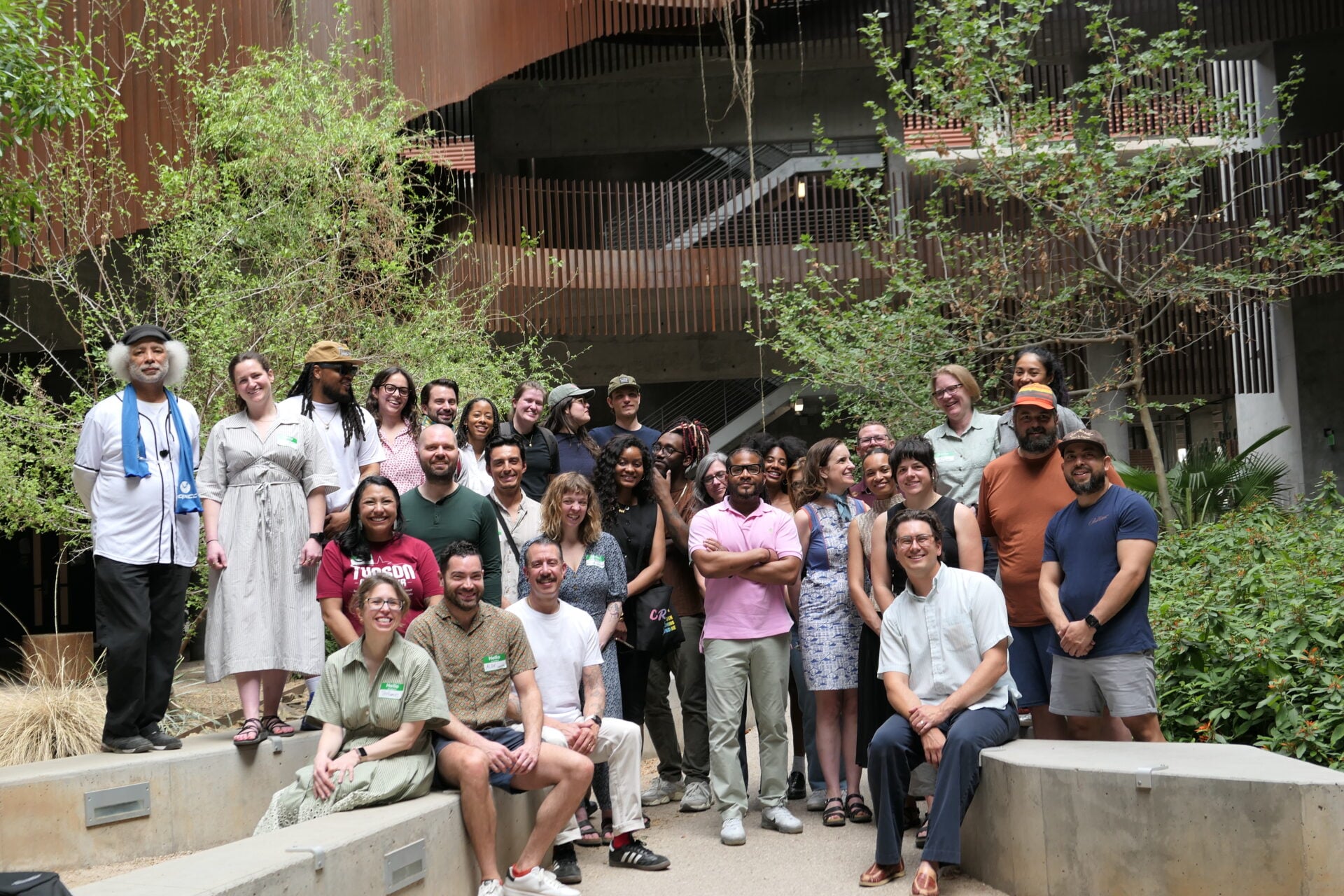
Behind every shared micromobility program is a team of people figuring out how to make it work in their city. Last month, 30 of these practitioners representing 20 cities gathered in Tucson, Arizona, for the 2026 Better Bike Share Partnership (BBSP) Roundtable. BBSP—a collaboration between NACTO, PeopleForBikes, and the City of Philadelphia—focuses on making bike share equitable and sustainable.
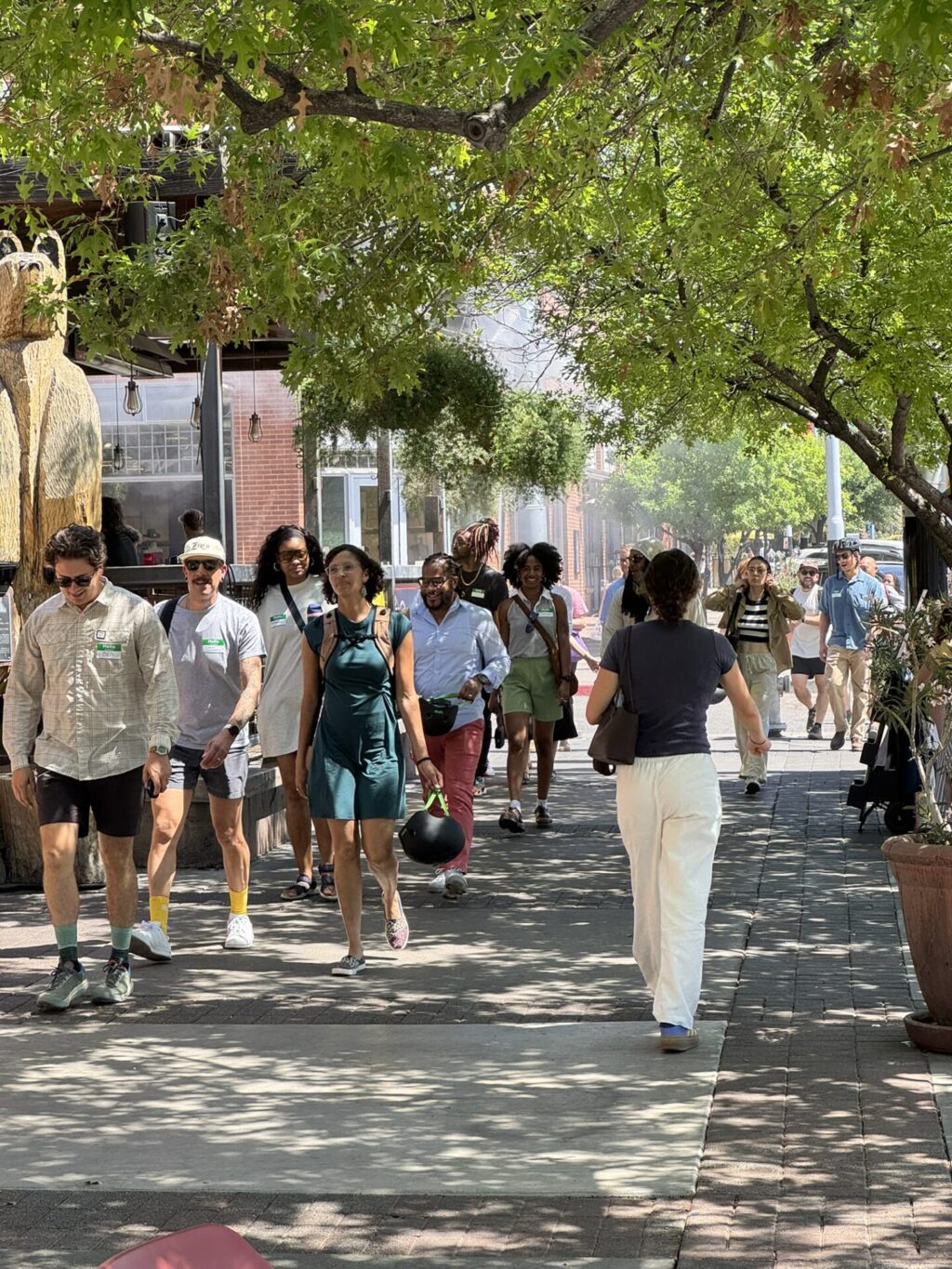
Over two days of gathering, riding bikes and scooters, and sharing meals, attendees discussed successes, tackled common hurdles, and brainstormed ways to ensure micromobility truly serves every member of a community. Success stories from BBSP Living Labs grantees and a dialogue between Tucson Vice Mayor Lane Santa Cruz and organizer Vanessa Gallego from Familias Unidas Ganando Accesibilidad (FUGA) reminded us what this work is all about: bike share that truly serves our communities.
A Two-Wheeled Tour of Tucson
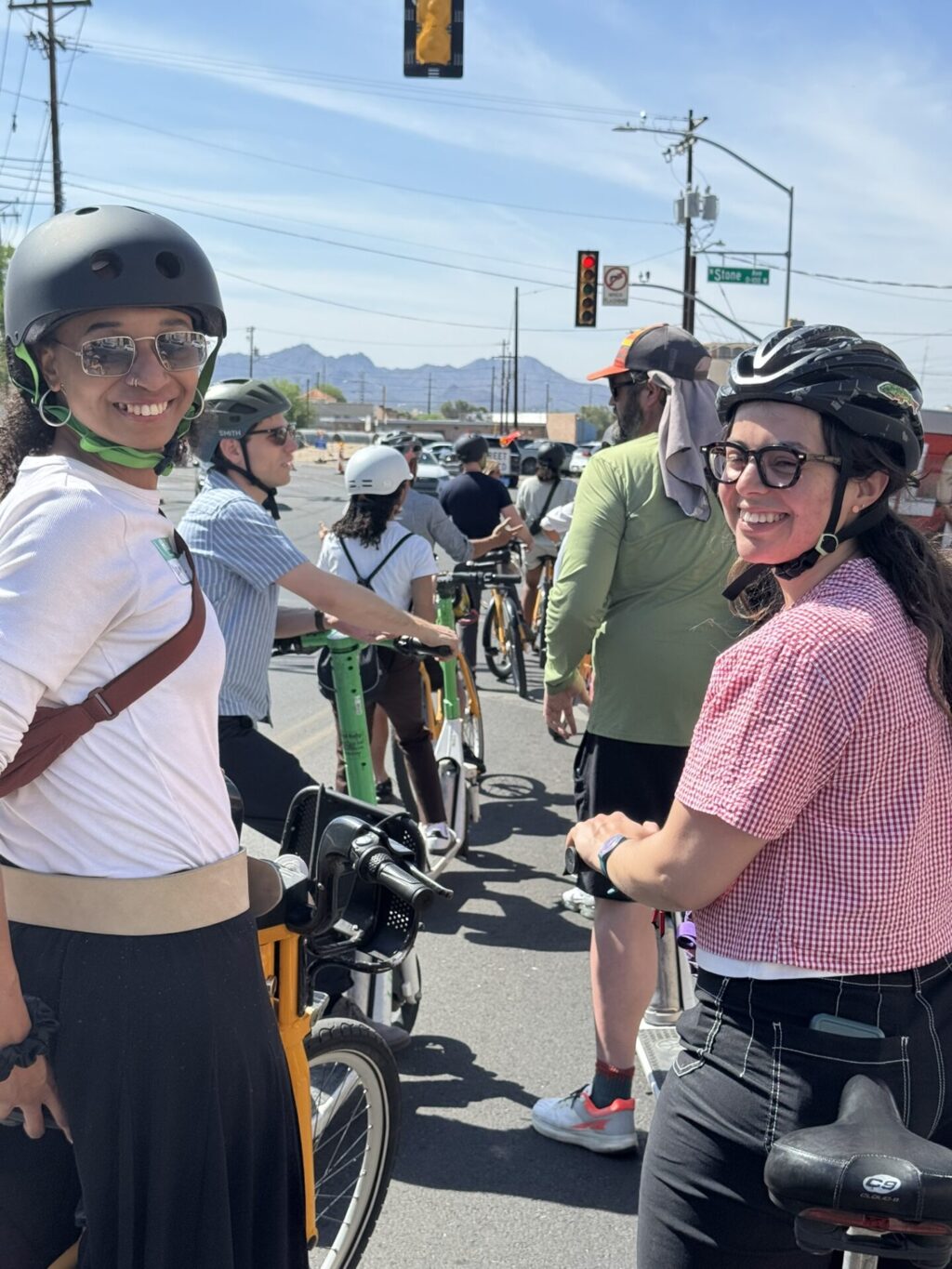
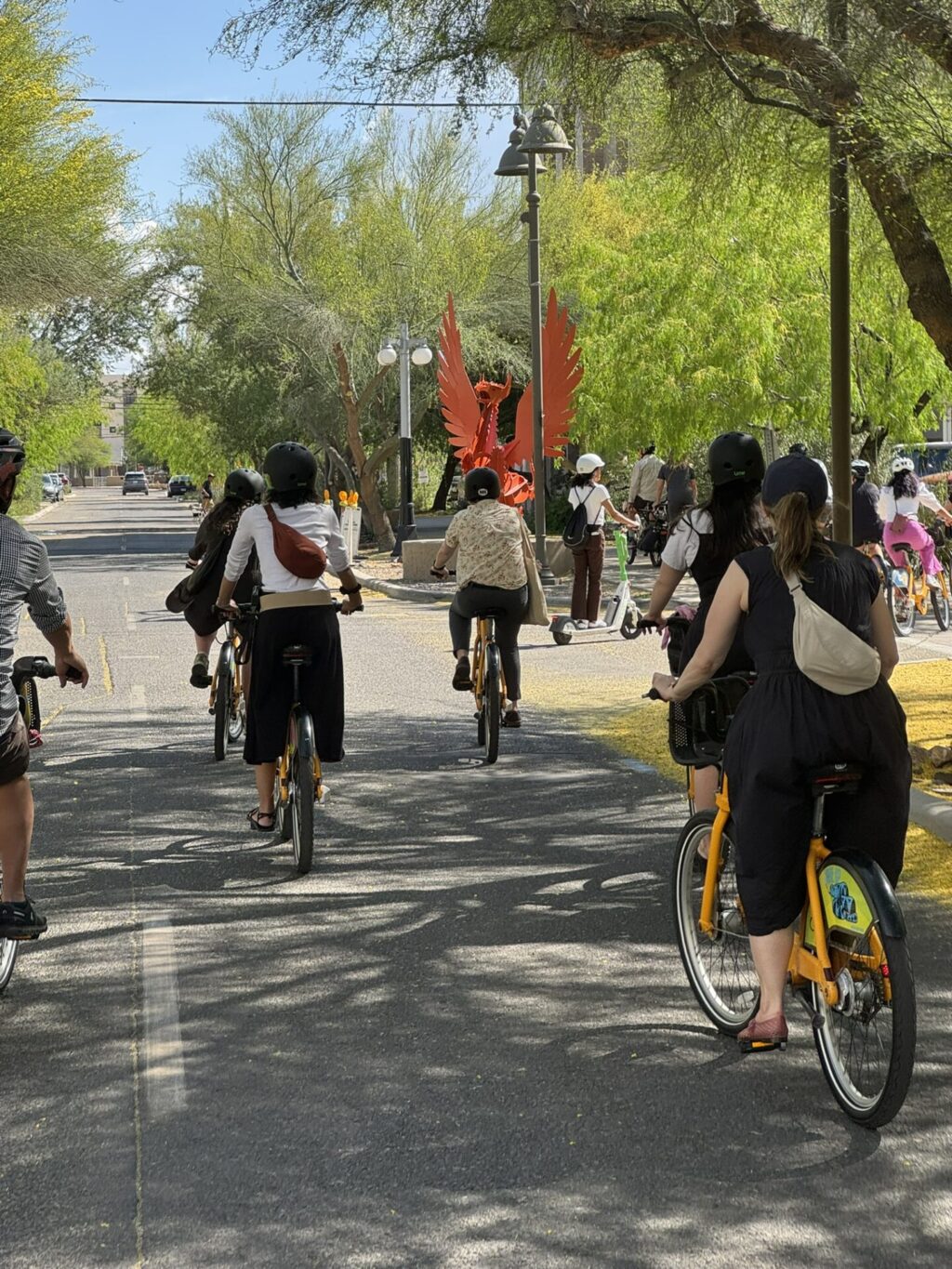
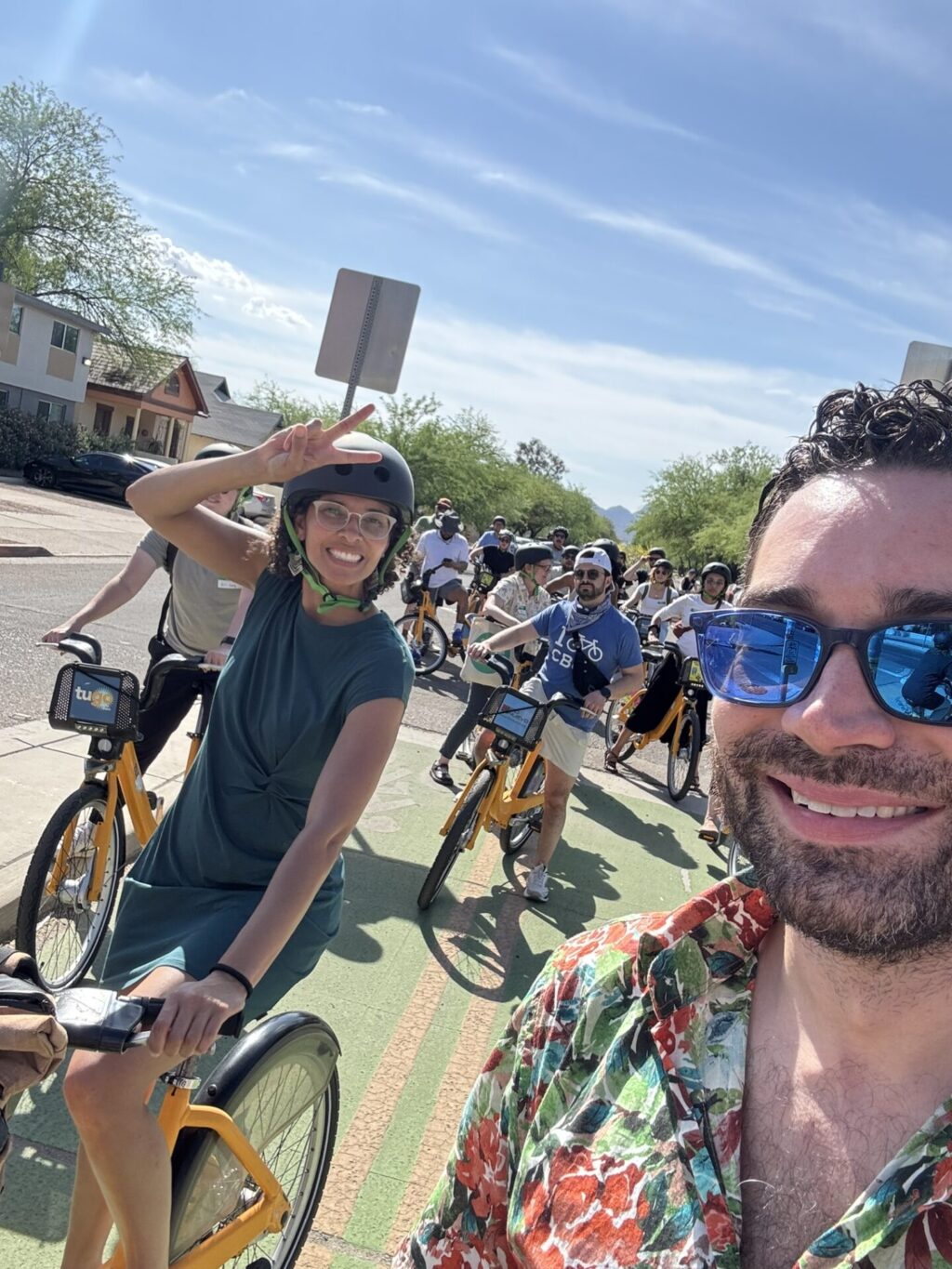
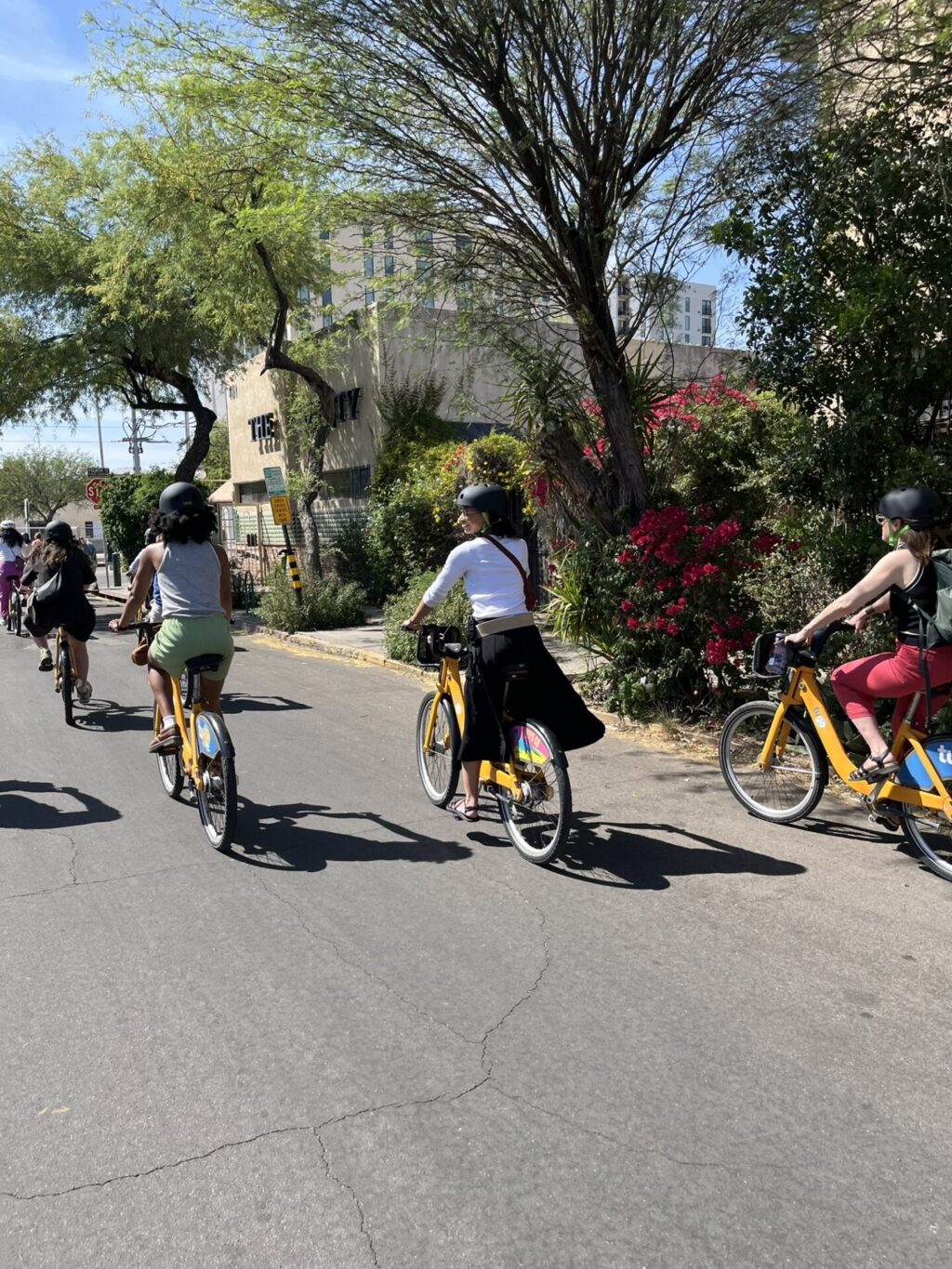
To see local innovation in action, the group hopped on Tugo’s iconic yellow bikes for a five-mile tour of Tucson’s bicycle boulevards. The city is currently expanding its network, with plans to add dozens of miles of protected lanes and bike boulevards in the coming years.
Highlights from the tour included:
- TOUCAN signals: specialized “half signals” that stop traffic fully to allow safe crossings for people on foot, bike, or scooter.
- Storm to Shade: an innovative program that uses green infrastructure to both make streets safer and collect stormwater runoff, recharging the aquifer with precious (in the desert) water. The program incorporates native flora into curb cuts, traffic circles, and protected bike lane buffers, and provides greenery and some shade for people walking and rolling.
Thank you to Ben Elias and Colin Chesston for leading the ride, and to all of the many other Tucson folks who stopped by along the way!
Takeaways From Our Time Together
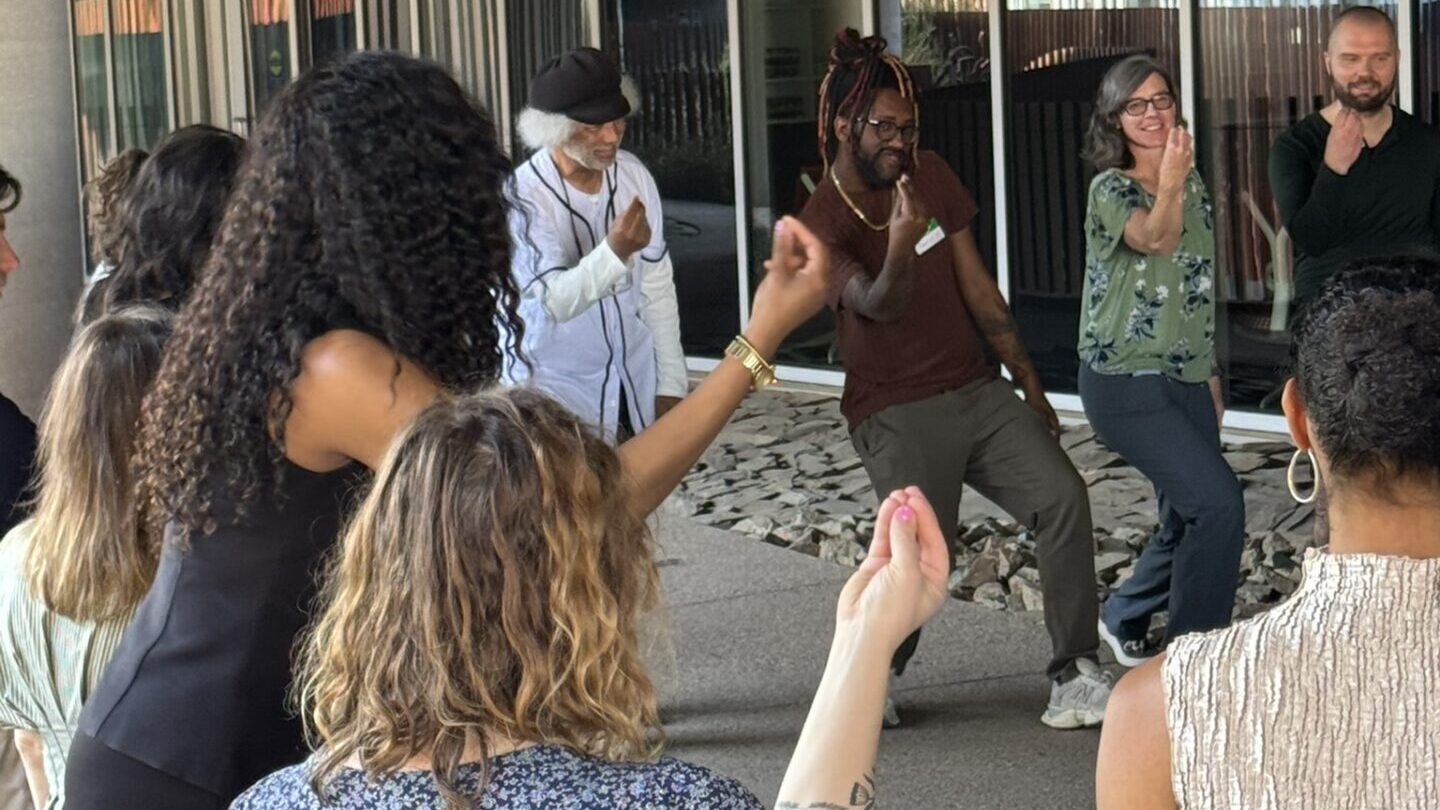
First—this group is fun! We were reminded of the joys of breaking bread, laughing, playing games, and exploring our shared humanity — while focusing on the nuts and bolts of running systems, making streets safer, and delivering for residents.
We also learned:
Staffing is the key ingredient: Shared micromobility programs provide major benefits to cities, but are largely not staffed or funded for long-term success. Most teams consist of five or fewer full-time employees, and even those employees typically split their time between shared micromobility and other responsibilities.
Creative solutions help shared micromobility serve communities where they are. Red Bike Cincinnati’s $5 equity pass is a critical resource in the Queen City—with more than half of all bike share trips in 2025 taken by those enrolled in the program. To make the pass sustainable, and serve more people, Red Bike partnered with Shelterhouse, a local organization for people experiencing homelessness, to both provide hands-on enrollment support, and open up more sources of funding for the program.
Assumptions about access should be challenged. Who is bike share actually serving? Tucson is tackling this head-on by working with longtime community leaders at FUGA and the Office of Equity to design a community-led planning effort, learning how and where Tucsonians of all stripes want access to bike share. As a result, the city is on track to redistribute five of its underutilized downtown stations to neighborhoods that currently do not have access to bike share.
Ways to approach the work with humility and flexibility. Practitioners have a lot to learn from their communities, especially from youth and elders. In Philadelphia, Indego Bike Share saw an unexpected surge in use by seniors after introducing e-bikes. They are now leaning into this trend, actively recruiting older riders through community ambassador and wheels to work programs.
The power of a community of practitioners. The most unanimous takeaway? Connection matters. Shared micromobility practitioners love the work that they do, both in their communities and with their peers across the country. Spaces to meet in person and virtually are invaluable opportunities for city staff to share ideas and struggles with peers. For NACTO peer network co-chair Hannah Dos Santos, “being around peers who all understand the challenges–and joys–of doing this work felt really encouraging.”
Learn more
- See photos from our time in Tucson.
- Read People for Bikes’ roundtable recap.
- Learn more about the City of Tucson’s plan to reallocate bike share stations to underserved neighborhoods.
Learn more about the 2024-2026 BBSP Living Lab Grantees.