From Our Executive Director
Dear NACTO Community:
When I first stepped into my role as Executive Director a little over half a year ago, it felt, in many ways, like coming home. The NACTO network has meant a tremendous amount to me for more than a decade—going back even further than the first Designing Cities conference, hosted by NYC DOT back in 2012. NACTO helped me build a network of like-minded professionals that has supported me for years. When I became Director of a new DOT in Oakland, California, NACTO supercharged the capacity of my team.
So while I was thrilled to be asked to take the reins, I also knew the weight of leading this unique organization—the place for those of us in the public sector who are using city streets as a powerful tool to make our cities safer, more sustainable, joyful, and accessible to all.
And seeing, first-hand, everything that this organization does has only reinforced my awe for it, and for the practitioners we serve.
Just this past year, the NACTO staff, and network, accomplished so much:
- We finished the bike guide! The third edition of the seminal Urban Bikeway Design Guide—updated for the first time in over a decade—finally was set and off to the printing press, for release in early 2025.
- We delivered an inspiring, energizing, and rejuvenating Designing Cities Conference with 1,000 practitioners filling ballrooms, breakout sessions, workshops, and streets throughout Miami-Dade County and beyond.
- We won major upgrades to the ‘Notorious’ MUTCD. While published in late 2023, 2024 was the year we were able to digest this many-page rulebook, see the changes made, and help cities implement the dramatic modernization of this document toward streets that are safer, more sustainable, and more accessible to all.
- We graduated our third, and welcomed our fourth, cohort of Transportation Justice Fellows. These remarkable professionals are leading the charge, and are our next visionary leaders, for advancing equity in transportation.
- And throughout it all, we sharpened our focus on our members. In getting to know the remarkable staff at NACTO, I consistently heard a desire to improve how we communicate, collaborate, and connect with our members—the people who make up the local transportation and transit agencies across North America. So: We refreshed our peer networks, started a monthly members-only update from me, and began overhauling our member programming (with more to come in 2025).
Much of this incredible work is thanks to my predecessor, Corinne Kisner, who served as executive director for five years, and spent eleven years total with the organization. NACTO thanks her tremendously for her service.
As we look to uncertainty ahead in the coming year, I am reminded that cities have always been the authority most responsive—and accountable—to their communities. Cities innovate from the ground up. Even, in many cases, with inadequate support from their states, provinces, and national governments. We’ve seen what cities can do. Over the next year, I know that I will be in awe of what our member agencies—working together—will have accomplished. And throughout it all, NACTO will be here for you.
With gratitude,
Ryan Russo
Executive Director
Convene
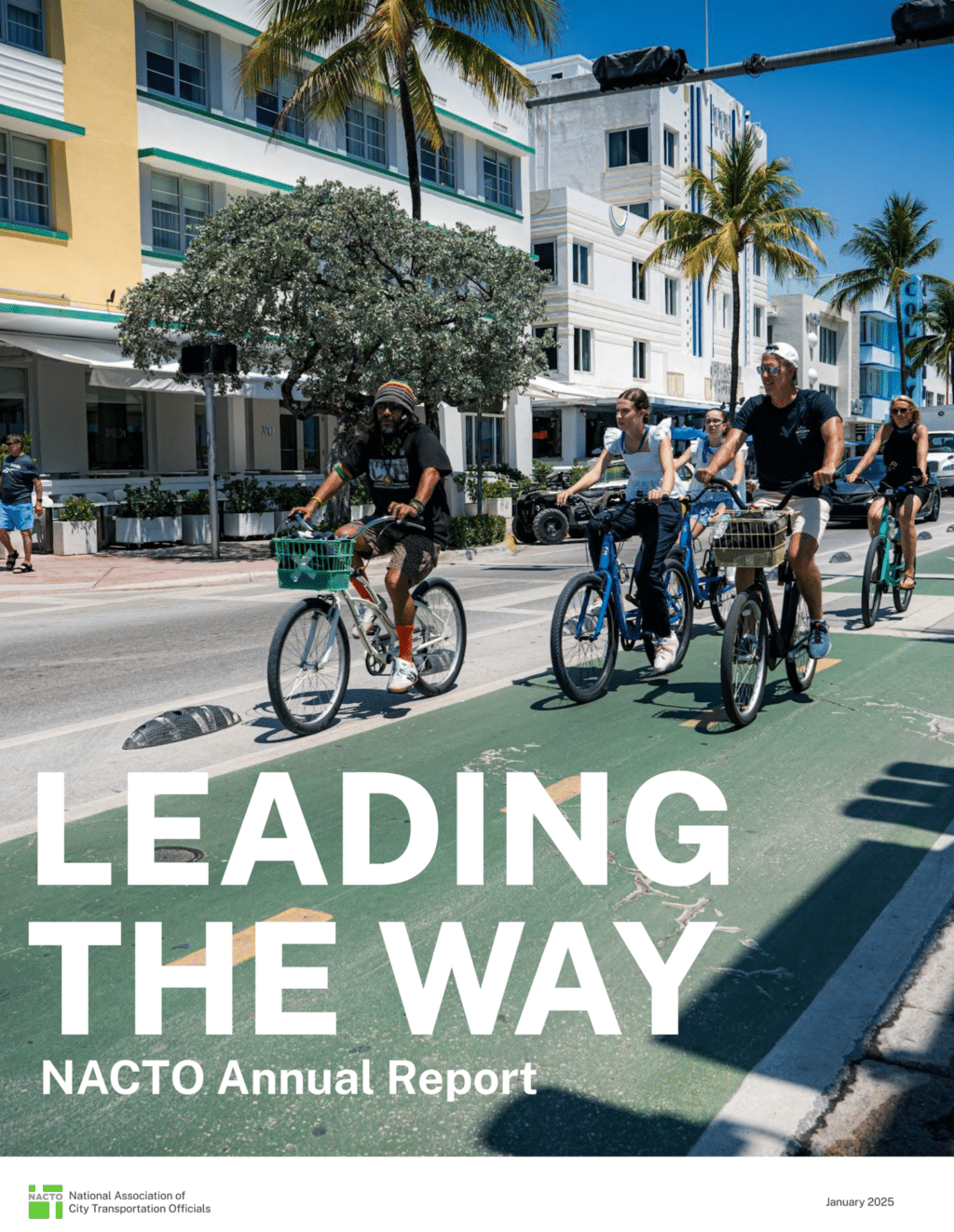
Throughout the year, NACTO brought together practitioners from our member agencies to share knowledge, collaborate with each other, and advance the state of the practice. In 2024, we hosted our annual Designing Cities Conference and continued members-only programs to connect with each other and with NACTO.
2024 Designing Cities Conference In Miami-Dade County
Between May 7 and 10, NACTO gathered over 1,000 transportation leaders, engineers, planners, advocates, policymakers, and community engagement practitioners in Miami to learn, share ideas, and make connections.
Even though this was the 12th Designing Cities Conference, it was a year of firsts: the first conference held in the southeastern United States, the first time a county member agency hosted us, and the first time we organized a Member Program Committee to help us plan peer sessions.
We worked closely with the Miami-Dade County team for over a year to plan the four-day conference. Miami-Dade joined NACTO in 2016 as a transit agency member. The county is a microcosm of the issues facing North American cities today, including the 2024 conference’s themes: safety, climate change, equity, sustainable growth, and regional collaboration.
NACTO’s first-ever Member Program Committee featured staff from member agencies across the country, who organized peer sessions that reflected their experiences and expertise. The Committee reflected the diversity of our membership, from a Madison, WI traffic engineer to an Atlanta shared micromobility coordinator, to a Fremont, CA transportation planner.
On 81—more than six dozen!—WalkShops, we explored the Miami-Dade region on foot, bikes, scooters, and transit, and got a firsthand understanding of the infrastructure, history, and successes on Miami’s streets—and what still needs to be done. In 34 peer sessions and roundtables, transportation officials from across the country—and the world—shared examples and specific tips on everything from asphalt art to implementing Vision Zero to how cities can partner with state departments of transportation. Our inspirational plenary speakers—including Miami-Dade Transportation and Public Works Director and CEO Eulois Cleckley, U.S. DOT Deputy Secretary Polly Trottenberg, author Veronica O. Davis, and Hoboken, NJ Mayor Ravi Bhalla—outlined a vision for transformative change and reflected on the challenges that come with implementing that shared vision. Our second annual Better Bike Share Partnership Roundtable brought together shared micromobility practitioners for a three-hour deep dive. Participants built community at our Grief and Resilience Roundtable and BIPOC Breakfast. And more than 40 sponsors invested in the NACTO movement by supporting the conference!
Meet the Cities
At the Designing Cities Conference, over half of our 100 member cities and agencies shared about a project or program at Meet the Cities. Conference attendees had a chance to connect with presenters and hear about successes and lessons learned for transformative change.
For the second year in a row, NACTO reprised Meet the Cities online over the summer. Thirty-three members presented their projects again during six events between July and September. The online programming welcomed back conference attendees who wanted a deeper dive into featured projects and provided an opportunity for people who couldn’t attend the conference in person to connect with their peers. Presenters shared the latest project updates, and attendees had a chance to dig into the topics, ask questions, and provide their own insights.
Member Education and Discussions
NACTO regularly convenes members to learn from each other, hear from experts, and share their own experiences. Our members-only events this year included:
- Member Listening Tour: Between January and September, we met with members from a dozen agencies across the United States and Canada to hear about their work priorities and challenges. Through these one-on-one conversations, we identified common themes of interest for our membership base and learned about how members use NACTO’s member benefits.
- Lunch & Learn Series: This series offers opportunities throughout the year for member city staff to hear new ideas from experts in—and outside of—the transportation field. In 2024, NACTO hosted four Lunch & Learn events focused on shared micromobility, safe routes to school, human-oriented public transit, and engaging with children in street design projects.
- Capacity-Building Discussions: These virtual sessions foster a collaborative space for members to engage with each other and share challenges, best practices, and wins. In October 2024, we convened staff from Detroit, Minneapolis, Oakland, and Pittsburgh to discuss capital improvement planning.
Collaborate
NACTO enables collaboration among our members, helping them form peer-to-peer connections that build professional skills and spread ideas. This year, we revamped our peer networks, developed future leaders with the Transportation Justice Fellowship, and worked with City of Minneapolis staff to host a workshop series on racial equity frameworks.
Reinvigorating Peer Networks
NACTO’s peer networks are a key benefit for our members, allowing them to learn from each other, share their work, and create connections within the NACTO community. Peer networks focused on different topics connect through regular virtual meetings and discussions on Forj, an online community platform.
In 2024, these peer networks—and the platform that facilitates online discussions—underwent a major refresh. Online, we streamlined the sign-up process. Peer networks, working groups, and discussion forums are now completely members-only and even easier for our members to join. We promoted these changes widely and encouraged more staff at NACTO member agencies to join. This investment paid off: 800 new users joined the platform in 2024, and participation and engagement have increased significantly.
Transportation Justice Fellowship
The Transportation Justice Fellowship, organized by NACTO as part of the Better Bike Share Partnership, builds community and skills among early- and mid-career people of color working to embed mobility justice in transportation. It centers on shared micromobility as a critical tool for building transportation justice.
In 2024, we wrapped up our second cohort of eight brilliant fellows. Through eight months of skills-building sessions, one-on-one coaching, special trainer visits, and structured collaboration, fellows will receive deep support as they advance professionally and work on tangible ways to improve mobility for communities of color. Our fellows played a key part in planning portions of the 2024 Designing Cities Conference, facilitating discussions at a Shared Micromobility Roundtable, organizing a BIPOC Breakfast, and sharing their achievements during Meet the Cities.
In the fall, we received a record 120 applications for the third cohort, and our selected group of 11 comes from all sectors: city and state agencies, nonprofits, and private agencies.
Applying a Racial Equity Framework
This fall, NACTO equipped 22 of our member cities with tools to operationalize equity through a series of interactive workshops on building and using a racial equity framework for transportation projects. To create the series, we partnered with transportation planners from Minneapolis, guided by the City’s Racial Equity Framework for Transportation adopted in March 2023. Workshop participants will reconvene in March 2025 to check in on their progress, and present their work at a Designing Cities Conference session in May 2025.
Curate
NACTO turns our members’ experience, experiments, and expertise into resources for cities. This year, we finalized the third edition of the Urban Bikeway Design Guide, worked with our members to influence and make sense of the new edition of the Manual on Uniform Traffic Control Devices, published a City Limits Quick Guide, crunched micromobility numbers for our annual Shared Micromobility in the U.S. and Canada report, and laid out recommendations for autonomous vehicle policy in Principles for Autonomous Vehicles on City Streets.
Working Together on the Urban Bikeway Design Guide
Since it was first published in 2011, NACTO’s Urban Bikeway Design Guide has set the standard for designing city streets for people cycling. Over a decade later, it’s time for an updated standard. This year, NACTO finalized the third edition of the Guide and delivered it to our publisher.
NACTO worked directly with member city staff and other experts to shape and build out this substantial update. We gathered the expertise of hundreds of city staff and industry experts through:
- The Urban Bikeway Design Guide working group, comprising 150 individuals employed at more than 60 municipalities and transit agencies in the U.S. and Canada
- Focus group meetings focused on specific issues such as signal phasing and the book’s organizational structure
- Feedback via email, comments on documents, and one-on-one meetings
- Contracted support from three planning and engineering firms
The working group informed all aspects of the Urban Bikeway Design Guide’s advice for bikeway design in North America, including designing for non-visual navigation and accessibility, contextual guidance for conflicts at signalized intersections, bike boulevards, advisory bike lanes, process and partnerships for maintenance, and aspirational and achievable bikeway widths.
Look out for the third edition of the Urban Bikeway Design Guide on shelves on January 14, 2025!
Influencing—and making sense of—the MUTCD
In December 2023, the Federal Highway Administration (FHWA) published the 11th Edition of the Manual on Uniform Traffic Control Devices (MUTCD), the federal regulation that is used for nearly all traffic markings and street designs in the U.S. This was the first update to the manual in almost 15 years. In 2024, we worked to educate member agencies and partner organizations on the changes made in the 11th edition. We hosted a series of six webinars for our members between February and December, covering general changes, updates to speed limit guidance, crosswalk installation, asphalt art, bikeway design, and bike signals.
Our National Standards Committee, formalized this year, is developing recommendations to improve future editions of the MUTCD. In 2024, the group supported NACTO’s delegation to the National Committee on Uniform Traffic Control Devices, reviewing and submitting comments on 26 proposals for the January 2025 NCUTCD meeting.
We regularly collaborated with FHWA’s MUTCD team. We elevated member cities’ questions, received and circulated responses to clarifying questions, discussed member agency perspectives, and advocated for changes in future editions. In the fall, U.S. DOT hosted a meeting with NACTO to advance the conversation about experimentation and innovation as it relates to the MUTCD.
Helping Cities Set Appropriate Speed Limits
The 11th Edition of the MUTCD officially discourages the use of the 85th percentile to set speed zones. Instead, it requires an engineering study that considers roadway context, aligning with NACTO recommendations.
To support cities, NACTO published the City Limits Quick Guide, which demonstrates how to set a MUTCD-compliant speed limit using the safe speed study method first published in City Limits. With this tool, engineers can analyze a street’s activity level and conflict density to determine what speed limit to post in a zone, knowing that it will meet the requirements of the MUTCD.
Trends in Shared Micromobility
NACTO shared the big news: trips taken on bike share and scooter share systems in the U.S. and Canada reached an all-time high in 2023. People took 157 million trips on bike and scooter share, surpassing the previous peak of 147 million trips in 2019 and firmly establishing these systems as important transportation infrastructure.
Yet, despite the incredible popularity of shared bikes and scooters, some systems folded or otherwise had trouble financing their operations in 2023, and many riders (and frustrated would-be riders) watched fares climb—especially for e-bikes and shared scooters.
NACTO made specific policy recommendations to support the continued growth of shared micromobility systems and to ensure their longer-term sustainability: invest public money in capital and operating costs, eliminate sales taxes on shared micromobility, and build connected networks of bikeways that connect people to where they want to go.
Principles for Autonomous Vehicles on City Streets
In November, NACTO released Principles for Autonomous Vehicles on City Streets. The policy paper will help all actors—cities, states, federal regulators, and AV companies—successfully integrate AVs into existing, complex city streets and transportation systems. Developed in partnership with a working group of NACTO members, our principles reinforce the need for cities to inform and shepherd the deployment of AVs. These recommendations include specific ways that federal and state governments can make it easier for cities to make decisions for their transportation systems.
Communicate
NACTO elevates the city voice in national conversations about transportation policy and practice. We promote their voices in the media, educate the general public about transportation issues, and comment on and shape federal and state regulations.
NACTO in the News
In breaking news stories, long-form features, and webinars, NACTO has served as a trusted expert voice that journalists and industry peers rely on to provide context, data, and thoughtful analysis of our transportation system. In articles and presentations, we’ve reframed the conversation about transportation to focus on safety, equity, and sustainability.
In 2024, NACTO coverage drove national stories across North America, in outlets including the AP (Associated Press), USA Today, Axios, Slate, Bloomberg CityLab, Curbed (New York Magazine), GOVERNING, Smart Cities Dive, Streetsblog, Planetizen, Next City, Fast Company, Route Fifty, WIRED, and others.
NACTO is also frequently cited in local transportation stories—helping cities advocate for better projects and outcomes for residents. From local news stations such as ABC 7 Denver, WBEZ Chicago, NBC Montana, and NBC 8 Portland, to renowned newspapers including The Globe and Mail, the Baltimore Sun, the Toronto Star, and the Philadelphia Inquirer, NACTO is a trusted source to help drive transportation progress forward.
Crafting the New NACTO Website
NACTO will be launching a redesigned and reimagined website in late January 2025. Throughout 2024, our staff worked with an external vendor to audit the eight-year-old NACTO website and brainstorm how to organize our work more clearly. The end result is a site that will be much easier to navigate, with a modern design and structure. Our resources will be more accessible, making it easier for our members and partners to create change locally.
NACTO’s website is a major influence in the transportation industry—in 2024 alone, half a million people accessed guidance and other content on NACTO.org.
Spreading the Word
NACTO’s newsletter continues to provide essential monthly updates to subscribers passionate about city transportation—and this year, those subscribers grew by over 1,200 people. And people aren’t just subscribing; they’re reading the content. Our open rate of 39% far exceeds the 25% industry average.
In October, NACTO started sending a new monthly update to members. Sent by Executive Director Ryan Russo, this member update includes exclusive insights into what NACTO’s working on, round-ups of important industry news, and information on ways members can get involved in our work.
Transportation enthusiasts can follow NACTO on LinkedIn, Facebook, Instagram, Threads, and Bluesky. Across platforms, NACTO’s posts received over 800,000 impressions in 2024.
Informing Federal Policy
NACTO serves as the city voice in national and state policy conversations. We engage governments at all levels, harness and elevate the voices of our members, analyze policy proposals, and inform members of major policy actions and opportunities from U.S. DOT, Congress, and other governmental bodies. In 2024, NACTO worked with our member agencies to submit comments on Public Right-of-Way Accessibility Guidelines (PROWAG), accessibility standards for on-street electric vehicle charging stations, and vehicle safety standards.
Public Right-of-Way Accessibility Guidelines
In late August, U.S. DOT released a 30-day comment period on a long-awaited proposed rulemaking for adopting the Public Right-of-Way Accessibility Guidelines (PROWAG). NACTO worked with member agencies and partner organizations on a detailed comment letter asking the U.S. DOT to adopt PROWAG without any changes from the version passed by the U.S. Access Board. The effort was well worth it: in December, U.S. DOT announced that it would accept PROWAG without modification.
EV Charging
In November, the U.S. Access Board requested comments on accessibility guidelines for off-street electric vehicle parking spaces. NACTO’s comments, informed by member cities including Boston, Detroit, Miami-Dade County, Milwaukee, and Pittsburgh, recommended that all off-street parking spaces should be designed for accessibility by default and requested that the Access Board also provide guidance for on-street accessible spaces.
Vehicle Safety Standards
NACTO provided comments on a variety of proposed legislation and rules in 2024.
- In April, NACTO celebrated changes to the National Highway Traffic Safety Administration’s (NHTSA) new Federal Motor Vehicle Safety Standard that will make automatic emergency braking, including pedestrian AEB, standard on all passenger cars and light trucks. NACTO submitted comments to NHTSA in favor of this change in 2023.
- In July, NACTO submitted comments to the Massachusetts Department of Transportation to support proposed rule changes that would require safety features in large vehicles to protect people walking, biking, and rolling. NACTO strongly supported the Commonwealth’s proposal to apply this regulation to all state agencies, rather than select transportation-focused agencies.
- In August, NACTO coordinated with California member cities and submitted a letter on their behalf in support of SB 961, which would require that new vehicles sold in California be equipped with intelligent speed assistance technology. The bill passed the California General Assembly but was vetoed by Governor Newsome.
- In November, we submitted detailed recommendations to the National Highway Traffic Safety Administration on a proposed Federal Motor Vehicle Safety Standard that would require new passenger vehicles to be designed to reduce the risk of serious-to-fatal injuries in child and adult pedestrian crashes.
- In December, NACTO commended NHTSA for updating the New Car Assessment Program. Consumers will now have better information about how well new vehicles reduce the likelihood and severity of crashes involving people walking and biking.
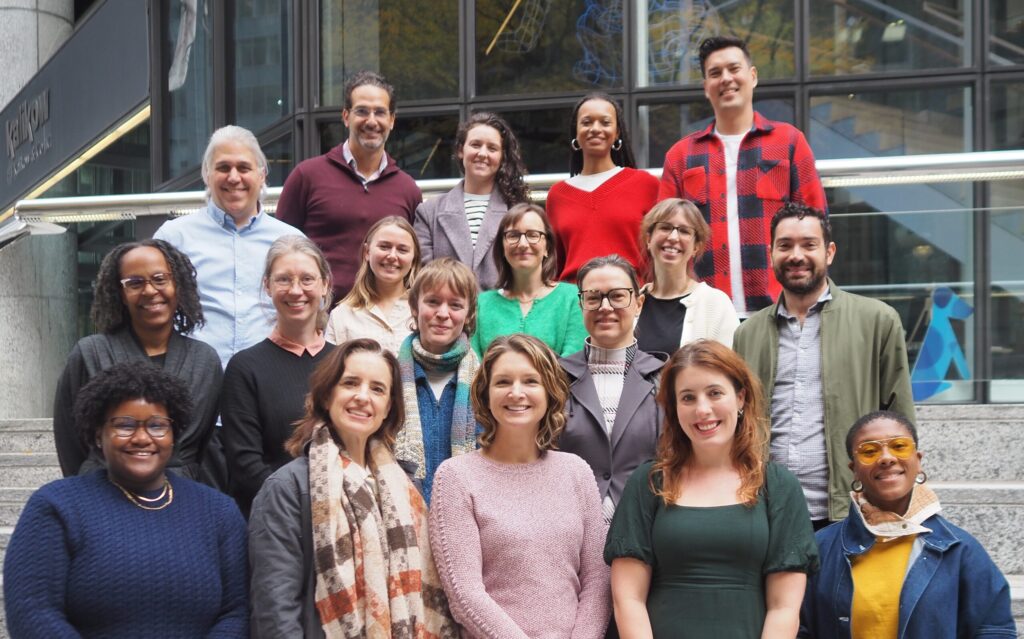
The NACTO Team
Ryan Russo Joins NACTO as New Executive Director
In June, Ryan Russo took the reins of NACTO from former Executive Director Corinne Kisner. Ryan has 25 years of experience in transportation and extensive connections with NACTO, holding leadership roles at two NACTO member agencies, serving on the NACTO board, and contributing to NACTO’s Urban Street Design Guide and Urban Bikeway Design Guide.
Ryan led the Oakland Department of Transportation and served as a deputy commissioner of the New York City Department of Transportation. In Oakland, Ryan made the city a national model for incorporating equity into transportation planning. In New York City, he designed and implemented some of the country’s most prominent safety, pedestrian, cycling, and transit projects, from the pedestrianization of Times Square to the nation’s first Vision Zero program.
New Board Members
NACTO welcomed two new board members this year: Laura Rubio-Cornejo and Jeffrey Tumlin joined the NACTO Board in March.
- NACTO Board Treasurer Laura Rubio-Cornejo is the General Manager of the Los Angeles Department of Transportation (LADOT). Under Rubio-Cornejo’s leadership, LADOT works to provide all Los Angelenos with access to safe and affordable transportation that treats everyone with dignity and supports vibrant, inclusive communities.
- NACTO Vice President Jeffrey Tumlin, Director of Transportation for the San Francisco Municipal Transportation Agency (SFMTA), oversees the Municipal Railway (Muni), traffic engineering, bicycle and pedestrian safety, parking, transportation accessibility, and taxi regulation for the City and County of San Francisco.*
Welcome New Staff!
In addition to our new Executive Director, NACTO welcomed three new staff members to our organization this year:
Elise Harmon-Freeman (she/her) joined us in May as our new Communications Program Manager. She rounds out our three-person communications team with a focus on NACTO’s public communications, website, social media, and helping to shape our overall communications strategy. She comes to NACTO with experience leading communications for the Traffic, Parking, and Transportation Department in a NACTO member city: Cambridge, Massachusetts.
Ethany Uttech (she/her) is our new Senior Manager of Member Experience! She joined us in September, and is responsible for building, maintaining, connecting, and energizing our diverse and growing network of member agencies. Ethany will be the first point of contact for NACTO members and prospective members, ensures that all our members can access their member benefits, and works to keep NACTO responsive to member needs, ideas, and values.
Briah Spencer (she/they) joined the NACTO team in October as a Program Associate for Policy and Practice. Briah supports NACTO’s street design and transportation policy priorities. Their role includes facilitating our Policy Committee and National Standards Committee meetings, contributing research to NACTO’s public-facing materials, and helping NACTO effectively communicate our organizational positions.
NACTO Board
Janette Sadik-Khan, Chair | Principal, Bloomberg Associates
Michael Carroll, President | Deputy Director for Transportation and Infrastructure, Philadelphia
Laura Rubio-Cornejo, Vice President | General Manager, Los Angeles Department of Transportation
Jeffrey Tumlin, Treasurer | Former Director of Transportation, San Francisco Municipal Transportation Agency
Kim Lucas, Secretary | Director, Pittsburgh Department of Mobility and Infrastructure
Brad Rawson, Affiliate Member Representative | Director of Mobility, City of Somerville Mayor’s Office of Strategic Planning and Community Development
*Jeffrey Tumlin stepped down from his position in San Francisco at the end of his contract, on December 31, 2024. NACTO extends a heartfelt thanks to him for his leadership at SFMTA and for his support of NACTO!
NACTO Staff

Ryan Russo | Executive Director
Alana Brasier | Director of Engagement
Lauren Nixon | Director of People and Culture
Stefanie Seskin | Director of Policy and Practice
Alex Engel | Senior Manager, Communications
Aminah Ricks | Senior Manager, Capacity Building
Briah Spencer | Program Associate, Policy and Practice
Camille Boggan | Program Manager, Policy and Practice
Cary Bearn | Senior Manager, Multimodal Design and Programs
Celine Schmidt | Visual Communications Manager
Dana Jacks | Events and Operations Associate
Elise Harmon-Freeman | Program Manager, Communications
Ethany Uttech | Senior Manager, Member Experience
Fielding Hong | Senior Manager, Field Building
Hannah McCasland | Senior Events Manager
Jenny O’Connell | Associate Director of Programs
Josh Naramore | Senior Program Manager, Policy
Katya Tabakina | Senior Manager, Finance and Administration
Financials
