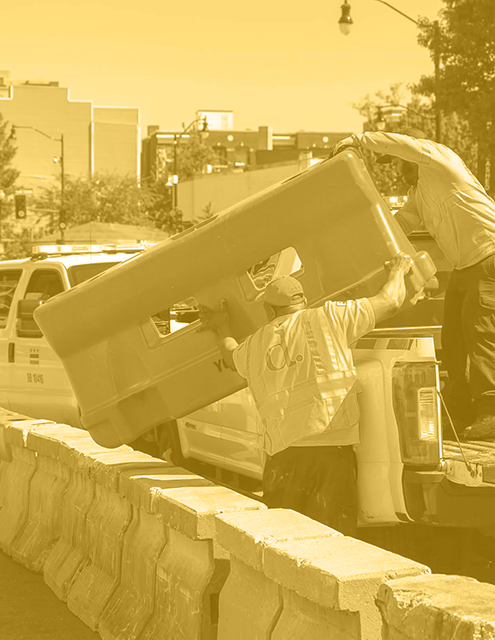
Five years ago, the world changed.
In just a few short weeks, the threat of infection from COVID-19, stay-at-home orders, and social distancing requirements radically altered daily life. Globally, everyone experienced huge shifts in daily activities, from moving about the community to getting groceries to traveling to work. Essential and critical workers, including most employees in city transportation departments and transit agencies, played a vital role in keeping services going as cities worked in real time to ensure the safety of their residents.
The challenges faced by transportation and city officials during this time were unprecedented. How the coronavirus spread was not fully understood for months, which meant that difficult decisions had to be made, and fast. There was no playbook for addressing the emergency that city officials were facing.
In response to the unprecedented and fast-changing nature of the emergency, in March 2020, NACTO launched the COVID-19 Transportation Response Center to support cities and transit agencies on the front lines.
We built a clearinghouse of resources to provide real-time information to city and transit agency staff as they responded to immediate needs brought on by the pandemic. This resource documented the ingenuity of city transportation practitioners through the critical first six months, recording new initiatives and approaches through trackers, network calls, webinars, audio briefings, and, eventually, emerging practice guidance: Streets for Pandemic Response and Recovery and a grant program that further tested these emerging practices on the ground.

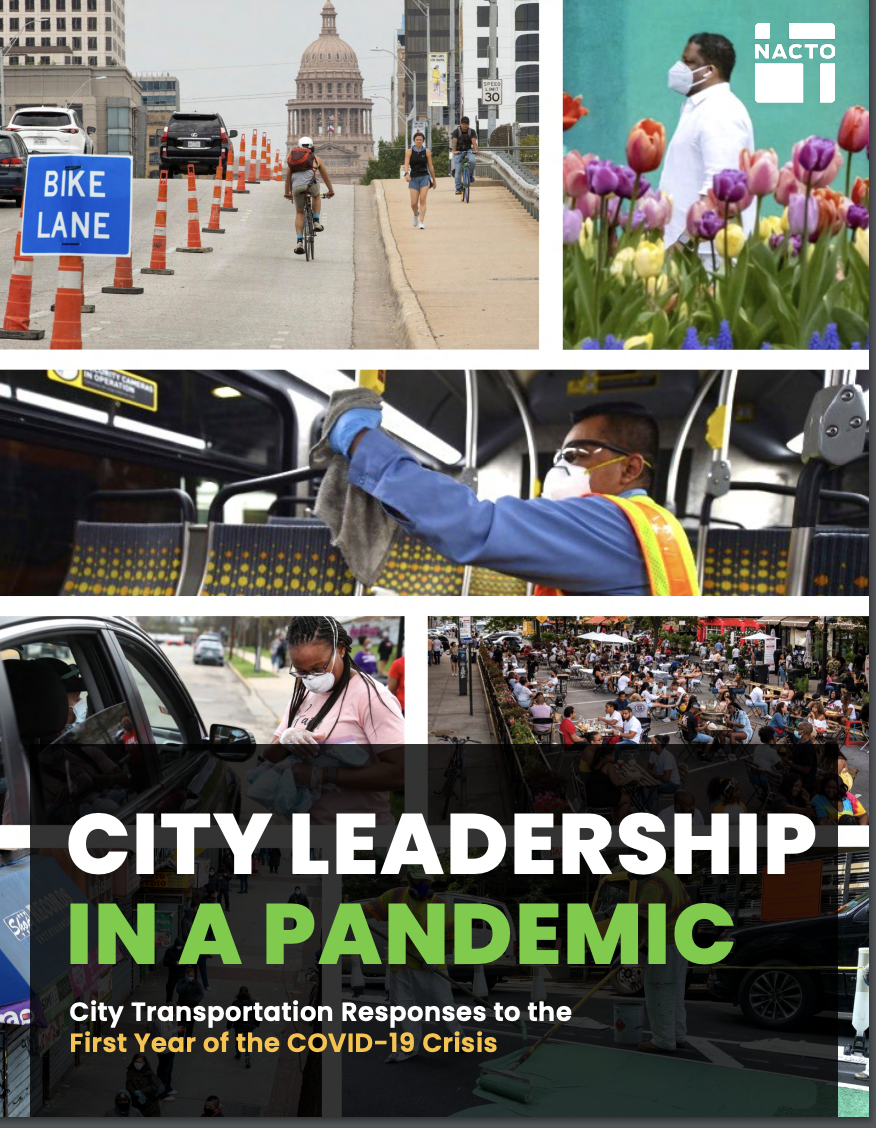
NACTO’s report, City Leadership in a Pandemic, shows how cities responded to the unknown and developed a deeper understanding of the ways they can work rapidly to better serve residents.
By building their own playbook, city transportation departments and transit agencies:
- Protected essential workers–those providing medical care, meals and groceries, transportation, and more–by adjusting transit service to focus on routes serving hospitals and grocery stores or providing free memberships on bike share.
- Adapted streets for safety and mobility. By late spring 2020, it was clear that COVID-19 transmission was greatest indoors, which led many people to walk and bike to work, and spend more of their time outside. Streets and sidewalks constitute most of the public space in cities, and cities responded by reinventing streets and sidewalks, expanding bike lanes, and creating space for outdoor voting and streets for dining.
- Clearly communicated policies and changes: As cities contended with uncertainty, local residents were trying to do the same. As streets changed, cities used the communications networks they had, from rapidly deployed social distancing decals to consistent media outreach. In some cases, new signage became a part of the infrastructure itself: the city of Oakland created a 21-mile network of slow streets, all of which was mapped and indicated by using signage mounted on a-frames.
NACTO member cities, transit agencies, their local partners, and staff across the country have seized the difficult moment wrought by the COVID-19 pandemic, harnessing incredible creativity, demonstrating necessary leadership, and finding new solutions that will benefit our communities well beyond the pandemic. In responding to the biggest crisis in years, cities showed resiliency, ingenuity, and grit: necessary qualities for addressing the many challenges and headwinds facing cities now, five years after the first major response to the pandemic.
From an entirely new bus map in San Francisco, to free rides to Covid testing sites in Detroit, to free bike share for healthcare workers in Minneapolis, cities were able to quickly identify their residents’ needs and activate solutions quickly and effectively. These incredible responses showed that cities are uniquely positioned to help their residents, connect them to opportunity, and build trust in government.
NACTO’s resources on COVID-19 Response, including the COVID-19 Transportation Response Center, were supported by Bloomberg Philanthropies as part of the Bloomberg Philanthropies COVID-19 Local Response Initiative.