In 2025, people took 150 million trips on shared bikes and scooters in NACTO member cities1, cementing shared micromobility as an integral form of public transportation in North America.
Ridership continues to grow across every member city with a shared micromobility system—even as fares rise. E-bikes and scooters are incredibly popular, and pedal bikes remain a vital and affordable option for everyday travel.
However, this growth does not guarantee sustainability or stability. As fleets electrify and operating costs climb, most cities and public agencies are not keeping pace with the staffing or funding these systems need.
To ensure that shared micromobility remains a reliable, affordable transportation option, cities can consider:
- Funding shared micromobility like public transit. Shared micromobility systems need public funding to remain sustainable. This investment means more support staff, more (and better-maintained) bikes and scooters, effective community programming, and fare subsidies for a wider swath of riders—all vital to the continued success of affordable transit.
- Re-evaluating agency staffing structures. Currently, many staff manage shared micromobility programs while splitting their time with other competing responsibilities. To meet the continued growth and demand for these programs, cities should invest in internal capacity and external support.
- Balancing e-bike growth with pedal bikes in station-based systems. Pedal bikes remain popular among riders and are the most affordable option for community members.
- Using contract language to hold operators accountable for e-scooter and hybrid systems. Contracts are valuable tools for enforcing a city’s affordability and equitable distribution goals.
Trends in Ridership
COLUMBUS, OH
Photo Credit: City of Columbus
Station-based bike share
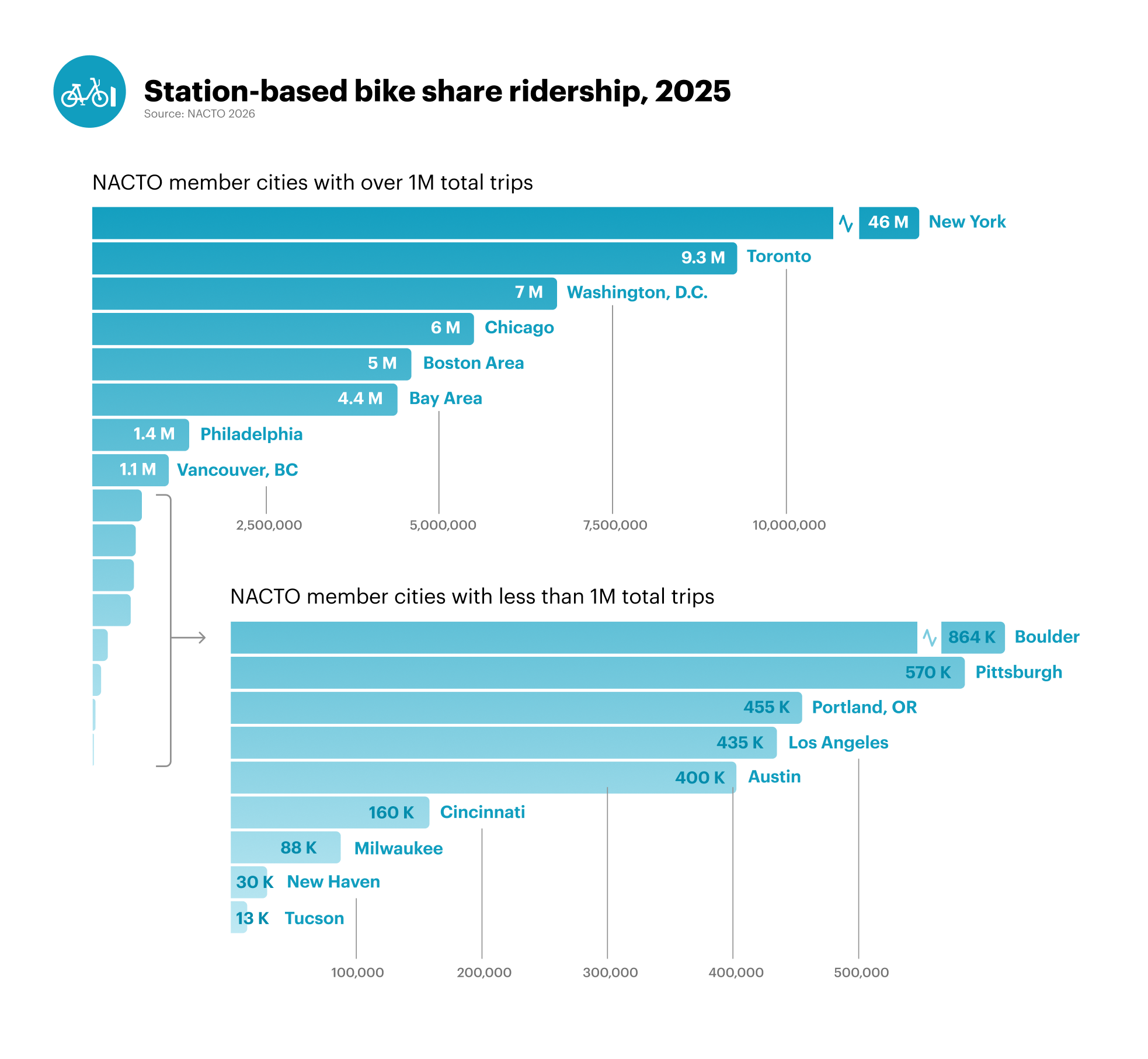
People took 82 million trips on station-based bike share systems in NACTO member cities in 2025. This is a 6% increase in trips from 2024 (77 million trips) and a 30% increase from 2023 (63 million trips).
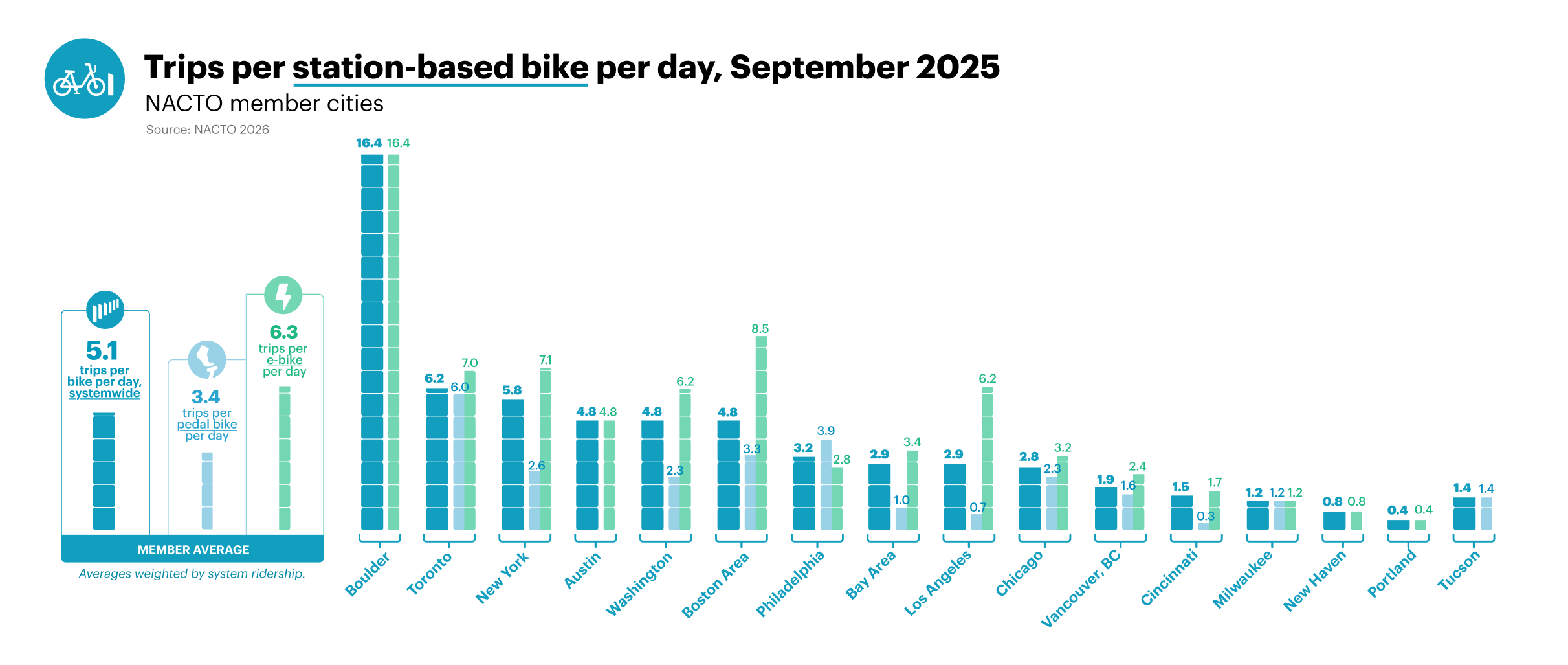
On average, station-based systemwide utilization in September 2025—calculated as the average number of trips per bike per day—was 5.1 trips per bike per day, weighted by system ridership. The average use of station-based e-bikes was 6.3 trips per bike per day, while pedal bikes averaged 3.4 trips per bike per day. The Boston region’s e-bikes were the most used across NACTO member cities, with 8.5 trips per bike per day.
Where e-bikes are offered, they are a popular choice—and in many cities, more popular than pedal bikes. However, pedal bikes continue to be well-used across station-based systems. The number of trips per pedal bike per day was higher in September 2025 than in September 2023 in multiple NACTO member cities. Toronto’s pedal-bikes, with 6 trips per bike per day, were almost as well-used as the system’s e-bikes (7 trips per bike per day), and pedal bikes remain more used than e-bikes in Philadelphia.
Dockless e-bikes
People took 10 million trips on dockless e-bikes in NACTO member cities in 2025. This total—lower than both station-based bikes and e-scooter trips—reflects the limited market share of dockless e-bikes as compared to station-based bikes or to e-scooter systems.
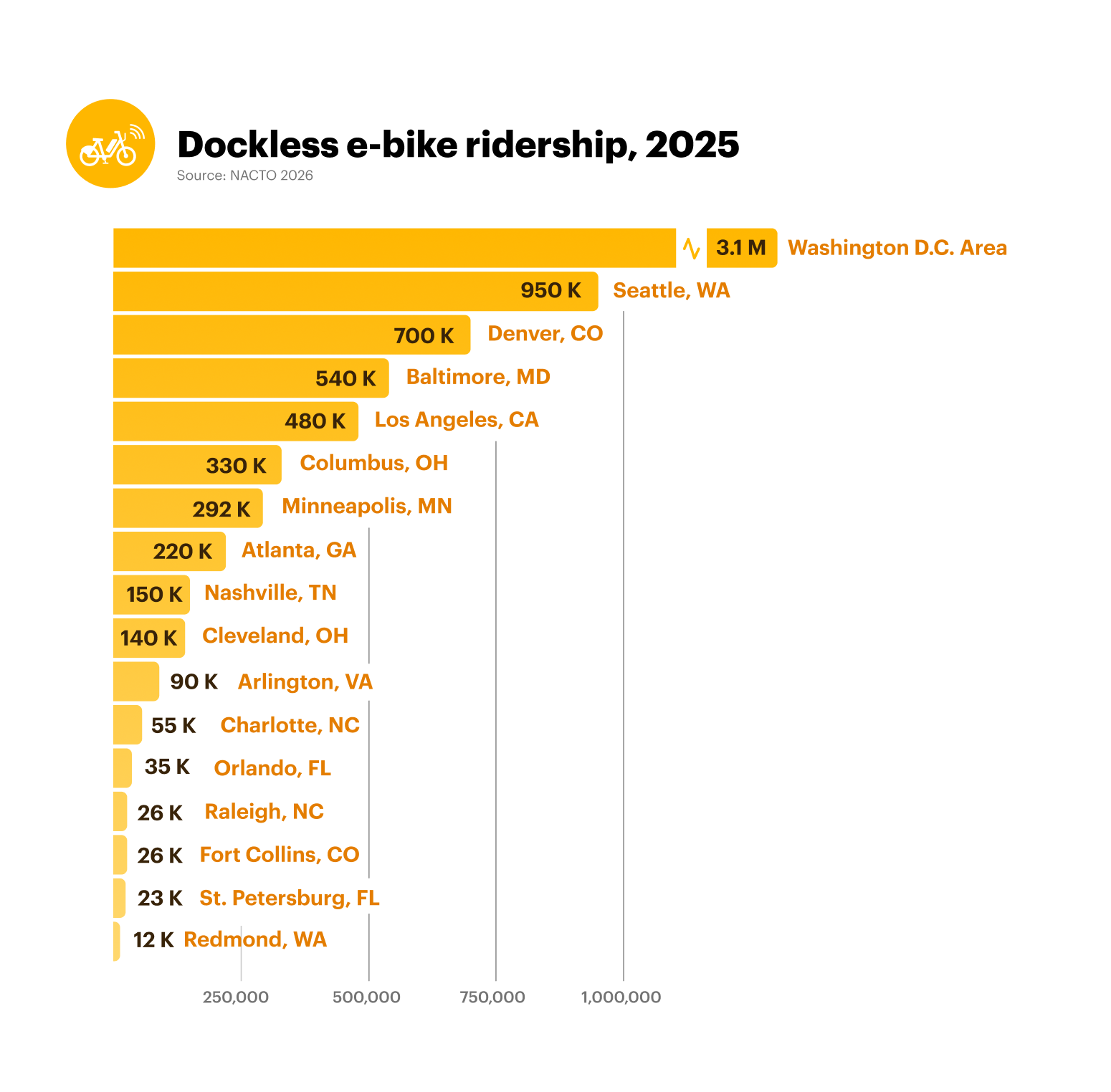
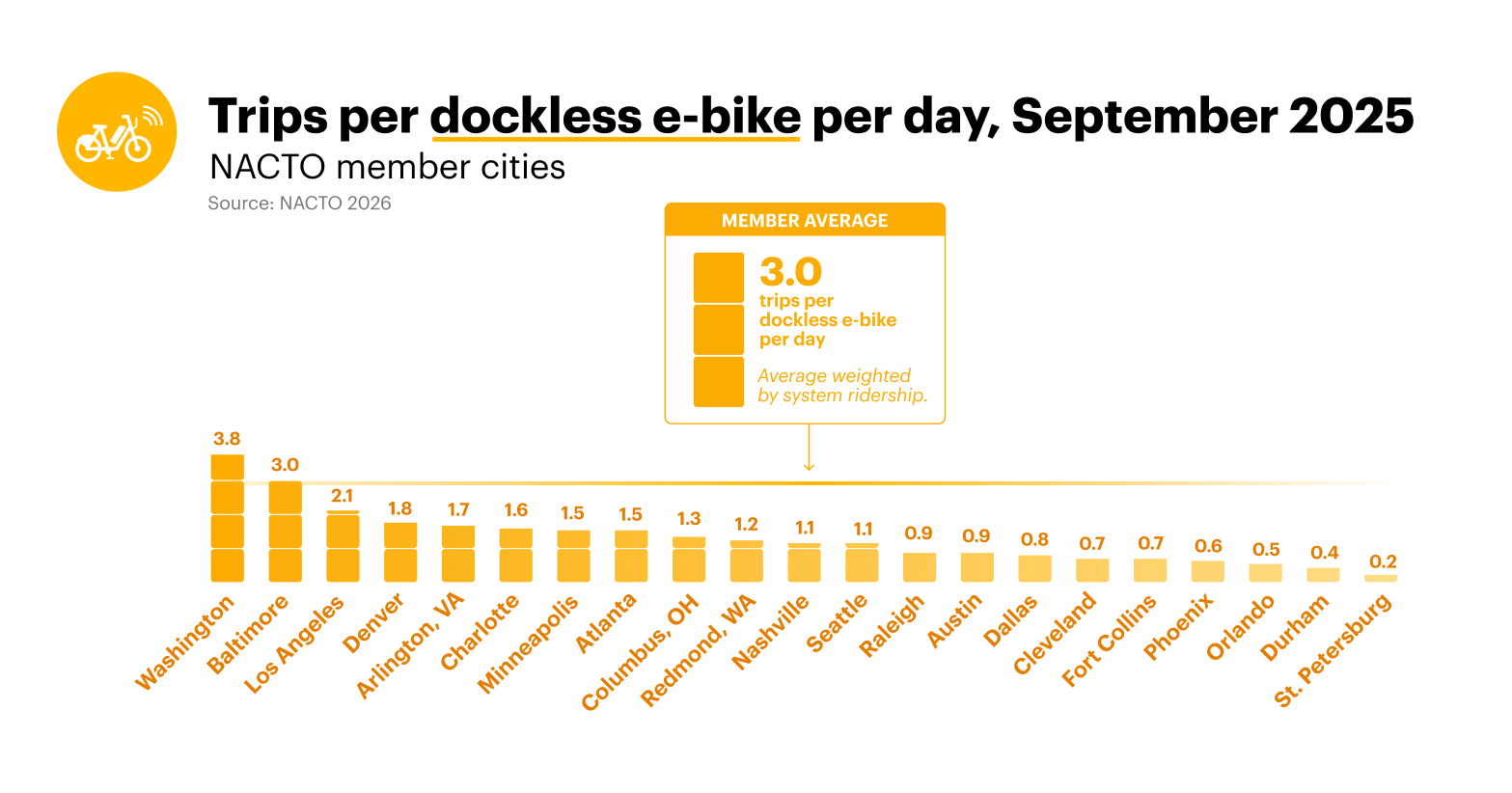
In September 2025, dockless e-bikes in NACTO member cities averaged 3 trips per bike per day, weighted by system ridership. Dockless e-bikes in Washington, D.C. and Baltimore, MD, were used the most: each bike in Washington, D.C. hosted 3.8 trips per day, while Baltimore matched the average with 3 trips per bike per day.
Shared e-scooters
People took 58 million trips on shared e-scooters in NACTO member cities in 2025. Trips increased by 29% from 2024, when 45 million trips were taken on e-scooters.
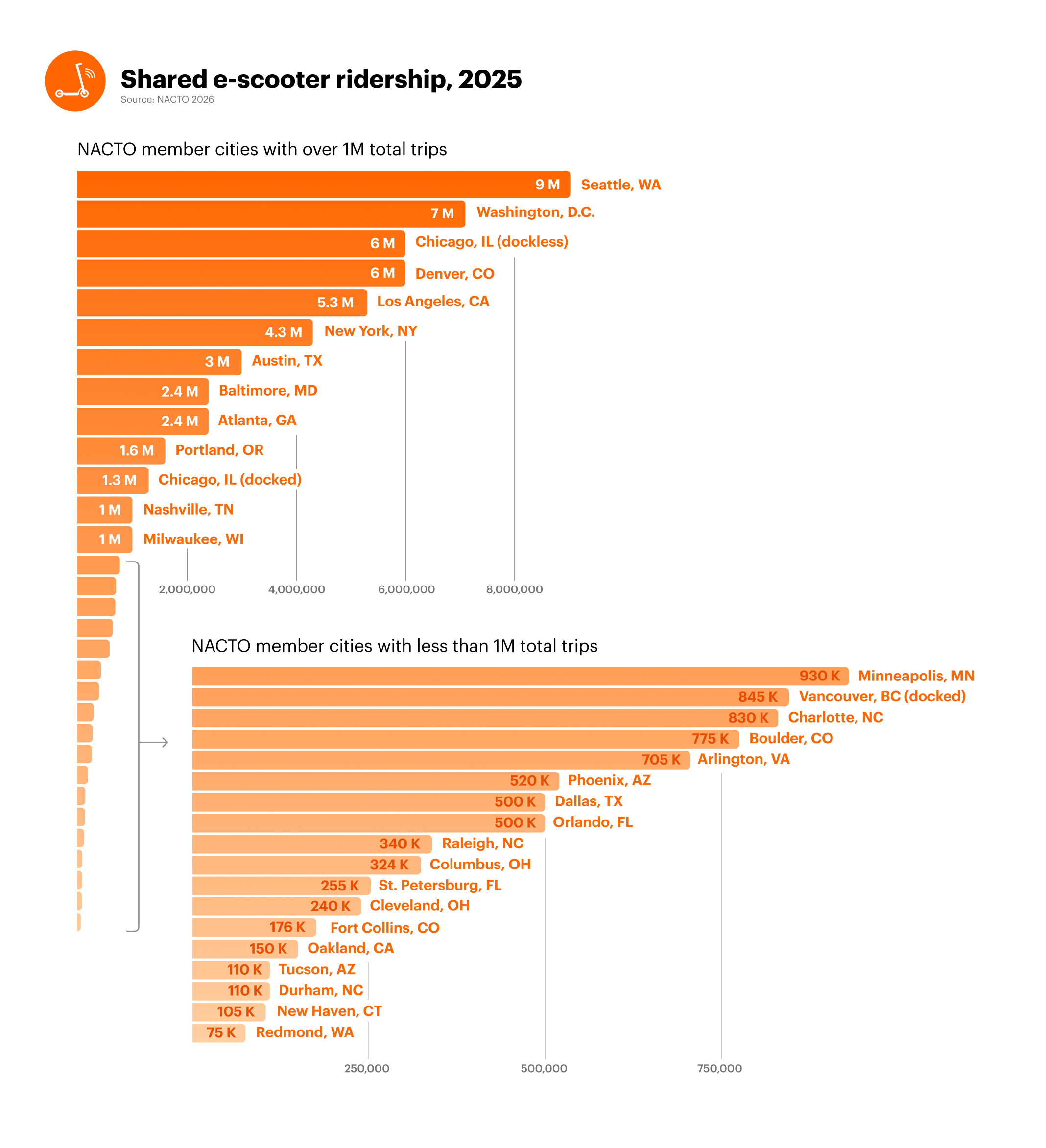
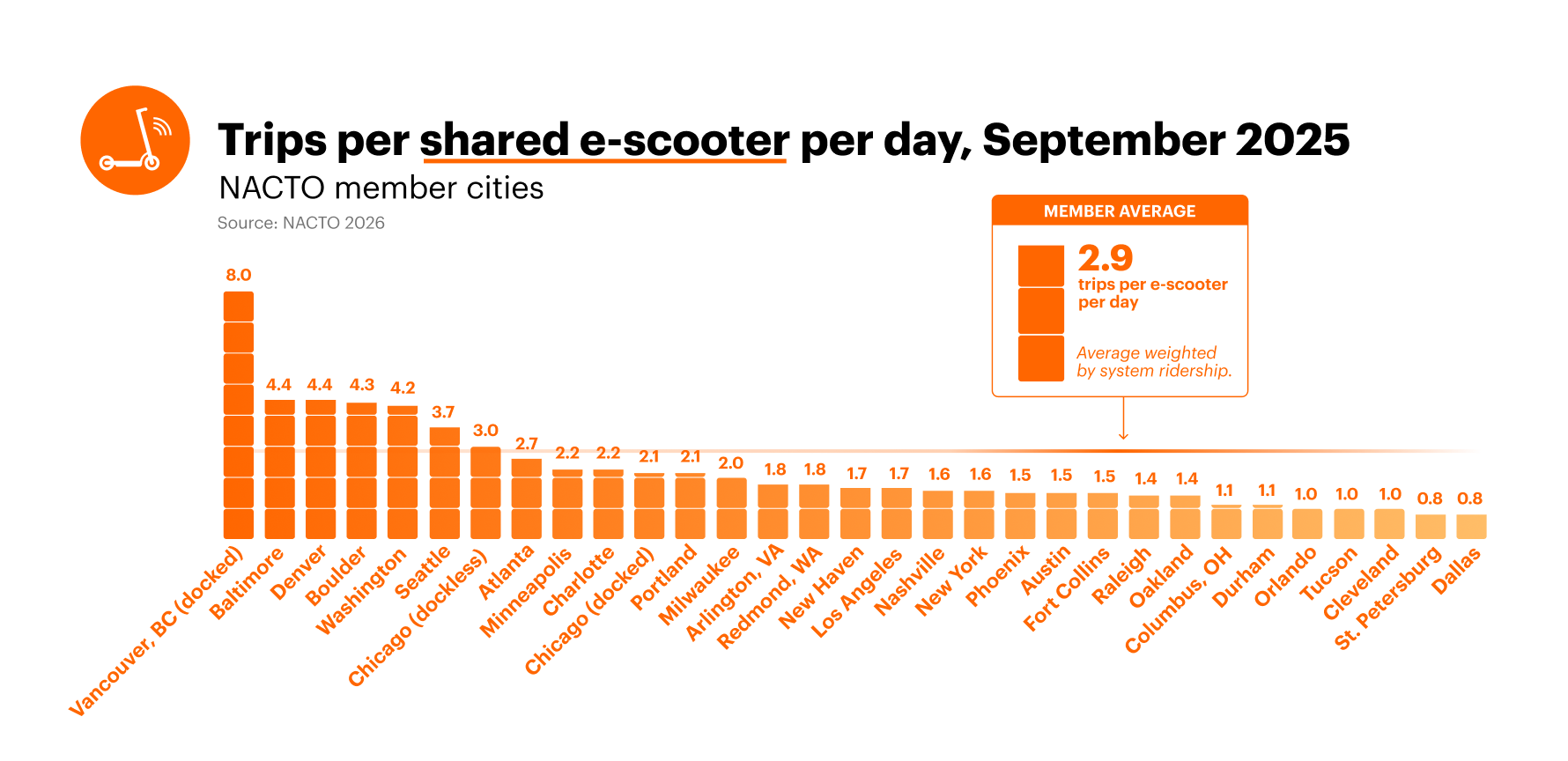
On average, shared e-scooter utilization in September 2025 was 2.9 trips per e-scooter per day, weighted by system ridership. Vancouver’s docked e-scooter system saw the most rides per vehicle among NACTO members, with 8 trips per e-scooter per day. The other e-scooters in this analysis were all dockless. Baltimore, Boulder, Denver, and Washington, D.C. also had very popular systems, with over 4 trips per e-scooter per day.
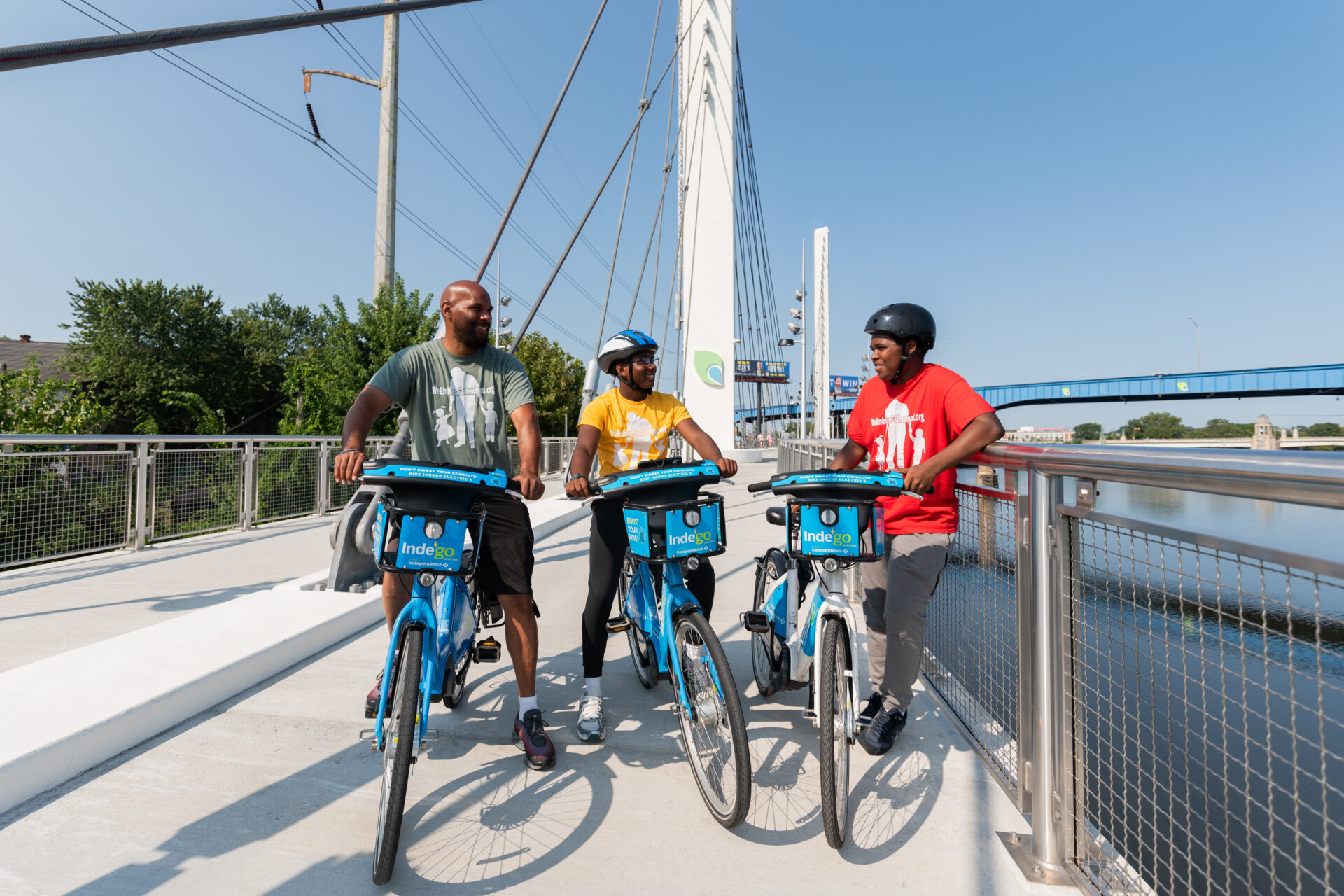
Trends in Pricing
PHILADELPHIA, PA
Photo Credit: Jasmine Alston
Station-based bike share
Across all shared micromobility systems in NACTO member cities, a pedal bike with an annual membership is still the most affordable option for both frequent and infrequent users. In 2025, the median base cost of a station-based annual membership was $147.2
For a daily commuter with a membership, taking two pedal bike trips a day across 21 working days costs around 30 cents per trip. However, trips on an e-bike with a membership are nearly 20 times as expensive.
With these per-minute charges, even short daily trips are expensive on station-based e-bikes: 15 minutes twice a day on an e-bike with an annual membership adds an additional $113 a month. If someone’s average ride time is longer—say, 30 minutes—their daily round-trip is approximately $10.80, adding $227 a month on top of the annual membership fee. Pay-as-you-go prices for station-based bikes have continued to rise. In 2023, the average one-way, 30-minute, pay-as-you-go trip on an e-bike in NACTO member cities was $7.50; in 2025, that number rose to $10.75 per-trip. The cost of a 30-minute, one-way trip on a pedal bike increased to an average of $4.35 in 2025 from $3.85 in 2023.
Dockless e-scooters and e-bikes
Typically, dockless e-scooter and e-bike subscriptions charge around $6 per month to waive unlock fees, combined with reduced per-minute rates or a monthly allotment of minutes.
Pay-as-you-go costs for dockless e-bikes and e-scooters still exceed those of station-based systems. In 2025, the average cost per ride for a dockless e-bike or e-scooter was $5.40 for a 10-minute ride, $7.65 for a 15-minute ride, and $14.30 for a 30-minute ride. For a daily commuter who lives close to work, this means $306 per month (or $15.30 daily) for a 15-minute commute. For those who live farther from work, a 30-minute commute will cost $572 per month ($28.6 per day)—rivaling the cost of car ownership.
The electric device conundrum
E-bikes and e-scooters are popular, and vendors and private operators are responding by expanding the number of e-devices available in cities. However, e-bikes and e-scooters have higher labor and maintenance costs compared to pedal bikes. These higher costs are typically passed on to riders, who now pay substantially higher per-trip fees.
This impact is most obvious in station-based systems. In 2022, e-bikes accounted for approximately 30% of the fleet in NACTO member cities’ station-based systems. Today, e-bikes make up approximately42% of station-based system fleets, a 33% increase over the last four years. In the same time period, the average cost of a 30-minute trip on an e-bike increased from $4.40 to $5.40 for annual members and $7.50 to $10.75 for pay-as-you-go rides.
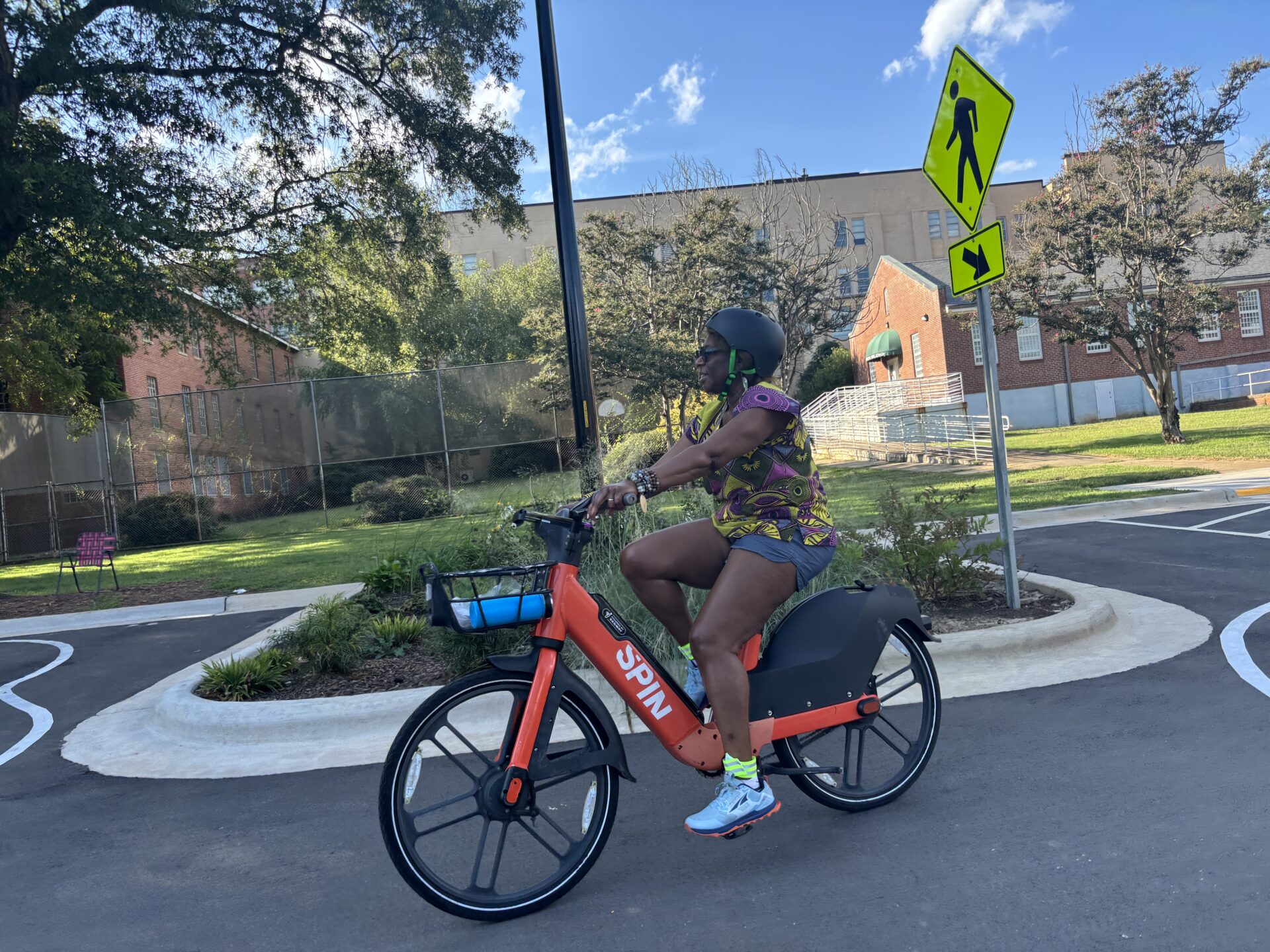
Trends in Staffing
and Funding
RALEIGH, NC
Photo Credit: City of Raleigh
NACTO surveyed a subset of its member cities that offer shared micromobility to better understand how systems are staffed and funded by public agencies. Despite seeing trips in the millions (and tens of millions in many cities), financial and operational support for shared micromobility programs remains a challenge.
The teams managing shared micromobility programs remain remarkably small. Limited staff capacity exists even in cities with multiple operators and over a thousand devices operating on city streets every day. Of the two dozen cities that responded, the vast majority employed five or fewer full-time staff whose primary role is to manage the city’s shared micromobility programs. In four cities, the one person assigned to shared micromobility worked less than full-time on the program. When asked about the availability of public funds to support shared micromobility systems, nearly a third reported having no budget to support programs, data collection, planning, capital procurement, or ongoing operations and maintenance. Among those cities with some funding for shared micromobility, more than a third used that money for contracted data support; five cities supported the purchase of bikes, scooters, stations, or corrals; three could hire a consultant for planning support; and two could count on some money for ongoing operating or maintenance costs.

Looking Forward
MILWAUKEE, WI
Photo Credit: City of Milwaukee
Shared micromobility is a fundamental part of how people travel within NACTO’s member cities and beyond. As systems grow and attract more riders, however, their long-term sustainability is not guaranteed. Addressing these challenges requires cities to take the lead in shaping the shared micromobility landscape and to set strategies for long-term sustainable operations.
Peer-to-peer conversations and connections remain fundamental to solving these goals. NACTO members can join the Shared Micromobility Peer Network, a cities-only forum for honest peer exchange, where shared micromobility staff can continue conversations about internal capacity, fundraising, and community engagement.