During a recent webinar, the Portland Bureau of Transportation shared how they propose to regulate robotaxi services for public benefit
Robotaxis aren’t in the future—they’re operating in dozens of cities. And more are coming soon.
As cities have learned from previous arrivals of new technologies—from ride-hail to free-floating bikes and scooters—these new services integrate well only with regulation, partnerships, and open communication with service providers, regulators, and stakeholders.
Portland is planning ahead, and preparing for the launch of robotaxis in their city. In a NACTO webinar on Wednesday, April 8, Jacob Sherman, the Portland Bureau of Transportation (PBOT) Mobility Innovations Section Manager, Hannah Morrison, PBOT Mobility Innovations Transportation Planner, and Shoshana Cohen, PBOT Chief of Staff, shared the city’s framework for proactively managing robotaxi operations.
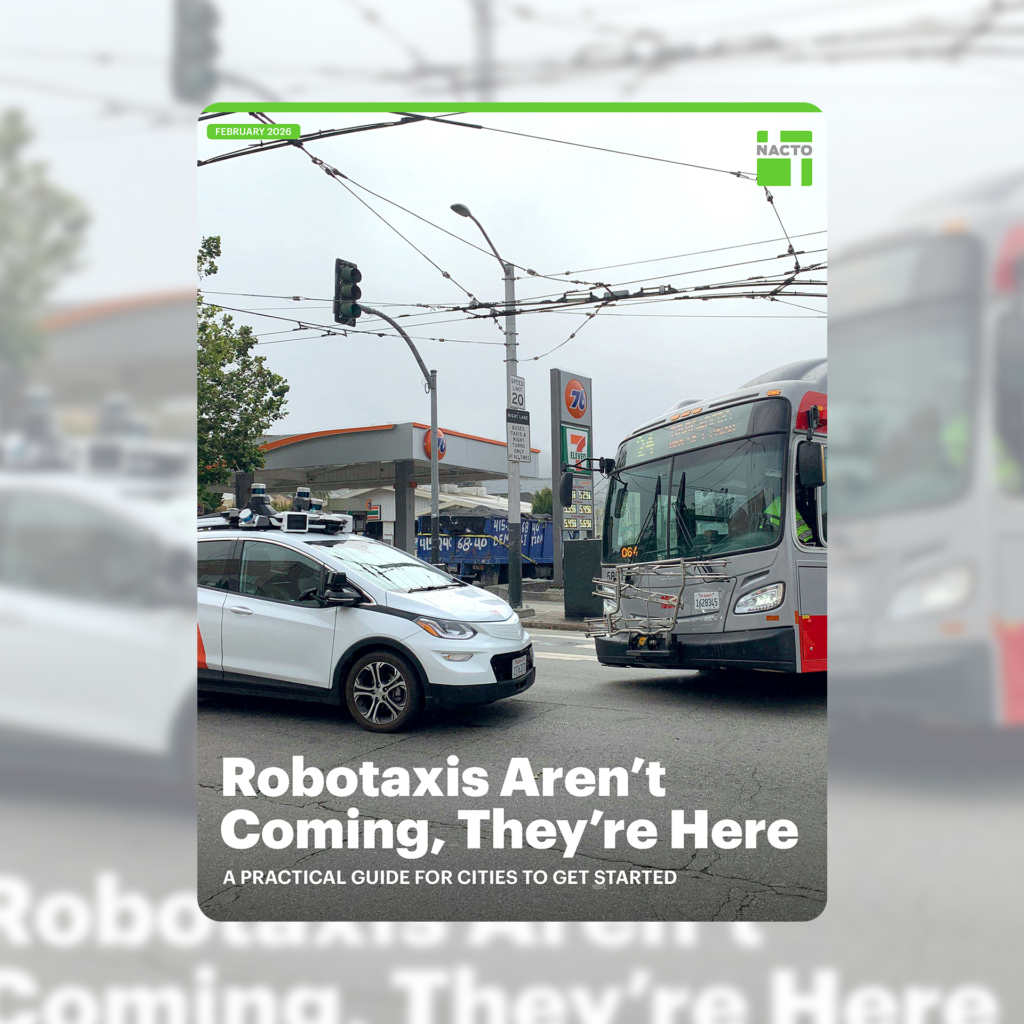
Robotaxis Aren’t Coming, They’re Here
NACTO’s newest resource helps cities prepare for the arrival of robotaxi services, much like Portland has done.
Portland built a strong foundation even before robotaxis started testing
In 2017, PBOT was explicitly tasked with proactively developing regulations for autonomous vehicle testing that led to the adoption of a policy framework and permit in 2018. That was prescient: In the past two years, robotaxi operations have launched and expanded across dozens of U.S. cities, often with little or no regulatory framework. In light of these developments, PBOT developed an updated draft framework to manage the testing and operations of robotaxis.
Portland strategized across multiple departments
As a key step in proactively managing robotaxi operations in Portland, PBOT staff met with internal stakeholders and other subject matter experts. This included critical stakeholders like first responders and law enforcement, the mayor’s office, city attorneys, and city council representatives.
Portland also worked closely with other important stakeholders like the PBOT Vision Zero team, the Chief Sustainability Officer, Portland’s Office of Equity and Human Rights, data privacy experts, and staff leading the operations and enforcement of taxi and TNC permits and regulations.
The city also worked with the NACTO Autonomous Vehicles Working Group, getting insights from dozens of cities in various stages of developing regulations, policies, and procedures for working with robotaxi companies. This group was also instrumental in creating NACTO’s robotaxi guidance for cities of all sizes.
Building a Framework for Problem-Solving
As drafted (and subject to change), the city’s new rules would establish a permit for robotaxi operations that allows the city to limit fleet size, require specific insurance and liability requirements, enforce each company’s operational and safety plans and procedures, and suspend or revoke permits for non-compliance.
The permit program focuses on several areas:
- Prioritizing safety. As part of the permit application process, companies will need to provide plans for safe operations, including how passengers can exit the vehicle in an emergency, how first responders can interact and override autonomous operations, and how each company will comply with local laws.
- Managing daily operations. To receive a permit, companies would share the conditions and restrictions for operations, including whether a company will operate on highways or other high-speed roads and if there are any time-of-day or weather-based restrictions to operations. The city would also review each company’s experience with testing and deployment of robotaxis and ensure that companies comply with robust insurance and liability requirements.
- Ensuring widespread access. Any permitted company must provide reasonable accommodations to passengers with disabilities and host at least two public outreach events annually.
- Ensuring data privacy and data sharing. Permitted companies will need to comply with the Oregon Consumer Privacy Act, commit to sharing anonymized trip-level data consistent with what the city requires of taxis, TNCs, and shared micromobility operators, and submit a privacy policy showing how they safeguard passenger information.
- Climate and right-of-way impacts. If approved, companies will need to pay the standard for-hire permit and per-trip fee already established for taxis and TNCs. These permit fees support program administration as well as the maintenance and operations of the transportation system.
The administrative rule update and regulations are currently in draft form, and PBOT expects to update the regulations based on feedback received during a comment period that recently closed.
To continue providing an effective, safe, multimodal transportation system for people and goods, cities must prepare now for robotaxi operations. Portland provides one model of how to do so.
- See Portland’s full draft administrative rule update
- Watch the webinar (NACTO members only)
Header Photo Credits: Ian Sane