A safe streets project in the City of Columbus, Ohio, is demonstrating how cities can deliver federally funded projects that make a tangible difference.
In November 2024, the City of Columbus used Safe Streets and Roads for All (SS4A) funding to install a demonstration project on a two-mile portion of East Broad Street. Broad Street is on the City’s Vision Zero High Injury Network—a list of city-owned streets that have had the greatest number of fatal crashes, crashes causing serious injuries, and crashes involving vulnerable road users.
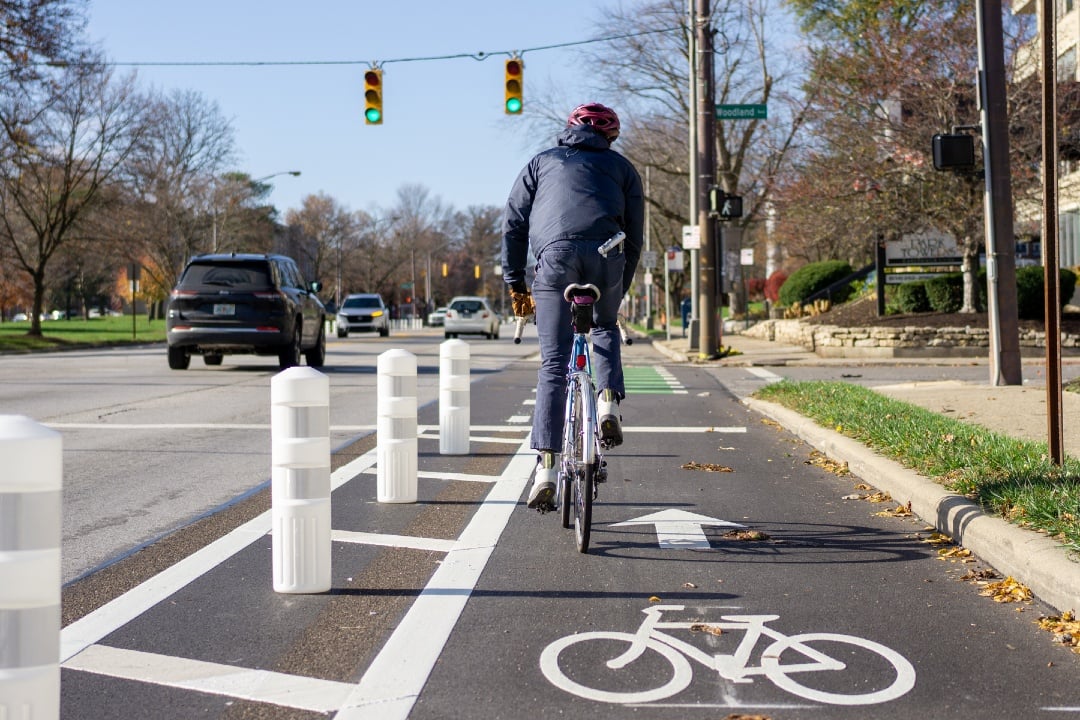
The Vision Zero Columbus project transformed the oversized six-vehicle lane street to two vehicle lanes and one protected bike lane in each direction.
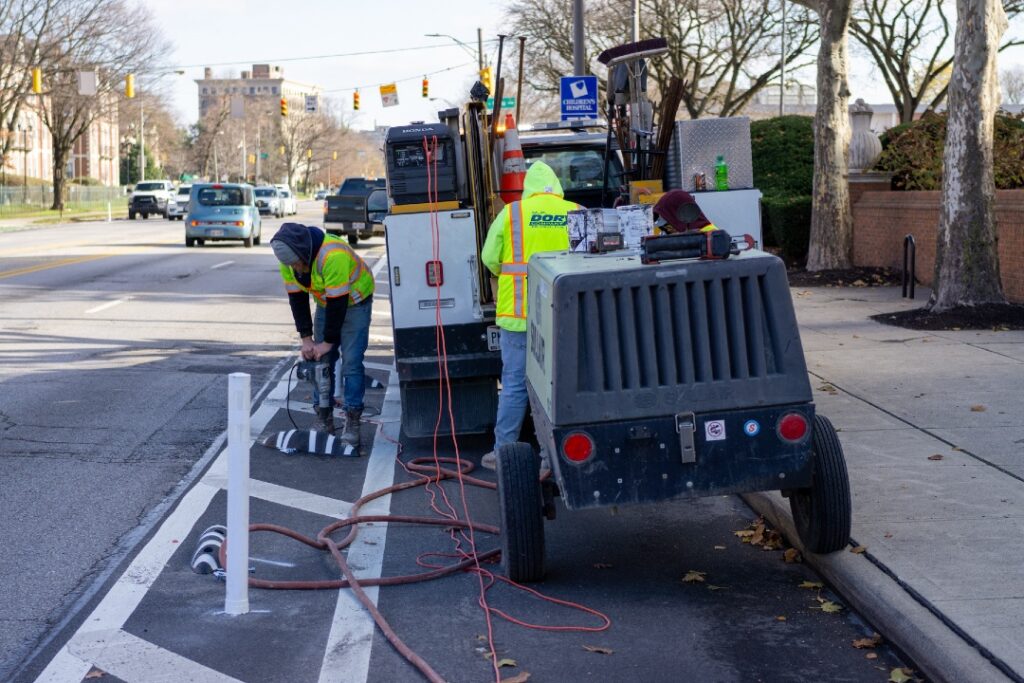
The one-year findings indicate the safety improvements are working. Preliminary data released by the city’s Department of Public Service shows:
- Excessive speeding by drivers (driving 55 mph or more in a 35 mph zone) was reduced by 89%.
- Crashes decreased from 28 crashes in the first half of 2024 to 13 in the same period in 2025. No bike or scooter crashes have been reported since the project was installed.
- People biking and riding scooters have taken more than 12,000 trips in the protected bike lanes since traffic count monitors were installed in May.
In addition to installing the new pavement markings on East Broad Street, the City is evaluating three different types of bike lane separators, testing equipment for bike lane snow removal, and working with Central Ohio Transit Authority to install and test new level-boarding bus platforms at stops adjacent to the protected bike lanes.
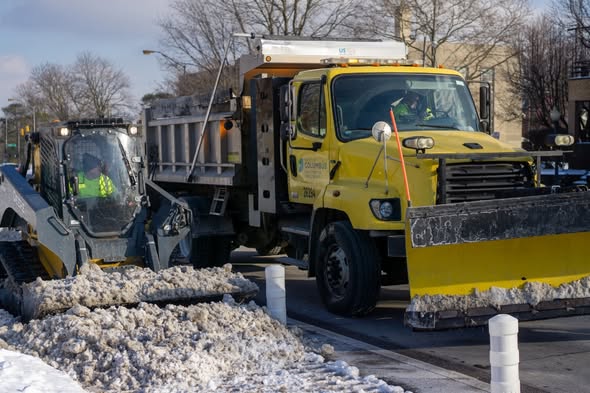
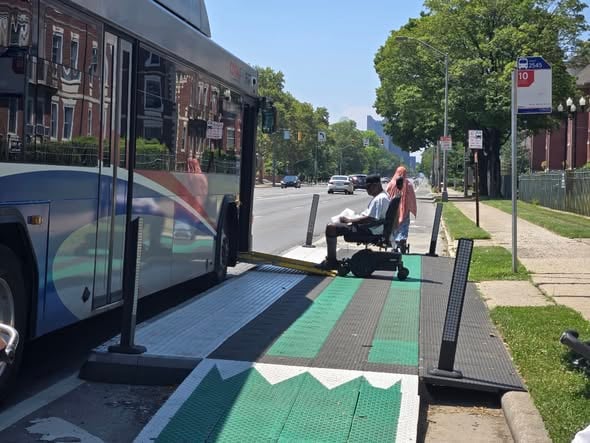
The City of Columbus is now designing permanent improvements for East Broad Street based on the findings of the demonstration project.
This project was funded as part of a $1.4 million SS4A planning grant. In addition to the East Broad Street improvements, the federal dollars are funding a neighborhood slow zones pilot in the Near East Side area of the city and a citywide Vision Zero survey and focus group project.
A key part of SS4A planning grants has been to fund demonstration projects for cities to test and evaluate the impacts of safety improvements. The East Broad Street safety project has made transportation safer and more accessible for everyone using the street—and provides the data to prove it.
Photo Credits: City of Columbus Department of Public Service, Facebook