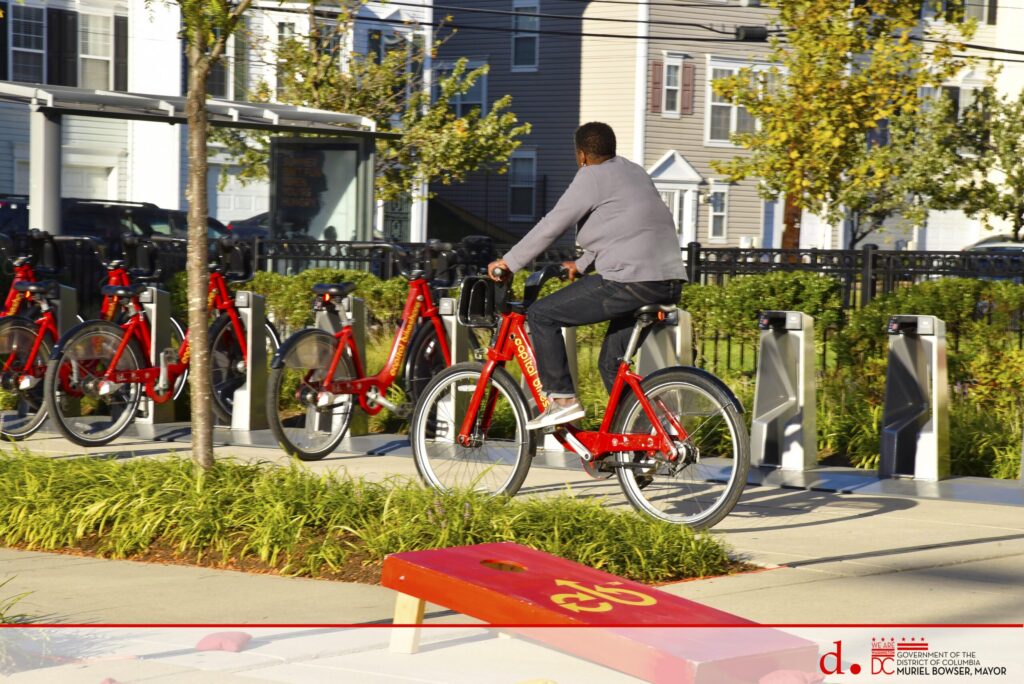
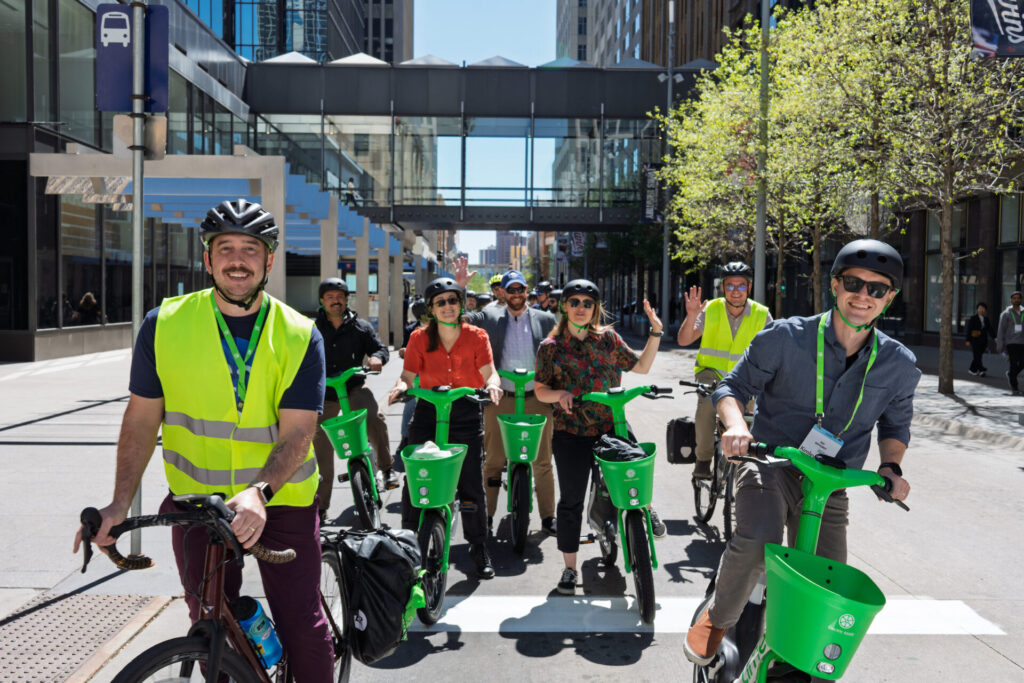
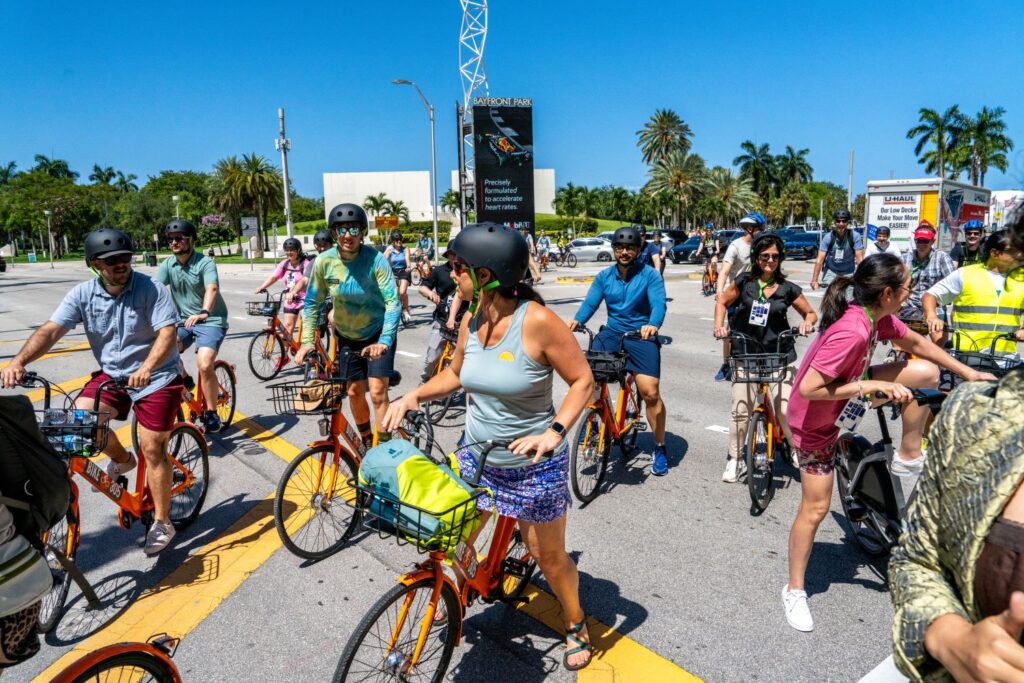
All aspects of the NACTO Designing Cities conference are carefully planned, with a focus on the most pressing topics for our member agencies. Unlike many conferences, NACTO does not have an open call for session proposals. Instead, sessions and WalkShops are programmed by the conference host city, NACTO staff, or city practitioners on the Member Program Committee.
Member Program Committee members help shape the conference by bringing their unique perspectives to planning and coordinating a peer session. The committee reflects a diversity of races, ethnicities, genders, ages, abilities, geographies, agency sizes, specialties, and career levels. In 2025, our nine committee members are planning conference sessions covering everything from transitioning temporary projects to permanent ones to strategies for hosting large-scale sporting events.
Read about their sessions below and don’t miss them at Designing Cities 2025! This year, we will be hosted by our member District DOT. We look forward to bringing the NACTO movement together in Washington, D.C. from May 28 to May 31 for another great event.
If you haven’t registered yet, get your tickets soon! Registration closes on April 30, 2025 or when tickets sell out.
Meet the Committee

Anna Chamberlain
Former Associate Director of Planning and Sustainability Division, District DOT
Conference Session: “Was It Worth It?” Before and After Data on Multimodal Low Cost, High Impact Safety Projects
With decreasing budgets and an increasing need for quick build safety projects, how do you know if a small-scale capital project was worth the squeeze? What type of data should you collect and how do you measure success? Hear from peer cities on how they collect before and after data on lower-cost multimodal safety projects and how they use it to demonstrate project impact and identify areas for improvement when efforts come up short.

Armand Shahbazian
Electric & Automated Mobility Policy Advisor, Seattle DOT
Conference Session: Rise of the Robots! Preparing for Autonomous Vehicles on City Streets
When implemented thoughtfully, autonomous vehicles offer an opportunity to make streets safer, improve transportation access for underserved communities, and boost U.S. industry competitiveness in the international market. When done haphazardly, AVs and AV testing will make our cities less safe, less equal, and more congested. NACTO’s new Principles for Autonomous Vehicles on City Streets helps all actors–cities, states, federal regulators, and AV companies–successfully integrate AVs into existing, complex city streets and transportation systems. In this session, members of NACTO’s AV Working Group share specific actions cities can take today to address AV testing on city streets and prepare for large-scale deployment in the future.

Brian Ashworth
Transportation Planning Manager, City of Columbus
Conference Session: Confessions of a Shared Mobility Planner
How do you build and manage a system that continually evolves? In the two decades since bike share systems started appearing in North America, a lot has already changed, including the introduction of dockless scooters and bikes. Shared devices provide ease of access to users, but add complications for municipalities. Join us for a casual, facilitated conversation with three communities about the basics: what to include in an RFP, how to balance subsidies, what devices to select, and where to park the dang things. We’ll cover everything from subsidies and contract structures, to geofences and device selection. At a minimum, you will learn what NOT to do!

Carlos Hernandez
Senior Transportation Planner, Santa Monica DOT
Conference Session: Game On – Strategies for Hosting the World
Lace up your cleats and get ready to cheer for your favorite athlete: the FIFA World Cup and the Olympic/Paralympic Games are almost here! From watch parties to long-term infrastructure investments, large-scale sporting events are known to make a lasting impact on communities and their transportation networks. Learn from cities on how they best prepare to host tens of thousands of visitors during these mega events.

Hillary Orr
Transportation Planning Associate II, City of Alexandria
Conference Session: NextGen Vision Zero – Harnessing Technology & Trust for Safer Streets
Designing safer streets is not just about infrastructure—it’s about reimagining how technology can fundamentally change the way we prevent crashes. While political challenges, funding concerns, and public resistance often slow implementation, cities must start thinking beyond traditional design and consider a tech-driven Safe System approach.
This session will challenge transportation professionals to adopt a new mindset—one that sees vehicle technology as an essential tool in redesigning streets for safety. Join this forward-thinking discussion to explore how cities can use technology not just to improve streets, but to redefine what safety means in an era of automation and connectivity.

Jonathan Brown
Development Review Engineer, City of Durham
Conference Session: Raising the Grade – Transitioning Projects from Quick Build to Full Build
Cities have used quick build projects to make immediate, impactful changes to their streets. These projects use low-cost materials and rapid construction to reimagine the public realm. However, while these swift changes often bring immediate benefits, they can be challenging to maintain over time and may lose their spark as other streets receive full reconstruction. Once a quick build proves successful, how does a city turn a temporary installation into a permanent one? What lessons learned during the trial phase can inform a better final design?

Lauren Nagle
Active Modes Specialist, City of Fort Collins | FC Moves
Conference Session: From Project to Legacy – Building Sustainable Communities Beyond Implementation
When the funding ends and the ribbon is cut, what’s next? This interactive workshop dives into strategies for keeping community projects alive and thriving long after implementation. Explore best practices for ongoing community engagement, transparent communication, co-creating adaptations, and celebrating success. Through group discussions, case studies, and collaborative activities, you’ll gain actionable insights to ensure your projects make a lasting impact.

Nataly Rios Gutierrez
Transportation Planning Associate II, Los Angeles DOT
Conference Session: Embedding Equity in Infrastructure – Transforming Capital Investment for Inclusive Cities
How can cities embed equity into their infrastructure planning to drive meaningful change? This session brings together practitioners from leading NACTO member agencies to share how they are addressing the needs of underserved neighborhoods, balancing priorities like safety, accessibility, and sustainability, and building public trust through transparency. We’ll explore real-world strategies and examples of infrastructure investments that create more inclusive and equitable cities.

Peter Trinh
Multi-Modal Engineering Supervisor, Seattle DOT
Conference Session: One Size Doesn’t Fit All – Designing for Constrained Spaces
What happens when our cross-section doesn’t look like what’s in the standards? National, state, and local guidelines and standards shape our street designs, but real-world constraints often mean we don’t have the space for ideal conditions. From constrained bike lane widths to sharing street space between protected bike lanes and transit stops, how are cities navigating and documenting deviations from the standard? What tradeoffs do cities look at when it comes to fitting in a facility versus considering liability? This session will help cities implement designs that they may not have considered before and potentially fit bike and pedestrian facilities in spaces that simply do not have the right-of-way to build the “perfect standard.”