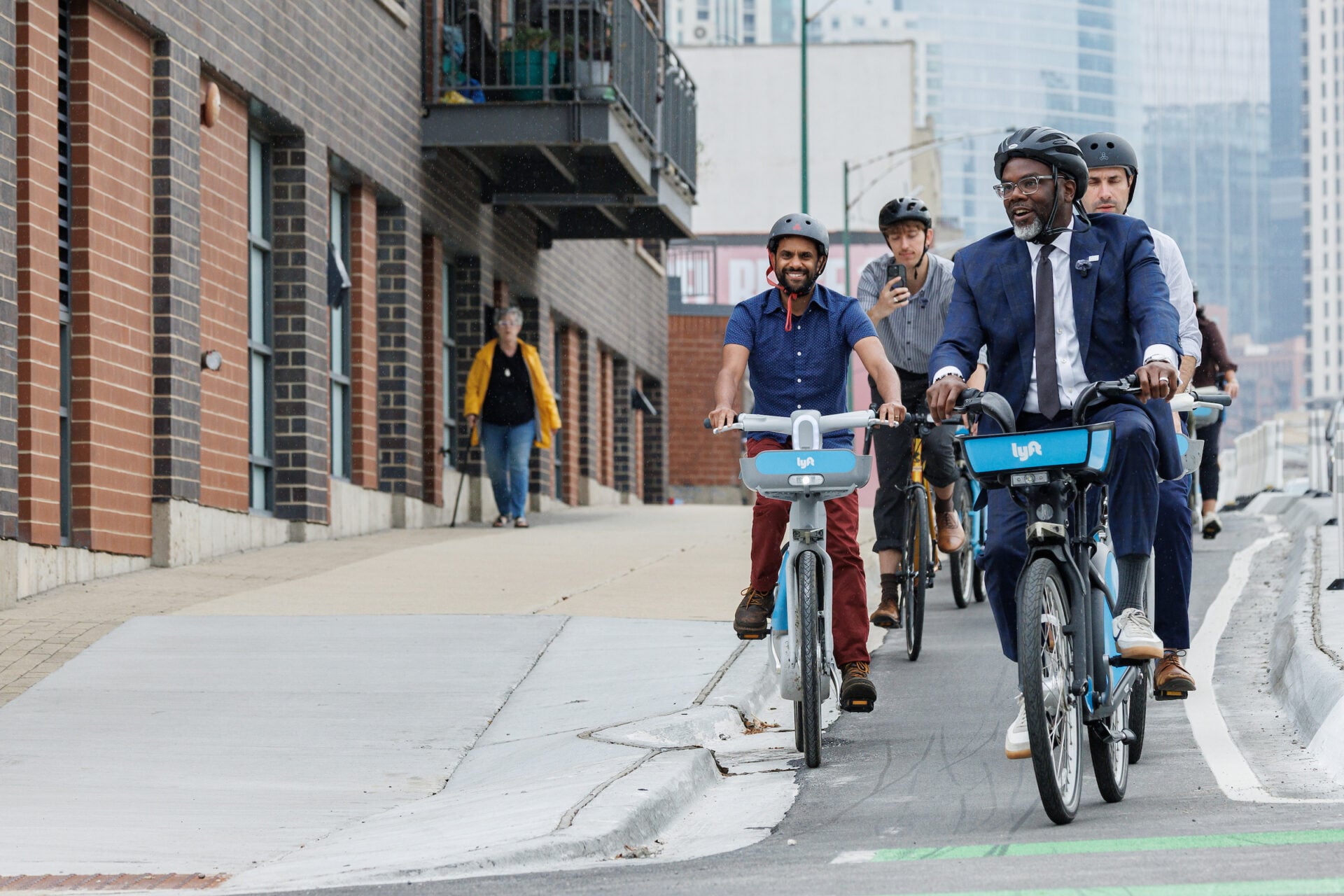
Divvy Bikes, Chicago’s station-based bike share system, is one of the largest and most-ridden systems in North America, with over 12,000 bikes, 1,100 stations, and millions of rides per year. But price increases for members and casual riders rose significantly between 2021 and 2025.
While the system’s Divvy for Everyone (D4E) program has seen immense success since its launch in 2015, the $5 annual memberships and discounted trip fares are only available for a portion of Chicago residents. As wages stagnate and eligibility for government assistance is restricted, the City saw a need for additional resources to provide affordability for riders. As a result, the Chicago Department of Transportation (CDOT) invested over $3 million in public funds to keep the system affordable for Chicagoans and to make improvements for its long-term success.
Rising Costs
Electric-assist bikes are popular choices in Chicago—in 2025, Divvy e-bikes were used at an average rate of three trips per bike per day, nearly 1.5 times more than traditional pedal bikes. But e-bikes are expensive to purchase and maintain. Batteries must be regularly swapped out for off-site charging, and opportunities for powering in-station charging are limited. In Chicago, this meant that annual membership costs for Divvy increased by 10% each year since 2021, in addition to increases in per-minute pricing for rides.

The Solution
In mid-2025, the City of Chicago announced that it would invest more than $3 million into the Divvy system, including a $550,000 subsidy to provide affordable pricing for Chicago residents. Starting in June 2025, the infusion of funds from the City provided:
- An annual membership price freeze at $143.90 for over 9,200 riders
- 5,500 new annual membership sign-ups at a discounted rate of $99
- Price capping for member trips taken on e-bikes, up to 45 minutes
- Waived unlock fees for all trips starting in the city’s designated Equity Priority Zones
This public investment in keeping shared micromobility affordable and improving the system paid off. By the end of 2025, riders took over 6.8 million trips on Divvy bikes and e-scooters, the highest-ever recorded annual trip count in the system’s history.
In March 2026, the City of Chicago and its Lyft partners announced the extension of the reduced-price new memberships and existing member price freeze through 2026. The extension of public funding will continue to provide subsidized pricing, infrastructure improvements, and expanded service throughout the city, including:
- The addition of 200+ new station sacross the city, including downtown Chicago, the lakefront, and areas of the city previously underserved by Divvy.
- Pedal bike pricing and the ability to choose “low assist mode” for members taking e-bikes when traditional bikes aren’t available.
Public Investment in Shared Micromobility
In order for shared bikes and scooters to continue to get people where they need to go at an affordable price, and to support the long-term longevity of these systems, shared micromobility systems need to be funded like a public service.
Divvy’s record-breaking year shows that treating bike share as essential infrastructure works. Public investment is the key to maintaining an affordable, reliable bike share network.
Header Photo Credit: Chicago Department of Transportation (CDOT)